How to Obtain Salt and Potassium Off-Grid: Methods, Yields, and Practical Constraints
How to source salt and potassium off-grid using real methods, yields, and constraints for long-term survival.

Summary
Salt (sodium chloride) and potassium (primarily as potash compounds) are foundational inputs in any off-grid system, supporting human physiology, food preservation, and agricultural productivity. Their sourcing, however, differs fundamentally. Salt is a location-dependent resource that must be extracted from existing natural deposits such as seawater, brine, or mineral formations. It cannot be synthesized efficiently at small scale and therefore represents a potential long-term constraint for inland systems.
Potassium, by contrast, is a process-dependent resource. It is widely distributed in plant biomass and can be recovered through controlled combustion and leaching processes. This makes it locally producible in most environments with sufficient vegetation, allowing it to be integrated into closed-loop nutrient cycles.
Off-grid sourcing of both minerals is viable, but not symmetrical. Salt requires either geographic access or energy-intensive processing, while potassium can be produced through repeatable biological and chemical processes. Effective system design must therefore treat salt as a strategic resource to be secured or conserved, and potassium as a resource to be continuously generated within the system.
Why These Minerals Matter
Sodium and potassium are essential electrolytes that regulate nerve signaling, muscle contraction, and fluid balance. In the absence of reliable dietary intake, deficiencies can develop rapidly, particularly in high-activity or high-heat environments. Sodium is also critical for food preservation, enabling salting, curing, and brining processes that extend shelf life without refrigeration.
In agricultural systems, potassium is one of the three primary macronutrients (alongside nitrogen and phosphorus). It supports plant water regulation, enzyme activation, and stress tolerance. Without sufficient potassium, crop yields decline and plant resilience deteriorates.
In off-grid contexts, these minerals become bottlenecks because they are not easily substituted. While calories can be generated through agriculture and protein through livestock, mineral inputs must either be sourced directly or regenerated through system processes. Failure to account for these inputs results in gradual system degradation, both biologically and nutritionally.
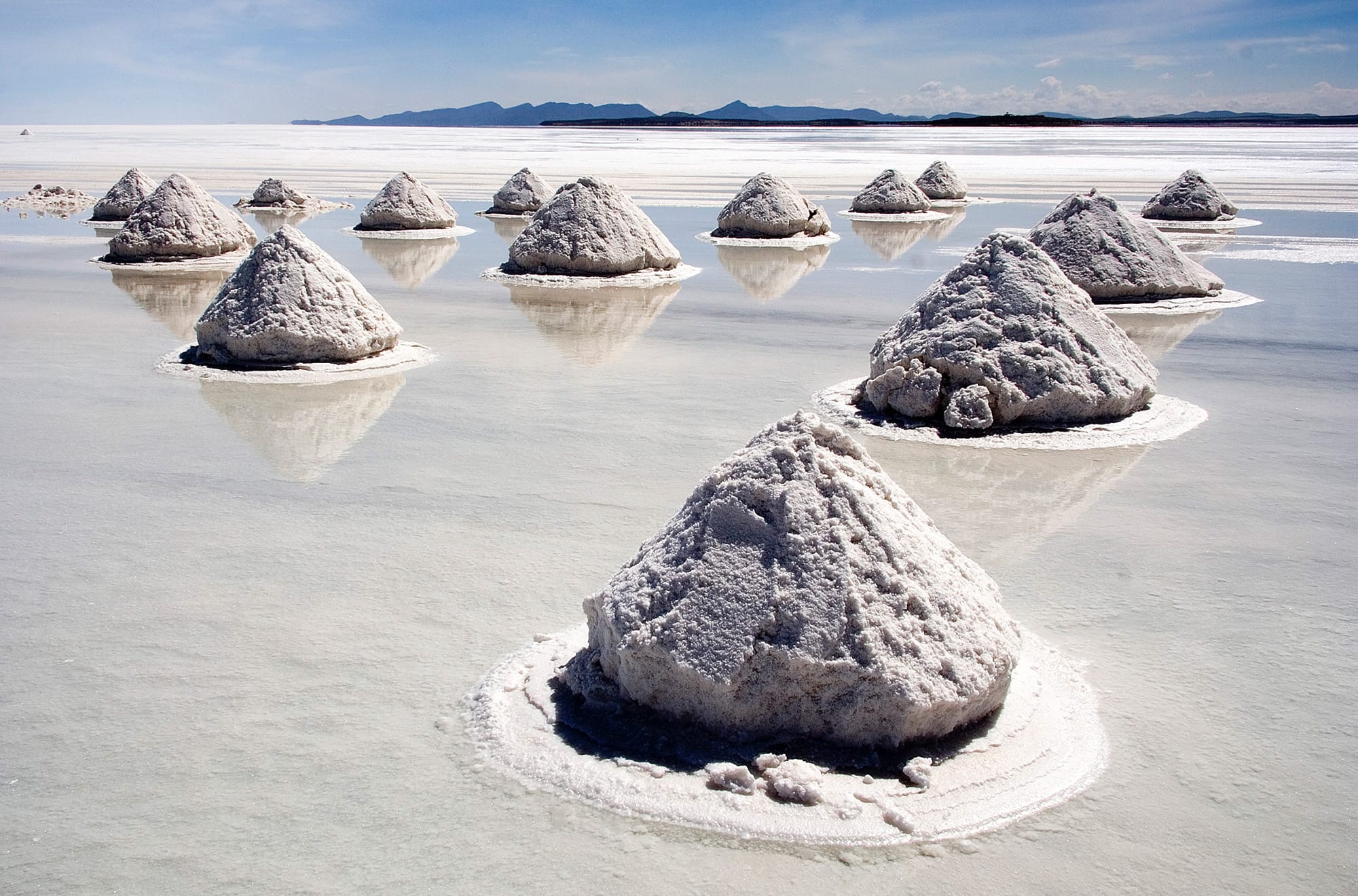
Salt (Sodium Chloride): Source-Constrained Resource
Seawater Extraction
Seawater contains approximately 3.5% dissolved salts, of which sodium chloride is the dominant component. Extraction relies on either solar evaporation or boiling.
Solar evaporation is the most energy-efficient method. Shallow basins or trays are filled with seawater and exposed to sunlight. As water evaporates, salt concentration increases until crystallization occurs. Under favorable conditions, roughly 1 liter of seawater yields about 30–35 grams of salt. Large-scale systems use staged evaporation ponds to improve efficiency and purity.
Boiling accelerates the process but requires substantial fuel input. Evaporating 1 liter of water requires approximately 2.3 MJ of energy, making this approach impractical unless waste heat or abundant fuel is available.
Infrastructure requirements are minimal for solar systems: shallow containers, impermeable surfaces, and sufficient land area. The limiting factor is climate, high solar radiation and low humidity significantly improve yield.
Inland Brine and Salt Deposits
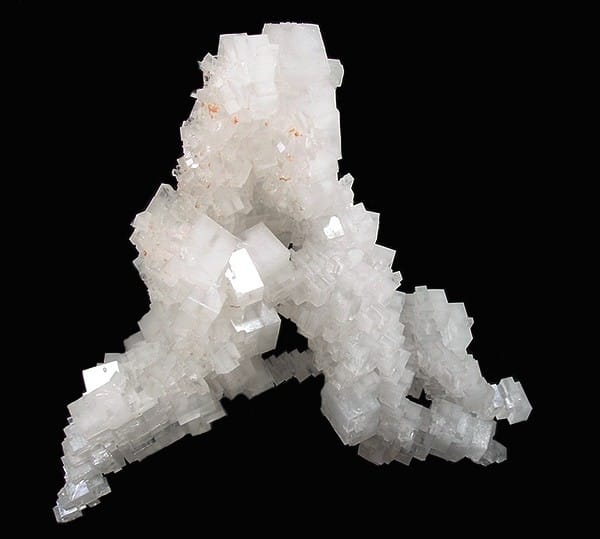
Inland systems depend on access to natural brine sources or mineral deposits. Brine wells and salt springs provide water with elevated salt concentrations, reducing the energy required for extraction. Rock salt deposits can be processed by dissolving the material in water, filtering impurities, and evaporating the solution to recover salt.
Yields vary widely depending on concentration. Brine sources may contain anywhere from 1% to over 20% dissolved salts. Higher concentrations significantly reduce processing effort.
Limitations
Salt production is constrained by geography. Without access to seawater, brine, or mineral deposits, production becomes energy-intensive and inefficient. This creates a structural dependency for inland systems.
Storage is straightforward once obtained. Salt is chemically stable and can be stored indefinitely if kept dry. As a result, stockpiling is a practical strategy when supply is available.
The key constraint remains access. Salt cannot be generated from biomass or synthesized efficiently at small scale. It must be extracted from the environment.
Potassium (Potash): Process-Based Resource
Wood Ash Processing
Potassium is widely distributed in plant material and becomes concentrated in ash after combustion. Hardwood ash typically contains 5–10% potassium compounds by weight, primarily as potassium carbonate (K₂CO₃).
The extraction process involves leaching. Ash is placed in a container, and water is passed through it, dissolving soluble potassium compounds. The resulting liquid, historically referred to as lye water, is then evaporated to produce crude potash.
Yields depend on biomass type and processing efficiency. Approximately 10–20 kg of hardwood ash may produce 1–2 kg of crude potash. This is a low-yield process, but it is repeatable and scalable with sufficient biomass.
Plant-Based Sources
Certain plants accumulate higher levels of potassium, particularly fast-growing species and agricultural residues. Crop waste, pruned branches, and other biomass can be cycled through combustion and leaching to recover potassium.
This creates a closed-loop system: soil nutrients support plant growth, plant material is harvested and used, and residual biomass is converted into ash and returned to the system as potassium input.
Alternative Sources
Composting systems also concentrate potassium as organic matter decomposes. While not as efficient as ash processing, compost can serve as a secondary potassium source, particularly when combined with ash inputs.
Agricultural waste streams (such as husks, straw, and processing residues) provide additional material for potassium recovery. These sources are variable but contribute to resource availability.
Processing Systems and Methods
Ash processing begins with controlled combustion of biomass to produce fine ash. The ash is then placed in a leaching vessel, typically a container with a permeable base. Water is poured over the ash and allowed to percolate through, dissolving soluble compounds.
The collected liquid is filtered to remove particulates and then evaporated. Evaporation can be achieved through solar exposure or low-heat boiling. The remaining residue is crude potash, which may contain impurities such as sodium salts and carbonates.
Refinement involves additional dissolution and recrystallization steps to increase purity, though this is not always necessary for agricultural use.
Safety is a critical consideration. Lye water is alkaline and can be caustic, particularly at higher concentrations. Handling requires basic protective measures, including avoiding skin and eye contact.
 John D
Integrating Into a Homestead
A functional off-grid system integrates potassium production into existing biomass cycles. Wood used for heating or cooking produces ash, which is then processed to recover potassium. This creates a continuous loop tied to daily energy use.
Salt extraction, if possible, is integrated into water management systems. In coastal environments, evaporation ponds can be incorporated into land use. Inland, salt must either be sourced externally or produced from brine if available.
Production capacity is limited by input availability. A small homestead may produce a few kilograms of potash per season, depending on biomass throughput. Salt production, if based on evaporation, depends on climate and surface area.
Seasonality affects both systems. Solar evaporation is more efficient in warm, dry periods, while biomass availability may fluctuate with agricultural cycles.
Redundancy improves availability. Multiple biomass sources, combined with stored reserves of salt, reduce vulnerability to disruptions.
John D
Constraints and Failure Points
Salt scarcity is the primary structural constraint. Inland systems without access to brine or deposits face high energy costs for extraction. This makes salt a critical resource to secure in advance or through trade.
For any serious survivalist homesteader residing inland, I'd recommend purchasing 500 LB / 226 KG of salt for long term abundance and barter.
-John D, author of Athena Tactical Survival
Potassium production is limited by biomass availability and labor input. The process is inherently inefficient at small scale, requiring significant material for modest output.
Environmental conditions affect both systems. Solar evaporation depends on sunlight and humidity, while biomass production depends on climate and land use.
These systems are viable but require consistent input and management. They do not operate passively without planning and effort.
Strategic Insight
Salt and potassium occupy different positions in an off-grid system. Salt is an external dependency unless geographic conditions provide direct access. Potassium, by contrast, can be generated internally through biomass processing.
Long-term survival depends on recognizing this distinction. Contingencies should be designed to minimize salt dependence through conservation and stockpiling, while maximizing potassium production through integrated biomass cycles.
Conclusion
Off-grid sourcing of salt and potassium is achievable through a combination of environmental access and process design. Salt requires extraction from natural sources and is constrained by location. Potassium can be produced locally through repeatable processes tied to biomass use.
The key to long-term viability is not any single method, but the integration of these processes into a broader, diversified system. Mineral sourcing must be treated as part of infrastructure, not an afterthought. When designed correctly, these inputs can be sustained indefinitely within the limits imposed by environment and energy availability.
John D John D
 John D
 John D
 John D
 John D