Arvexa ThermoLab Review: A Lightweight Tool for Thermodynamic Cycle Calculations and State Tracking
A lightweight thermodynamics tool for cycle calculations, state tracking, and interpolation. Tested for accuracy and real-world use.

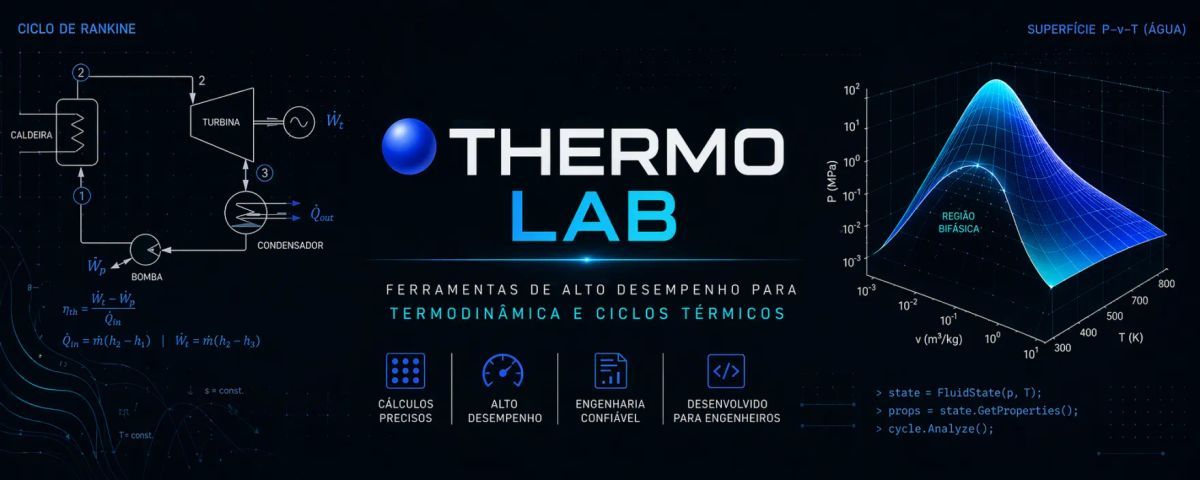
Arvexa ThermoLab v0.2.0-alpha: A Lightweight Tool for Thermodynamic State Tracking
I stumbled across a project called Arvexa ThermoLab built by a chemical engineering student, and it’s worth highlighting; especially if you’ve spent any time dealing with thermodynamic cycles by hand.
The core problem it’s trying to solve is straightforward:
manual thermodynamics work is error-prone, and once you start iterating through cycles like Rankine or Brayton, small mistakes compound quickly. On top of that, sketches and state tracking tend to break down as complexity increases.
ThermoLab approaches this from a precision-first perspective.
What It Actually Does
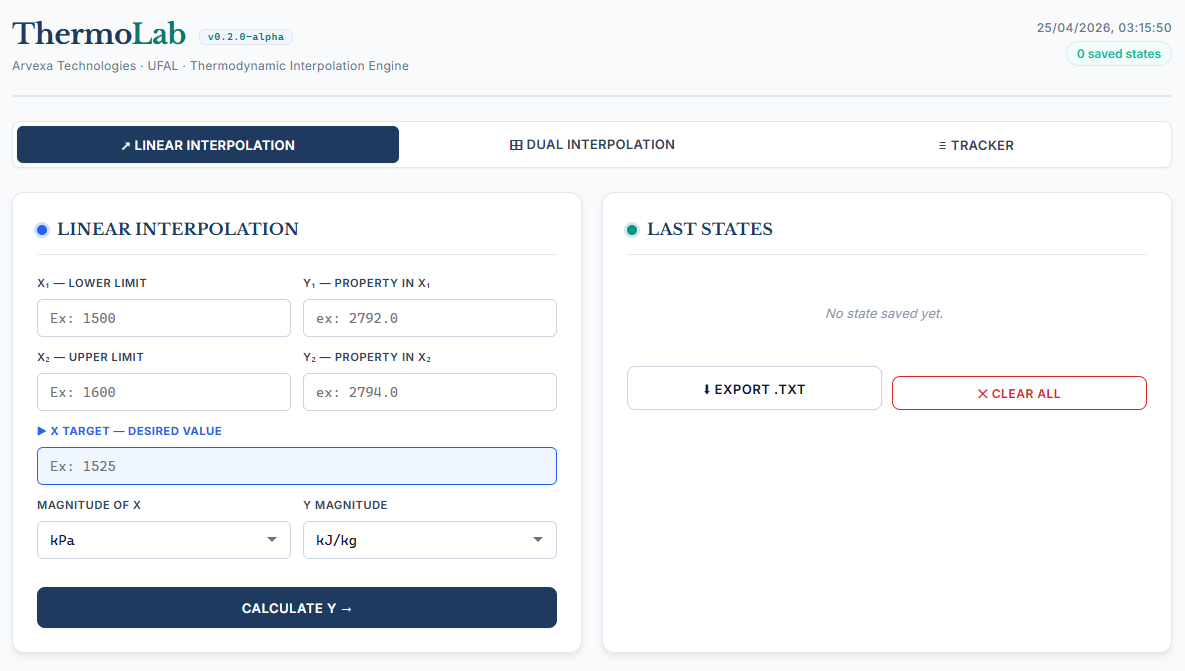
At its core, the tool is focused on state tracking and interpolation accuracy.
It implements a multi-stage interpolation engine designed to handle common edge cases, specifically situations where traditional interpolation can break down (e.g., singularities where two values converge and cause NaN or infinite outputs). That alone addresses a real issue in student and early-stage engineering workflows.
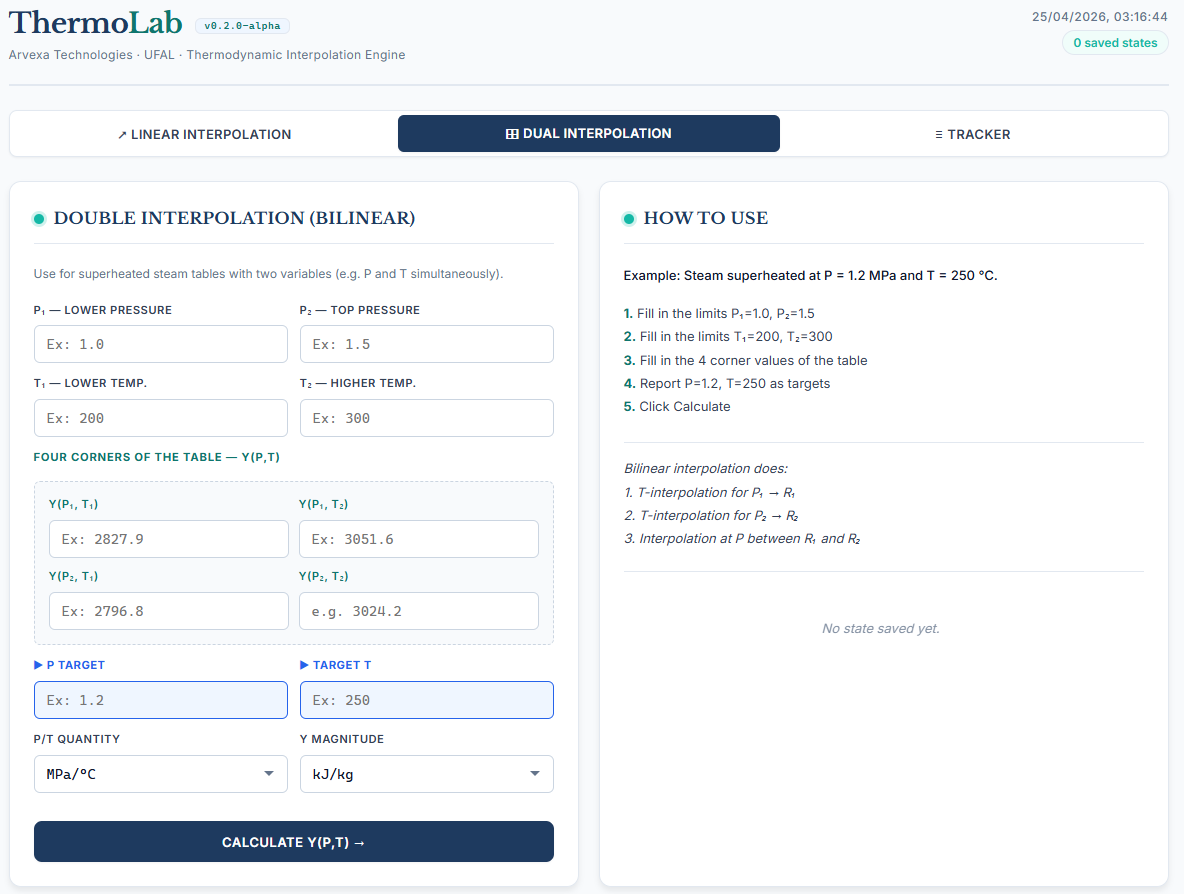
Alongside that, it includes a state management system that tracks thermodynamic variables (pressure, temperature, enthalpy, entropy, internal energy) and persists them in-browser. This is a small detail, but practically useful. Losing state mid-calculation is a common frustration when working across multiple steps.
There’s also a basic export function that generates session reports as structured text files. It’s simple, but it fits the use case: documenting calculations for review or submission.
Technical Approach
The project is built as a lightweight single-page application, with core logic originally written in C# and ported to the web. The frontend is intentionally minimal; vanilla JavaScript with Tailwind, keeping performance tight and avoiding unnecessary overhead.
This is not a feature-heavy simulation platform. It’s closer to a focused calculation environment, optimized for speed and repeatability rather than visual complexity.
The modular design suggests future expansion, particularly with potential integration of external thermodynamic libraries like CoolProp. If that happens, it could significantly increase its utility without changing the core workflow.
Where It Fits
Right now, ThermoLab sits in an interesting niche:
- More structured than spreadsheets
- More transparent than black-box calculators
- Less complex than full simulation software
That makes it particularly relevant for:
- students working through cycle problems
- early-stage engineering workflows
- situations where you need fast iteration without setting up a full model
Limitations
This is an alpha release, and it shows in a few areas:
- UI/UX is functional but still minimal
- Feature scope is narrow by design
- No deep integration with external property databases yet
None of these are dealbreakers, but they are reflections of where the project is in its lifecycle.
Overall Take
ThermoLab is a focused attempt to solve a real, practical problem in thermodynamics: maintaining accuracy and traceability across iterative calculations.
It’s not trying to replace full engineering software, and it doesn’t need to. Its value is in reducing friction in the early and intermediate stages of problem-solving.
If the interpolation engine holds up under stress testing and the developer continues building out integrations, this could turn into a very solid scientific tool.
Links
Tool: https://aad-systems.github.io/thermolab/
Repository: https://github.com/AAD-Systems/thermolab
- Core Logic: C# 12 / .NET 8 (Logic ported to Web)
- Frontend: Vanilla JS (ES6+) + Tailwind CSS
- Typography: Syne & JetBrains Mono (Dev Experience)
- Architecture: Modular design focused on future CoolProp API integration.
Testing and Feedback
The developer is actively looking for technical feedback from the community, particularly around the robustness of the interpolation engine under stress and the usability of the engineering-focused interface.
If you have experience working with thermodynamic cycles, iterative calculations, or engineering tools, this is a good opportunity to put the system through real-world use cases. Edge cases, failure points, and workflow friction are especially valuable at this stage.
Testing the tool directly and reviewing the underlying logic can help validate its accuracy and guide future development!
Features
- Bilinear Interpolation Logic: High-fidelity linear and bilinear interpolation engine (3 stages), handling mathematical singularities (X1 = X2) to prevent
NaN/Infinity. - State Tracker & Persistence: Thermodynamic state management system via
localStorage. Every cycle point (P, T, h, s, u) is indexed and persisted in the browser. - Industrial Export: Session report generation in
.txt(UTF-8 with BOM) for academic auditing and calculation records. - Performance: Ultra-lightweight SPA (Single Page Application) optimized for zero latency in lab environments.
代码与创意共舞
- Code and creativity dance together
Architecting the digital future, one project and video at a time.
-Author of ThermoLab
Disclaimer: Athena Tactical Survival is unaffiliated with ThermoLab. Zero financial incentives, funding, or sponsorships were provided for the preparation of this content.