
Beneficial Nematodes for Pest Control: How They Work, When to Use Them, and What to Expect
Beneficial nematodes hunt and kill soil pests. Learn how they work, when to apply them, and what results to expect in real conditions.

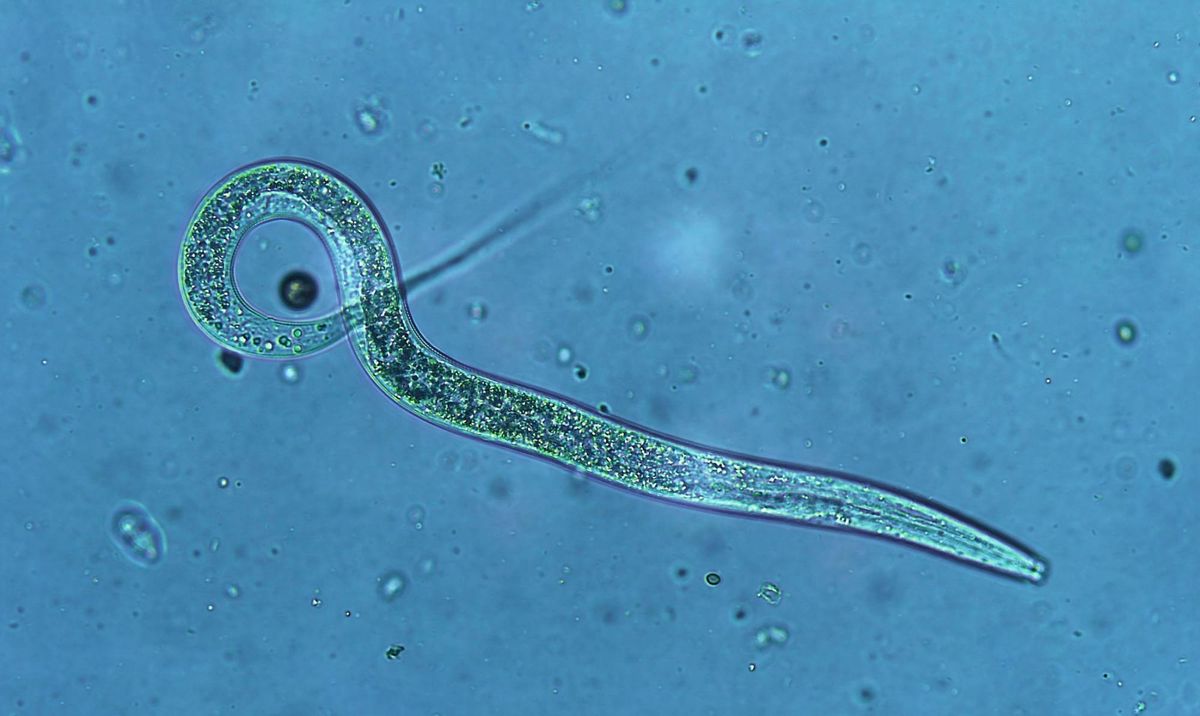
Beneficial Nematodes: Active Biological Pest Control
Beneficial nematodes are microscopic, soil-dwelling roundworms that parasitize insect pests. They represent one of the cleanest tools in the integrated pest management (IPM) toolbox, OMRI-listed, safe around pets and children, and non-destructive to earthworms or pollinators.
Unlike passive biological controls such as Bacillus thuringiensis (Bt), nematodes actively hunt their hosts. This distinction matters in dynamic environments where pest pressure fluctuates, and passive agents may fail to make contact.
How They Eliminate Pests
The infective juvenile (IJ) stage is the active hunting phase.
These juveniles enter insect hosts through natural openings; mouth, spiracles, or anus, or, in some cases, penetrate directly through the cuticle. Once inside, they release symbiotic bacteria:
- Xenorhabdus (associated with Steinernema species)
- Photorhabdus (associated with Heterorhabditis species)
These bacteria rapidly proliferate, causing septicemia and killing the host within approximately 24–48 hours.
After host death, the nematodes feed on the resulting bacterial biomass and liquefied tissue. They reproduce inside the cadaver, completing one or more life cycles before a new generation of infective juveniles emerges to seek additional hosts.
From a systems perspective, this creates a self-propagating control loop under favorable conditions.
The Three Workhorse Species
Most field and commercial applications rely on three primary species, each with distinct behavior and environmental preferences.
Steinernema feltiae (Sf)
A cool-soil specialist, active in the ~50–85°F range.
Best suited for fungus gnats, thrips pupae, and leaf miners.
This is the most reliable option for controlled environments such as greenhouses and microgreen operations, where temperature stability and shallow soil profiles align with its hunting behavior.
Steinernema carpocapsae (Sc)
An ambush predator that remains near the soil surface and waits for passing hosts.
Effective against:
- Surface-dwelling caterpillars
- Cutworms
- Armyworms
- Sod webworms
- Fleas
It delivers rapid knockdown but does not persist well in the soil. Best used as a targeted, short-term intervention rather than a long-term population control strategy.
Heterorhabditis bacteriophora (Hb)
A “cruiser” species that actively moves through soil in search of hosts, particularly at greater depths. Performs best in warmer conditions (~60–90°F+).
Effective against:
- Grubs
- Root weevils
- Japanese beetle larvae
- Billbugs
- Fire ants
This species is notable for its ability to establish and recycle within the soil ecosystem. In environments with persistent pest pressure, Hb can transition from a one-time application into a semi-stable biological control layer.
For regions such as Central Texas, this becomes especially relevant. Fire ant suppression alone can justify baseline deployment, making Hb a strong candidate for foundational land management.
Application Practicalities
Nematode performance is highly dependent on environmental conditions and handling.
- Moisture is critical
Soil must be moist both before and after application. Dry conditions significantly reduce survival and mobility. - UV sensitivity
Ultraviolet light rapidly degrades nematodes. Applications should be done at dusk, dawn, or under heavy cloud cover. - Temperature control
Nematodes should be stored under refrigeration prior to use. Viability declines quickly at room temperature. - Application method
They can be applied through standard sprayers, with constraints:- Use screens no finer than ~50 mesh
- Keep pressure below ~300 psi to avoid mechanical damage
Operationally, nematodes should be treated as a live biological input, not a chemical product. Handling, timing, and environmental alignment determine success more than application rate alone.
 John D
 John D
 John D
Application Rates and Environmental Windows
In practice, nematode performance is dictated by conditions more than dosage. Standard application rates sit around one billion infective juveniles per acre, or roughly ten million per 2,000–3,000 square feet for smaller treatments. These numbers are consistent across most products, but they only matter if the environment supports activity.
Soil temperature is the primary limiting factor. Below roughly 50°F, nematodes become inactive and fail to locate hosts. Above approximately 90°F at soil depth, survival drops and mobility declines. In hot climates, especially in exposed soils, surface conditions can exceed this threshold for extended periods.
Because of this, timing becomes more important than quantity. Spring and fall typically provide the most reliable conditions. In summer, application can still work if done at night with sufficient irrigation to cool and hydrate the soil. The objective is to create a short window where nematodes remain active long enough to find hosts before conditions degrade.
What Success Actually Looks Like
Nematodes do not produce instant, visible results in the way chemical treatments do. There is no immediate “kill signal.” Instead, effectiveness shows up as a gradual reduction in pest pressure over one to two weeks.
In soil pests like grubs or fungus gnat larvae, you’re looking for:
- reduced emergence
- fewer visible larvae over time
- stabilization rather than complete elimination
For something like fire ants, impact is uneven. Some colonies collapse quickly, while others persist and require follow-up applications. The outcome is typically suppression rather than eradication.
This is a biological system, not a binary treatment. Results vary depending on soil moisture, temperature, and how well the nematodes are able to move through the environment.
Where They Work Well (and Where They Don’t)
Nematodes are highly effective in environments where pests spend a significant portion of their lifecycle in the soil. This includes:
- grubs and beetle larvae
- fungus gnat larvae
- root weevils
- certain ant species
They perform especially well in contained or controlled environments (greenhouses, raised beds, irrigated soil systems) where moisture and temperature can be managed.
They are much less effective in dry, compacted, or heavily exposed soils where mobility is limited. Sandy soils tend to allow better movement, while dense clay can restrict it unless moisture levels are maintained.
They do not affect above-ground pests. Anything living on foliage or exposed surfaces requires a different approach entirely.
Behavior in the Soil
Once applied, nematodes disperse through the soil water film. Movement is not random; it’s guided by chemical signals produced by potential hosts. Some species actively move through the soil (“cruisers”), while others remain near the surface and wait for contact (“ambushers”).
This behavior directly impacts results. Cruiser species are better for deeper pests like grubs, while ambush species perform better against surface-level insects.
Their effective range is limited. They do not travel long distances, which is why even coverage matters more than high concentration in a single area.
Persistence and Reapplication
In most environments, nematodes should be treated as a temporary population. They persist as long as:
- moisture is adequate
- hosts are available
- temperatures remain within range
Once any of these conditions fail, populations decline.
Some species can reproduce and maintain presence for multiple cycles, but this is inconsistent and highly dependent on local conditions. In most cases, reapplication is required if ongoing control is needed.
This makes them closer to a seasonal input than a permanent solution.
Non-Target Effects
Nematodes are not perfectly selective. They target insects within a certain size and accessibility range, which means some non-pest organisms may be affected.
In practice, this impact is limited. Most beneficial insects either:
- do not spend significant time in the soil, or
- are outside the effective size range
As a result, ecosystem disruption is minimal compared to chemical treatments, but it is not zero.
Integration Into a Real System
Nematodes work best when they’re not relied on alone.
In a functional setup, they sit alongside:
- moisture management
- soil structure improvement
- crop rotation or planting strategy
- other biological controls
They are particularly useful as a reset mechanism; bringing down pest populations to a manageable level so that other systems can maintain balance.
Trying to use them as a one-time fix usually leads to inconsistent results. Using them as part of a layered system produces much more reliable outcomes.
Where They Fit
Nematodes are not a universal solution. They are a tool with a specific range. They are strong against soil-stage pests, but are dependent on environmental conditions, and limited in persistence. They are most effective when integrated with other methods
When used correctly, they reduce pest pressure without introducing chemical load or long-term residue. When used incorrectly, they fail quietly - no visible effect, no clear signal.

Citations
Ferris, H., & Bongers, T. (2009). Indices developed specifically for analysis of nematode assemblages. In M. J. Wilson & T. Kakouli-Duarte (Eds.), Nematodes as environmental indicators (pp. 124–145). CABI. https://doi.org/10.1079/9781845933852.0124
Ferris, H., Bongers, T., & De Goede, R. G. M. (2001). A framework for soil food web diagnostics: Extension of the nematode faunal analysis concept. Applied Soil Ecology, 18(1), 13–29.
Shapiro-Ilan, D. I., Hazir, S., & Glazer, I. (2017). Basic and applied research: Entomopathogenic nematodes. Biological Control, 38(1), 124–133.
Brenner, S. (1974). The genetics of Caenorhabditis elegans. Genetics, 77(1), 71–94.
Bongers, T., & Ferris, H. (1999). Nematode community structure as a bioindicator in environmental monitoring. Trends in Ecology & Evolution, 14(6), 224–228.