The eVTOL Reckoning of 2026: Joby, Archer, Beta, and the Collapse of Europe's Air Taxi Ambitions
The eVTOL shakeout has arrived. Two certified operators, both Chinese. FAA type certification not before mid-2027. Here's who survives and why.

The eVTOL reckoning of 2026
Joby, Archer, Beta, EHang, and AutoFlight after $13B spent and Lilium scrapped, who holds type certificates, what the FAA SFAR means, and where revenue actually comes from.
The electric vertical takeoff and landing (eVTOL) industry has bifurcated. As of April 2026, exactly two companies hold full type, production, and operating certificates anywhere in the world, both Chinese: EHang for autonomous tourism flights and AutoFlight for cargo. Lilium is being scrapped at Oberpfaffenhofen after a second insolvency in February 2025. Volocopter was rescued by Wanfeng/Diamond and pivoted to ultralights. Supernal paused work after its CEO and CTO departed in September 2025. Joby Aviation flew its first FAA-conforming Type Inspection Authorization aircraft on March 11, 2026, and is positioned to carry its first paying passengers from a four-story Skyports vertiport at Dubai International Airport in 2026, under a six-year RTA exclusivity. The sector has consumed more than $13 billion in equity since 2019, yet US passenger commercial revenue remains effectively zero pending FAA type certification, which industry analysts now expect no earlier than mid-2027.
The near-term story is narrower than the marketing decks suggest. The viable use cases reduce to four: premium airport shuttles in Dubai, New York, and Los Angeles; defense logistics under AFWERX Agility Prime, where Joby, Archer, and Beta have collected over $273 million in awarded ceilings; medical and organ logistics anchored by Beta and United Therapeutics; and short-range cargo to nearshore offshore platforms, already proven by AutoFlight's August 2025 CarryAll flight to a CNOOC platform 150 km off Shenzhen. Almost every other claimed application, from Coast Guard SAR to deepwater crew change to agricultural spraying, runs into hard physics or hard economics. The companies that will survive are those with deep industrial parents (Toyota, Stellantis, Boeing, Embraer, GE Aerospace) and the willingness to accept that the first decade of revenue comes from cargo and military, not air taxis. The broader implication for urban planning, defense logistics, and public infrastructure spending is that eVTOLs will arrive as a premium niche layered atop existing aviation, not as a replacement for ground transport.
Industry landscape: five winners, three walking wounded, and the European collapse
The competitive set has clarified sharply since 2024. Joby Aviation (NYSE: JOBY) is the leader by certification progress, capital, and partnership depth. Joby flew its first FAA-conforming TIA aircraft on March 11, 2026, completed 850-plus test flights in 2025, and holds roughly $2.6 billion in cash after a February 2026 raise. Toyota has invested $894 million in cumulative tranches and is named preferred manufacturing partner for the Dayton, Ohio facility targeting 500 aircraft per year. The Delta partnership locks up the US and UK air-taxi market for five years post launch, while a 6-year exclusivity with Dubai's RTA, an MOU with Saudi GACA, and validation pathways with EASA and Japan provide a multi-front international roadmap. The S4 is a six-rotor tilt-rotor design carrying a pilot plus four passengers approximately 100 to 150 miles at 200 mph cruise.
Archer Aviation (NYSE: ACHR) is the clearest second mover. Archer became the first US eVTOL OEM to have 100% of its 797 Means of Compliance documents accepted by the FAA, completing Phase 3 of certification in Q4 2025, with TIA flying targeted for 2026. Archer's "Midnight" uses 12 propellers (six tilting, six fixed-tilt rear), a deliberate trade that reduces actuator count at the cost of cruise dead-weight. Capital position approaches $2 billion, with Stellantis committing up to roughly $400 million in manufacturing labor and capex through 2030 in exchange for equity and Boeing participating via PIPE. Archer's order book of approximately $6 billion spans United Airlines (100 aircraft), Japan Airlines/Sumitomo's "Soracle" (100 aircraft, $500 million), Kakao Mobility Korea (50, $250 million), and a UAE cornerstone with the Abu Dhabi Investment Office. Archer was named Official Air Taxi Provider of the LA28 Olympics in May 2025 and acquired Hawthorne Airport for $126 million in November 2025 as its Los Angeles hub. An Anduril partnership for a hybrid VTOL military variant rounds out the strategic positioning.
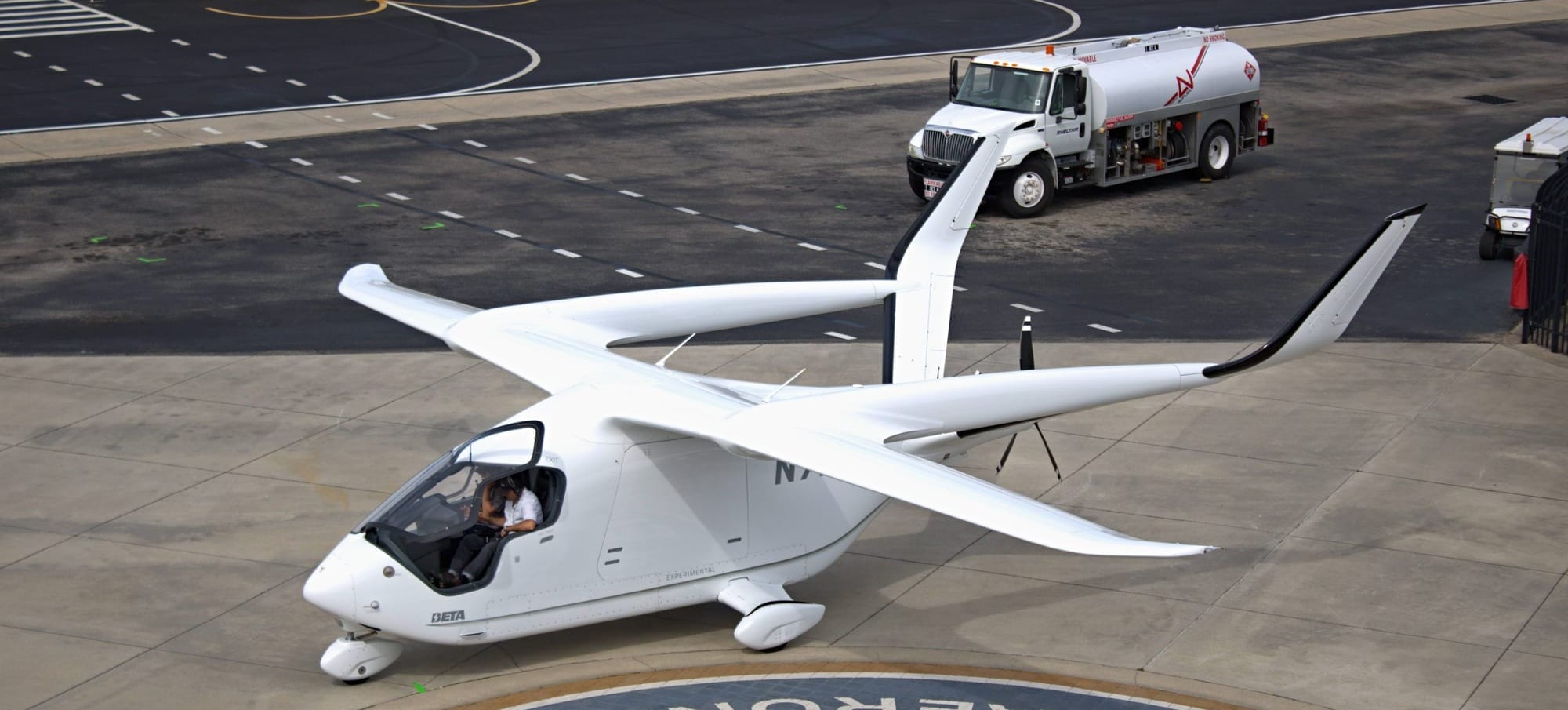
Beta Technologies is the cargo, military, and medical specialist that quietly built the most diversified customer base in the industry. Beta's strategy diverged from peers by certifying the CX300 conventional electric variant first, then the ALIA-250 eVTOL. The CX300 received an FAA Special Airworthiness Certificate in November 2024 and conducted the first US passenger f light by an electric aircraft (Long Island to JFK) in June 2025. Beta delivered the first CX300 to Bristow Norway after a 6,976 km demonstration tour across seven European countries, won the Pulitzer Electric Aircraft Race in October 2025, and conducted Loganair-Royal Mail Orkney trials in March 2026. Capital position exceeds $1 billion, including a Q4 2024 Series C of $318 million led by the Qatar Investment Authority, a $169 million Export-Import Bank loan, and a reported $300 million GE Aerospace investment for a hybrid powertrain on the MV250 military variant. Customer roster includes UPS (10 firm, 150 options), United Therapeutics for organ delivery ($48 million launch contract), Air New Zealand, Bristow, Metro Aviation (20 ALIAs for HEMS), Helijet, Blade, and the US Air Force AFWERX program where Beta was the first eVTOL with USAF airworthiness in 2021. A November 2025 IPO valued the company at roughly $7.4 billion.
EHang (Nasdaq: EH) holds the global certification lead but in a different operational paradigm. The EH216-S is a 16-rotor multicopter for two passengers operating as a fully autonomous tourism platform with a 22-mile range. EHang received the world's first eVTOL type certificate in October 2023, production certificate in April 2024, and on March 28, 2025, the world's first eVTOL Air Operator Certificate, allowing point-to-point human-carrying tourism in defined airspace. The Yunfu factory is doubling to 1,000 units per year, supplemented by a Hefei JV with JAC Motors. Q1 2025 revenue was modest (RMB 26.1 million, roughly $3.6 million), but the company has logged 60,000-plus cumulative safe flights and operates commercial service in Guangzhou, Hefei, Shanghai, Shenzhen, and Wenzhou. The caveat: tourism in isolated airspace is not the same business as urban air taxi, and EHang's commercial scaling outside this niche remains unproven.
AutoFlight is EHang's commercial twin in the cargo segment. The CarryAll V2000CG, an uncrewed lift-and-cruise eVTOL above one ton MTOW, achieved full triple certification under CAAC (TC March 2024, PC December 2024, AC July 2025), the first eVTOL above one ton anywhere with all three. The August 3, 2025 CNOOC operational flight, 150 km from Shenzhen to the Huizhou 19-3 platform in 58 minutes versus 10 hours by sea, is the most operationally significant cargo eVTOL milestone to date. CITIC Offshore Helicopter and CITIC Financial Leasing ordered 100 aircraft in May 2025. The piloted Prosperity I and a five-tonne hybrid Matrix concept (1,500 km range claimed) extend the portfolio.
Wisk Aero, wholly owned by Boeing, is the autonomy-only outlier. The Generation 6 aircraft, a 12-propeller lift-and-cruise design with no flight controls and ground-based supervision at a 1:3 supervisor-to-aircraft ratio, conducted its first hover on December 16, 2025 at Hollister, California. Wisk targets commercial launch by 2030 and committed to the eIPP in December 2025 with proposals for Houston, Florida, New York, and California. Boeing has invested at least $1 billion. The June 2025 acquisition of SkyGrid adds airspace management capability. Wisk's straight-to-autonomy bet is the highest-risk, highest-reward thesis in the sector.
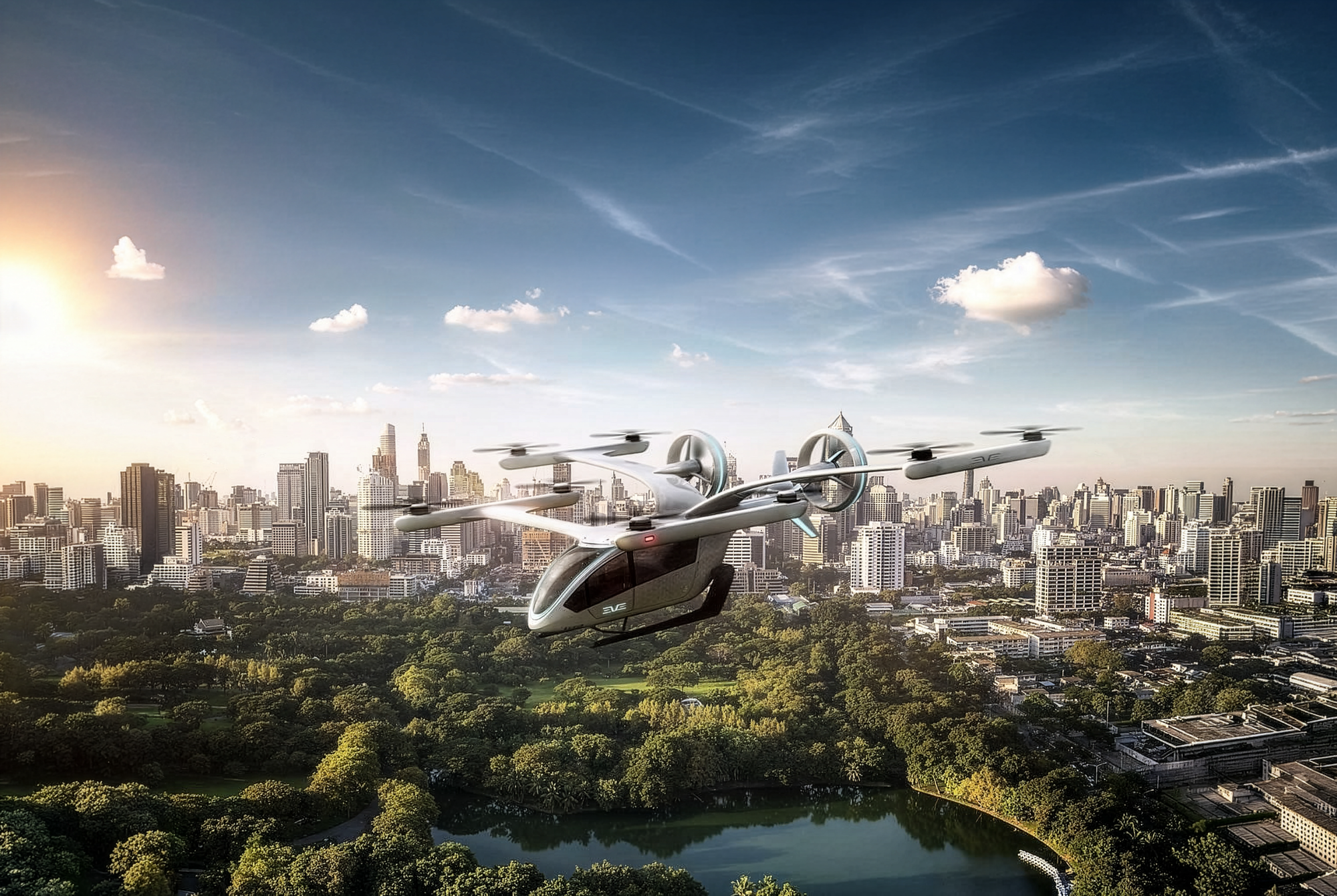
Eve Air Mobility (NYSE: EVEX), an Embraer subsidiary, conducted its maiden flight in December 2025 at Gavião Peixoto and held 2,800 LOIs worth approximately $14 billion at 2025 list prices. Of these, only 100 are firm. Eve's lift-and-cruise design uses Beta-supplied electric motors under a December 2025 contract, an unusual industry cross-pollination. Type certification is targeted for late 2027 with ANAC as primary regulator. Capital exceeds $586 million plus a recent $230 million raise. Vertical Aerospace (NYSE: EVTL) survived 2024-2025 only via Mudrick Capital's debt-to-equity conversion that gave Mudrick approximately 70% ownership; founder Stephen Fitzpatrick resigned in January 2025. A late-2025 nonbinding term sheet with Mudrick and Yorkville provides up to $850 million through 2027. Certification slipped from 2026 to 2028, with cash break-even pushed to 2030. Vertical completed its first piloted transition flight in April 2026.
The European collapse is the central structural fact of 2024-2025. Lilium filed insolvency in October 2024 after the German federal parliament's budget committee, with Greens opposing, blocked a €50 million KfW loan guarantee, triggering withdrawal of matching Bavarian state guarantees. A December 2024 acquisition by MUC/Mobile Uplift Corporation collapsed when the promised €150 million from Slovak entrepreneur Marian Boček never materialized; Lilium f iled a second insolvency in February 2025, laid off roughly 1,000 employees, and as of April 2026 is scrapping prototypes. Approximately $1.5 billion in equity is a total loss. Volocopter filed insolvency on December 26, 2024 after running out of cash and missing the cancelled Paris Olympics demonstration; it was acquired in March 2025 by Wanfeng Auto Wheel via Diamond Aircraft for roughly €10 million, having previously raised over €600 million. Volocopter's April 2026 unveiling of the VoloXPro ultralight at Aero Friedrichshafen, a 600 kg two-seater priced at €490,000, represents a wholesale retreat from urban air taxi ambitions. Supernal, Overair, and Jaunt are functionally dormant or pivoted to uncrewed cargo. Rolls-Royce closed its AAM division in late 2024; Airbus Helicopters paused the CityAirbus NextGen demonstrator in early 2025, citing battery immaturity.
The lesson is structural. Pure-play startups without deep industrial parents could not survive the gap between certification cost and certification timeline. The survivors are paired with Toyota, Stellantis, Boeing, Embraer, GE Aerospace, the Qatar Investment Authority, or the US Department of Defense. China's CAAC moved faster than Western regulators by certifying autonomous and cargo aircraft first under a separate framework, giving EHang and AutoFlight a multi-year operational head start.
Engineering: battery cycle life is the binding constraint, not energy density
The dominant binding constraint on every eVTOL program is battery specific energy at the pack level under flight-relevant high-C-rate power profiles. Mainstream aviation-grade lithium-ion delivers 250 to 300 Wh/kg at the cell level today, with pack-level energy density 20 to 30% lower (typically 200 to 230 Wh/kg) due to BMS, thermal management, structural support, and cell balancing. Joby has stated its automotive-derived cells achieve nearly 300 Wh/kg. The ACS Energy Letters benchmark study by Vishwanathan and colleagues at Carnegie Mellon concluded that Joby S4, Beta ALIA-250, and Lilium-class vehicles need minimum cell-level specific energy of 300 to 400 Wh/kg with sustained specific power of 1 to 3 kW/kg and 7 to 15C peak pulses for one to two minutes during takeoff and climb.
Silicon-anode cells from Amprius are commercially shipping at 400 to 450 Wh/kg with third party validation up to 500 Wh/kg, and SiCore variants rated for 1,300 full DoD cycles and zero to 80% charge in under six minutes. Lithium-metal and solid-state chemistries (NASA's SABERS program among them) demonstrate paths to over 500 Wh/kg with inherent fire safety advantages, but neither is aviation-ready. The under-appreciated risk is cycle life under flight profiles: ACS Energy Letters work shows that 15C takeoff pulses cause progressive damage even when low-rate performance recovers, meaning takeoff dominates degradation. With the 10 to 15 flights per day operators target for unit economics, packs maintaining 80% capacity over 1,000 to 2,000 cycles imply only two to four years of service life. Battery replacement at $150 to $200/kWh translates to $40,000 to $65,000 per pack as a recurring opex line item that few business cases fully capture.
Safety certification compounds the engineering challenge. RTCA DO-311A (the FAA reference standard via TSO-C179b) requires thermal runaway containment, short-circuit protection, 20g sawtooth crash safety, and battery-level Fault Tree Analysis to SAE ARP 4761, with critical control electronics designed to DO-254 DAL A and DO-178C DAL A. EASA's June 2023 propulsion-battery thermal-runaway MoC offers two compliance paths, with Battery Thermal Runaway Containment for Continued Safe Flight and Landing recommended for the Enhanced category covering operations over congested areas. Internal cell shorts from latent manufacturing defects "cannot be completely avoided" per EASA, mandating propagation containment, gas venting, and fire-resistant structure, all of which add parasitic mass and further reduce effective pack energy density. Volocopter's choice of battery swap in five to eight minutes sidesteps the cycle-life penalty, while Beta's 350 kW Charge Cube and Joby's 1.2 MW prototype Global Electric Aviation Charging System (GEACS) push for fast-charge solutions that accept some degradation.
Motor power density is no longer a binding constraint. Joby's six-motor architecture uses direct drive radial-flux outer-rotor permanent-magnet motors with dual independent windings delivering 236 kW per motor at approximately 8.4 kW/kg including inverter. The dual winding effectively makes each motor "two motors in one stator," critical for the 10⁻⁹ catastrophic failure rate required by EASA Enhanced and FAA powered-lift criteria, equivalent to CS-25/CS-29 transport airliners. Archer's 12 motors use flat-wire windings, Halbach-array PM rotors, and integrated oil cooling at roughly 5 kW/kg per unit. The architectural difference is real: Joby's six large dual-wound motors maximize power density and minimize parts count, while Archer's 12 single-wound motors give finer-grained redundancy where loss of one or two motors has limited thrust impact. Both must demonstrate the same 10⁻⁹ catastrophic threshold via different fault trees. SiC MOSFETs now achieve 99% inverter efficiency at 400 to 850 V DC bus voltages, with Paschen's law altitude derating and DC-DC converter gravimetric power density (currently 20 kW/kg vs. an 80 kW/kg target) being the remaining electronics bottlenecks.
The airframe configuration choice is essentially picking which mission segment to optimize, since hover and cruise efficiency trade off. Multirotor designs (Volocopter VoloCity, EHang EH216-S) have low disk loading around 25 to 35 kg/m² with hover figures of merit above 0.7, but lack wings, so the entire weight remains rotor-supported in cruise, capping practical range at 22 to 35 km. Lift-and-cruise designs (Beta ALIA, Wisk Gen 6) achieve 90 to 250 mile range by using dedicated cruise propulsion and a lifting wing, at the cost of dead-weight in both regimes. Tilt rotor designs (Joby S4, Archer Midnight) achieve the best overall efficiency by making each propulsor work in both regimes, but the tilt actuators must achieve DAL-A reliability without service-experience baseline, an unprecedented certification problem. Tilt-duct designs (Lilium's now-defunct 30-ducted-fan layout) have the highest cruise efficiency at speed but disk loading above 250 kg/m² destroys hover efficiency, requiring 2 to 3 times the hover power of a tilt rotor, plausibly contributing to Lilium's commercial failure. MIT's 2021 ICAT modeling found tilt rotor at FoM 0.64 in hover with the best hybrid-electric outcomes when batteries are sized by power rather than energy
Energy efficiency per passenger-mile, modeled at design occupancy and 150 mph cruise, ranks Joby S4 at 156 Wh/pass-mi, Beta ALIA-250 at 161 Wh/pass-mi, and Lilium at 218 Wh/pass-mi, compared to a US average EV at 223 Wh/pass-mi, an ICEV at roughly 1,000 Wh/pass-mi, a Robinson R44 helicopter at 2,700 Wh/pass-mi, and an R66 at 4,200 Wh/pass-mi. Fully loaded f ixed-wing eVTOLs beat passenger-loaded EVs on Wh/pass-mi for trips above 70 to 100 miles and are roughly an order of magnitude more efficient than helicopters. The caveat is load factor: real early operations are likely to run two to three passengers, not four to five, pushing energy intensity closer to ICEV values. The energy-efficiency case requires both high load factors and long-leg utilization that the air-taxi business model may not naturally produce.
Noise is the area where eVTOLs achieve genuine advantage. NASA's Mobile Acoustics Facility measured Joby S4 at 45.2 dBA at 500 m altitude in 100 kt cruise, between a refrigerator and moderate rainfall, and under 65 dBA at 100 m during takeoff and landing, comparable to normal conversation. Helicopter equivalents typically exceed 80 dBA at 100 m, making eVTOLs 15+ dB quieter, perceptually 30 times less loud. The acoustic levers are reduced tip Mach number (broadband noise scales with M_tip⁵-⁶, tonal with M_tip⁴), higher blade count (Joby uses 5), larger diameter slow-turning props enabled by high-torque motors, and intentional RPM phasing to disrupt coherent tonal addition. There is no eVTOL-specific FAA Part 36 noise standard yet; the July 2025 Powered-Lift AC commits to case-by-case examination and possible "rules of particular applicability."
Certification has crystallized in the past 18 months. The FAA Powered-Lift SFAR (final rule November 21, 2024, the first new civil aircraft category since helicopters in the 1940s) establishes Part 194, permits single-control trainer aircraft with full-flight simulator plus solo flight (a critical change for Joby and Archer), adopts performance-based operational rules, and runs for ten years to gather data. Type certification proceeds under 14 CFR 21.17(b) Special Class, with AC 21.17-4 (final July 18, 2025) replacing prescriptive minimum-speed requirements with flight profiles. EASA's SC-VTOL framework applies a stricter standard: Enhanced category requires no single failure to cause catastrophic outcome at 10⁻⁹ per flight hour and Continued Safe Flight and Landing (CSFL) capability after the catastrophic event, including 1.0 kg bird-strike survivability up to 8,000 ft. EASA also still requires dual flight controls, while FAA permits single-stick training, a meaningful structural advantage for US OEMs. A five-nation harmonization agreement (US, Canada, UK, Australia, New Zealand) signed in June 2025 enables shared review.
Autonomy integration remains regulatorily blocked for passenger operations. All FAA TC applicants except Wisk launch piloted, deferring detect-and-avoid certification and using existing voice ATC. Wisk's Gen 6 architecture uses logic-driven procedural algorithms explicitly avoiding general-purpose AI/ML to enable deterministic certification, with multi vehicle ground supervisors and a target catastrophic failure rate of 10⁻⁹. The fundamental blocker is that no certification basis explicitly addresses passenger transport without an onboard pilot; Wisk's program will require novel airworthiness criteria via 21.17(b). The eVTOL Integration Pilot Program (eIPP), established by Presidential Executive Order in September 2025, is the structured pathway for BVLOS and autonomous operations data collection over three years.

Commercialization: vertiports, megawatt charging, and the unit-economics question
Vertiport infrastructure is the second binding constraint after batteries. FAA Engineering Brief 105A (finalized December 27, 2024) reclassifies vertiports as a heliport variant with distinct geometry, introducing Rotor Diameter (RD) as a TLOF/FATO sizing metric distinct from full controlling dimension D, requiring 8:1 horizontal-to-vertical approach gradient, and adding a Downwash/Outwash Caution Area where research found rotorwash velocities exceeding 34.5 mph at 126 ft from TLOF center. EB 105A is non-binding guidance, leaving zoning, environmental, building, and fire-code authority to states and localities, including jurisdictions like New York City that banned rooftop heliports after the 1977 Pan Am crash.
Power requirements are the under-appreciated infrastructure problem. NREL's 2024 FAA commissioned study found average vertiports need at least 1 MW continuous charging capacity (roughly 800 homes), busy multi-pad sites could draw 5 MW, and a 12-simultaneous movement vertiport could spike above 13 MW, into data-center territory. A 100-flight-per-day single site needs 40 to 60 MWh/day, equivalent to 30,000 home-equivalent loads. All candidate sites require utility upgrades; common mitigations include 1 to 5 MWh on-site battery storage, solar PV, and demand-charge management algorithms that can otherwise double effective energy cost. Lilium had been co-developing a 1 MW Megawatt Charging System with ABB before its collapse; Joby's GEACS at 1.2 MW prototype is proprietary, raising interoperability concerns that Beta-Archer's late-2024 Charge Cube interoperability deal began to address. Vertiport capex ranges from $1 to 2 million for FBO-charging retrofits, $3 to 7 million for standard mid-tier sites (Illinois Tech estimates $6 to 7 million per site), and $10 to 15 million for flagship hubs like Skyports' four-floor 3,100 m² Dubai DXV vertiport, opened April 17, 2026 with 170,000 passenger and 42,000 movement annual capacity.
Major vertiport developers consolidated in 2025. Atlantic Aviation acquired Ferrovial Vertiports in January 2025, gaining its 25-site UK plan and 10-plus Florida sites and adding eVTOL readiness to over 100 existing FBOs. Skyports Infrastructure operates DXV, took over the Downtown Manhattan Heliport in early 2025, and runs the Bicester Motion UK testbed. UrbanV signed a JV with Signature Aviation in June 2025 for FL/NY/CA/TX, plus the Rome Fiumicino testbed and Saudi partnerships. Joby announced 25 vertiports with Metropolis Technologies in December 2025, leveraging parking-garage sites. As of mid-2025, industry trackers count 1,504 vertiports planned globally, 156 operational, and 350 under construction.
The unit economics case rests on aggressive utilization and pricing assumptions that may not hold. Joby's stated target is $3 per passenger-seat mile by 2026 at scale, with net revenue per aircraft of $2.2 million per year, $1 million in earnings, and a 1.3-year payback on a 10-year service life, all premised on 2,500 flight hours per year per aircraft. Volocopter targeted 3,000. Charter helicopters typically achieve 300 to 500 hours per year. Aviation Week's analysis of a Joby midtown-JFK 13-mile flight shows direct operating cost of approximately $430 per flight, only a 14% reduction versus helicopter equivalent, modest rather than revolutionary. Pilot wages dominate direct operating cost at 30 to 40%, since one pilot serves four passengers (twice the seat-density penalty of an A320). Battery amortization adds another major line item; insurance is currently priced as experimental at 10 to 20% of DOC. NASA and industry pricing surveys converge on a near-term reality of $5 to $8 per passenger-mile, premium-black-car comparable, not the $3 rideshare aspiration.
Market size forecasts diverge by an order of magnitude. Morgan Stanley's 2018-2020 Blue Paper projected a $1.5 trillion TAM by 2040 base case; the 2021/2023 revision lowered the 2040 base to $1 trillion while raising 2050 to $9 trillion, reflecting "greater margin of safety given the certification landscape." McKinsey notes eVTOL funding halved in 2023 versus 2022, and as of 2024 analysis, five of the public Western eVTOL companies had less than one to three years of cash runway, a forecast that subsequently materialized in Lilium and Volocopter. The FAA Aerospace Forecast FY2024-2044 is far more conservative, projecting AAM/UAM revenues of $150 million in 2025-2026 growing to $2.7 billion by 2030. Bain forecasts 12,000 aircraft globally by 2035 and 45,000 by 2040; Aviation Week sees 1,000 by 2030 and 10,000 by 2040. The divergence reflects different definitions (UAM only versus AAM including cargo and regional), certification timing assumptions, utilization assumptions, and consumer adoption curves.
Bottlenecks beyond batteries and vertiports include pilot supply (KPMG estimates 19,000 eVTOL pilots needed by 2030 against a backdrop of 300,000 new pilots needed globally per CAE), insurance and liability frameworks where there is no specific federal AAM regime, and capital intensity demonstrated by Lilium's and Volocopter's collapses. The US-China divergence is structural: Chinese firms benefit from CAAC's "low-altitude economy" national strategy and state-aligned investors; US firms benefit from DoD Agility Prime contracts and deep capital markets; European firms had neither and consumed over €2 billion with no certified product.

Use cases: a sharply narrower opportunity than the marketing suggests
Urban air mobility is the design center, but only for premium
Airport shuttles are the genuine first commercial application. Joby-Delta targets JFK Manhattan in roughly seven minutes versus 50 to 75 by car, and LAX-downtown LA in eight minutes. Joby acquired Blade Air Mobility's passenger business in 2025, inheriting 90,000 annual riders and three Manhattan heliport lounges. Joby flew the first FAA eIPP point-to-point eVTOL flights in NYC in April 2026, operating from JFK to Downtown Skyport, West 30th, and East 34th heliports. Archer-United announced a nine-node NYC network in April 2025 spanning the three major airports, three Manhattan heliports, and Westchester, Teterboro, and Republic, targeting 2026 launch. Archer's LA28 selection and the $126 million Hawthorne Airport acquisition in November 2025 anchor Los Angeles ambitions. Joby in Dubai has the most concrete launch path: 6-year RTA exclusivity, the DXV vertiport completing Q1 2026, 21 plus piloted test flights in 110°F heat in summer 2025, the first UAE point-to-point flight on November 9, 2025, and Uber app integration confirmed in April 2026. Tickets are likely to price at $200 to $300 for premium routes, comparable to existing Blade helicopter shuttles, not yet to rideshare. Time horizon: 1 to 3 years for limited service, 5 to 10 years for network scale. Skeptical observers including Aviation Week and Flying Magazine doubt the LA28 Olympics will see meaningful operations rather than demonstration flights.
Last-mile cargo and medical logistics are commercially live now. Beta-UPS holds 10 firm and up to 150 option ALIA aircraft and Worldport charging integration, with eIPP cargo selections in Utah, Florida, and North Carolina. Beta-United Therapeutics is the founding eVTOL mission for organ transport, with the ALIA originally designed around it. Loganair-Royal Mail trialed CX300 service to Orkney in March 2026, and Air New Zealand ordered up to 23 CX300s. AutoFlight CarryAll is operationally certified in China and proven on offshore cargo to China National Offshore Oil Corporation (中国海洋石油集团有限公司). Medical missions through Metro Aviation's 20-aircraft ALIA order target inter-hospital transfers and organ delivery first, with HEMS scene response further out due to IFR/icing certification gaps. Time horizon: 1 to 3 years for niche cargo and organ logistics; 3 to 7 years for routine inter-hospital HEMS; longer for scene work.
Rural connectivity works for eCTOL, less for eVTOL, and not for agriculture
The Beta CX300 conventional electric variant is more relevant than eVTOL for rural Scandinavian and island routes. Bristow Norway completed a six-month Stavanger-Bergen f light test campaign with 100-plus cargo flights ending January 2026, the first large-scale international Beta deployment. The CX300's roughly 250 nautical mile range is reasonable for sub regional links replacing thin Cessna Caravan and Twin Otter routes. Vertical Aerospace's 50 firm plus 50 option Bristow VX4 order targets UK service from London Q1 2029.
Agricultural applications are a poor fit and should not be expected to scale. Crop spraying is dominated by DJI Agras T40/T50 and XAG drones at 50 to 100 lb payload and $20,000 to $50,000 per unit, properly sized for low-altitude swath work. A 5,000 lb eVTOL costing $1 to 5 million is grossly oversized, generates excessive rotor wash, and lacks spray boom geometry. Indigenous and Arctic remote-community connectivity is conceptually compelling given $10 to $15 per gallon avgas in remote Alaska, but no firm pilot programs exist as of April 2026 outside the Loganair-Orkney trial. Cold-soak battery performance, float and ski configuration, and remote-site charging logistics remain unproven

Remote and austere environments are dominated by defense, not commercial
The single strongest near-term revenue use case is defense. AFWERX Agility Prime has awarded ceiling values of up to $131 million to Joby, $142 million to Archer, and substantial contracts to Beta. Joby delivered the first eVTOL to Edwards AFB in September 2023, six months early, and a second to MacDill AFB. The Joby S4-T hybrid with L3Harris flew November 7, 2025, targeting the US Army Group 4+ S/VTOL UAS competition with 5 to 10+ hour endurance. Archer delivered the first Midnight to USAF Salinas and licensed its powertrain to Anduril's "Omen" autonomous VTOL with EDGE Group. Beta is the first eVTOL with USAF manned airworthiness, with Army crewed flights and 2024 Air National Guard cargo and medevac exercises. The use cases are personnel movement, casualty evacuation, contested logistics, special operations infiltration (low noise advantage), and intra-theater liaison. Military procurement does not require strict commercial unit economics, making this the only segment where current eVTOL economics are viable today. Disaster response and FEMA missions are theoretically compelling but face the first 72 hours grid-down problem: post-hurricane charging requires diesel-generator-fed Charge Cubes and a logistical chain that does not yet exist. Infrastructure inspection at the asset level remains a small-drone domain (DJI M350, Skydio); eVTOL relevance is only for personnel transport to inspection sites, particularly offshore wind technician access.
Maritime applications: nearshore cargo yes, deepwater crew change no, SAR not at all
Bristow's diversified eVTOL portfolio (Beta firm 5 plus 50 option, Vertical 50 firm plus 50 option, Eve up to 100 MoU, plus Electra eSTOL and others) is a deliberate hedge by the world's largest VTOL operator that does not yet know which architecture wins. Offshore platform deepwater crew transport will not be replaced by current eVTOLs: Sikorsky S-92 carries 19 passengers 450 nautical miles (nm); ALIA carries 5 passengers 250 nm. Even Brazilian pre-salt at 150 to 300 nm is out of reach with reserves. Nearshore platforms under 80 nm and shore-base shuttling are feasible, and AutoFlight has already demonstrated cargo runs operationally. Time horizon: 2 to 4 years for nearshore and cargo niches; 10+ years or never for full S-92 replacement.
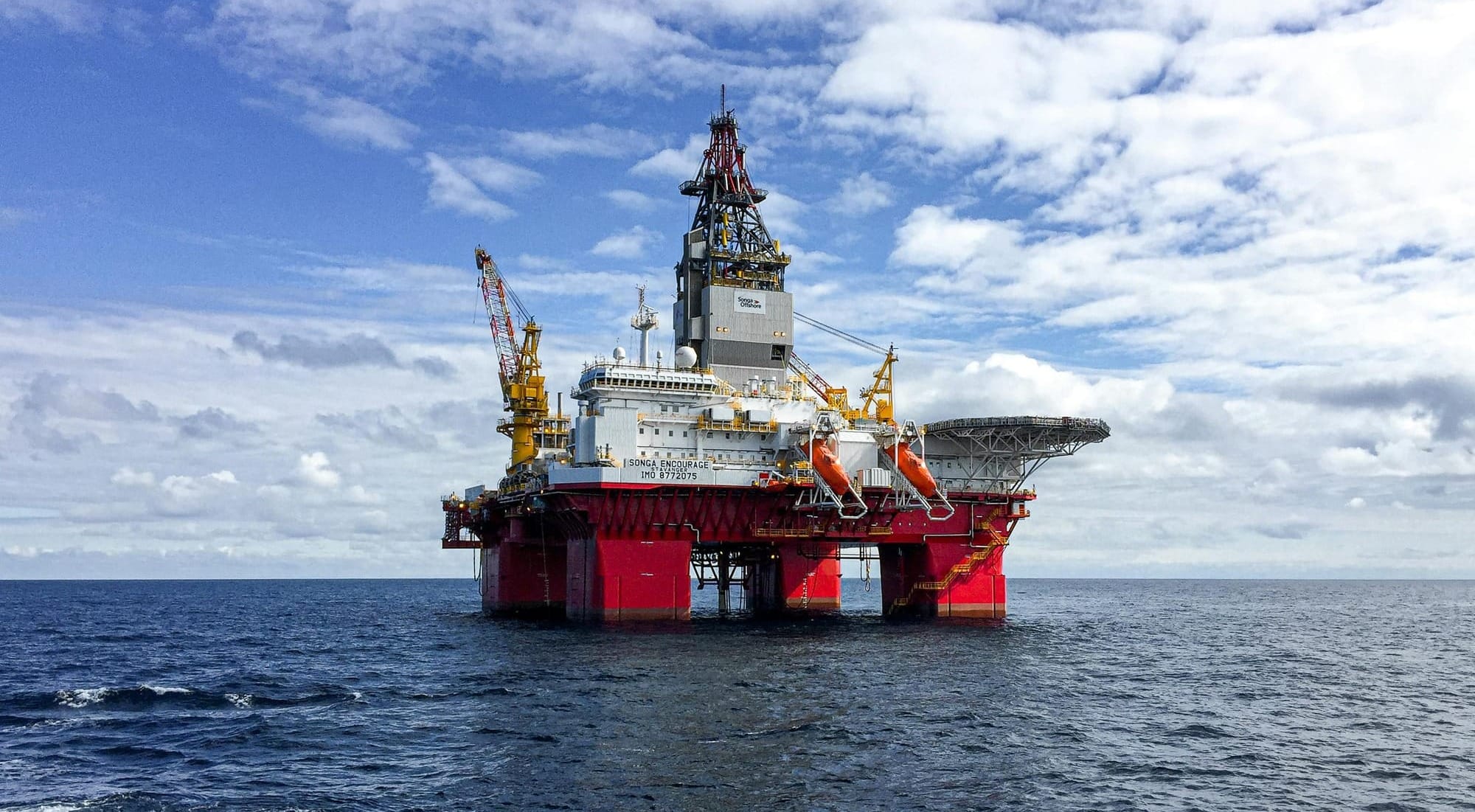

Marine pilot transfer is theoretically the strongest unproven fit: 5 to 30 nm missions, high frequency, and current pilot launch boat or H145 helicopter winching is slow and dangerous in heavy seas. No firm program exists as of April 2026. Coast Guard SAR is the worst fit: hover endurance for hoisting and rescue swimmer deployment is power-intensive and an order of magnitude shorter on electric propulsion than turbine helicopter, and survivor payload growth makes hybrid variants marginal. The MH-60T Jayhawk is already optimized for a mission electric eVTOLs cannot perform. Naval shipboard operations face saltwater corrosion, deck handling in seaway, folding-rotor storage, and four-to-six-hour ASW endurance requirements that are physically impossible on current batteries. NAVAIR is procuring purpose-built unmanned VTOL (MQ-8C Fire Scout, MQ-25) rather than commercial eVTOL adaptations.
Strategic implications and the next five years
Three claims should structure executive thinking about eVTOLs.
First, the next five years of the industry are about Dubai, defense, and cargo, not US air taxi at scale. Joby's likely first paying passengers will fly in Dubai in 2026 under UAE certification leveraging FAA-validated data, not in New York or Los Angeles. The AFWERX program has paid out the largest checks the industry has received; Beta's IPO valuation and customer mix prove the cargo-first thesis. Investors and corporate strategists evaluating eVTOL exposure should weight Dubai operations, AFWERX progression, and organ/medical logistics far more heavily than US passenger network buildouts that depend on FAA TC unlikely before mid-2027 and on vertiport infrastructure that NYC, LA, and other cities have barely begun to permit.
Second, the long-term implications for urban planning, defense logistics, and infrastructure investment are real but layered, not transformative. eVTOLs will arrive as a premium niche above existing aviation rather than as a ground-transport replacement. Urban planning implications include vertiport siting (zoning will be the binding political constraint, not technology), megawatt-class grid upgrades at FBOs and downtown sites, and noise tolerance at 65 dBA being meaningfully different from helicopters at 80+ dBA but still not silent. Defense implications are that hybrid-electric VTOL at the 5- to 10-hour endurance class will plausibly enter service for personnel movement and contested logistics in the late 2020s, with autonomy following. Public infrastructure investment should focus on charging interoperability standards (CCS, MCS) before vertiport networks lock into proprietary systems like Joby's GEACS.
Third, the survivors will be those with industrial parents, government anchor customers, and a willingness to accept that revenue precedes air taxi. Joby has Toyota, Delta, RTA, and AFWERX. Archer has Stellantis, United, the Abu Dhabi Investment Office, and AFWERX. Beta has UPS, GE Aerospace, Qatar Investment Authority, the US Air Force, Bristow, and Air New Zealand. EHang and AutoFlight have CAAC and Chinese state alignment. Wisk has Boeing. Eve has Embraer. The companies without these anchors (Lilium, Volocopter, Overair, Supernal, and to a lesser extent Vertical Aerospace) have either failed, been absorbed, or are surviving on emergency capital structures with founders displaced. The pattern will likely continue: a second consolidation wave is plausible by 2027-2028 as TIA flying reveals which of Joby and Archer hits true commercial readiness first and as Eve's customer LOI book converts (or fails to convert) to firm orders.
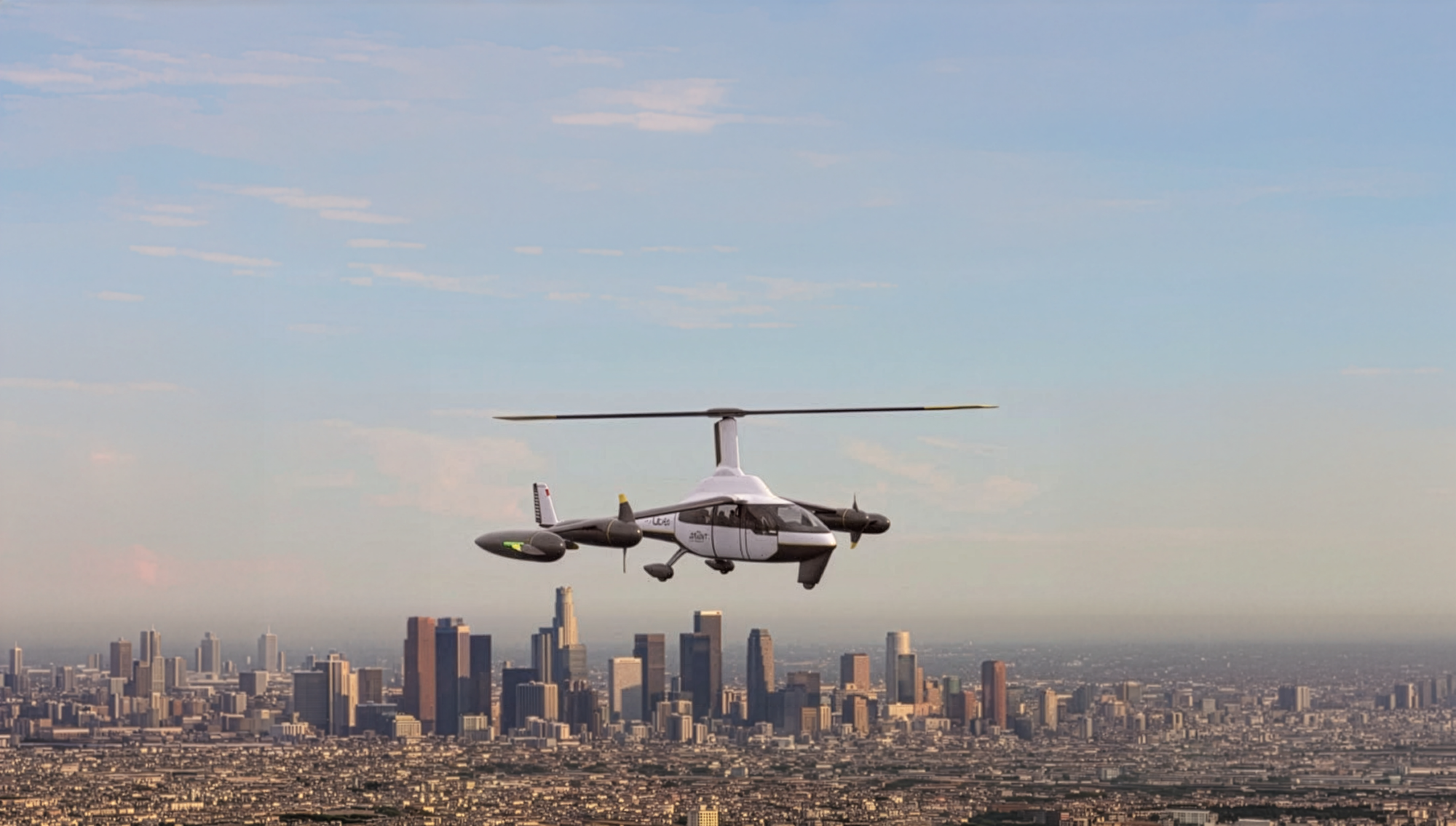
The most important insight is that eVTOLs are not the rideshare disruption their early marketing promised, but they are a real new aircraft category, the first since helicopters in the 1940s, with genuine engineering merit on noise (15+ dB quieter than rotorcraft), efficiency (an order of magnitude better Wh/pass-mi than helicopters at design load), and operating cost (a meaningful but not revolutionary improvement). For senior decision-makers in aerospace, defense, infrastructure, and urban policy, the 2026-to-2030 window is the critical period when the genuine niches (Dubai shuttles, AFWERX logistics, organ transport, nearshore cargo) will reveal whether the unit economics scale beyond the premium segment, and whether the certification pace and capital discipline of the surviving five or six developers can sustain the transition from heavily subsidized experimentation to self-funded commercial aviation.
 John D
 John D
 John D
 John D
 John D
 John D
Citations
AutoFlight. (2026). AutoFlight achieves aviation milestone with world’s first 2-ton eVTOL aircraft. https://www.autoflight.com/en/news/autoflight-achieves-aviation-milestone-with-worlds-first-2-ton-evtol-o/
BloombergNEF. (2023). Manhattan to JFK in 7 minutes: Affordable electric air taxi potential. https://about.bnef.com/insights/clean-transport/manhattan-to-jfk-in-7-minutes-in-affordable-electric-air-taxi/
Bristow Group. (2023). Bristow signs order of up to 55 Beta Technologies ALIA aircraft. https://www.bristowgroup.com/news-media/press-releases/detail/517/bristow-signs-order-of-up-to-55-beta-technologies-alia-250
Business Wire. (2023). Joby Aviation to deliver aircraft to Edwards Air Force Base under DoD contract. https://www.businesswire.com/news/home/20230425005486/en/Joby-Aviation-to-Deliver-Aircraft-to-Edwards-Air-Force-Base-as-Part-of-Department-of-Defense-Contract-Valued-up-to-%24131-Million
EHang. (2024). EHang company news release. https://www.ehang.com/news/990.html
EVTOL Travel. (n.d.). eVTOL battery technology overview. https://evtol.travel/evtol-battery-technology
Federal Aviation Administration / Holland & Knight. (2024). FAA clears the runway for advanced air mobility. https://www.hklaw.com/en/insights/publications/2024/10/faa-clears-the-runway-for-the-future-of-advanced-air-mobility-travel
FlightGlobal. (2026). Lilium jet program ends as prototypes fail to sell. https://www.flightglobal.com/aerospace/2026/04/lilium-jets-journey-ends-on-scrapheap-as-prototypes-fail-to-sell/
Flying Magazine. (2023). Beta Technologies raises $375 million in Series B funding. https://www.flyingmag.com/evtol-startup-beta-technologies-raises-375-million-in-series-b-funding/
Gulf News. (2024). 300,000 new pilots needed by 2034: Industry forecast. https://gulfnews.com/business/aviation/300000-new-pilots-needed-by-2034-industry-forecast-1.500417699
Joby Aviation. (2024). Joby’s first FAA-conforming aircraft takes flight. https://www.jobyaviation.com/news/joby-s-first-faa-conforming-aircraft-takes-flight
Joby Aviation. (2022). SEC filing: Registration statement. https://ir.jobyaviation.com/sec-filings/all-sec-filings/content/0001193125-22-108623/d273972dposam.htm
LAM Motor. (2024). Archer motor vs Joby motor comparison. https://lammotor.com/archer-motor-vs-joby-motor/
Low Altitude Economy. (2024). AutoFlight Matrix 10-seat eVTOL and portfolio strategy. https://lowaltitudeeconomy.aero/evtol-news-and-electric-aircraft-news/low-altitude-economy/autoflight-matrix-10-seat-evtol-three-aircraft-portfolio-execution-advantage
Morgan Stanley. (2023). Autonomous aircraft: Market outlook. https://www.morganstanley.com/ideas/autonomous-aircraft
NASA / New Atlas. (2024). Joby eVTOL noise testing results. https://newatlas.com/aircraft/nasa-joby-evtol-noise/
New Atlas. (2024). Wisk Generation 6 eVTOL completes first flight. https://newatlas.com/aircraft/gen-6-evtol-maiden-flight/
NLR (Netherlands Aerospace Centre). (2024). Electric aircraft will require high-power vertiports. https://www.nlr.gov/news/detail/program/2024/electric-aircrafts-will-need-powerful-ports
SEC. (2026). Archer Aviation shareholder letter. https://www.sec.gov/Archives/edgar/data/1824502/000182450226000017/archerlettertoshareholde.htm
True Blue Power. (2023). Lithium-ion battery regulations and certifications. https://www.mcico.com/truebluepower/resource-center/articles/lithium-ion-battery-regulations-and-certifications
Uncrewed Systems Technology. (2025). High-energy-density lithium-ion batteries for UAVs and eVTOL aircraft. https://www.unmannedsystemstechnology.com/2025/04/high-energy-density-lithium-ion-battery-solutions-for-uavs-evtol-aircraft/
Urban Air Mobility News. (2024). FAA publishes updated vertiport design engineering brief. https://www.urbanairmobilitynews.com/emerging-regulations/faa-publishes-updated-vertiport-design-engineering-brief/
Vertical Magazine. (2024). Lilium files for insolvency again as funding deal collapses. https://verticalmag.com/news/lilium-files-for-insolvency-again-as-funding-deal-falls-through/
Wisk Aero. (2024). Wisk completes first flight of Generation 6 autonomous eVTOL. https://wisk.aero/newsroom/wisk-completes-first-flight-of-generation-6-autonomous-evtol
Wikipedia contributors. (2025). Beta Technologies. https://en.wikipedia.org/wiki/Beta_Technologies
Wikipedia contributors. (2025). Eve Air Mobility. https://en.wikipedia.org/wiki/Eve_Air_Mobility