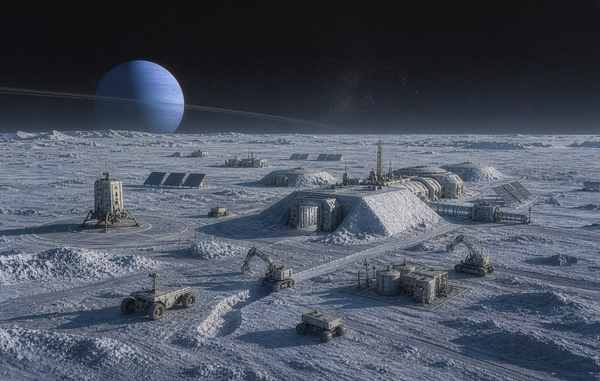
Nuclear Powerships: How Floating Microreactors Could Solve Disaster, Military, and Remote Energy Crises
Floating nuclear microreactors deployed by sea could deliver grid-scale power to disaster zones, military bases, and remote islands within days.

Deployable Nuclear Reactors for Emergency and Remote Power
Summary
A Category 5 hurricane makes landfall on a Caribbean island nation, and within six hours the electrical grid ceases to exist. Transmission towers are sheared at the base; substations are submerged. Diesel generators at the main hospital complex have seventy-two hours of fuel remaining. The national airport, itself without power, cannot receive the tanker flights that might extend that window. International aid organizations begin mobilizing portable generators, but the logistical chain, including fuel procurement, maritime transport, and last-mile distribution over debris-choked roads, will take weeks to deliver meaningful capacity. In those weeks, people die.
This scenario is not hypothetical; it is a composite of Hurricane Maria (Puerto Rico, 2017), Typhoon Haiyan (Philippines, 2013), and the Tonga volcanic eruption and tsunami of 2022. It recurs with increasing frequency in a warming climate, and it exposes a structural gap in the global disaster-response toolkit: there is no rapidly deployable source of grid-scale, fuel-independent electricity. The thesis of this analysis is that floating, deployable nuclear microreactors mounted on maritime vessels, hereafter "powerships", represent a credible, near-term solution not only for emergency power restoration but also for forward-deployed military energy and chronic energy poverty in remote or island geographies. The concept is not speculative. The U.S. Army's MH-1A Sturgis, a converted Liberty ship housing a pressurized water reactor, provided 10 MWe to the Panama Canal Zone from 1968 to 1976 [U.S. Army Corps of Engineers, 2015]. What follows is an examination of the operational concept, enabling technologies, regulatory and nonproliferation considerations, cost dynamics, and strategic implications of a modern powership fleet.
The Operational Concept
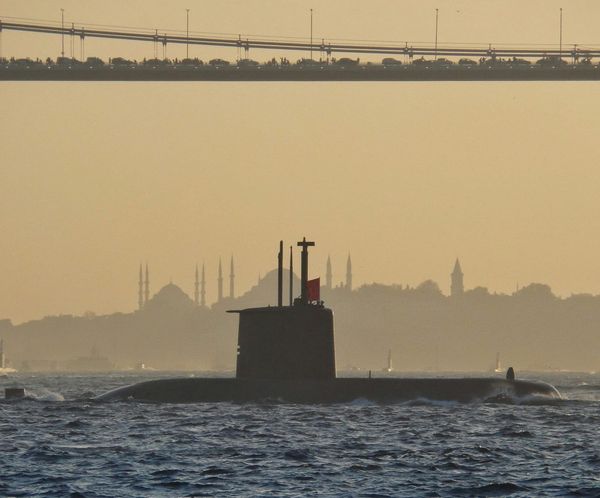
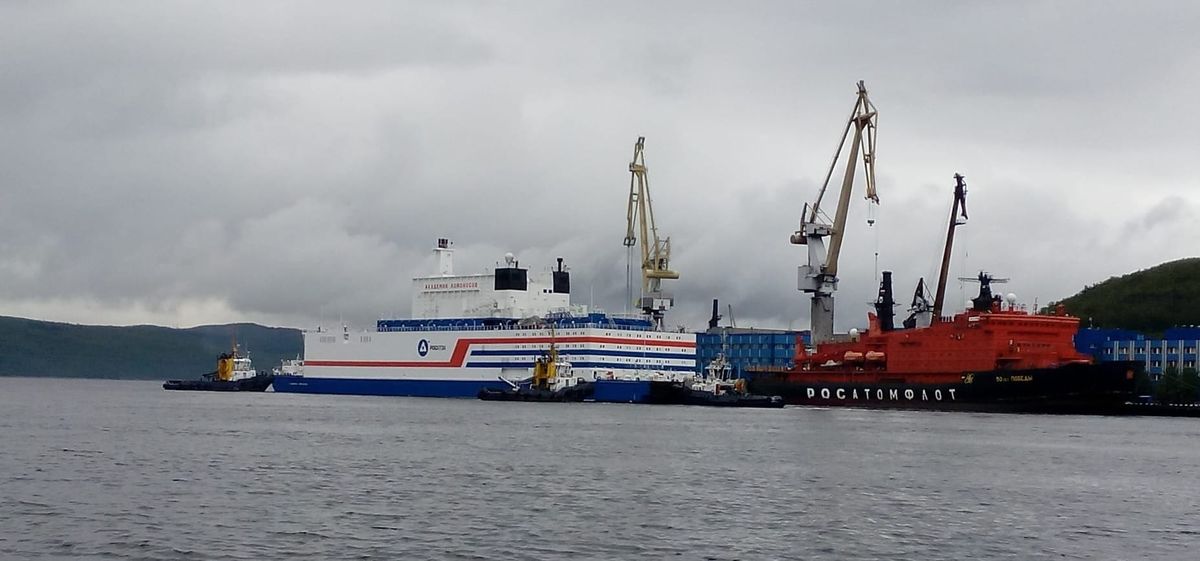
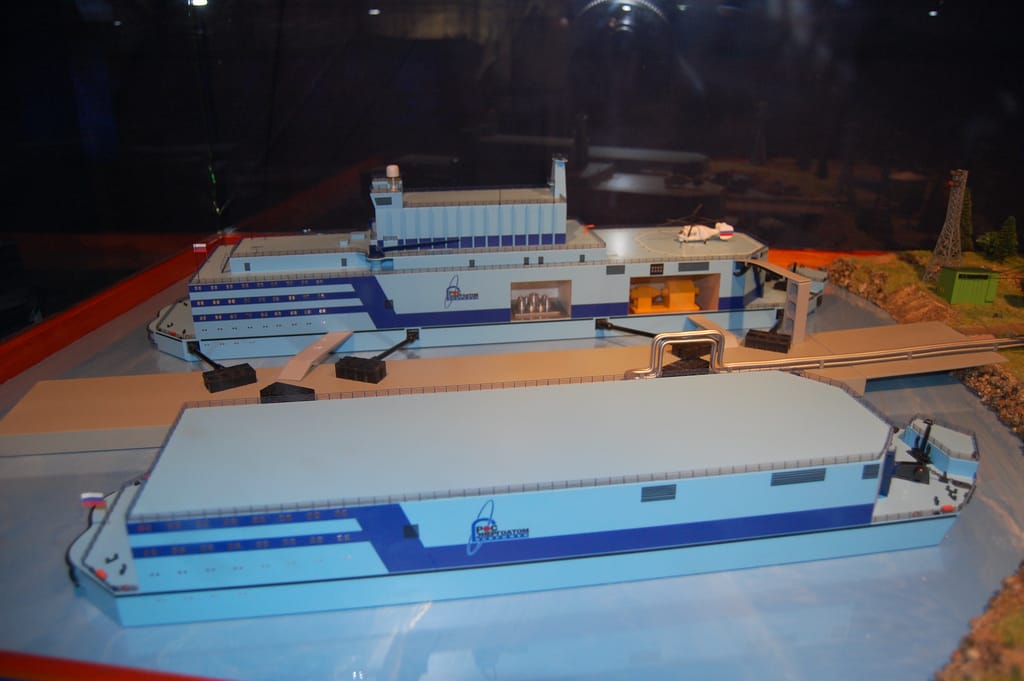
A nuclear powership, in the sense used here, is a marine vessel. Whether a purpose-built barge, a converted commercial hull, or a modular floating platform housing one or more factory-fabricated small modular reactors (SMRs) or microreactors in the 1–50 MWe class. The term must be distinguished from two adjacent concepts. First, fossil-fuel powerships already exist at commercial scale: Karpowership, a Turkish firm, operates a fleet of gas and oil-fired floating power plants serving approximately fifteen countries, primarily in sub-Saharan Africa, Southeast Asia, and Latin America [Karpowership, 2024]. These vessels demonstrate the viability of ship-to-shore power delivery but remain tethered to continuous fuel supply. Second, civilian floating nuclear power plants are no longer theoretical. Russia's Akademik Lomonosov, carrying twin KLT-40S ice-breaker-derived reactors rated at a combined 70 MWe, has been operational since 2020 in Pevek, Chukotka, providing electricity and district heat to a remote Arctic mining town [World Nuclear Association, 2025].
The nuclear powership's core value proposition emerges across three distinct use cases. In disaster response, a vessel pre-positioned or rapidly dispatched could restore grid-scale power within days or weeks of a catastrophic infrastructure failure, bridging the gap that currently stretches into months or years. In military expeditionary energy, a nuclear powership addresses the so-called "fuel logistics tail". The Department of Defense estimates that the fully burdened cost of fuel delivered to forward operating bases in contested logistics environments ranges from $40 to $400 per gallon, depending on theater and threat level [DOD Operational Energy Strategy, 2023]. A nuclear vessel eliminates recurring fuel convoys and the casualties associated with protecting them. In persistent remote and island power, a powership provides baseload electricity to small island developing states (SIDS), remote Arctic communities, or extractive-industry operations where diesel dependency creates extreme cost and supply-chain fragility.
The deployment sequence is conceptually straightforward: factory fabrication and fueling at a licensed shipyard, ocean transit (self-propelled or towed), mooring at a host-nation pier or at an offshore anchorage, shore-power cable connection, grid synchronization, and sustained operation for months to years. At end of cycle, the vessel is either refueled in place or replaced by a rotation unit while the original returns to a depot facility. The model is, in effect, the naval nuclear propulsion paradigm; mature, proven, and operating continuously since 1955, reoriented from ship propulsion to shore-power delivery.
Enabling Technologies
Three families of advanced reactor technology are particularly well suited to powership integration, each offering distinct advantages for the maritime operating environment.
High-temperature gas-cooled reactors (HTGRs) using tristructural isotropic (TRISO) fuel particles represent perhaps the most mature candidate. TRISO fuel encases uranium kernels in concentric layers of carbon and silicon carbide, creating a micro-encapsulated containment structure rated to withstand temperatures exceeding 1,600°C; far beyond normal operating conditions and well above any credible accident scenario [DOE, 2021]. The fuel is, for practical purposes, meltdown-proof. X-energy's Xe-100, an 80 MWe pebble-bed HTGR currently progressing through U.S. Nuclear Regulatory Commission (NRC) licensing, and BWXT's HTGR work for the Department of Defense both leverage TRISO's inherent safety characteristics. For a floating platform subject to wave loading, collision risk, and the possibility of operational disruption at sea, a fuel form that cannot melt under any physically plausible condition is a compelling engineering foundation.

Heat-pipe microreactors represent a second pathway, optimized for the smallest end of the power spectrum. The Department of Defense and Department of Energy's joint Project Pele has produced the BWXT Advanced Nuclear Reactor, a 1–5 MWe unit designed to be transportable by truck, barge, or C-17 aircraft and to operate with minimal or no on-site staffing [DOD, 2024]. Heat-pipe reactors use solid-state heat transfer; sealed pipes containing an alkali metal working fluid to move thermal energy from the core to the power conversion system without pumps or active coolant circulation. The elimination of pumped coolant loops reduces mechanical complexity, removes a major class of failure modes, and simplifies the interface between reactor and hull.
Molten salt reactors (MSRs) offer a third, potentially transformative option. Because the fuel is dissolved in a molten salt carrier that operates at atmospheric or near-atmospheric pressure, the massive pressure vessel required by conventional light-water reactors is unnecessary, a characteristic that substantially reduces hull structural demands for a floating platform. Seaborg Technologies, a Danish firm, has designed its Compact Molten Salt Reactor (CMSR) explicitly for marine deployment on a standardized barge, targeting 100 MWe per unit with a twenty-four-year fuel cycle [Seaborg Technologies, 2024]. The low-pressure architecture also provides an inherent safety advantage: a breach does not produce the energetic steam release associated with pressurized systems.
 John D
Across all three technology families, cross-cutting engineering considerations include marine-grade seismic and wave-loading qualification (drawing on decades of naval reactor experience), passive safety systems that function during simultaneous loss-of-power and loss-of-coolant events at sea, and the physical protection and security architecture required for a mobile nuclear asset operating outside the perimeter of a fixed military installation or licensed power plant site.
Regulatory and Nonproliferation Architecture
The most formidable barrier to nuclear powership deployment is not technological but institutional. No existing international framework cleanly governs a nuclear reactor fabricated in Country A, registered under the flag of Country B, and deployed to generate electricity in Country C. This jurisdictional ambiguity touches every relevant regulatory body simultaneously and satisfies none of them completely.
The International Atomic Energy Agency (IAEA) maintains safeguards agreements with member states, but these agreements are structured around fixed facilities with defined material balance areas. A mobile reactor that transits international waters and operates in multiple host-state jurisdictions over its lifetime does not map neatly onto existing safeguards protocols [IAEA, 2022]. The U.S. Nuclear Regulatory Commission holds licensing authority over civilian reactors within U.S. territory, but the question of whether that jurisdiction extends extraterritorially — to a U.S.-designed, U.S.-fueled reactor aboard a foreign-flagged vessel operating in foreign sovereign waters — is legally untested. The Department of Defense operates its naval reactors under a separate regulatory framework, with exemptions from NRC civilian licensing under 10 CFR 50 and authority vested in the Naval Nuclear Propulsion Program, but extending this military pathway to power-export missions serving civilian populations in allied or partner nations introduces novel legal and political questions.
Maritime law adds a further layer of complexity. Under the United Nations Convention on the Law of the Sea (UNCLOS) and the International Convention for the Safety of Life at Sea (SOLAS), flag state and port state responsibilities for vessel safety are well established for conventional shipping but inadequately specified for nuclear-powered vessels providing shore electricity. The International Maritime Organization (IMO) adopted a Code of Safety for Nuclear Merchant Ships in 1981, but it has been largely dormant since no commercial nuclear merchant fleet materialized [IMO, 1981].
Nonproliferation concerns center on fuel characteristics. Most SMR and microreactor designs require high-assay low-enriched uranium (HALEU), enriched to between 5% and 19.75% uranium-235. While HALEU remains below the 20% threshold that defines weapons-grade highly enriched uranium, it is substantially above the sub-5% low-enriched uranium used in conventional power reactors, and its physical security requirements during transit, storage, and deployment are correspondingly more demanding. Spent fuel repatriation obligations (ensuring that irradiated fuel is returned to the fabricating state rather than remaining in the host nation, must be contractually and legally codified before deployment.
The path forward requires a purpose-built governance instrument. A multilateral "Mobile Nuclear Power Code," updating and expanding the IMO's 1981 framework, should be negotiated and adopted under joint IAEA-IMO auspices to establish flag-state licensing standards, port-state inspection rights, safeguards protocols for mobile material balance areas, and spent fuel return obligations.
Cost Dynamics and Comparative Economics
The economic case for nuclear powerships must be stated with appropriate uncertainty, because the relevant cost data is both sparse and subject to wide confidence intervals. Powership economics depend on three principal variables: reactor capital cost per installed kilowatt, operational tempo (the fraction of a vessel's service life during which it is generating revenue), and the counterfactual cost of the alternative it displaces.
On the capital-cost front, current SMR projections remain aspirational. The NuScale UAMPS project, prior to its cancellation in late 2023, had estimated a levelized cost of electricity (LCOE) in the range of $89/MWh; a figure that rose substantially from earlier projections as construction cost estimates escalated [NuScale/UAMPS, 2023]. The Department of Energy has articulated a target of $60–$80/MWh for nth-of-a-kind microreactors, but this target assumes a mature production line and serial fabrication that does not yet exist [DOE, 2023]. First-of-a-kind units will cost significantly more.
 Dr. José ReyesNuScale Chief Technology Officer and Co-founder
The critical insight, however, is that the powership's target market is not grid-connected natural gas generation in developed economies, where LCOEs of $40–$70/MWh prevail. The target market is the displacement of diesel generation in remote, logistically constrained, or emergency settings, where delivered electricity costs $0.30–$0.60/kWh or higher [IRENA, 2023]. At these counterfactual price points, even an expensive first-generation nuclear powership can be economically competitive. Karpowership's existing fossil-fuel floating power plants, operating under power purchase agreement (PPA) structures, charge host nations approximately $0.12–$0.18/kWh; a useful commercial benchmark that demonstrates both the market's willingness to pay a premium for ship-delivered power and the price ceiling against which nuclear powerships must compete in non-emergency contexts [estimated reference].
A "reactor-as-a-service" leasing model may prove transformative. Under this structure, the host nation never takes title to the nuclear fuel or the vessel; it simply purchases electricity under a PPA from an operator that retains ownership, regulatory responsibility, and fuel-cycle obligations. This approach reduces the host nation's financial exposure (no upfront capital), regulatory burden (no need for a domestic nuclear licensing infrastructure), and proliferation risk (fuel never leaves the operator's custody), addressing three barriers simultaneously with a single contractual architecture.
Strategic Implications and the Path Forward
Nuclear powerships sit at the intersection of three converging pressures that are unlikely to abate. First, climate-driven increases in the frequency and intensity of natural disasters are expanding the demand for rapidly deployable, grid-scale emergency power. a demand that existing diesel-and-generator logistics chains are structurally unable to meet at the required scale and speed. Second, the Pentagon's operational energy modernization agenda, articulated most recently in the DOD's 2023 Operational Energy Strategy, explicitly identifies the fuel logistics tail as a strategic vulnerability and calls for diversified, forward-deployable energy sources [DOD, 2023]. Third, the geopolitical competition for influence in the Global South increasingly turns on energy access, which remains the binding constraint on economic development for hundreds of millions of people in SIDS, sub-Saharan Africa, and island Southeast Asia.
The competitive landscape is already taking shape, and the West is not leading it. Russia's Akademik Lomonosov is operational, and Rosatom has four improved floating nuclear power plants based on the RITM-200 reactor under construction, with prospective deployments discussed for nations across Africa, Southeast Asia, and the Pacific [World Nuclear Association, 2025]. China's state nuclear corporation, CNNC, has announced the ACP100S floating reactor for deployment in the South China Sea, where it would serve both energy and strategic-presence functions [CNNC, 2023]. Western inaction does not merely forfeit a commercial market; it cedes the regulatory-standard-setting power that accompanies market leadership. The nation that deploys the first fleet of floating reactors to the developing world will write the safety codes, the safeguards protocols, and the fuel-supply agreements that govern the sector for decades.
Three concrete steps are warranted. First, the U.S. Congress should authorize and fund a Nuclear Powership Demonstrator program under joint DOD-DOE sponsorship, leveraging existing Project Pele hardware and contractor relationships, with a target initial operating capability no later than 2030. Second, the IAEA should convene a dedicated working group to draft an updated international regulatory code for mobile and floating nuclear power, with a target completion date of 2028. Third, allied nations; spanning AUKUS, NATO, and Quad frameworks, should establish a multilateral Floating Nuclear Power Consortium to pool regulatory harmonization efforts, coordinate HALEU fuel supply, and govern operational deployments under shared institutional oversight.
The powership is not a futuristic concept; it is a 1960s concept that has been waiting for 2020s technology and 2030s urgency to catch up. Both have arrived.
U.S. Army Corps of Engineers, Baltimore District. (2015). Decommissioning of the STURGIS floating nuclear power plant: Environmental assessment. USACE.
Karpowership. (2024). Karpowership global operations overview. Karadeniz Energy Group. https://www.karpowership.com
World Nuclear Association. (2025, March). Floating nuclear power plants. World Nuclear Association Information Library. https://www.world-nuclear.org/information-library/nuclear-fuel-cycle/nuclear-power-reactors/floating-nuclear-power-plants.aspx
U.S. Department of Defense, Office of the Assistant Secretary of Defense for Energy, Installations, and Environment. (2023). 2023 operational energy strategy. DOD.
U.S. Department of Energy, Office of Nuclear Energy. (2021). TRISO fuel: The most robust nuclear fuel on earth. DOE. https://www.energy.gov/ne/articles/triso-particles-most-robust-nuclear-fuel-earth
U.S. Department of Defense, Strategic Capabilities Office. (2024). Project Pele: Mobile microreactor program update. DOD.
Seaborg Technologies. (2024). Compact molten salt reactor: Technical overview and maritime deployment concept. Seaborg Technologies ApS. https://www.seaborg.com
International Atomic Energy Agency. (2022). Small modular reactors and their safeguards implications (IAEA Working Paper). IAEA.
International Maritime Organization. (1981). Code of safety for nuclear merchant ships (Resolution A.491(XII)). IMO.
NuScale Power & Utah Associated Municipal Power Systems. (2023, November). Carbon free power project LCOE update and project termination announcement.
U.S. Department of Energy, Office of Nuclear Energy. (2023, March). Pathways to commercial liftoff: Advanced nuclear. DOE. https://liftoff.energy.gov/advanced-nuclear/
International Renewable Energy Agency. (2023). Renewable energy statistics 2023. IRENA.
China National Nuclear Corporation. (2023). ACP100S floating nuclear power plant development update. CNNC.