Triton as a Space Outpost: Energy, Logistics, and Why Colonization Is Robotic-First (2026)
A Triton outpost would prioritize robotics, nuclear power, and autonomy to enable ocean-world science and deep-space operations.

Triton as an Outer Solar System Outpost
Triton as an Outer Solar System Outpost
Summary
Triton is one of the most scientifically compelling destinations in the outer Solar System, but it is not a plausible near-term “colony” target in the conventional sense. The strongest case for a Triton presence is not demographic settlement, prestige occupation, or export-driven industry. It is the establishment of a long-duration robotic and later robotic-human research and infrastructure node focused on ocean-world science, cryovolcanism, ice-giant system studies, and the development of high-autonomy surface systems that can operate far from Earth. Triton’s unusual status as a likely captured Kuiper Belt object, its young surface, active plumes, volatile-rich geology, and likely subsurface ocean together make it a uniquely information-dense target. The Roadmap to Ocean Worlds identified Triton as the highest-priority candidate ocean world for near-term study among not-yet-confirmed ocean worlds. [1]
The primary barriers are structural rather than incremental. Triton sits in the Neptune system, more than 30 times farther from the Sun than Earth, which implies one-way light-time on the order of four hours and solar flux of only about 1.5 W/m² by inverse-square scaling from Earth’s mean solar irradiance. That combination pushes any serious surface architecture away from solar-primary designs and toward radioisotope systems for small assets and fission systems for sustained surface power. It also means that local autonomy, fault tolerance, and spare-parts resilience are not optional design virtues; they are mission-enabling conditions. [2]
 John D
Radiation is a serious but not dominant differentiator in the way it is for the inner Jovian system. Chronic galactic cosmic ray exposure remains an outer-Solar-System hazard because heliospheric shielding weakens with distance, and Triton lacks a substantial atmosphere. However, Voyager-era measurements indicate that Neptune’s higher-energy trapped particles were largely confined inside Triton’s orbital radius, suggesting that Triton’s local radiation environment is likely less severe than Europa’s or Io’s, even though it remains far worse than Earth’s. The practical implication is that shielding is still mandatory for humans and sensitive biology, but the principal architecture driver remains energy and logistics, not extreme magnetospheric radiation. [3]
On balance, Triton is best framed as a late-century or beyond robotic industrial-scientific outpost candidate, with any human presence arriving only after extensive robotic reconnaissance, nuclear power deployment, buried-habitat testing, and in-situ shielding and consumables demonstrations. A permanent human settlement is not the baseline case. The baseline case is a robotic-first, nuclear-powered, partially subsurface station designed to support science, infrastructure proving, and possibly later limited-duration crews. [4]
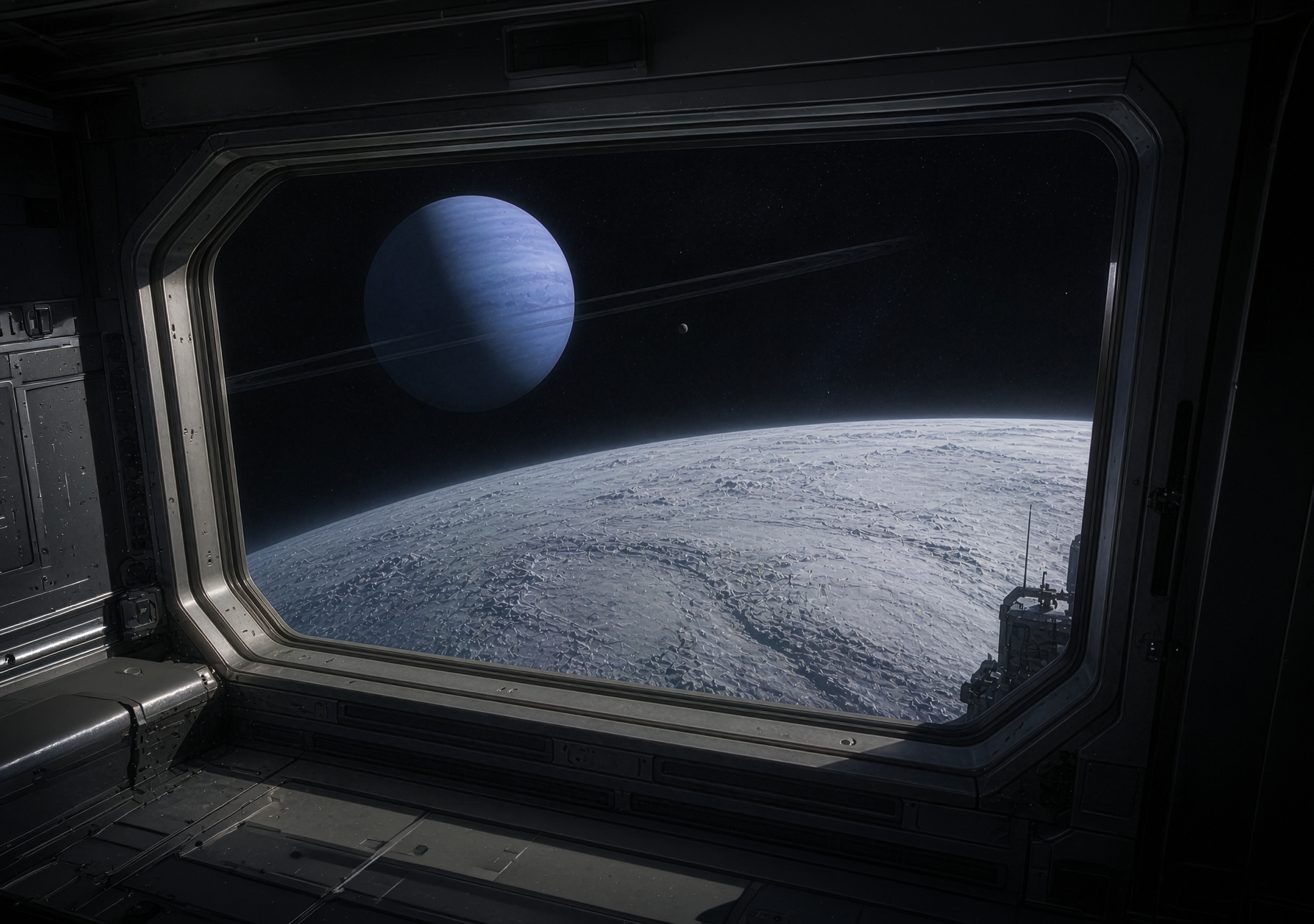
Environmental and Strategic Context
Physical and orbital environment
Triton is a large icy moon with a mean radius of 1,352.6 km and a mean density of about 2.065 g/cm³, indicating a differentiated body with substantial rock as well as ice. Its surface gravity is about 0.78 m/s², or roughly 0.08 g, low enough to ease landing and surface hops but low enough to create unresolved long-duration biomedical questions for any human population. Its surface environment is extremely cold: Triton’s nitrogen frost is in vapor-pressure equilibrium near about 38 K, and NASA [5] characterizes the surface as roughly −235 °C. Triton’s atmosphere is thin, dominated by nitrogen with methane and carbon monoxide as minor constituents, and its measured surface pressure during the Voyager era was about 1.4 Pa. [6]
Its orbital geometry matters operationally. Triton’s orbit is retrograde and highly inclined, strongly supporting the conclusion that it was captured from the Kuiper Belt rather than formed in situ around Neptune. That captured origin is not just a formation curiosity; it makes Triton a bridge object between ice-giant satellite science and Kuiper Belt dwarf-planet science. In strategic terms, a Triton outpost would not simply be “a Neptune moon base.” It would be an operating platform on what is, in many ways, a reworked Kuiper Belt world embedded in an ice-giant system. [7]
John D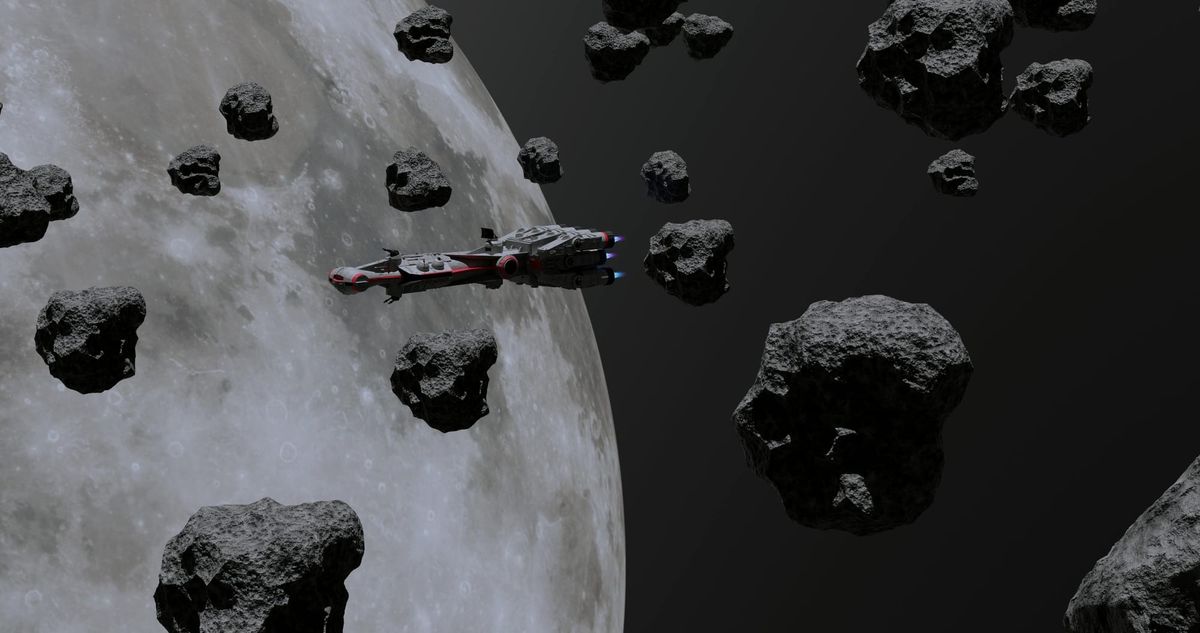
Triton is also geologically unusual. Crater counts imply a young surface, generally less than 100 million years old and possibly much younger in some terrains. Voyager 2 observed plumes or geysers rising more than 8 km, and the literature continues to treat resurfacing, cryovolcanism, and endogenic activity as live questions rather than settled history. Current models do not prove a present ocean, but they do support Triton as a candidate ocean world, with possible retention of subsurface liquid water through combinations of capture-related tidal heating, radiogenic heat, and perhaps ongoing obliquity tides. The same literature argues that magnetic induction and geodetic measurements could detect such an ocean if one exists. [8]
Distance is the other defining environmental fact. Neptune is more than 30 AU from the Sun, and mission studies to the Neptune-Triton system routinely assume cruise durations of roughly 12 years with a Jupiter gravity assist or around 16 years on direct trajectories using conventional assumptions. That distance drives communications latency, resupply delay, reactor redundancy requirements, and the near impossibility of prompt human rescue. A Triton settlement architecture must therefore be designed on the assumption that local systems absorb most failures without help from Earth. [9]
Strategic rationale
The strongest strategic rationale for a Triton outpost is scientific. Triton is simultaneously a candidate ocean world, an active volatile-ice surface, a likely captured Kuiper Belt object, and a key moon in the only ice-giant system not yet revisited since Voyager 2. This means that a single Triton-centered program would support at least four major science agendas: habitability and ocean-world assessment, cryovolcanic and volatile-cycle geophysics, Neptune-system magnetospheric and atmospheric science, and comparative dwarf-planet/Kuiper Belt evolution. Few destinations combine those domains so efficiently. [10]
There is also a credible infrastructure rationale, though it is narrower than the science case. A persistent Triton station could function as an outer-Solar-System testbed for autonomous construction, high-latency operations, long-duration nuclear power, cryogenic ISRU, and local navigation or communications support for later Neptune-system and Kuiper Belt missions. That does not make Triton an obvious logistics hub in the terrestrial sense; traffic volumes would be too low and transportation costs too high. But it does make Triton a plausible “gateway” in the more limited sense of a prepositioned support node at the edge of the classical planetary zone, especially for missions that would otherwise have to arrive at the Kuiper Belt with no local infrastructure at all. This is a reasoned engineering inference from the mission distance, communications delay, and power constraints, not a claim of current programmatic commitment. [11]
The industrial case is the weakest. Triton clearly has useful local materials, but the economics of exporting anything to inner-Solar-System markets are poor under any near-to-medium-term propulsion regime. Accordingly, the defensible industrial rationale is inward-facing rather than export-facing: bulk shielding production, local volatile handling, hopper propellant production, life-support consumables, and possibly fabrication of berms, landing surfaces, and sacrificial structural masses. That is enough to support an outpost concept. It is not enough, on present evidence, to support a self-justifying extraction colony. [12]
Comparative assessment
Compared with the Moon and Mars, Triton is scientifically richer in ocean-world and volatile geophysics terms but vastly harder operationally. The Moon and Mars are reachable on far shorter timelines, support denser logistics, and lie close enough to Earth that maintenance, rescue, replacement, and iteration are meaningful concepts. Triton offers almost none of those advantages. As a human destination, it therefore ranks well below the Moon and Mars despite its scientific appeal. [13]
Compared with Ceres, Triton likely offers a stronger candidate-ocean and active-volatile story, and a much richer tie to ice-giant and Kuiper Belt science. But Ceres is incomparably easier to reach and probably easier to industrialize in any near-term architecture. Compared with Europa and Enceladus, Triton may be less punishing radiologically, but it is farther away, colder, and harder to support. Compared with Titan, Triton has the disadvantage of much lower atmospheric pressure and weaker local operational buffering; Titan’s thick nitrogen atmosphere and shorter distance make it a more human-compatible outer-Solar-System target despite its own profound difficulty. Compared with Pluto/Charon and smaller Kuiper Belt objects, Triton gains a major advantage by residing inside a giant-planet environment, where ongoing study of the planet, magnetosphere, atmosphere, rings, and moon system compounds the value of a local outpost. [14]
The net assessment is straightforward: Triton is more scientifically leverageable than many easier destinations, but it is operationally harder than almost all of them. That is why a Triton program makes sense only if framed as a robotic-first strategic science infrastructure effort rather than as the next human settlement frontier. [15]
Colonization Architecture and Surface Systems
Robotic-first development pathway
A Triton outpost would almost certainly begin with robotic and semi-autonomous systems. The reason is not simply lower cost or lower risk tolerance; it is physics. Multi-hour one-way latency prevents real-time teleoperation from Earth, and analog studies reviewed by NASA consistently show that even far smaller delays substantially degrade coordination, message completion, and crew-ground cohesion while increasing the need for local autonomy and structured protocols. At Triton, these constraints would be much stronger. Thus, robots on Triton must be capable of autonomous diagnosis, local path planning, asynchronous task execution, and graceful degradation under communication outages. Humans can supervise from Earth or from a future local orbital node, but they cannot “joystick” a Triton settlement in real time. [16]
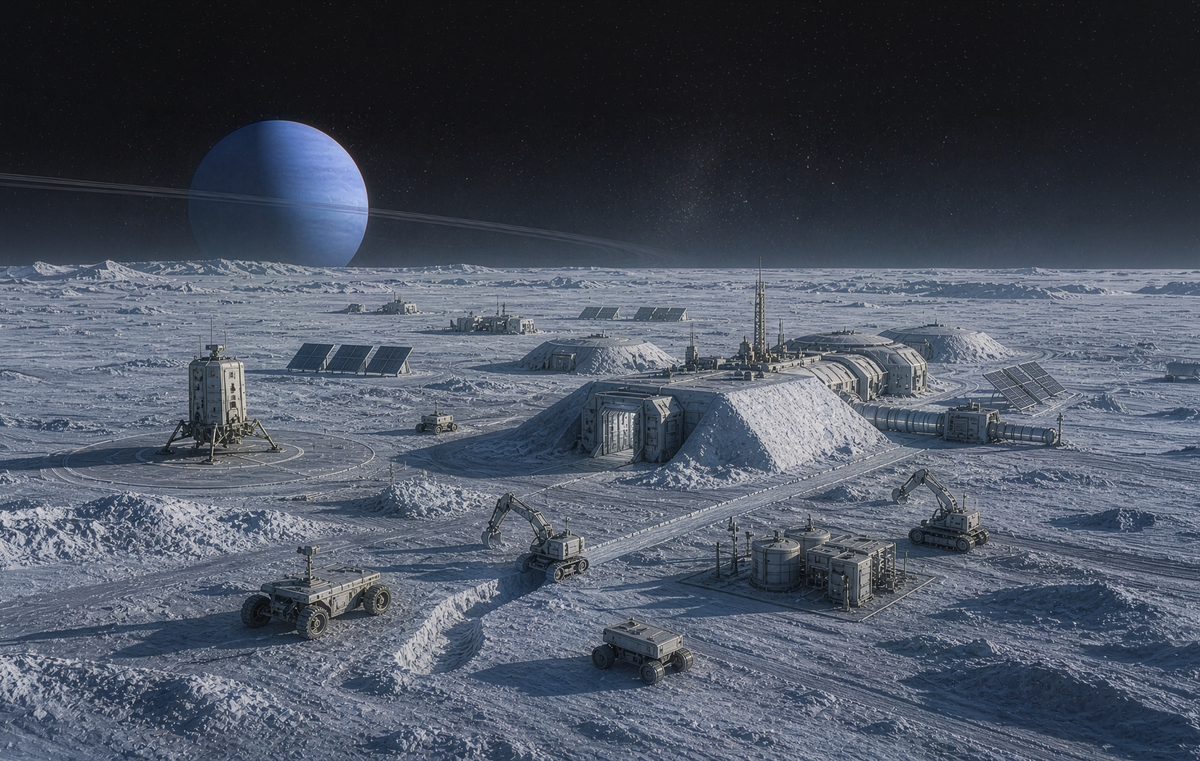
This points toward a layered operational model. The first layer is fully robotic reconnaissance: orbiters, landers, weather stations, and geophysical packages. The second is robotic infrastructure: nuclear power emplacement, sheltered electronics bays, communications nodes, mobility assets, and bulk excavation. The third is semi-autonomous construction and ISRU. Only after those layers are proven would a limited-duration human expedition become credible. Even then, the likely role of crew would be system commissioning, troubleshooting, scientific judgment, and high-value maintenance rather than routine manual labor. That is closer to an Antarctic-style nuclear-supported field station than to a self-expanding frontier settlement. [17]
John D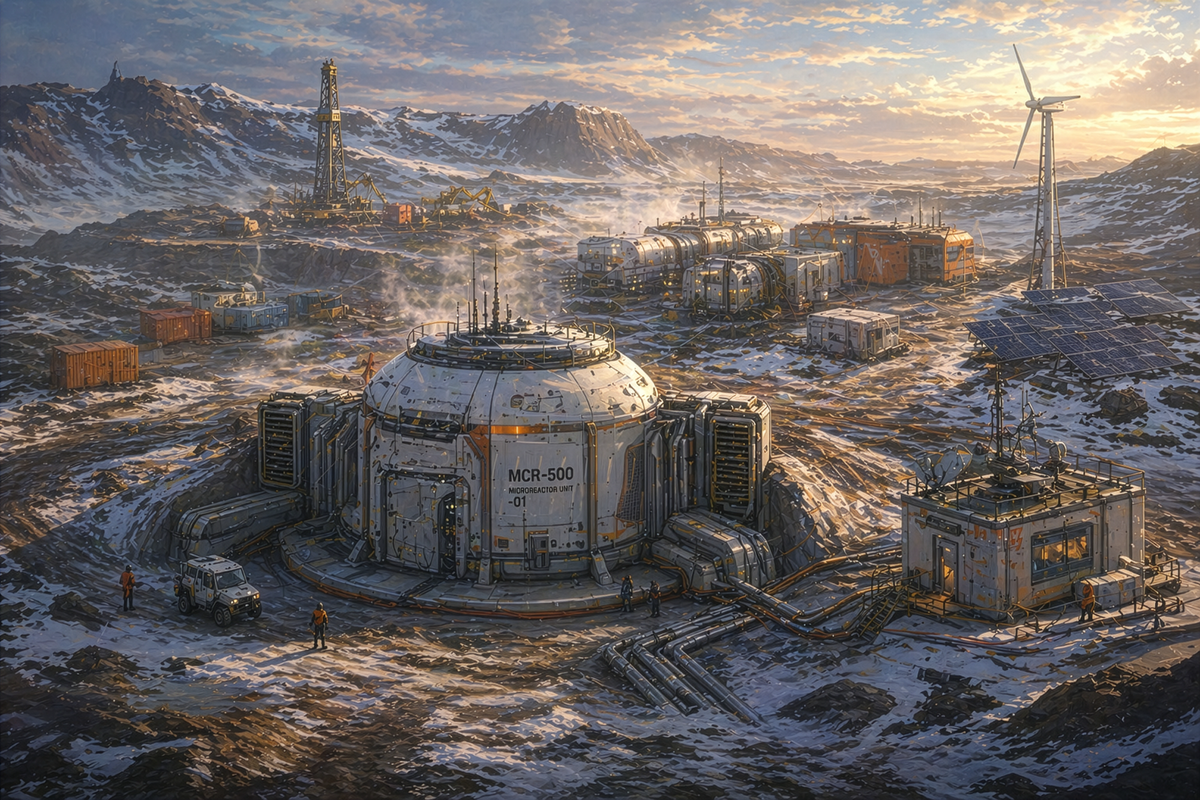
The robotic mobility case is unusually interesting at Triton because nitrogen is locally abundant. NASA NIAC-era Triton Hopper studies specifically examined the use of local nitrogen ice as propellant for repeated robotic hops, enabling global-scale traversal of terrains that would be slow or hazardous for wheeled systems. That is not a mature transportation architecture for a colony, but it does demonstrate a distinctive advantage for robotic operations: Triton may support low-gravity, local-propellant mobility concepts that are unlikely to be available on many other worlds. [18]
Habitat and infrastructure design
For humans, the dominant habitat concept is not an exposed dome or a lightly shielded module. It is a buried or semi-buried pressure habitat, likely assembled from landed modules and then covered with local ice-rich material. Triton’s thin atmosphere provides almost no meaningful pressure protection, negligible thermal moderation, and little radiation benefit. Buried habitats therefore address three requirements at once: radiation attenuation, thermal stability, and micrometeoroid/debris protection. Surface-access architecture would need short transit paths, powered airlocks, heated maintenance bays, and robotics-compatible material handling because externally exposed mechanisms at ~38 K will be failure-prone. [19]
The thermal problem is two-sided. Triton’s ambient cold severely stresses seals, lubricants, bearings, cable insulation, and electronics, but it also means that reactor or RTG waste heat becomes an asset. Habitat design would therefore need aggressive insulation, zoned thermal control, and integrated waste-heat recovery. Critical mechanical systems may need to be kept inside warm shells or in vacuum-separated service corridors rather than exposed directly. NASA tribology and cryogenic electronics work indicates that extreme-cold operations require different lubrication and component strategies than conventional room-temperature designs, reinforcing the logic of warm industrial enclosures paired with external robotic effectors. [20]
Landing and surface operations would need strict contamination control. Triton’s volatile-rich surface means plume ejecta, redistributed frost, and engine-induced resuspension could contaminate nearby equipment, optical systems, and science sites. A serious outpost would therefore require designated landing pads located away from main habitat clusters, sacrificial surface treatments, and robotic road-building or berm construction to separate dirty logistics zones from clean science and life-support zones. These are engineering inferences from the volatile surface conditions and from analog surface-power deployment doctrine; exact Triton pad designs remain untested. [21]
In-situ resource utilization
Triton’s resource base is credible for outpost support, but not yet for full industrial autonomy. Spectroscopy and synthesis papers support the presence of nitrogen, methane, carbon monoxide, carbon dioxide, and water ice, with water and carbon dioxide likely contributing to more durable substrate or “bedrock” materials beneath volatile veneers. Nitrogen is the most obvious bulk commodity. Water ice is the strategic prize because it can support shielding, thermal mass, and production of oxygen and hydrogen by electrolysis. Carbon-bearing volatiles could support limited chemical processing, and nitrogen could in principle serve as a buffer-gas feedstock or as propellant for specialized mobility concepts. [22]
The key limitation is power. ISRU on Triton is not primarily geology-limited; it is power-limited and reliability-limited. Extracting, heating, separating, storing, and processing cryogenic volatiles at scale requires abundant continuous energy and robust thermal machinery. NASA’s broader surface-power literature shows that once surface mobility, habitats, and ISRU are combined, power demand rapidly escalates from kilowatts into tens or hundreds of kilowatts, and sometimes far beyond for aggressive propellant manufacturing architectures. On Triton, that means practical ISRU would likely begin with bulk shielding, water processing, nitrogen handling, and perhaps limited propellant or consumables production, not with comprehensive metals processing or broad manufacturing independence. [23]
The most realistic ISRU hierarchy is therefore: first shielding and thermal mass, second life-support feedstocks, third local mobility propellants, and only later structural or industrial feedstocks. In other words, ISRU on Triton is likely to be about reducing imported bulk mass, not eliminating imports altogether. [24]
Energy and Radiation Architecture
Power architecture
Energy is the central bottleneck for Triton colonization. Because Neptune lies more than 30 AU from the Sun, available sunlight is reduced by roughly the square of that distance. Using NASA’s present-day total solar irradiance value of about 1361 W/m² at 1 AU, Neptune-distance insolation is only about 1.5 W/m² before panel efficiency, cosine losses, dusting, degradation, and thermal-operational penalties. As a rough design-order implication, even a 40 kW surface system using 30%-efficient arrays would need on the order of 90,000 m² of perfectly illuminated photovoltaic area, and more in realistic operations. That does not make solar impossible for sensor packages or emergency backup. It makes solar a poor primary source for a serious outpost. [25]
Radioisotope systems are well matched to low-power Triton operations. NASA’s radioisotope power systems provide both electricity and valuable waste heat for decades in distant, low-solar environments, and current RTGs remain the obvious choice for scouts, small landers, meteorology stations, communications beacons, and dormant-survivable science nodes. However, RTGs are not a colony-scale answer. Classic MMRTG-class systems produce only on the order of 100 W electric at beginning of mission, while future next-generation RTGs are still in the hundreds of watts class. That is ideal for distributed robotics and thermal survival, but not for habitats, drilling, or industrial processing. [26]
For sustained surface operations, fission is the decisive technology. Kilopower-class concepts were developed specifically as small, sun-independent 1-10 kWe systems for planetary surfaces and science missions, while NASA’s current Fission Surface Power program targets a 40-kWe-class system capable of multi-year continuous operation. That is highly relevant to Triton. A robotic research station could plausibly begin with one or more 1-10 kWe units plus RTGs. A more capable science-industrial outpost would likely require clustered 40-kWe-class reactors, with segregated power buses and black-start capability. A human outpost would likely need multiple modular reactors because habitat heating, environmental control, communications, drilling, mobility recharge, and ISRU together quickly move the required power level into the tens to hundreds of kilowatts range. [27]
Waste heat management remains nontrivial even in extreme cold, because reactors and electronics must still reject heat by radiation in vacuum, not by convective dumping to air. Triton’s cold environment lowers the radiative sink temperature and allows useful heat cascading into habitats and process loops, but it does not remove radiator sizing constraints. Practical architectures would likely pair reactors with buried or shielded habitats so that “waste” heat is first used for internal temperature maintenance, volatile handling, melt/extraction operations, and freeze-protection before the remainder is rejected to space. This is another reason why reactors would likely be the core of any Triton base rather than an add-on utility module. [28]
Radiation environment and shielding
The long-duration human radiation problem at Triton is dominated by galactic cosmic rays and secondarily by solar energetic particles, not by an Earth-like trapped-belt environment. Because heliospheric modulation weakens with distance, the contribution of cosmic rays to outer-planet environments increases outward through the Solar System. At Triton, the atmosphere is too thin to provide meaningful bulk shielding. Neptune’s magnetosphere adds complexity, however: it is strongly tilted and offset, creating a variable plasma interaction environment, yet Voyager-era data indicate that the higher-energy trapped particles were mostly confined inside Triton’s orbit and that local plasma density near Triton is low. The practical reading is that Triton is not a benign radiation environment, but it is also not Europa. For chronic human exposure, deep-space GCR remains the pacing hazard. [29]
That distinction matters for shielding architecture. Hydrogen-rich materials remain the best passive choices in NASA’s habitat-shielding work, which is why water and ice are attractive dual-use shielding media. For solar particle events, comparatively modest areal densities can make a major difference; recent lunar modeling found that more than 4 g/cm² of regolith can drive expected SPE doses below NASA’s current 30-day limits in modeled cases. But GCR is harder. NASA and related literature repeatedly conclude that passive shielding is inefficient for large GCR reductions, and in aluminum some models show dose-equivalent minima near ~20 g/cm² before neutron production starts to raise exposure again. That means a Triton habitat should absolutely have a heavily shielded storm shelter and broad water/ice integration, but no realistic amount of imported passive shielding alone will transform Triton into an Earth-normal radiation environment. [30]
The realistic answer is local overburden. Triton has abundant ice, and likely ice-rich regolith or volatile-rich unconsolidated materials, so the main challenge is not finding shielding mass but moving it and shaping it. Subsurface or deeply bermed habitats therefore become the most credible shielding strategy because they convert a launch-mass problem into an excavation and thermal-engineering problem. Water tanks, ice walls, and consumables storage should be integrated into the habitat layout as active shielding layers around crew quarters, biological archives, and command spaces. Electronics would still need radiation-hardening because chronic GCR, transient events, and local charging/plasma effects can all degrade long-lived systems. [31]
Artificial magnetic shielding remains speculative and unattractive for Triton. NASA assessments of several active-shield concepts found large mass penalties, stability hazards, or poor effectiveness against GCRs, and in multiple cases explicitly recommended that they not be pursued as baseline radiation solutions. For a Triton outpost, the burden should therefore stay on passive local shielding plus operational countermeasures, not on exotic magnetic shields. [32]
Logistics, Governance, and Risk
Transportation and logistics
A realistic Triton program is logistics-dominated. Published Neptune mission concepts still rely on very long cruise phases, with roughly 12-year Jupiter-assist options or roughly 16-year direct options in representative studies. Those are robotic timelines. Human transfer architectures would require even more demanding reliability, life support, and radiation performance. Cargo would therefore need to be prepositioned years in advance, with depot-style redundancy and an architecture that assumes no near-term rescue or rapid replenishment. [33]
Theoretically, a consistent stream of Triton destined space craft could allow for rescue windows within 3 months, as well as continuous crew rotations. Depending on the interplanetary transit infrastructure, "rest-stops" could be scattered throughout, reducing any single trip. A triton colony could be a transit hub for deeper and possibly interstellar missions.
Orbital insertion is a major technical challenge because Neptune arrivals at useful flight times drive large capture energy requirements. That is why multiple studies continue to treat aerocapture as enabling or strongly enhancing for Neptune orbiters. Aerocapture can reduce propellant burden dramatically and, in some studies, reduce Neptune trip times to roughly eight years while enabling more capable orbiter-probe architectures. But it is also a one-shot high-consequence maneuver subject to atmospheric uncertainties, entry-heating challenges, and guidance robustness demands. For Triton colonization planning, the correct conclusion is that aerocapture is promising and probably strategically important, but not a solved operational primitive. [34]
Communications architecture would require high-gain antennas, long-duration power, and likely a local relay layer if multiple surface assets were active. The main issue is not just bandwidth; it is operational asynchrony. Multi-hour light-time means diagnosis, maintenance, and emergency operations must be locally managed. That increases the premium on onboard expertise, autonomous repair, modular hardware replacement, and standard operating doctrine that makes sense without immediate Earth approval. The deeper implication is that a crewed Triton mission would require a much more sovereign local decision system than current low-Earth-orbit or even Mars-analog operations. [16]
Governance and ethics
Planetary protection is not peripheral at Triton. The recent Committee on Space Research [35] planetary protection policy treats icy worlds much more conservatively than earlier generalized outer-Solar-System categories. In the 2026 policy, icy worlds are by default Category III for flyby/orbiter missions and Category IV for lander/probe missions unless reclassification can be justified, with contamination analyses tied to the probability of access to environments above the low-temperature limit for life. Triton is explicitly listed as a known or suspected icy world. This has direct implications for a Triton outpost: sterilization, cleanliness control, impact-probability analysis, and contamination governance would all be foundational, especially if subsurface access or plume sampling were planned. [36]
Nuclear governance would also be central. A Triton outpost almost certainly requires RTGs, fission surface power, or both. That entails launch safety review, international legal coordination, and end-of-mission disposal planning. It also argues for an international architecture. A program this distant, expensive, and multi-decadal would be more credible if distributed across major civil-space actors rather than carried by one nation alone. That logic is consistent with the way ice-giant and ocean-world mission studies are already discussed across Jet Propulsion Laboratory[37], European Space Agency[38] communities, and broader decadal-science processes. [39]
Finally, terminology matters. “Colonization” may be rhetorically useful as a long-range framing device, but from an engineering and governance standpoint “robotic outpost,” “scientific station,” or “hybrid research infrastructure node” is usually more precise. Those terms better reflect the likely scale, the absence of plausible near-term civilian settlement, the planetary protection burden, and the expectation that any human presence would initially be temporary, sparse, and operationally specialized. [40]
Failure modes and constraint analysis
Power failure is the existential risk. On Triton, loss of primary power cascades immediately into loss of heat, communications, mobility recharge, volatile handling, and possibly atmosphere integrity if habitat systems freeze or depressurize secondarily. Reactor faults, converter degradation, radiator damage, or bus failures must therefore be treated as base-kill scenarios unless the architecture includes redundant isolated power islands and black-start reserves. This is the single largest reason Triton settlement cannot begin with human crews. [41]
Thermal-management failure is a close second. Triton’s environment punishes unheated systems, while cryogenic mechanical behavior raises the odds of tribology failures, sticking, embrittlement, and sensor drift. A habitat can survive low power for a time if it has thermal mass and local sheltering. External rovers, valves, drills, and manipulators often cannot. That implies high demand for duplicated robotics, protected service garages, and maintenance-centered station design. [42]
The remaining risks are systems-coupled rather than isolated: communications loss can become dangerous when combined with autonomy shortfalls; ISRU underperformance becomes dangerous when paired with propellant scarcity or shielding shortfalls; depressurization becomes irrecoverable when spare hardware and rescue are years away; and psychological degradation becomes more serious when latency and isolation separate crews from Earth for long periods. NASA analog and behavioral literature consistently shows that isolation, confinement, and delayed communications degrade morale, stress tolerance, and coordination. Triton would be an extreme instantiation of those stressors. [43]
Phased Development Roadmap and Conclusion
A credible Triton program would proceed in phased steps over many decades rather than through a single heroic expedition.
Phase one: orbital reconnaissance and system mapping. The objective would be to update Voyager-era knowledge with modern imaging, spectroscopy, gravity, and magnetospheric measurements. Required technologies are long-duration nuclear-electric or radioisotope-supported spacecraft, high-bandwidth communications, and robust outer-planet navigation. The major risks are cruise attrition, orbit insertion failure, and incomplete environmental characterization. Success means globally relevant maps of surface composition, plume activity, radiation/plasma environment, and candidate landing sites. Timescale: multi-decadal program start to arrival. [44]
Phase two: robotic landers and geophysical probes. These missions would target surface mechanics, volatile behavior, seismic structure, local plasma interaction, and weather/seasonal monitoring. Required technologies are precision landing, cryogenic survival, autonomous fault management, and local power in the RTG or small-fission class. The key risk is that Triton’s surface or volatile behavior is harder to operate on than expected. Success means survivable landers returning multi-season data and validating one or more safe industrial zones. Timescale: after orbital characterization, still robotic-only. [45]
Phase three: nuclear-powered robotic research station. Here the objective shifts from exploration to persistence. A fixed station would integrate kilowatt-to-tens-of-kilowatts power, mobility charging, instrument servicing, and possibly trenching or shielding emplacement. Required technologies are clustered RTGs or Kilopower/fission systems, warm robotics bays, and autonomous maintenance. The major risk is long-duration reliability of cryogenic mechanisms and power conversion. Success means continuous operation through years of local conditions without crew intervention. [46]
Phase four: ISRU demonstration. The task would be to prove that local nitrogen and water resources can be processed into useful outpost commodities: shielding blocks, water inventories, oxygen/hydrogen feedstocks, or local mobility propellant. Required technologies are excavation, thermal processing, cryogenic storage, and contamination-controlled chemical handling. The biggest risk is that bulk processing is too energy-intensive or too failure-prone for the return gained. Success means measurable replacement of imported consumables. [12]
Phase five: autonomous construction and buried-habitat testing. Before any humans arrive, the program would need robotic emplacement of berms, shielding layers, perhaps trench-lined modules, and closed-loop environmental systems tested without crew. Required technologies include autonomous excavation, precision assembly, local overburden placement, and health-monitoring systems. Major risks are construction drift, contamination of science zones, and thermal failures in buried systems. Success means proving that a habitat can remain stable, warm, pressurized, and maintainable for long periods robotically. [47]
Phase six: limited-duration crewed expedition. A first crew, if justified at all, would be there to commission, troubleshoot, and amplify the productivity of a pre-existing robotic base, not to build one from scratch. Required technologies extend beyond Triton-specific systems to include deep-space transit habs, radiation countermeasures, partial-gravity biomedical management, and emergency-safe nuclear operations. The major risks are transit radiation, years-long logistics dependence, and inability to recover from medical or habitat emergencies. Success means safe crew survival, high-value mission output, and return or rotation without relying on ad hoc rescue. Timescale: very late, and highly contingent. [48]
Phase seven: permanent robotic-human hybrid outpost. Only after earlier phases succeed would a hybrid station become plausible. Even then, “permanent” would likely mean permanent infrastructure with intermittent or rotating human occupancy at first. Required technologies would include modular fission clusters, resilient life support, robust local shielding, and a mature logistics chain. The decisive success criterion would not be symbolic occupation; it would be the ability to survive multiple supply gaps and major subsystem faults without catastrophic loss. [49]
The overall conclusion is that Triton is better suited to robotic colonization than to human settlement for the foreseeable future. The strongest arguments for a Triton outpost are scientific leverage, Neptune-system access, candidate-ocean-world astrobiology, and the value of proving autonomous nuclear-supported infrastructure under extreme latency and cold. The principal bottlenecks are energy, logistics, autonomy, and long-duration reliability; shielding is a major requirement but not the only or even primary impossibility driver. Nuclear power would be foundational. Local ice-based overburden is the most realistic shielding architecture. And a Triton outpost could eventually serve as a gateway to the Kuiper Belt, but only in the limited sense of a prepositioned science and support node, not as a populous frontier settlement. [50]
Open questions remain material. Triton’s present-day ocean is still unconfirmed; the true near-surface radiation environment is only partially constrained by flyby-era data; the accessibility and industrial value of its volatiles remain unproven at settlement scale; and long-duration human health in ~0.08 g remains operationally unvalidated. Those uncertainties do not weaken the robotic case for Triton. They do, however, strongly argue against treating human settlement as a default or early-stage objective. [51]
References
Adams, J. H., Jr., et al. (2005). Revolutionary concepts of radiation shielding for human spaceflight. NASA.
Buchvarova, M., & Velinov, P. I. Y. (2005). Modeling spectra of cosmic rays influencing on the ionospheres of the Earth and outer planets during solar maximum and minimum. Advances in Space Research, 36(11), 2127-2133. https://doi.org/10.1016/j.asr.2005.04.002
COSPAR. (2026). COSPAR policy on planetary protection. Space Research Today, 224, 17-39.
Davis, J. M., Cataldo, R. L., Soeder, J. F., Manzo, M. A., & Hakimzadeh, R. (2005). An overview of power capability requirements for exploration missions. NASA/TM-2005-213600.
Dutta, S., et al. (2020). Aerocapture as an enhancing option for Ice Giants missions. NASA white paper.
Hansen, C. J., et al. (2021). Triton: Fascinating moon, likely ocean world, compelling destination! The Planetary Science Journal.
Heidrich, C. R., Dutta, S., & Braun, R. D. (2019). Modern aerocapture guidance to enable reduced-lift vehicles at Neptune. AAS/AIAA Astrodynamics Specialist Conference.
Hendrix, A. R., et al. (2019). The NASA roadmap to ocean worlds. Astrobiology, 19(1), 1-27. https://doi.org/10.1089/ast.2018.1955
JPL Solar System Dynamics. (2025). Planetary satellite physical parameters.
Krimigis, S. M. (1990). The encounter of Voyager 2 with Neptune’s magnetosphere. In B. Hultqvist & C.-G. Fälthammar (Eds.), Magnetospheric Physics (pp. 41-59). Springer.
NASA. (2023). Passive radiation shielding: Integrating multilayer and multipurpose materials into space habitat design.
NASA. (2024). Mars surface power generation challenges and considerations.
NASA. (2025). Fission Surface Power.
NASA. (2025). Kilopower.
NASA. (2025). Neptune: Facts.
NASA. (2025). Radioisotope power systems: Power generators.
NASA Earth Science. (2025). Solar irradiance science.
Oleson, S., & collaborators. (2018). Triton Hopper: Exploring Neptune’s captured Kuiper Belt object. NASA Innovative Advanced Concepts / mission concept study.
Rymer, A. M., et al. (2021). Neptune Odyssey: A flagship concept for the exploration of the Neptune-Triton system. The Planetary Science Journal, 2, 184. https://doi.org/10.3847/PSJ/abf654
Slaba, T. C., Bahadori, A. A., Reddell, B. D., Singleterry, R. C., Clowdsley, M. S., & Blattnig, S. R. (2017). Optimal shielding thickness for galactic cosmic ray environments. Life Sciences in Space Research, 12, 1-15. https://doi.org/10.1016/j.lssr.2016.12.003
Struster, J., et al. (2010). Behavioral issues associated with long duration space expeditions: Review and analysis of astronaut journals. NASA.
Cruikshank, D. P., Roush, T. L., Owen, T. C., Geballe, T. R., de Bergh, C., Schmitt, B., Brown, R. H., & Bartholomew, M. J. (1993). Ices on the surface of Triton. Science, 261(5122), 742-745.