Asteroid Mining Logistics: The Off-World Economy's $100 Trillion Challenge
Asteroid mining is here. Can we solve the logistics puzzle to unlock a trillion-dollar space economy?

Strategic Pathways for a Multi-Trillion-Dollar Off-World Economy
Summary
Asteroid mining represents a pivotal opportunity to unlock a multi-trillion-dollar off-world economy by 2045, shifting resource extraction from Earth’s finite reserves to near-Earth asteroids (NEAs) rich in platinum-group metals (PGMs), water ice, and rare-earth elements. While extraction technologies have advanced rapidly, evidenced by successful sample-return missions such as NASA’s OSIRIS-REx and JAXA’s Hayabusa2; the primary constraint has evolved from technical feasibility to logistical execution. Orbital mechanics, microgravity operations, return trajectories, and supply-chain autonomy form the critical bottlenecks that could delay commercial viability by a decade or more.
Modeling from recent analyses by NASA’s Asteroid Redirect Mission concepts and Deloitte-modeled space-economy scenarios projects that mastering asteroid logistics could reduce launch costs from $10,000 per kilogram to under $100 per kilogram through in-situ resource utilization (ISRU). The most promising pathways involve hybrid chemical-electric propulsion fleets, autonomous robotic swarms, and cislunar propellant depots, targeting C-type (volatile-rich) and M-type (metallic) NEAs with delta-v requirements below 6 km/s round-trip. Economic tipping points emerge around 2035, when a single 100-tonne payload return could yield net-present values exceeding $5 billion at current PGM prices, assuming launch cadence scales to Starship-class vehicles.
Strategic recommendations for stakeholders include prioritizing public-private partnerships under the Artemis Accords, investing in AI-driven teleoperation latency solutions, and establishing standardized orbital traffic management protocols. Governments should focus on regulatory sandboxes for resource rights, while corporations target first-mover advantages through modular infrastructure. Investors are advised to allocate 5–10% of space portfolios to logistics-focused ventures. In short, asteroid mining logistics is no longer a question of if, but of sequenced execution. Industry leaders who integrate these pathways today will define the off-world economy tomorrow.

Introduction: From Science Fiction to Strategic Imperative
The global space economy, currently valued at approximately $600 billion, is projected to surpass $1 trillion by 2040 according to consensus forecasts from leading aerospace consultancies. Within this expansion, asteroid mining stands out as a transformative frontier, promising to decouple terrestrial resource constraints from humanity’s off-world ambitions. Yet, as extraction demonstrators prove increasingly viable, logistics emerges as the decisive differentiator. Unlike lunar regolith or Martian volatiles, Near Earth Asteroids offer unmatched accessibility due to their low delta-v profiles: often requiring less energy for round-trip missions than terrestrial deep-sea mining analogs.
NEAs are classified primarily by spectral type: C-types (carbonaceous, water- and organic-rich), S-types (stony, silicate-dominant), and M-types (metallic, dense with iron, nickel, and PGMs). Recent orbital surveys indicate over 20,000 NEAs larger than 100 meters, with several dozen viable targets exhibiting Earth-like orbital periods that enable low-energy rendezvous every 1–3 years. The delta-v economics are compelling: a typical Earth-to-NEA transfer might demand only 4–6 km/s, compared to 9 km/s for geostationary orbit insertion or 15+ km/s for Mars return. This efficiency translates directly to payload fractions exceeding 30%, versus under 5% for traditional chemical rockets without refueling.
Logistics constraints, rather than mining hardware, now dominate roadmaps. Challenges span trajectory optimization, autonomous proximity operations in microgravity (where anchoring forces are measured in millinewtons), and scalable return architectures capable of delivering refined materials to Earth or cislunar markets. This speculative analysis examines these dynamics through a strategic lens, synthesizing orbital mechanics, robotic systems engineering, and economic modeling. By 2040, mastered logistics could catalyze self-sustaining supply chains for space-based solar power, orbital manufacturing, and crewed Mars missions, positioning asteroid resources as the backbone of a truly multi-planetary civilization.
Current State and Foundational Technologies
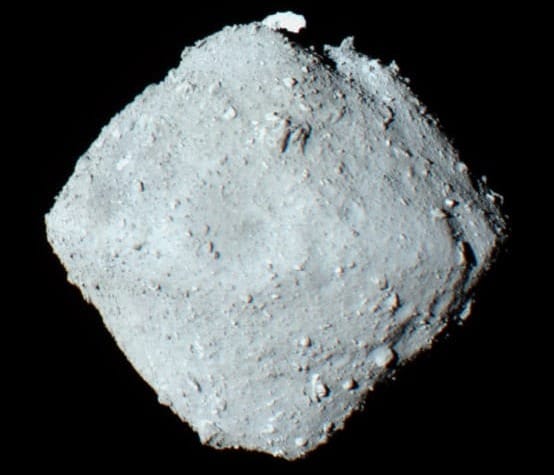
Today’s asteroid mining capabilities rest on a foundation of robotic sample-return missions that have validated remote sensing, surface interaction, and material characterization. NASA’s OSIRIS-REx mission (2016–2023) successfully collected and returned over 120 grams from Bennu, a C-type NEA, demonstrating touch-and-go sampling in microgravity. Similarly, JAXA’s Hayabusa2 (2014–2020) returned samples from Ryugu, confirming the presence of hydrated minerals and organic compounds. These precursors inform prospecting payloads, including hyperspectral imagers, neutron spectrometers, and laser-induced breakdown spectrometers for real-time resource mapping.
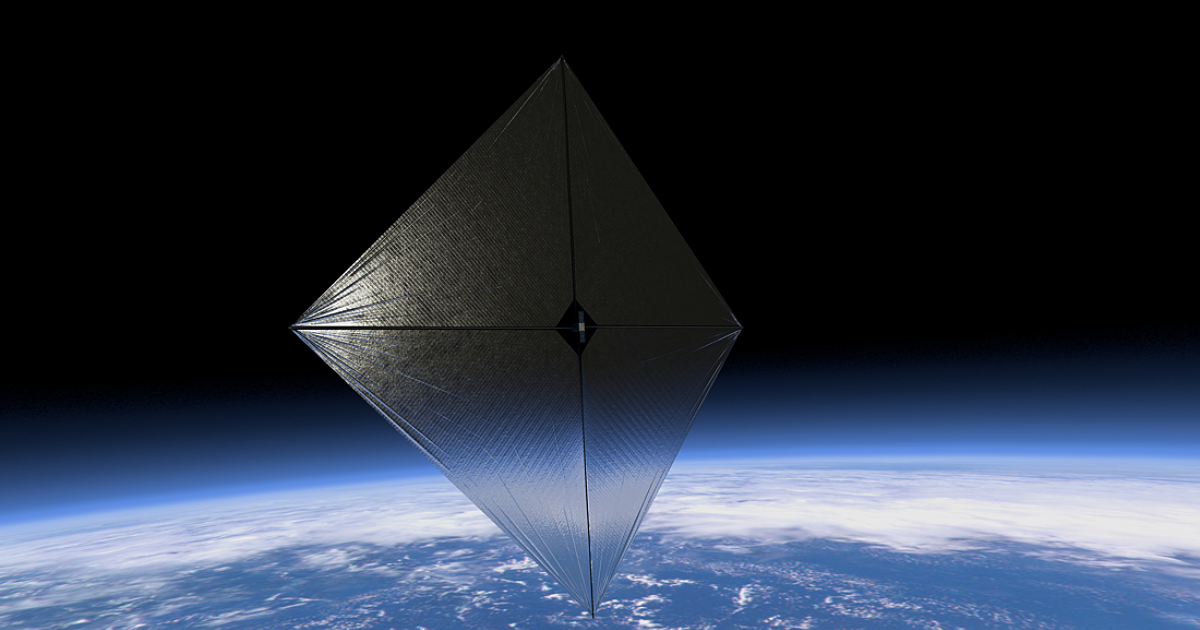
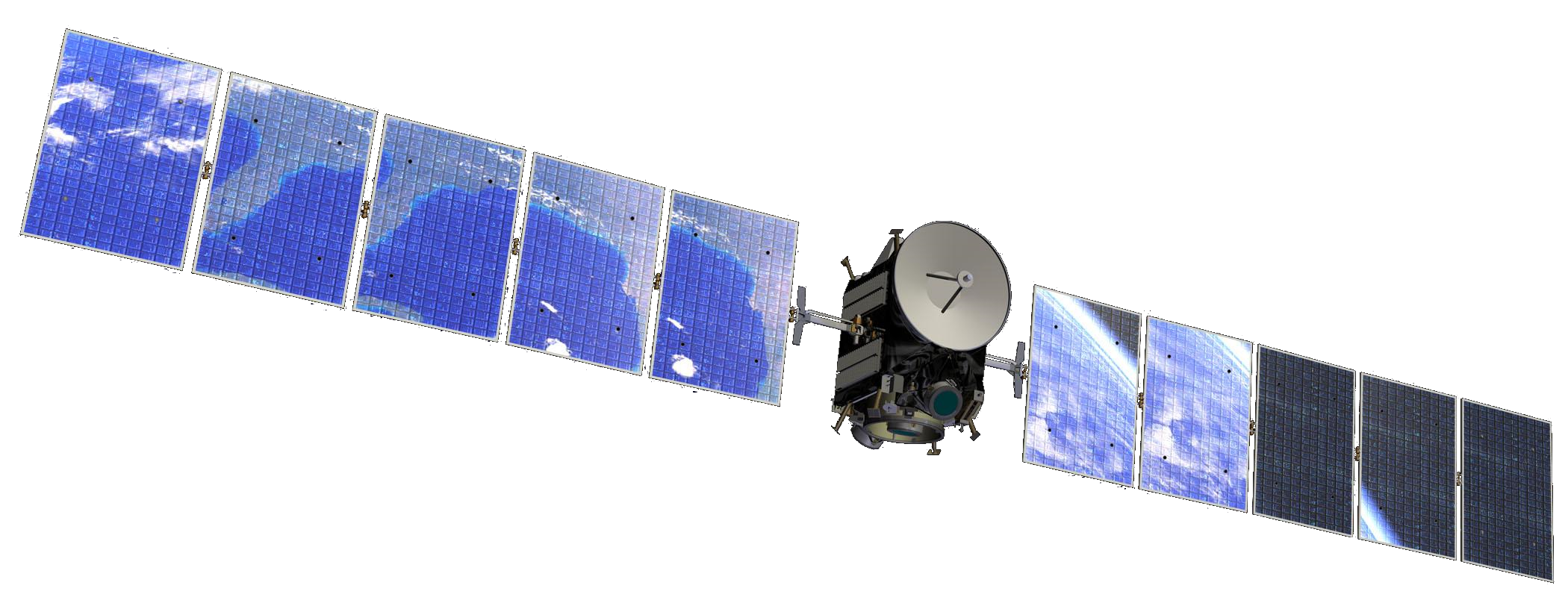
Propulsion baselines remain anchored in chemical bipropellants for high-thrust maneuvers and solar-electric propulsion (SEP) for efficient cruise phases. Ion thrusters, such as those on NASA’s Dawn mission, achieve specific impulses exceeding 3,000 seconds (triple that of chemical engines) enabling multi-year trajectories with minimal propellant mass. Solar sails, prototyped by the Planetary Society’s LightSail 2 and NASA’s Advanced Composite Solar Sail, offer propellantless options for station-keeping and slow spiral transfers, though acceleration remains modest at 0.1–1 mm/s².

In-situ resource utilization (ISRU) precursors focus on volatile extraction via heating or microwave sintering and metallic beneficiation through magnetic separation or electrostatic sorting. A comparative delta-v cost table illustrates the advantage:
- Earth-to-Low-Earth-Orbit launch: ~9.5 km/s (current $2,000–$10,000/kg)
- LEO-to-NEA rendezvous (typical): 4.5 km/s (SEP-assisted)
- NEA-to-Earth return (aerobraking): 0.5 km/s (propulsive delta-v only)
- Total round-trip (with ISRU refueling): <6 km/s versus 11+ km/s for lunar round-trip without depots
These technologies provide the scaffolding, yet scaling to commercial volumes demands end-to-end logistical integration absent in current demonstrators.
Core Logistical Challenges in Deep-Space Operations
The end-to-end logistics chain for asteroid mining encompasses five interdependent layers, each introducing compounding uncertainties that amplify mission risk and cost.
First, orbital mechanics and rendezvous require precise trajectory design. NEAs follow eccentric, inclined orbits; phasing opportunities align only periodically, necessitating gravity-assist flybys or multi-revolution transfers. Lambert’s problem solvers optimize departure windows, but solar radiation pressure and third-body perturbations demand continuous low-thrust corrections. Latency in ground-based navigation (up to 30 minutes one-way at 2 AU) shifts reliance to onboard autonomous navigation using optical landmark tracking and LIDAR.
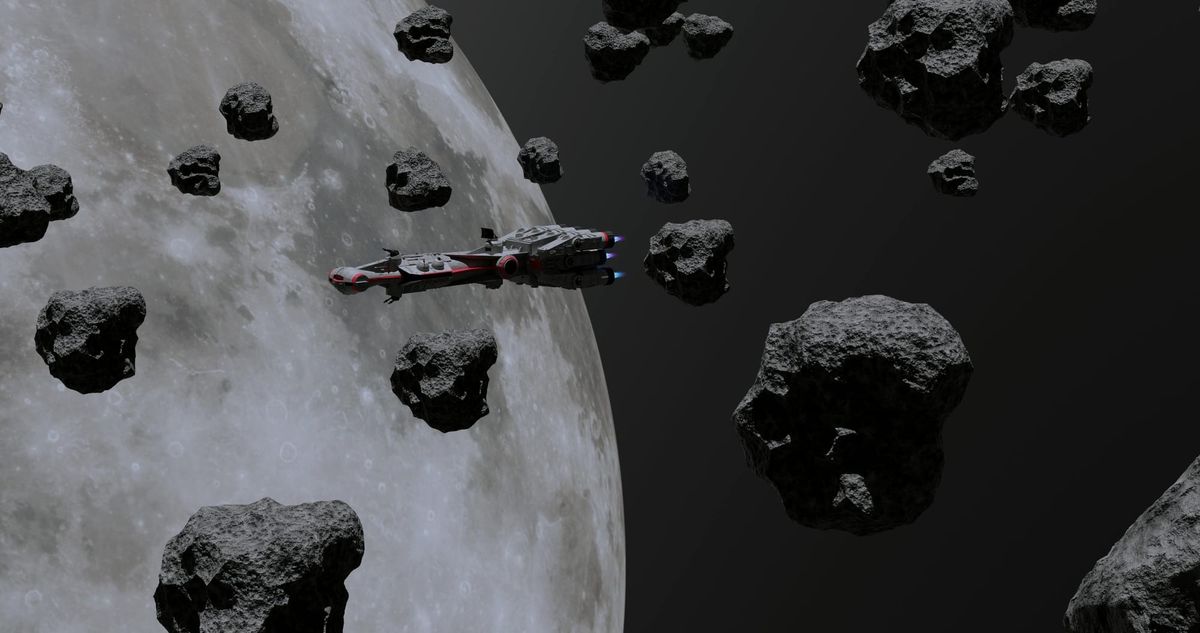
Second, proximity operations in microgravity pose anchoring and handling dilemmas. Surface gravity on a 500-meter asteroid registers at 10⁻⁵ g, rendering traditional wheeled rovers ineffective. Concepts like harpoon anchors, electrostatic grippers, or “touch-and-go” with momentum-exchange tethers have been tested in microgravity drop towers, yet scaling to 10,000-tonne operations requires swarm architectures where multiple 50–200 kg robots coordinate via mesh networks. Regolith handling risks “fluidization” under vibration, potentially ejecting material at escape velocities.
Third, resource extraction and processing vary by asteroid type. C-type bodies yield water ice (up to 20% by mass) via thermal mining or vacuum distillation, while M-types demand pyrometallurgical smelting or carbonyl vapor processes for PGMs. Beneficiation (separating valuables from slag) must occur in vacuum to avoid contamination, with yields modeled at 60–85% efficiency. Storage of volatiles requires cryogenic tanks maintained below 100 K, while metals may be cast into ingots for radiation shielding or structural feedstock.
Fourth, return logistics hinge on Earth re-entry or cislunar depot handoff. Aerobraking reduces propellant needs by 40–60% but exposes payloads to 10–15 g decelerations and thermal loads exceeding 2,000 K. Propulsive return via Solar Energetic Particle spirals demands 1–2 years, during which radiation exposure accumulates. Hybrid solutions, such as refueling with asteroid-derived oxygen, enable mass drivers or electromagnetic catapults for initial ejection.

Fifth, supply-chain resilience demands closed-loop systems. Teleoperation latency prohibits real-time control, necessitating AI swarms capable of self-repair via 3D-printed spares from asteroid regolith. A 2035–2040 mission profile scenario illustrates viability: A fleet of 12 SEP-driven prospectors departs Earth in 2035, rendezvouses with a 1-km M-type NEA in 2037, extracts 500 tonnes of refined nickel-iron over 18 months, and returns 100 tonnes to a cislunar depot by 2040. Total mission delta-v: 5.8 km/s; projected cost: $1.2 billion (including 20% contingency for swarm attrition).
These challenges underscore that logistics maturity, not raw extraction power, will dictate commercial timelines.
Emerging Solutions and Technology Roadmaps
High-potential innovations can be ranked by feasibility-impact matrix: near-term (2028–2035) modular SEP fleets and AI swarms; mid-term (2035–2045) nuclear thermal propulsion and orbital mass drivers; long-term (2045+) self-replicating systems.
Propulsion breakthroughs include nuclear thermal rockets (specific impulse ~900 seconds) and nuclear electric variants, reducing transit times by 50% while enabling heavier payloads. Laser sails, leveraging ground- or orbit-based phased arrays, promise 0.1–0.3c accelerations for rapid NEA intercepts. Momentum-exchange tethers (rotating cables flinging payloads) could slash return delta-v to near zero when anchored to larger asteroids.
Robotic architectures favor heterogeneous swarms: scout drones for mapping, anchor bots for stabilization, and processor modules for ISRU. Machine learning enables adaptive behaviors, with reinforcement learning optimizing energy budgets under variable solar flux. Self-replication, inspired by von Neumann probes, could bootstrap infrastructure from 10 initial units to thousands within five years.
 Contributors to Wikimedia projects
Orbital infrastructure forms the backbone: cislunar waystations at Earth-Moon L1/L2 points serve as propellant depots (water-derived LOX/LH2) and assembly yards. Mass drivers (electromagnetic rail systems powered by solar arrays or nuclear reactors) accelerate refined ingots to escape velocity with 95% efficiency. Hybrid Earth-space models integrate SpaceX Starship heavy-lift for initial deployment, transitioning to asteroid-derived propellants that cut launch mass by 70%.
A phased timeline illustrates cost trajectories:
- 2028–2035: Demonstration missions; launch costs $1,000–$3,000/kg; first 1-tonne returns.
- 2035–2045: Commercial pilots; costs <$500/kg via ISRU; annual throughput 1,000 tonnes.
- 2045–2050: Scaled economy; costs <$100/kg; multi-trillion-dollar market capitalization.
These roadmaps, if executed with disciplined iteration, compress the logistics learning curve from decades to years.
Economic and Business Models
Viability hinges on net-present-value (NPV) calculations incorporating commodity volatility and capital intensity. At $30,000/kg for PGMs and $1,000/kg for water in orbit, a 100-tonne mixed payload yields gross revenues exceeding $3 billion. Break-even analysis suggests internal rates of return above 25% once launch costs fall below $500/kg and mission success probability exceeds 80%.
Public-private partnerships, modeled on NASA’s Commercial Crew Program, de-risk early missions through anchored demand (e.g., government purchases of asteroid-derived propellant). Resource rights under the Artemis Accords and 1967 Outer Space Treaty remain contested; bilateral agreements could establish “use it or lose it” claims for developed sites, fostering investment.
New markets amplify upside: asteroid water powers orbital refueling for geostationary satellites (extending lifespan 30–50%), while metals enable radiation-shielded habitats and solar power satellites. Mars colonization logistics benefit from NEA-derived propellants, reducing Earth-Mars transit costs by 60%. First-mover advantages accrue to operators controlling key NEA families; risk-sharing via consortiums or asteroid mining SPACs mitigates individual exposure.
Risks, Governance, and Geopolitical Considerations
Technical risks include swarm coordination failures (modeled at 15–25% attrition per mission) and unknown asteroid geotechnical properties, porous “rubble piles” may collapse under anchoring loads. Environmental concerns encompass space debris from failed returns and unintended deflection altering impact probabilities. Planetary defense synergies exist: prospecting doubles as hazard mitigation.
Regulatory gaps in liability and traffic management demand international frameworks akin to the International Maritime Organization. Geopolitically, resource nationalism could fracture open-access regimes; major spacefaring nations may pursue exclusive claims, while emerging players advocate equitable benefit-sharing. Governance must balance innovation incentives with non-proliferation norms for nuclear propulsion.
Strategic Implications and Recommendations
Asteroid mining logistics mastery will catalyze a self-sustaining space economy, reducing terrestrial environmental burdens and enabling exponential growth in orbital infrastructure. Governments should fund cislunar testbeds and standardize ISRU protocols. Corporations must pursue vertical integration, pairing launch providers with robotics specialists, and allocate R&D toward swarm autonomy. Investors should prioritize logistics enablers over pure extraction plays, targeting 15–20% portfolio exposure with staged milestones.
Strategic foresight recommends a “Logistics Maturity Model” with four stages: prospecting, demonstration, pilot-scale, and industrial. Organizations advancing two stages ahead of competitors will capture disproportionate value. Ultimately, the pathways outlined here position asteroid resources not as speculative curiosities but as foundational infrastructure for humanity’s multi-planetary future.
Citations
Badescu, V. (Ed.). (2013). Asteroids: Prospective energy and material resources. Springer. https://doi.org/10.1007/978-3-642-39244-3
Cohen, M. (2018). Robotic Asteroid Prospector (RAP) (NASA Technical Report No. 20190001162). NASA Technical Reports Server. https://ntrs.nasa.gov/api/citations/20190001162/downloads/20190001162.pdf
Hein, A. M., Matheson, R., & Fries, D. (2020). A techno-economic analysis of asteroid mining. Acta Astronautica, 168, 104–115. https://doi.org/10.1016/j.actaastro.2019.12.021
Ho, K. L. (2021). The technological and economic feasibility of asteroid mining [Master’s thesis, Naval Postgraduate School]. Defense Technical Information Center. https://apps.dtic.mil/sti/trecms/pdf/AD1151011.pdf
Jones, C. A., Klovstad, J. J., & Komar, D. R. (2020). Cost breakeven analysis of lunar in-situ propellant production for human Mars exploration (NASA Technical Report). NASA. https://ntrs.nasa.gov/api/citations/20205007564/downloads/ISRU-Paper3-Final.pdf
Lauretta, D. S., et al. (2024). Samples returned from the asteroid Bennu by the OSIRIS-REx mission. Nature. (Sample return and analysis series; see also NASA OSIRIS-REx mission documentation).
Lau, C. O. (1987). Accessibility of near-Earth asteroids (NASA Contractor Report). NASA. https://ntrs.nasa.gov/citations/19870053583
Lewicki, C. (2021). Furthering asteroid resource utilization in the next decade (arXiv:2103.02435). arXiv. https://arxiv.org/pdf/2103.02435
Metzger, P. T. (2023). Economics of in-space industry and competitiveness of lunar-derived rocket propellant. Acta Astronautica, 206, 1–15. https://doi.org/10.1016/j.actaastro.2023.03.013
National Aeronautics and Space Administration. (n.d.). Near-Earth Asteroid (NEA) Human Space Flight Accessible Targets Study (NHATS). Jet Propulsion Laboratory. https://cneos.jpl.nasa.gov/nhats/
Ross, S. D. (2001). Near-Earth asteroid mining. California Institute of Technology. https://ross.aoe.vt.edu/papers/ross-asteroid-mining-2001.pdf
Sonter, M. J. (1997). The technical and economic feasibility of mining the near-Earth asteroids. Acta Astronautica, 41(4-10), 637–647. https://doi.org/10.1016/S0094-5765(98)00087-3
Steffen, O. (2022). A data-centred approach to space mining regulation. Space Policy, 60, Article 101485. https://doi.org/10.1016/j.spacepol.2021.101485
United Nations. (1967). Treaty on Principles Governing the Activities of States in the Exploration and Use of Outer Space, including the Moon and Other Celestial Bodies (Outer Space Treaty). United Nations Office for Outer Space Affairs.
U.S. Department of State. (2020). Artemis Accords: Principles for cooperation in the civil exploration and use of the Moon, Mars, comets, and asteroids for peaceful purposes. https://www.nasa.gov/wp-content/uploads/2022/11/Artemis-Accords-signed-13Oct2020.pdf
John D John D
 John D
 John D
 John D
 John D
 John D
 John D

Glossary
- C-type Asteroid: A carbonaceous asteroid, rich in water ice, organic compounds, and volatiles. These are prime targets for extracting water to create rocket propellant.
- Cislunar: The region of space between Earth and the Moon, including the Moon's orbit. It is a key area for staging depots and infrastructure for deep-space missions.
- Delta-v (Δv): A measure of the "effort" or energy required to perform a maneuver or change trajectory in space. It is the single most important factor in determining the feasibility and cost of a space mission.
- In-situ Resource Utilization (ISRU): The practice of using resources found or manufactured on another celestial body (like an asteroid or Mars) to reduce the mass that must be launched from Earth. This includes creating propellant, water, or building materials from local materials.
- Ion Thruster: A type of electric propulsion that generates thrust by accelerating ions with an electric field. It is extremely fuel-efficient but produces low thrust, making it ideal for long-duration deep-space missions.
- M-type Asteroid: A metallic asteroid, composed primarily of iron, nickel, and valuable Platinum-Group Metals (PGMs). These are the primary targets for mining high-value industrial metals.
- Mass Driver: An electromagnetic catapult or rail system designed to launch bulk materials (like refined metal ingots) from an asteroid's surface into space without using chemical rockets, significantly reducing propellant costs.
- Near-Earth Asteroid (NEA): An asteroid whose orbit brings it into close proximity with Earth. These are the most accessible targets for early mining missions due to their relatively low delta-v requirements.
- Platinum-Group Metals (PGMs): A set of six rare, precious metals (platinum, palladium, rhodium, ruthenium, iridium, and osmium) that are critical for high-tech industrial and catalytic applications, making them extremely valuable.
- Pyrometallurgical Smelting: A high-temperature process used to extract and purify metals from their ores, which would be necessary for processing M-type asteroids in a vacuum environment.
- Solar-Electric Propulsion (SEP): A propulsion system that uses solar panels to generate electricity, which then powers an ion thruster. It offers a highly efficient method for long-distance space travel.
- Volatiles: Chemical elements and compounds with low boiling points that vaporize easily, such as water, carbon dioxide, and methane. In asteroid mining, water ice is the most sought-after volatile for creating propellant and life support.
“Aerospace Corporation.” LunaNet: Crafting a Navigation and Connectivity Framework for Lunar Exploration’s Next Era. Aerospace Corporation, n.d., https://aerospace.org/article/lunanet-crafting-navigation-and-connectivity-framework-lunar-explorations-next-era
“ESA.” Helium-3 Mining on the Lunar Surface. European Space Agency, n.d., https://www.esa.int/Enabling_Support/Preparing_for_the_Future/Space_for_Earth/Energy/Helium-3_mining_on_the_lunar_surface
“GeekWire.” Interlune Excavator Targets Helium-3 for Moon Construction. 2026, https://www.geekwire.com/2026/interlune-excavator-helium-3-moon-construction/
“Harvard ADS.” Proceedings of the 2004 ESA SP-567. 2004, https://ui.adsabs.harvard.edu/scan/manifest/2004ESASP.567..173I
National Center for Biotechnology Information. PMC4128269. n.d., https://pmc.ncbi.nlm.nih.gov/articles/PMC4128269/
SAGE Journals. “Article 14614448261421211.” n.d., https://journals.sagepub.com/doi/10.1177/14614448261421211
ScienceDirect. “Article S0012821X17303254.” n.d., https://www.sciencedirect.com/science/article/abs/pii/S0012821X17303254
ScienceDirect. “Article S0273117725005319.” n.d., https://www.sciencedirect.com/science/article/abs/pii/S0273117725005319
ScienceDirect. “Article S2950431725000486.” n.d., https://www.sciencedirect.com/science/article/pii/S2950431725000486
Space Foundation. The Next Great Economy: The Moon. 16 Apr. 2026, https://www.spacefoundation.org/2026/04/16/the-next-great-economy-the-moon/
SpaceNews. Interlune Plans to Gather Scarce Lunar Helium-3 for Quantum Computing on Earth. n.d., https://spacenews.com/interlune-plans-to-gather-scarce-lunar-helium-3-for-quantum-computing-on-earth/
UCL Discovery. Thesis Final. University College London, n.d., https://discovery.ucl.ac.uk/id/eprint/10184154/2/Thesis_final.pdf