Tanbreez Rare Earth Deposit: HREE Supply Chain & China Risk
Tanbreez holds critical heavy rare earths. See its size, extraction challenges, and why it matters for EVs, defense, and supply chains.

Tanbreez Rare Earth Deposit: HREE Supply Chain and China Risk
The Tanbreez rare earth deposit in Greenland is best understood as a strategically important but still only partially de-risked heavy rare earths (HREEs) project. Its strongest features are unusual heavy-rare-earth enrichment for a hard-rock deposit, low uranium/thorium relative to many rare-earth peers, surface-to-near-surface geometry, and fjord access. Its weakest features are equally material: no declared Ore Reserve, a current compliant resource that is far smaller than the often-cited multi-billion-tonne geological endowment, unresolved full-scale eudialyte processing, dependence on non-Chinese downstream separation that does not yet exist at Tanbreez scale, and Arctic logistics that are manageable but not cheap. On a conservative gross in-situ basis, the current 44.9 Mt compliant resource appears to contain roughly 170.6 kt TREO and an oxide basket value on the order of $4.8 billion to $5.3 billion at recent prices; that number is not a project value and should not be confused with recoverable cash flow or NPV.[1]
What Is the Tanbreez Rare Earth Deposit?
Tanbreez sits in the Ilímaussaq alkaline complex in southern Greenland, close to Qaqortoq [2] and on a fjord-connected coastal site. Company technical materials place the project roughly 20 km south of Qaqortoq and about 2 km from a hydroelectric transmission line; the ore is hosted in layered kakortokite, with the rare earths principally contained in eudialyte. The exploitation licence, MIN 2020-54, was granted in August 2020 for 30 years, implying validity to 2050. In April 2026, Critical Metals Corp. [3] announced that the Government of Greenland [4] had approved transfer of the final 50.5% interest, bringing Critical Metals to 92.5% ownership, with European Lithium Ltd [5] retaining 7.5%. Company materials also indicated a 150-tonne bulk-sample pilot program was due to begin in May 2026. [6]
The current JORC-compliant mineral resource that the market can treat as compliant is 44.9 Mt at 0.38% TREO, split into 25.4 Mt indicated at 0.37% TREO and 19.5 Mt inferred at 0.39% TREO. That equates to about 170.6 kt contained TREO. Crucially, the same quarterly disclosure notes that this estimate is based on data collected from 2007 to 2013 and finalized in 2016; it is therefore a legacy resource model now being re-confirmed and extended rather than a newly built 2025 estimate from a fresh drilling database. No Ore Reserve has been declared, and the company’s own PEA/scoping disclosures explicitly warn that the studies are insufficient to support reserve estimation. [7]
A separate and much larger number also circulates in Tanbreez discussions: a conservative geological estimate of roughly 4.7 billion tonnes of kakortokite at around 0.6% total REO including yttrium, with about 30.9% HREE+Y. That figure comes from Tanbreez geology work published in 2014 and describes the broader orebody geometry, not a current compliant resource or reserve. The distinction is fundamental. The 4.7 billion tonne figure speaks to long-run geological scale; the 44.9 Mt figure is the current compliant inventory on which technical-economic analysis can realistically begin. [8]
Using the compliant 44.9 Mt resource at 0.38% TREO, contained TREO is about 170.6 kt. Because the company has not published a JORC- or S-K-1300-compliant element-by-element inventory for dyprosium, yttrium, and gallium, the most defensible way to estimate those inventories is to apply the published Tanbreez REE+Y distribution from the 2014 geology paper to the compliant TREO total, while clearly labeling the result as an inference rather than a formal resource statement. That approach yields approximately 32.6 kt Y2O3-equivalent and about 5.0 kt Dy2O3-equivalent in the current resource. Recent re-assays reporting roughly 690–742 ppm Y2O3 on broad mineralized intervals are broadly consistent with that order of magnitude. Gallium is more uncertain: recent drilling has reported around 97–102 ppm Ga2O3 over long intervals, which would imply roughly 4.4–4.6 kt Ga2O3-equivalent across the current resource if those grades prove representative, but no formal gallium resource has been published. [9]
For valuation, a realistic base case is gross in-situ oxide value, not project value. Using the Tanbreez REE+Y distribution and recent/recent-average oxide prices for major constituents; USGS 2025 average prices for La, Ce, Pr, Nd, Sm, Eu, Gd, Tb, Dy, Ho, Er, Yb and Lu, plus recent Shanghai Metals Market quotations for yttrium oxide; the implied weighted basket is roughly $28–31/kg REO. Applied to 170.6 kt contained TREO, that implies about $4.8 billion to $5.3 billion of gross in-situ oxide value for the current compliant resource before metallurgical losses, refining charges, payability deductions, SG&A, sustaining capital, taxes, financing, or time value. Dysprosium alone contributes roughly $0.9 billion to $1.2 billion of that gross figure at recent prices, while yttrium contributes roughly $0.12 billion to $0.30 billion depending on whether one uses conservative Chinese domestic or higher-purity benchmarks. Gallium’s notional contained value can look large using spot metal prices, but that is economically misleading because Tanbreez has not demonstrated a commercial gallium recovery flow sheet and the gallium market is too small to absorb primary-scale tonnage at current prices without price destruction. [10]
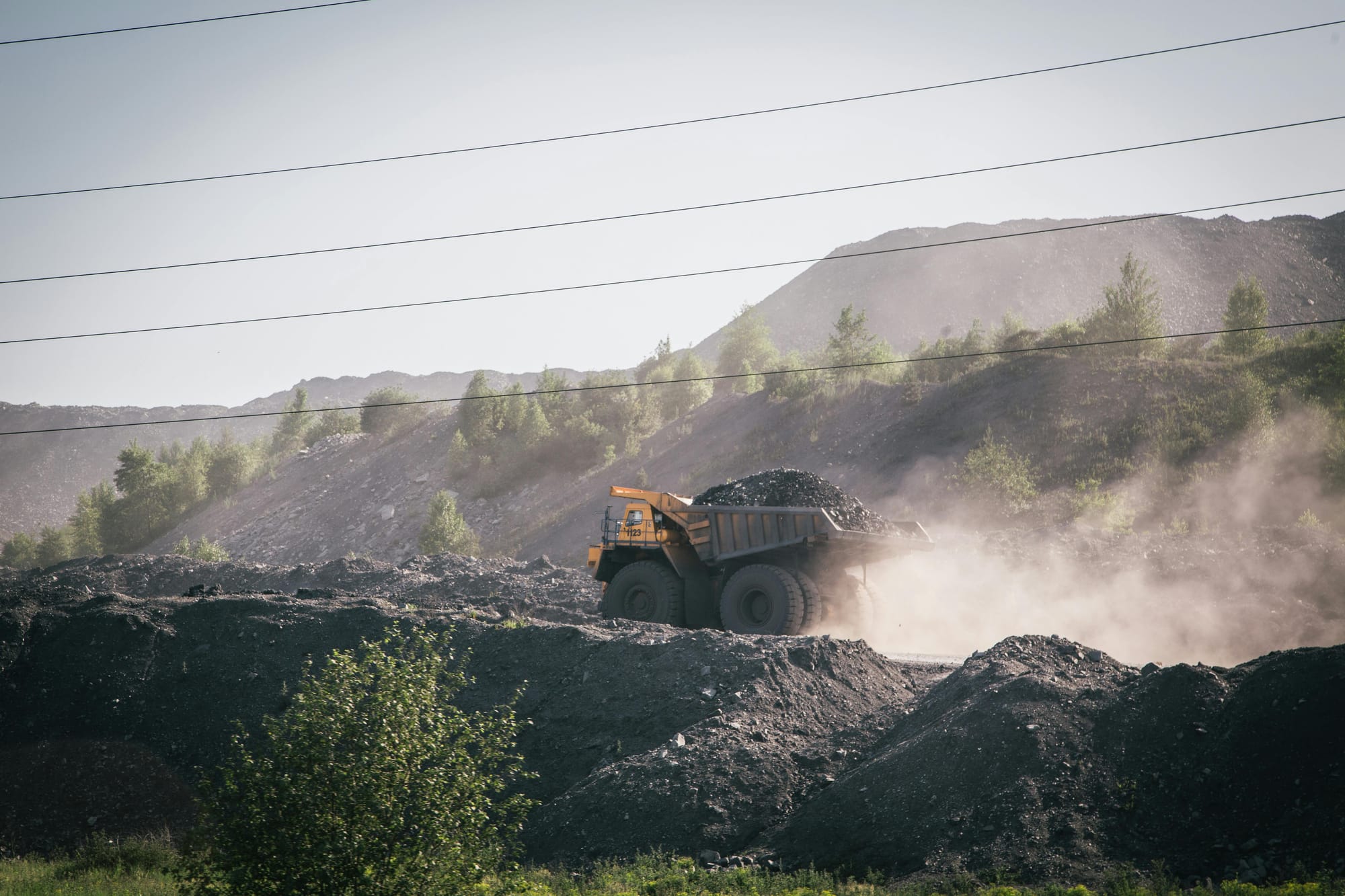
Heavy Rare Earth Elements (HREEs) and Why They Matter
Definitions matter because the market uses them loosely. In geological and industrial literature, LREEs are commonly defined as lanthanum through europium, while HREEs are gadolinium through lutetium; yttrium is not a lanthanide but is often grouped with HREEs in resource reporting because of similar ionic radius, co-occurrence, and downstream use patterns. Tanbreez company materials explicitly include yttrium in their HREO fraction, which is why reported HREO percentages there are higher than they would be under a strict lanthanide-only convention. [11]
HREEs are strategically harder materials than LREEs for three connected reasons. First, they are less abundant in the crust: one recent review cited roughly 137.8 ppm for LREEs versus 31.3 ppm for HREEs in average crustal abundance. Second, far fewer deposits are naturally enriched in the heavy end of the spectrum; most large hard-rock and carbonatite mines are dominated by cerium, lanthanum, neodymium, and praseodymium. Third, the HREEs that matter most industrially; especially dysprosium and terbium, sit in narrower supply chains and command much higher prices. USGS 2025 average oxide prices show the gap clearly: lanthanum oxide averaged about $1.00/kg and cerium oxide $1.71/kg, while dysprosium oxide averaged $239/kg and terbium oxide $1,010/kg. [12]
Global supply concentration remains the core system risk. USGS estimates total world rare-earth mine production at about 390,000 t REO equivalent in 2025, of which China accounted for 270,000 t, or roughly 69%. That mining concentration is only the starting point. According to the International Energy Agency [13], China accounted for 60% of mined magnet-rare-earth production in 2024, 91% of refined output, and 94% of sintered permanent magnet production. For heavy rare earths specifically, dependence is sharper still: the U.S. remained 100% net import reliant for heavy rare-earth compounds and metals in 2025, while China’s imports of heavy rare-earth oxides from Myanmar reached 41,700 tonnes in 2023, more than double China’s own domestic HREE mining quota for that year. In other words, the effective HREE system is not a diversified global market; it is largely a China-centered refining and magnet ecosystem fed by Chinese and Myanmar ionic-clay-type supply. [14]
Demand is concentrated in applications that value magnetic performance under heat, weight, and size constraints. The IEA estimates that permanent magnets account for about 95% of total rare-earth consumption by value. It also reports that each EV traction motor typically requires roughly 2–4 kg of permanent magnets, and that demand for magnet rare earths (Nd, Pr, Dy and Tb) has doubled since 2015 and is set to expand by about one-third by 2030 under current policies, crossing 120 kt, with EVs increasing from under 1% of magnet-REE demand in 2015 to 9% today and to 18% by 2030. Dysprosium and terbium matter because they improve coercivity and help NdFeB magnets retain performance at elevated temperature, which matters in high-speed EV motors, offshore wind generators, missiles, drones, and other systems that cannot tolerate thermal demagnetization. Reuters summarized the practical consequence neatly in late 2025: heavy-rare-earth-free magnets have some niche uses, but once operating temperatures rise into the 120–140°C range common in EV motors, “you need the heavies.” [15]
Yttrium and gallium sit in different strategic niches. USGS identifies yttrium’s leading end uses as catalysts, ceramics, electronics, lasers, metallurgy and phosphors. In defence and aerospace, yttrium is especially important in yttria-stabilized zirconia thermal-barrier coatings used to manage high temperatures in jet engines and space applications, and recent Reuters reporting showed how exposed that market is: GE Vernova[16] was working with the U.S. government to increase yttrium stockpiles after Chinese export restrictions caused severe shortages. Gallium, by contrast, is not a magnet input. USGS says 74% of gallium consumption is in analog and digital integrated circuits, with most of the rest in optoelectronic devices such as laser diodes, LEDs, photodetectors and solar cells; U.S. defence procurement notices specifically tie gallium-based devices to radar systems and electronic-warfare platforms. For Tanbreez, that means dyprosium is directly relevant to motors and generators, yttrium is relevant to coatings, lasers and electronics, and gallium is relevant primarily as a semiconductor/radar co-product rather than a rare-earth-magnet feedstock. [17]
Eudialyte Processing Challenges and Extraction Complexity
Tanbreez’s main differentiator is not just grade; it is mineralogy. The deposit is hosted in kakortokite within the Ilímaussaq intrusion, and the rare earths, zirconium, niobium and tantalum are concentrated principally in eudialyte, a sodium-rich zirconosilicate. The 2014 Tanbreez geology paper emphasized that the commodities are all contained in eudialyte and that bulk-rock chemistry shows strong linear correlations between zirconium and both light and heavy REEs, reinforcing that eudialyte is the dominant REE host. That same work also reported low uranium and thorium background values, around 20 ppm and 53 ppm respectively, which is a real permitting and waste-management advantage relative to many monazite-rich deposits. [8]
The problem is that eudialyte is not a conventional commercial rare-earth feedstock. Bastnäsite and monazite have long-established cracking and separation routes and existing industrial know-how. Eudialyte has some positives. It is acid-soluble and usually low in thorium/uranium, but also two major disadvantages. Its REE content is often lower than bastnäsite or monazite, so higher-grade preconcentrates are needed for economics; and its silica-rich chemistry creates a major hydrometallurgical hazard because direct acid attack can generate non-filterable silica gel. That gel issue is not a laboratory footnote. It is the central reason eudialyte projects have struggled to translate good geology into commercial production. [18]
Company planning reflects that constraint. Tanbreez proposes a surface mine feeding crushing and milling, followed by physical beneficiation, principally magnetic and gravity separation, to produce a eudialyte-rich concentrate on site. The concentrate, expected to assay roughly 20–30% TREO, would then be shipped to an offsite refinery in either North America or Europe for chemical extraction and separation into individual oxides. In other words, Greenland is currently being framed as a mine-and-concentrate location, not as a full mine-to-oxide-to-metal-to-magnet hub. That distinction matters because the technical and financial bottlenecks sit mostly after concentrate production. [19]
The best available proxy for processing performance comes from EURARE-related work on Greenland and Swedish eudialyte concentrates. A pilot-scale hydrometallurgical route based on dry digestion with concentrated HCl followed by water leaching was reported to achieve 88.8% leaching in the first two stages and 85.5% overall REE recovery to a 30% REE carbonate while suppressing silica-gel formation. That is encouraging, but it does not eliminate the downstream problem. The pregnant leach solution still requires impurity removal; zirconium, aluminium and iron were major impurities in the pilot work, and final rare-earth separation remains solvent-extraction intensive. A standard rare-earth separation plant can require hundreds of mixer-settler stages, and the heavy end of the spectrum is generally more difficult and more expensive to separate because of the smaller chemical differences between adjacent elements. [20]
For ore grades, the current compliant resource averages 0.38% TREO, which is modest rather than high in absolute terms. What makes Tanbreez interesting is the heavy enrichment, not bulk grade. Recent deeper drill intersections reported by the company averaged around 0.42–0.44% TREO with 24.5–28% HREE and around 102 ppm Ga2O3 in one of the key holes, while the older Tanbreez geological synthesis cited roughly 0.6% total REO including yttrium in the initial mining area of the broader body. The logical reading is that Tanbreez is a large, laterally continuous, low-to-moderate-grade hard-rock system whose economics depend on upgrading a very specific mineral host and then capturing value from a favorable element distribution. [21]
Tanbreez vs China’s Rare Earth Supply Chain Dominance
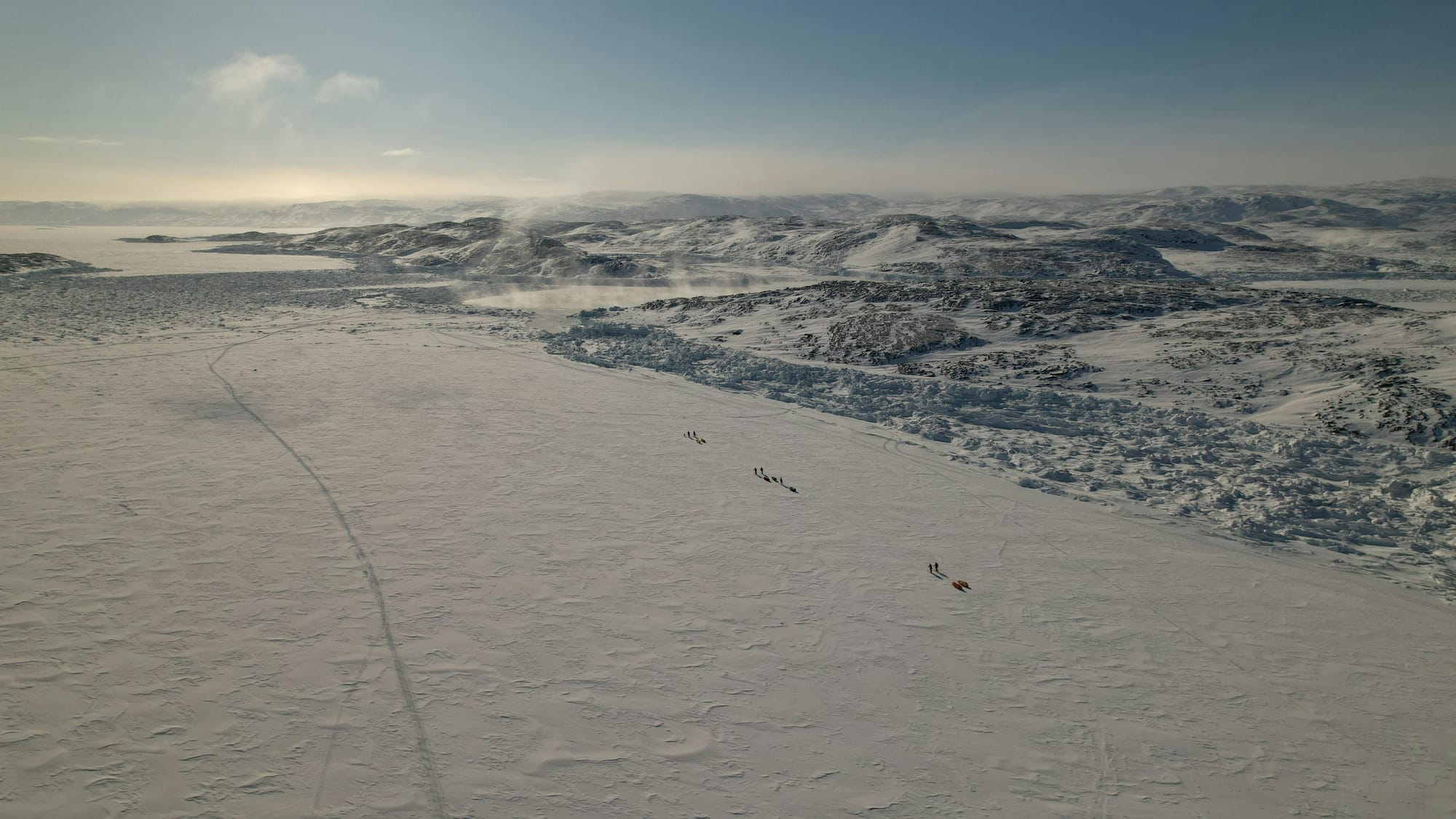
Tanbreez has better logistics than many Arctic projects, but “better than Arctic average” is not the same thing as simple. The favourable side of the ledger is clear: the site is coastal, company materials describe year-round deep-water fjord access, a small site port is contemplated, and bulk concentrate would likely move by ship to the east coast of North America or to Europe. Air access to southern Greenland is also improving, with Qaqortoq’s airport opening in 2026 and replacing the older Narsarsuaq-centric access model as the main gateway to the south. Those features materially reduce one of the biggest barriers in Greenland: long and costly overland haulage to export infrastructure. [22]
The constraint side is just as important. Greenland waters still involve Arctic marine operations. A 2019 navigation study notes that icebergs are present in Greenland waters year-round and that sea ice generally forms more extensively from November onward and expands southward over the winter season. Southern Greenland is milder and more navigable than the east and high north, but marine logistics, winter construction, standby time, weather downtime, specialized vessels, inventory buffering, and insurance all push costs upward relative to projects in Scandinavia, Canada’s south, or the continental United States. The company’s own PEA summary acknowledges that major works include port upgrades and that Arctic seasonality will matter even if the coastal climate permits a relatively long work season. [23]
Capital-cost realism therefore requires separating a mine-plus-concentrator case from a full Western supply-chain case. Reuters reported in June 2025 that the U.S. Export-Import Bank [24] had issued a letter of interest for up to $120 million toward a claimed $290 million Tanbreez mine expected to produce 85,000 t/y of rare-earth concentrate. That figure is directionally plausible for a relatively simple open pit plus dry concentration and port infrastructure, but it is not a credible all-in benchmark for a complete separated-oxide supply chain. Comparable ex-China REE projects show why: the 2021 Norra Kärr PEA cited initial capex of $487 million for a redesigned mine-plus-offsite-chemical-processing approach, while the 2021 Wicheeda PEA cited about C$461 million initial capex for staged development. The IEA adds that key rare-earth equipment outside China can be 5–12 times more expensive and often has 2–3 times longer lead times. On that basis, a realistic Westernized Tanbreez system that includes dependable heavy-rare-earth separation should probably be thought of as a several-hundred-million-dollar undertaking at minimum, and potentially materially higher once refining interfaces are included. [25]
Operating costs are similarly bifurcated. Mining itself appears comparatively favorable: the company describes a shallow outcropping deposit, low early strip ratio of around 0.5:1, and a conventional open-pit drill-blast-truck-shovel approach. OPEX pressure comes instead from comminution, concentration losses, reagent consumption in downstream refineries, energy, cargo handling, and freight. The company’s own summary identifies reagent and power as the largest processing-cost contributors. That pattern is typical for atypical REE mineralogy: the mine is seldom the hardest part. The plant chemistry is. [26]
One additional caution is that the published development parameters are not yet internally stable. A 2025 project document states the project is currently licensed for 500,000 tonnes per year, yet the scoping-study disclosure referenced a 19-year mine life extracting 24.25 million tonnes of eudialyte ore, which implies average throughput around 1.3 Mt/y. That mismatch suggests one of three things: a planned licence amendment, a phased ramp-up beyond the currently licensed rate, or unresolved inconsistencies between successive study packages. In a bankability review, that would be treated as a material open point rather than a clerical detail. [27]
Geopolitics of Greenland Rare Earth Development
The practical supply chain for Tanbreez is best represented as a sequence of chokepoints rather than a single mine-development problem: ore mining in Greenland, dry preconcentration to eudialyte-rich concentrate, chemical cracking/leaching and impurity removal, solvent-extraction separation into individual oxides, oxide-to-metal conversion, alloy/powder production, magnet fabrication, and finally integration into motors, turbines, radar modules, or aerospace systems. Tanbreez can plausibly address the first of those steps and perhaps part of the second. The strategic question is whether the rest of the chain can be built or contracted outside China at sufficient scale and at a cost that customers will bear. [28]
Today’s bottlenecks remain overwhelmingly downstream. The IEA places China at 91% of refined magnet-rare-earth output and 94% of permanent magnet output in 2024. It also notes that several key pieces of equipment and process knowledge outside China remain extremely expensive or unavailable, including metallisation equipment, strip casters, alignment pressers for sintered magnets, and grain-boundary-diffusion technology used to apply heavy rare earths to magnets. That means a new non-Chinese mine does not automatically create a non-Chinese magnet supply chain. Without secure ex-China separation, metallisation, alloying and magnet capacity, Tanbreez would mainly be a raw-material option feeding someone else’s chokepoint. [29]
This is why Tanbreez has attracted political attention out of proportion to its present development stage. Reuters reported that U.S. and Danish officials lobbied the original Tanbreez owner not to sell to Chinese-linked bidders, and the updated Greenland mineral-resources strategy explicitly prioritizes critical-minerals partnerships with the EU, renewal of cooperation with the United States, and Minerals Security Partnership funding channels. On the European side, the European Commission [30] states that the Critical Raw Materials Act sets 2030 benchmarks of 10% domestic extraction, 40% processing, and 25% recycling for strategic materials, with no more than 65% of annual need at any relevant processing stage coming from a single third country. Tanbreez therefore fits neatly into both U.S. and EU diversification narratives even before it produces a tonne. [31]
At the same time, Greenland’s politics impose limits that outside investors sometimes underweight. The 2025–2029 mineral strategy emphasizes sustainability, local societal development, investment attractiveness, improved IBA/SIA structures, and critical-minerals partnerships. But neighboring Kvanefjeld shows how quickly political and environmental concerns can overwhelm a large resource when uranium or local opposition enters the picture. Tanbreez enjoys a genuine advantage because low radioactivity makes it more politically manageable than Kvanefjeld. That does not remove permitting and social risk. Fisheries, grazing, fjord ecosystems, local benefit-sharing, and the optics of foreign control remain live issues in Greenland’s mining debate. [32]
Whether Tanbreez meaningfully reduces Western dependency therefore depends on what metric is used. If the metric is mine supply of heavy-rare-earth-bearing concentrate, the answer is yes, eventually. If the metric is separated dysprosium oxide, yttrium oxide, metal, alloy powder, or magnet production, the answer is only partially and only if linked projects in the U.S. or Europe actually materialize. The company has signaled that hydrometallurgical refining may be located in the U.S. or Europe and has signed offtake agreements with U.S. customers including Ucore Rare Metals [33], but the downstream chain is still emerging rather than established. [34]
Logistics and Infrastructure Constraints in Greenland
On current evidence, Tanbreez looks economically plausible but not yet bankable in the strict sense. The positive factors are meaningful: surface geometry, low early strip ratio, existing exploitation licence, fjord access, low uranium/thorium, and an HREE-rich distribution that is rare for a hard-rock deposit. The negative factors are equally meaningful: the current compliant resource is legacy and still being revalidated; there is no Ore Reserve; element-specific resource disclosure for Dy, Y and Ga remains incomplete; eudialyte chemistry adds flowsheet risk; and the heavy-rare-earth pricing that underpins project attractiveness is historically volatile and geopolitically distorted. [35]
A simple sensitivity frame is more useful here than a headline NPV. At a basket of $25/kg contained REO, the current compliant resource carries a gross in-situ value of about $4.27 billion; at $28/kg, about $4.78 billion; and at $31/kg, about $5.29 billion. Applying the 85.5% overall recovery demonstrated in EURARE-related pilot work would reduce those values to roughly $3.65 billion, $4.08 billion, and $4.52 billion respectively before further separation losses, payability penalties, refining charges, operating costs, sustaining capital and taxes. That explains both why Tanbreez attracts strategic capital and why investors should not extrapolate contained-value arithmetic into equity value. A mine can be geologically large and still be commercially fragile if the recovery path is narrow and the downstream chain is immature. [36]
Timeline realism is especially important. As of April 2026, the project had just cleared final ownership-transfer approval and was preparing a pilot bulk-sample program. Earlier company materials had targeted a feasibility study by late 2025, construction by 2026–2027, and ramp-up from 2028, but that schedule has already slipped relative to the state of the asset today. A realistic base case is that first concentrate production before 2028 would require rapid pilot success, firm project financing, detailed engineering, stable port and concentrator design, and bankable downstream separation arrangements. Commercial supplies of separated heavy rare earth oxides at meaningful scale look more like a 2029–2031 outcome than a near-term 2026–2027 supply solution. That conclusion is partly an inference from the disclosed development state, but it is the more defensible planning assumption. [37]
The best way to characterize Tanbreez economically is as a project whose viability is likely to depend on policy support, strategic offtake, and premium pricing for security-of-supply rather than on commodity-price normalcy alone. That does not make it uneconomic. It means the path to viability is political-industrial as much as geological. In a world without Western subsidies, export-credit support, or strategic procurement, Tanbreez would face a much higher hurdle. In a world with those supports, and with customers willing to pay for non-Chinese heavy-rare-earth optionality, it becomes substantially more credible. [38]
Final Assessment: Strategic Asset or Overhyped Resource?
Tanbreez is not a near-term cure for Western heavy-rare-earth dependence. It is a long-duration strategic asset whose importance remains in option value: a large, low-radioactivity, Western-controlled hard-rock source with an unusually favorable HREE+Y distribution and credible access to Atlantic export routes. The current compliant resource is meaningful, but it is not yet a reserve; the large geological endowment is real, but it is not yet commercial inventory; and the project’s eudialyte mineralogy is simultaneously its signature and its greatest technical risk. [39]
The system-level conclusion is therefore conditional. Tanbreez matters if paired with ex-China cracking, separation, metallisation, and magnet manufacturing. On its own, it adds concentrate optionality. With a fully linked Western downstream chain, it could become one of the more strategically important non-Chinese HREE suppliers of the 2030s. That is why governments care about it. But on a strict industrial-economics basis, Tanbreez should still be classified today as a promising but not yet fully de-risked project. Under current conditions it is better described as a long-term strategic asset than as a near-term supply fix. [40]
Works Cited
[1][2][7][16][21][24][35][39]
Tanbreez Project Announcement (ASX Filing)
https://announcements.asx.com.au/asxpdf/20250430/pdf/06j6gtwnnwr2mp.pdf
[3][18]
Mineral Processing of Eudialyte Ore from Norra Kärr
https://publications.rwth-aachen.de/record/668913/files/68_Mineral%20Processing%20of%20Eudialyte%20Ore%20from%20Norra%20K%C3%A4rr%20%2800000002%29.pdf
[4][25][30][38]
U.S. Export-Import Bank Considers Loan for Greenland Rare Earth Project – Reuters
https://www.reuters.com/business/us-export-import-bank-considers-120-million-loan-greenland-rare-earths-project-2025-06-15/
[5][13][17]
Yttrium Statistics and Information (Mineral Commodity Summary) – United States Geological Survey
https://pubs.usgs.gov/periodicals/mcs2024/mcs2024-yttrium.pdf
[6][27]
Tanbreez Project Preliminary Economic Assessment (PEA) – Critical Metals Corp
https://www.criticalmetalscorp.com/wp-content/uploads/2025/11/Tanbreez-PEA-03312025.pdf
[8][9]
Optimized Eudialyte Processing Study (Greenland Strategic Minerals)
https://greenlandstrategicminerals.com/gsm/wp-content/uploads/2025/12/HansKSchonwandt-Optimised.pdf
[10]
Heavy Rare Earth Elements (Mineral Commodity Summary 2026) – United States Geological Survey
https://pubs.usgs.gov/periodicals/mcs2026/mcs2026-rare-earths-heavy.pdf
[11]
Rare Earth Elements: Profile and Distribution – Natural Environment Research Council
https://nora.nerc.ac.uk/id/eprint/12583/1/Rare_Earth_Elements_profile.pdf
[12]
Eudialyte Processing and Rare Earth Extraction Study (ScienceDirect Article)
https://www.sciencedirect.com/science/article/abs/pii/S0883292724002634
[14]
Rare Earths (Mineral Commodity Summary 2026) – United States Geological Survey
https://pubs.usgs.gov/periodicals/mcs2026/mcs2026-rare-earths.pdf
[15][28][29][40]
Rare Earth Elements: Pathways to Secure and Diversified Supply Chains – International Energy Agency
https://iea.blob.core.windows.net/assets/de6a7c0d-f42e-4b0d-b16a-8dd3b9afb9e0/RareearthelementsPathwaystosecureanddiversifiedsupplychains.pdf
[19][22][26][34]
Tanbreez Rare Earth Project Overview (Investment Report)
https://investingnews.com/pdf-library/78343/02933982.pdf
[20][33][36]
Rare Earth Processing Technologies and Industrial Applications – Johnson Matthey
https://technology.matthey.com/content/journals/10.1595/205651318X15270000571362
[23]
Navigation Through Sea Ice in Greenland (Logistics Report)
https://earsc.org/sebs/wp-content/uploads/2019/04/1_full-report_Navigation-through-Sea-Ice-in-Greenland-final-issue-2.pdf
[31]
U.S. Lobbying Activity on Greenland Rare Earth Project (Tanbreez) – Reuters
https://www.reuters.com/markets/commodities/us-lobbied-greenland-rare-earths-developer-tanbreez-not-sell-china-2025-01-09/
[32]
Greenland Mineral Resources Strategy 2025–2029 – Government of Greenland
https://naalakkersuisut.gl/-/media/nyheder/2025/01/3101_ny_raastofstrategi/eng_greenland-mineral-resources-strategy-2025-2029.pdf
[37]
Critical Minerals and Rare Earth Market Analysis – Barron's
https://www.barrons.com/articles/critical-minerals-rare-earth-stock-e5b992c9
 John D
 John D
 John D
 John D