What Is AST SpaceMobile? Direct-to-Phone Satellite Network Explained (2026)
What ASTS is building, how it works, and why launch capacity and satellite design define its timeline.


AST SpaceMobile: Building a Cellular Layer in Orbit
AST SpaceMobile is often grouped into the broader category of satellite internet companies, alongside operators like SpaceX. That comparison captures the general domain but misses the underlying architecture.
AST SpaceMobile is building a direct-to-device cellular network from low-Earth orbit. The system is designed to connect standard mobile phones to satellites without requiring specialized hardware.
That design choice defines the engineering constraints, deployment model, and financial profile of the entire project.
What the System Does
The goal is straightforward: extend terrestrial cellular coverage beyond the limits of ground infrastructure.
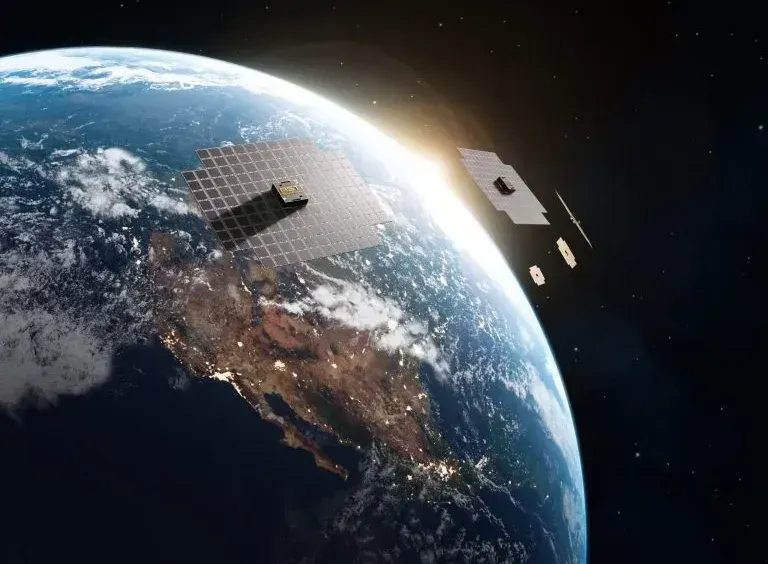
Instead of relying on dense networks of cell towers, ASTS deploys large satellites capable of communicating directly with consumer devices. Each satellite acts as a wide-area cell site, covering regions where traditional infrastructure is sparse or unavailable.
Primary use cases include:
- rural and remote coverage
- maritime and aviation connectivity
- emergency and fallback communication
The system integrates with existing mobile network operators, allowing it to function as an extension of current telecom networks rather than a separate ecosystem.
Engineering Constraints
AST SpaceMobile and Direct-to-Device Satellites: Architecture, Constraints, and Deployment Timeline
Delivering a usable cellular signal from orbit introduces a set of non-trivial requirements.
Distance and Power
Low-Earth orbit still places satellites hundreds of kilometers above the surface. Maintaining a connection with a standard phone requires:
- high-gain antennas
- significant onboard power
- precise beamforming to focus signal coverage
This drives satellite size and complexity.
Satellite Architecture
ASTS BlueBird satellites are large deployable systems rather than small modular units. Their scale is driven by the need to:
- generate sufficient power
- maintain signal strength
- support wide-area coverage
The tradeoff is straightforward:
- higher capability per satellite
- lower satellite count per launch
- increased dependence on larger launch vehicles
Constellation Density
Coverage depends on constellation design, not individual satellites.
To provide continuous service, the network requires:
- multiple satellites in coordinated orbits
- overlapping coverage zones
- reliable handoff between nodes
Until sufficient density is achieved, network performance remains constrained.
This creates a deployment threshold: the system becomes materially more useful only after a certain number of satellites are operational.
Deployment and Time Sensitivity
Each satellite represents capital that is inactive until deployed and integrated into the network.
Revenue generation depends on:
- geographic coverage
- service reliability
- telecom integration
Deployment delays directly affect:
- time to revenue
- capital efficiency
- overall project timelines
This creates a strong dependence on execution speed at every layer of the system.
Launch as a Critical Dependency
AST SpaceMobile relies on external launch providers to deploy its satellites, including:
- SpaceX
- Blue Origin
This introduces a dependency on the broader launch market, which remains:
- capacity constrained
- uneven in cadence
- sensitive to technical delays
Launch availability directly influences deployment timelines. Delays at this layer propagate into:
- slower constellation buildout
- deferred revenue
- extended capital deployment cycles
The launch layer functions as a gating factor for the entire system.

Vehicle Constraints and Provider Selection
Satellite size limits the set of viable launch options.
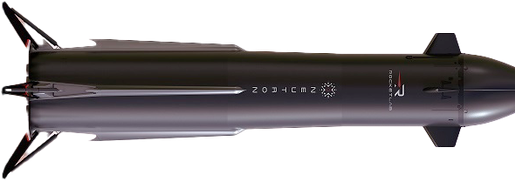
Smaller launch systems are not compatible with BlueBird-class payloads. For example, Rocket Lab operates Electron, a vehicle designed for small satellites. The payload capacity does not align with ASTS requirements.
Future vehicles such as Neutron may expand the available options, but they are not yet operational or proven in high-cadence deployment scenarios.
Current provider selection is driven by:
- payload mass requirements
- fairing volume constraints
- availability of launch slots
- demonstrated reliability
This narrows the field to medium- and heavy-lift providers with established track records.
Integration with Telecom Networks
AST SpaceMobile’s system is designed to operate within the existing telecom framework.
Key elements include:
- partnerships with mobile network operators
- shared spectrum access
- backend integration with terrestrial infrastructure
This allows the system to:
- extend coverage without replacing existing networks
- provide service continuity in low-density regions
- support emergency connectivity
The model leverages existing customer bases and infrastructure rather than requiring independent adoption at scale.
Competitive Positioning
Different satellite operators are optimizing for different use cases.
Starlink, developed by SpaceX, focuses on high-throughput broadband delivered through dedicated user terminals. The system is designed to provide primary internet connectivity.
AST SpaceMobile targets direct connectivity to standard mobile devices. The focus is on coverage extension and integration with existing cellular networks.
These architectures lead to different:
- hardware requirements
- deployment strategies
- revenue models
Overlap may occur in specific scenarios, but the core system designs address distinct problems.
System-Level Constraints
The viability of the network depends on coordinating multiple layers:
- satellite manufacturing and deployment
- launch availability and cadence
- orbital coordination
- telecom integration
- regulatory and spectrum approval
Each layer introduces its own constraints. System performance depends on alignment across all of them.
Progress is determined by:
- execution consistency
- timeline management
- ability to operate within external dependencies
 John D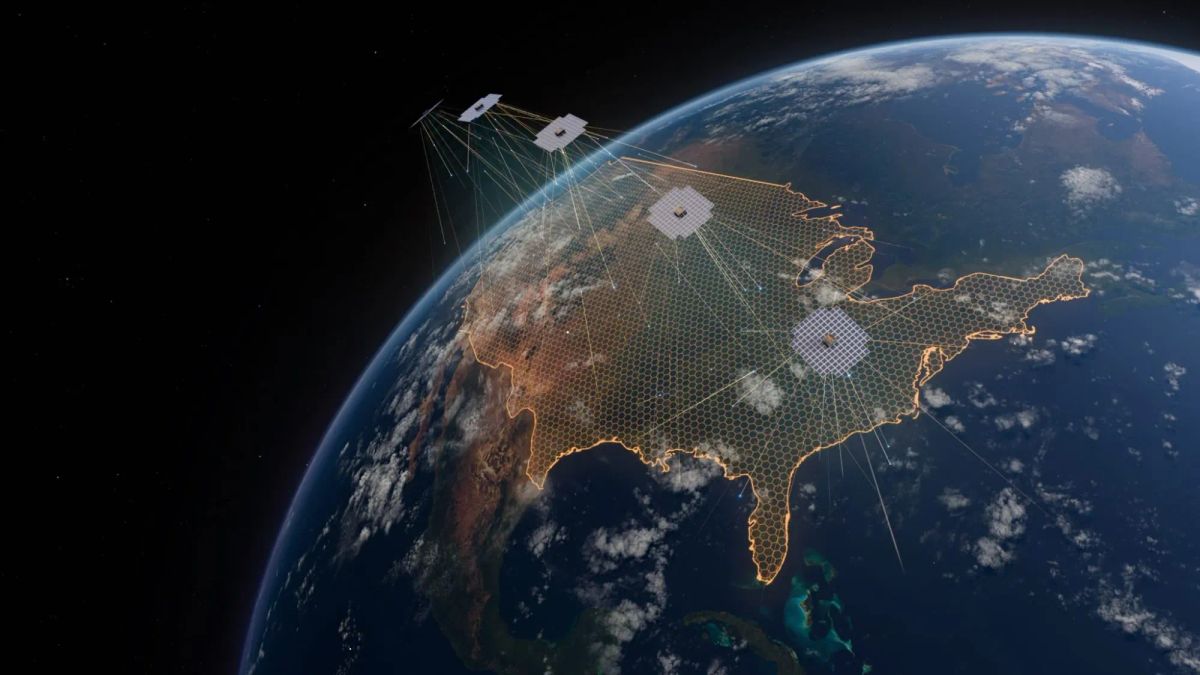
Conclusion
AST SpaceMobile is developing a space-based extension of the global cellular network. The system relies on large satellites, coordinated deployment, and integration with existing telecom infrastructure.
The primary challenges are not conceptual. They are operational:
- deploying sufficient satellite density
- maintaining access to launch capacity
- aligning technical, regulatory, and financial timelines
The project follows the characteristics of large-scale infrastructure development:
- high upfront capital requirements
- phased deployment
- delayed revenue realization
- dependence on external systems
Performance over time will depend on how effectively these constraints are managed.
The outcome is determined less by any single component and more by the coordination of the system as a whole.