Compact Fusion Microreactors: The Strategic Case for Distributed and Mobile Energy Infrastructure
Compact fusion microreactors could transform distributed energy, from Arctic outposts to military bases. Here's the strategic case for engaging now.


Compact Fusion at the Edge: The Strategic Case for Fusion Microreactors in Distributed and Mobile Energy Infrastructure
The Energy Paradox at the Edge
Consider the infrastructure ambitions of the next two decades. Arctic research stations are being expanded to monitor accelerating permafrost loss and shifting geopolitical boundaries. Pacific island nations are investing in desalination and data connectivity. Military planners are designing forward operating bases that must sustain operations for months without reliable resupply. Disaster-response networks must spin up rapidly in areas where grid infrastructure has been partially or entirely destroyed. Across each of these use cases, a single, stubborn constraint reasserts itself: energy.
The global push toward distributed and mobile infrastructure, driven simultaneously by climate adaptation, geopolitical competition, and digital connectivity, has outpaced the energy systems designed to power it. The tools available remain largely those of the 20th century: diesel generators that require continuous logistics chains, battery systems whose energy density caps out well below what sustained high-demand operations require, and renewable installations that remain hostage to weather and geography. Each of these technologies has a role; none of them solves the problem.
The distributed energy infrastructure needs a fundamentally different power source. The question is which candidate technologies are sufficiently mature, safe, and deployable to fill that gap, and on what timeline. That framing is where compact fusion enters the strategic conversation.
What Is a Fusion Microreactor?
Fusion and fission are routinely conflated in public discourse, a conflation that does neither technology any analytical favors. Fission, the basis of every commercial nuclear power plant operating today, splits heavy atomic nuclei to release energy, generating long-lived radioactive waste and relying on a chain reaction that requires careful management to prevent runaway. Fusion does the opposite: it forces light nuclei together, typically isotopes of hydrogen, to release energy. It is, in a meaningful sense, the same process powering the sun.
The practical appeal of fusion has always been obvious. Deuterium, one of the primary fusion fuels, is extractable from ordinary seawater at negligible cost and effectively limitless scale. The reaction produces no carbon, no long-lived radioactive waste, and crucially, no self-sustaining chain reaction. A fusion reactor cannot melt down in the manner of a fission plant; if plasma confinement fails, the reaction simply stops. The challenge has always been the engineering: confining plasma at temperatures exceeding 100 million degrees Celsius is extraordinarily difficult, and for decades, the energy required to sustain the plasma has exceeded the energy it produced. That constraint has shaped fusion's reputation as the perpetually deferred technology.
 John D
The microreactor form factor is a more recent development within this space. Where traditional fusion programs, most notably ITER, the international project under construction in France, target utility-scale output of hundreds of megawatts, compact fusion developers are pursuing designs with sub-100 MWe output targets in configurations small enough to be transported by truck or deployed in modular arrays. Organizations including Commonwealth Fusion Systems, Helion Energy, and TAE Technologies are pursuing distinct technical approaches to this goal, ranging from high-temperature superconducting tokamaks to field-reversed configurations and beam-driven systems. The December 2022 milestone at the National Ignition Facility, in which a fusion reaction produced more energy than the laser energy delivered to the fuel target, achieving Q greater than 1, provided important proof-of-concept validation, though its relevance to commercial compact fusion is indirect rather than direct. NIF demonstrated ignition; it did not demonstrate a deployable power system. The distinction matters, but the milestone meaningfully shifted the evidentiary landscape.
Why Distributed Grids? The Strategic Logic
The case for compact fusion is strongest not where centralized grids already function well, but precisely where they do not. Three interlocking arguments define the strategic logic.
The first is the energy density advantage relative to conventional logistics. Diesel, the incumbent fuel for off-grid power generation, requires continuous resupply chains that are expensive, vulnerable, and operationally constraining. The U.S. Department of Defense has long recognized that fuel logistics constitute one of its most significant operational vulnerabilities; supply convoys in conflict zones face interdiction risks, and the costs of forward-delivered fuel can reach multiples of its baseline price. Fusion fuel, by contrast, is orders of magnitude denser in energy-per-kilogram terms and requires resupply on a fundamentally different timescale. A compact fusion system designed for a forward operating base or an Arctic energy hub would not require weekly diesel tanker deliveries; it would run on fuel stockpiles that could be pre-positioned months or years in advance.
The second argument is the baseload advantage over renewable alternatives. Solar and wind installations have made meaningful inroads in distributed energy contexts, and their economics have improved dramatically. But they share a structural limitation: they are intermittent, and pairing them with sufficient storage to support high-demand, mission-critical loads remains expensive and in many deployment contexts impractical. A Pacific island chain grid that relies on solar-plus-storage must design for worst-case conditions (extended cloud cover, seasonal variation, demand spikes) and that design envelope drives costs upward and reliability downward. A fusion microreactor provides dispatchable, continuous baseload power unaffected by weather, geography, or season. For applications including hospitals, data centers, water treatment facilities, and military installations, that characteristic is operationally necessary.
The third argument is modularity. Centralized grid infrastructure requires massive capital outlays and years of construction before a single watt reaches an end user. Modular microreactor deployments, whether fission-based in the near term or fusion-based as the technology matures, allow incremental scaling matched to actual demand growth. A remote mining operation can commission a single unit, then add capacity as production expands. An island grid can phase deployment to match population growth and electrification targets. This scalability profile aligns with the financial and planning realities of the environments where distributed energy is most needed.


Technical Maturity and the Road to Deployment
Intellectual honesty demands a clear-eyed account of where compact fusion technology actually stands. The enthusiasm generated by the NIF milestone and the surge in private investment, cumulative private capital into fusion ventures exceeded $6 billion by 2023 and 2024, a figure that would have seemed implausible a decade earlier, has occasionally outpaced the underlying engineering reality. Assessing the technology's genuine trajectory requires distinguishing between scientific progress, engineering feasibility, and commercial deployment readiness.
On the Technology Readiness Level (TRL) scale used by the U.S. Department of Energy and analogous frameworks globally, most compact fusion approaches currently sit in the TRL 3 to 5 range: proof-of-concept and technology validation in laboratory settings, with some approaches reaching early prototype demonstration. The gap between TRL 5 and the TRL 8 or 9 required for deployed commercial systems is substantial, and it is in that gap, or the engineering development phase, where fusion programs have historically stalled or slipped.
Several technical challenges remain genuinely difficult. Plasma stability at smaller scales is an active research area; achieving and sustaining the conditions required for net energy gain in a compact form factor requires advances in both confinement physics and control systems. Tritium fuel cycle management presents supply chain challenges, as tritium is scarce and must be bred from lithium within the reactor system itself; a process that has not yet been demonstrated at scale in a commercial-trajectory device. Materials science remains a binding constraint: the neutron bombardment produced by deuterium-tritium fusion degrades structural materials in ways that fission reactors do not, and developing materials that can withstand decades of neutron flux in a compact system is an engineering problem of the first order. Power conversion efficiency (the fraction of fusion energy that can be converted to useful electricity) is another variable that significantly affects economic viability and has not yet been optimized in compact configurations.
Timelines from developers themselves cluster around the early 2030s for pilot plant operation, with commercial deployment scenarios typically placed in the mid-to-late 2030s. These estimates are presented with varying degrees of confidence, and the fusion field's history of optimistic timeline projection warrants appropriate skepticism. What has changed, however, is the nature of the actors making the claims. Private companies with fiduciary obligations to investors operate under different incentive structures than publicly funded research programs, and the commitment of serious capital to milestone-based development programs provides at least some discipline on timeline projection that earlier fusion programs lacked.
The regulatory pathway adds further complexity. The U.S. Nuclear Regulatory Commission has been developing frameworks for advanced reactors, and fusion presents a distinct regulatory profile from fission, potentially qualifying for lighter-touch oversight given its passive safety characteristics and absence of long-lived waste. However, regulatory clarity for mobile and maritime fusion deployments remains incomplete. A compact fusion system intended for deployment on a naval vessel, a mobile military platform, or a floating power barge would require regulatory frameworks that currently do not fully exist, spanning multiple agencies and potentially international bodies including the International Maritime Organization.
John D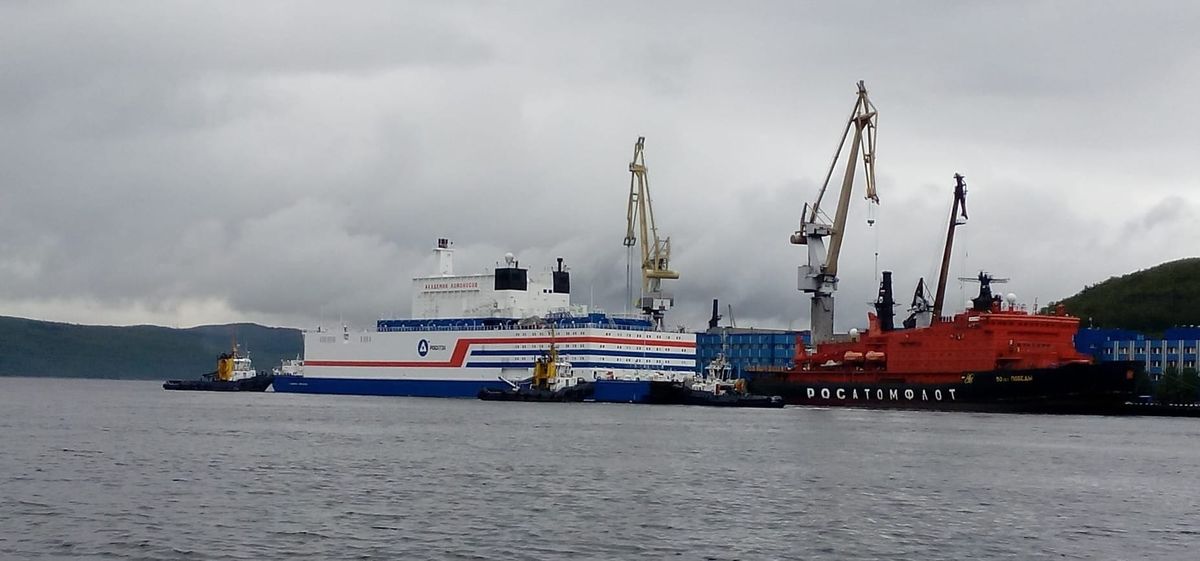
Defense and Critical Infrastructure Applications
The defense sector represents both the most natural early market for compact fusion and a potentially decisive accelerant for its development trajectory. The U.S. Department of Defense's Operational Energy Strategy has long identified energy as a critical vulnerability and a strategic priority. Project Pele — the DoD program that produced a transportable fission microreactor prototype — demonstrated the military's willingness to invest in advanced nuclear for forward-deployed applications. Compact fusion, if it achieves the technical milestones its developers are targeting, would offer meaningful advantages over fission in this context: simpler waste management, reduced regulatory burden for overseas deployment, and fuel logistics that depend on stockpiles rather than continuous supply chains.
The civilian critical infrastructure case is equally compelling. Remote communities in Alaska, northern Canada, and across the Arctic currently pay some of the highest energy costs in the world for some of the least reliable supply, which is a consequence of diesel dependency in geographies where alternative fuel delivery is challenging and renewable resources are constrained. Island nations across the Pacific and Caribbean face similar economics. Mining operations in remote regions carry energy costs that directly affect their economic viability. In each of these contexts, a compact fusion system providing baseload power at a levelized cost competitive with diesel would represent a fundamental economic improvement, not merely a marginal efficiency gain.
There is also a dual-use dynamic worth tracking. Technologies developed for defense deployment have historically accelerated civilian commercialization through shared R&D investment, regulatory pathway development, and manufacturing scale. The internet, GPS, and advanced materials all carry defense parentage. If the DoD serves as anchor customer for compact fusion microreactors while absorbing early development costs and establishing operational track records, the path to civilian deployment compresses meaningfully. Planners in both sectors should watch this dynamic closely.

Investment, Policy, and the Role of Public-Private Architecture
The enabling conditions for compact fusion deployment at scale are not purely technical. They are also financial, regulatory, and geopolitical, and in each of these dimensions, the architecture of public-private collaboration will be determinative.
Government has an indispensable role to play as anchor customer, risk absorber, and regulatory architect. The Department of Energy's loan guarantee programs, Advanced Research Projects Agency-Energy funding mechanisms, and potential DoD procurement commitments represent the kinds of de-risking instruments that can bridge the valley between prototype and commercial deployment. Early-stage private capital is flowing; what the sector now needs is instruments that can support the expensive, multi-year engineering campaigns required to move from TRL 5 to TRL 8, a phase where traditional venture capital timelines and return expectations are poorly matched to project realities.
The private capital surge merits analysis rather than celebration. The $6 billion-plus committed to fusion ventures signals serious conviction from sophisticated investors, but it also creates dynamics that require careful management. Competitive pressure among developers, with each pursuing proprietary technical approaches, may inhibit the kind of shared infrastructure investment and standards development that could accelerate the field as a whole. Investors entering fusion with standard VC return horizons and exit timelines face a mismatch with a technology development cycle that will almost certainly extend beyond a decade. Portfolio approaches with milestone-based tranches, patient capital structures, and realistic expectations about the distribution of outcomes are more appropriate instruments than conventional growth equity.
The international dimension adds further strategic complexity. China has substantially increased its fusion research investments and is pursuing both ITER participation and independent national programs. The European Union's fusion roadmap positions the technology as a medium-term energy security asset. The competitive dynamic is real and should inform policy, but it also creates opportunities for standards coordination that would benefit all parties. Regulatory harmonization for mobile and maritime fusion deployments, in particular, requires multilateral frameworks that no single nation can establish unilaterally.
Strategic Recommendations
For policymakers, the near-term priority is regulatory preparation. Establishing demonstration sandboxes for compact fusion, such as designated zones where pilot plants can operate under streamlined but rigorous oversight, would allow operational track records to develop without the full burden of commercial regulatory frameworks. Integrating fusion into national energy security planning documents, alongside fission microreactors and advanced battery storage, ensures the technology receives appropriate analytical attention as infrastructure decisions with decade-long lead times are made today.
For investors, the imperative is calibrating return expectations and capital structures to the actual development cycle. Fusion is not a software startup; it will not reach product-market fit in three years. The investors best positioned to benefit are those with patient capital, genuine technical due diligence capabilities, and portfolio construction approaches that account for the high variance of outcomes across competing technical approaches. The field will likely produce one or two dominant approaches and several failures. Diversified exposure across different confinement strategies is more prudent than concentrated bets.

For infrastructure planners in government and the private sector, the recommendation is to begin scenario planning now. Procurement cycles, siting decisions, and grid architecture choices made in the next five years will shape the physical and regulatory landscape that compact fusion either fits into or does not. Building fusion-compatible assumptions into long-range infrastructure plans, even while treating the technology as a probabilistic rather than certain input, is the kind of optionality preservation that sophisticated planning demands.
For the research and engineering community, the message from recent progress is that the bottleneck is shifting. The fundamental physics of fusion energy gain has now been demonstrated. The work that remains is primarily systems engineering: integrating plasma physics, materials science, tritium management, power conversion, and control systems into a device that operates reliably and economically at scale. That shift in emphasis should be reflected in research funding priorities and talent development pipelines.
A Calculated Bet Worth Making
No responsible analysis of compact fusion should promise certainty. The history of the field counsels humility, and the engineering challenges ahead are real and unresolved. What has changed in the past several years is the weight of evidence bearing on the question of whether those challenges are likely to be solved, and on what timeline. The NIF ignition result demonstrated that the physics works. Private capital has demonstrated that sophisticated actors believe the engineering can be solved. Preliminary regulatory engagement has demonstrated that deployment frameworks are conceivable.
What compact fusion microreactors represent, if their development trajectory holds, is a fundamental reordering of the energy economics that govern distributed and mobile infrastructure. The logistics chains that constrain military operations, the diesel costs that burden remote communities, the intermittency that limits renewable deployment in critical applications, each of these constraints dissolves if compact fusion reaches commercial deployment. While fusion isn't guaranteed; it is a scenario with a credible probability and an enormous payoff.
For strategists, investors, and infrastructure planners, the appropriate posture is neither evangelical adoption nor dismissive wait-and-see. It is calculated engagement: monitoring technical milestones, participating in regulatory development, building planning flexibility, and positioning now for a future in which the edge of the energy grid is no longer the edge of energy possibility. The organizations that do this work today will find themselves well-positioned for a transition whose timing remains uncertain but whose direction is increasingly clear.