How to Set Up a Small-Scale Algae Bioreactor (2026): IBC Tote Design, Power Needs, and Off-Grid Bioproduction
Learn how small-scale algae bioreactors use IBC totes, light, and solar power to produce biomass in compact, off-grid setups.

Setting Up a Small-Scale Algae Bioproduction Setup: A Practical Conceptual Framework Using Accessible Components
Summary
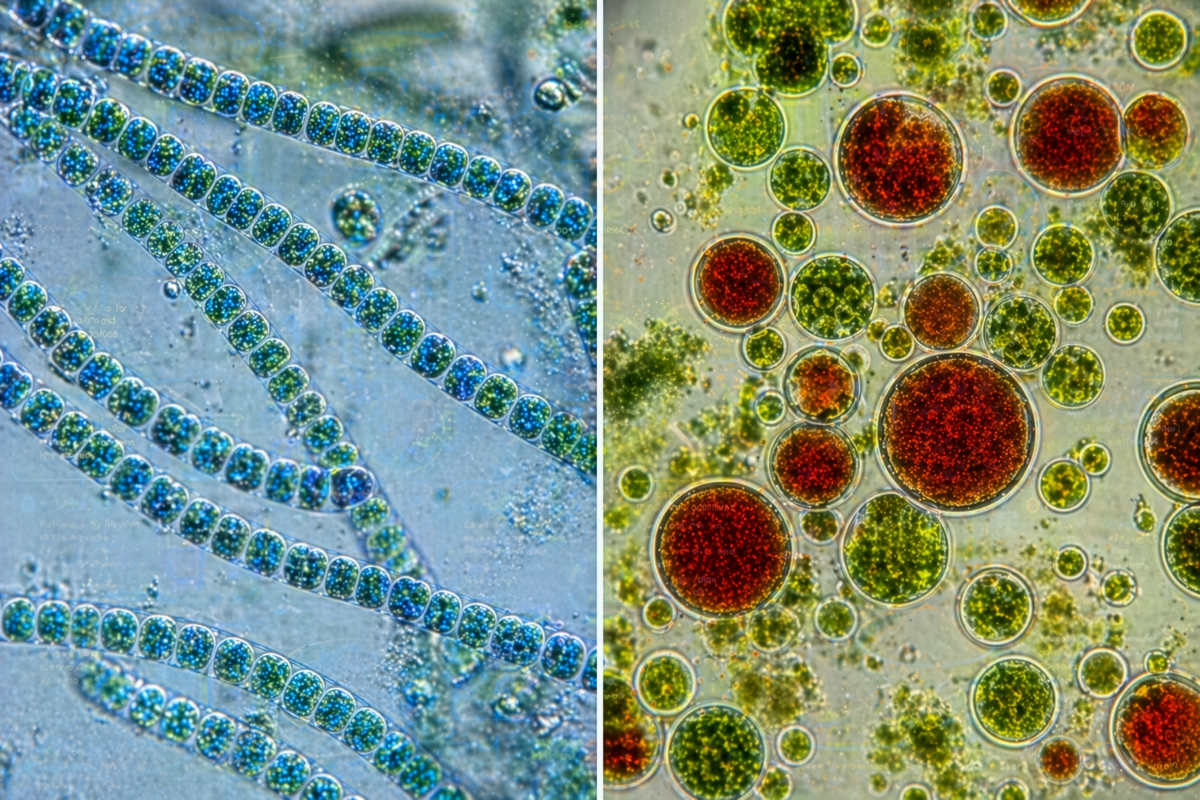
Small-scale microalgae production is often presented either as a hobbyist experiment or as an industrial process, with little middle ground. In practice, viable setups exist between these extremes, using accessible materials and modest infrastructure to produce meaningful biological output. The challenge is not the container or the organism itself but understanding the functional requirements that enable sustained operation.
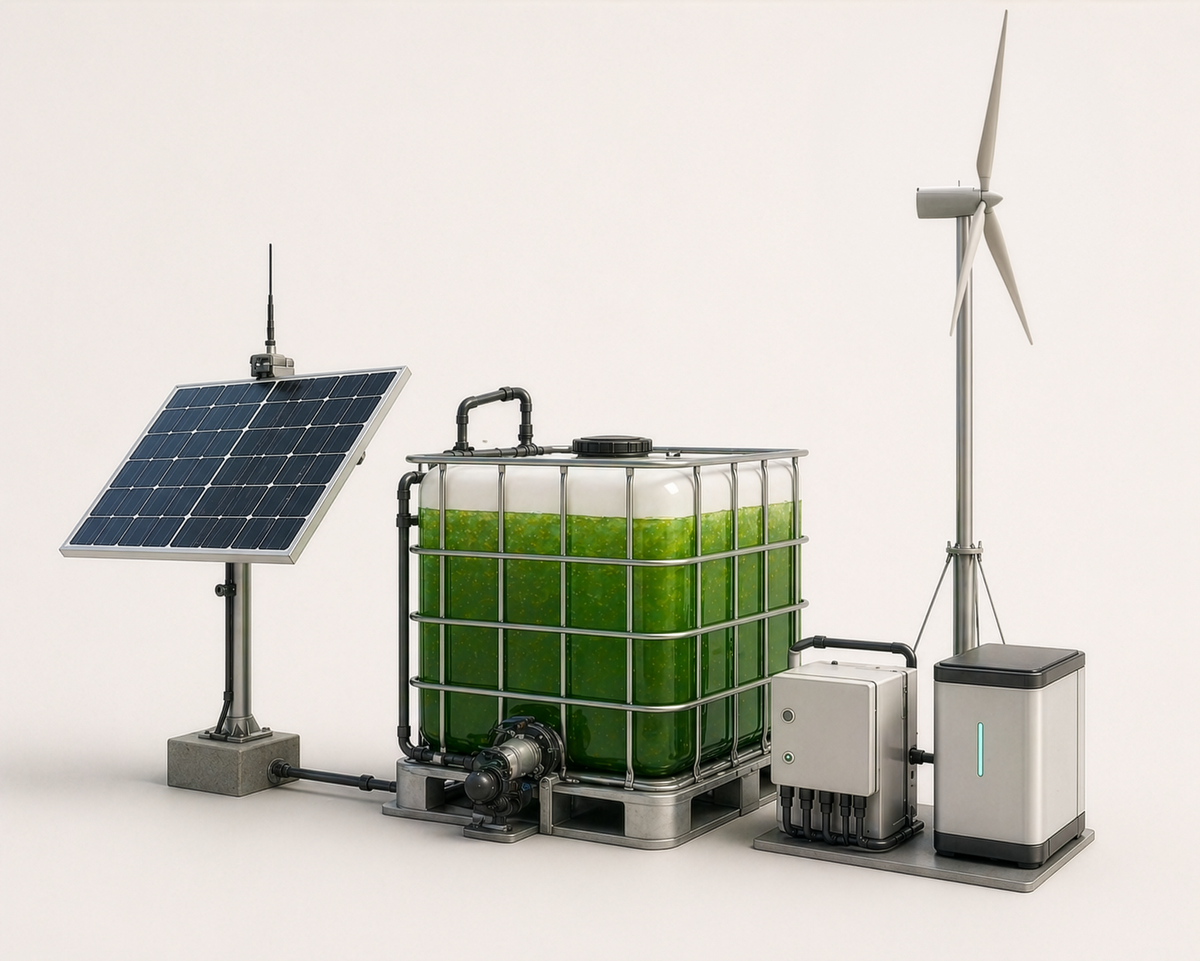
This framework outlines how a small-scale setup can be assembled using commonly available components, with an emphasis on modularity, controllability, and partial energy independence. Rather than prescribing a single build, it defines the core layers any system must satisfy and demonstrates how these layers can be combined in a practical configuration using an intermediate bulk container (IBC tote) as a reference model.
1. Framing the System
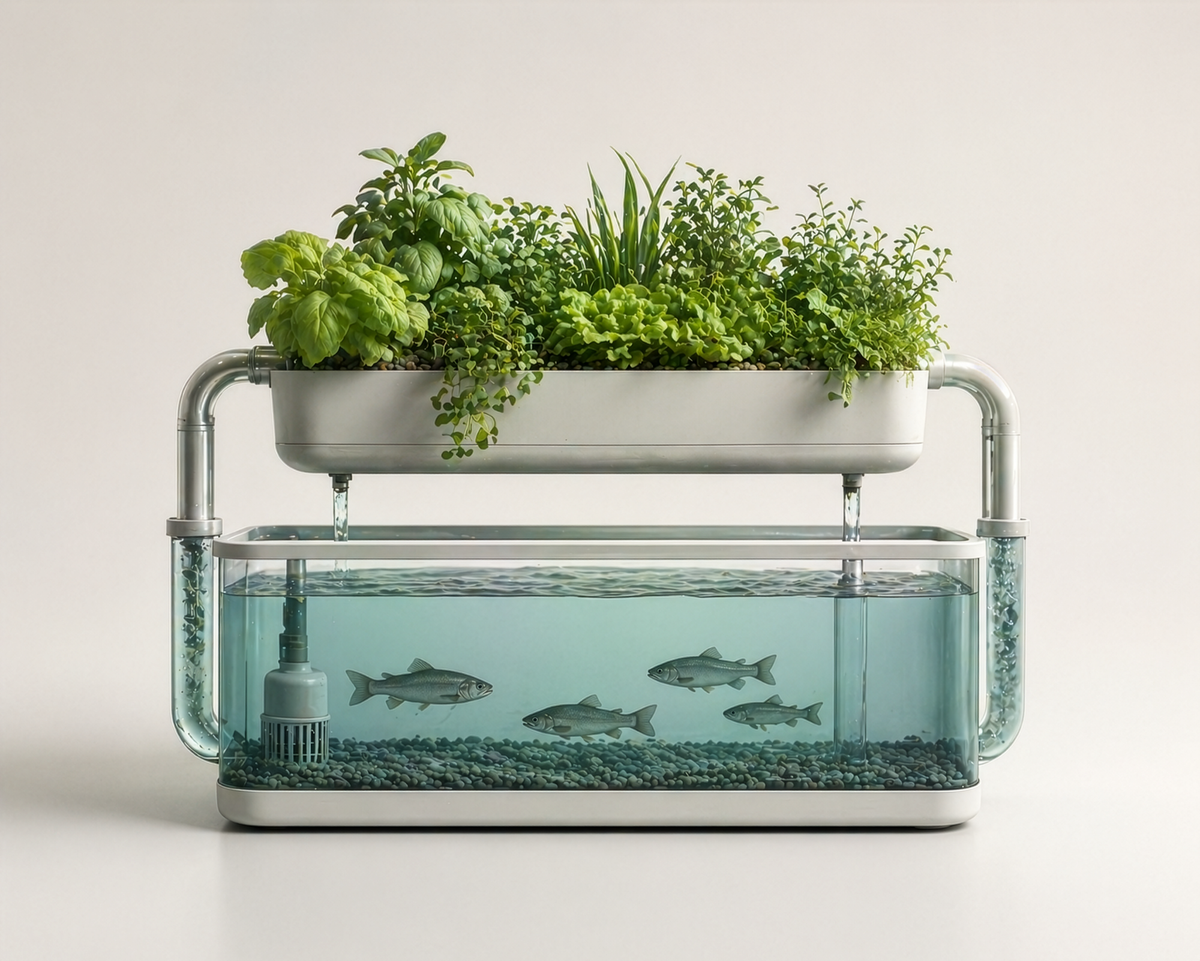
A small-scale algae setup is best understood not as a “tank,” but as a compact biological production unit. It converts light, carbon dioxide, water, and nutrients into biomass and, depending on the organism, higher-value compounds. The performance of this unit is determined by how well it manages a set of constraints: containment, energy input, gas exchange, nutrient availability, circulation, and output handling.
Once these constraints are clear, the physical design becomes flexible. Different communities or individuals can implement the same functional model using different materials, depending on availability and context.
2. Containment: Defining the Growth Volume
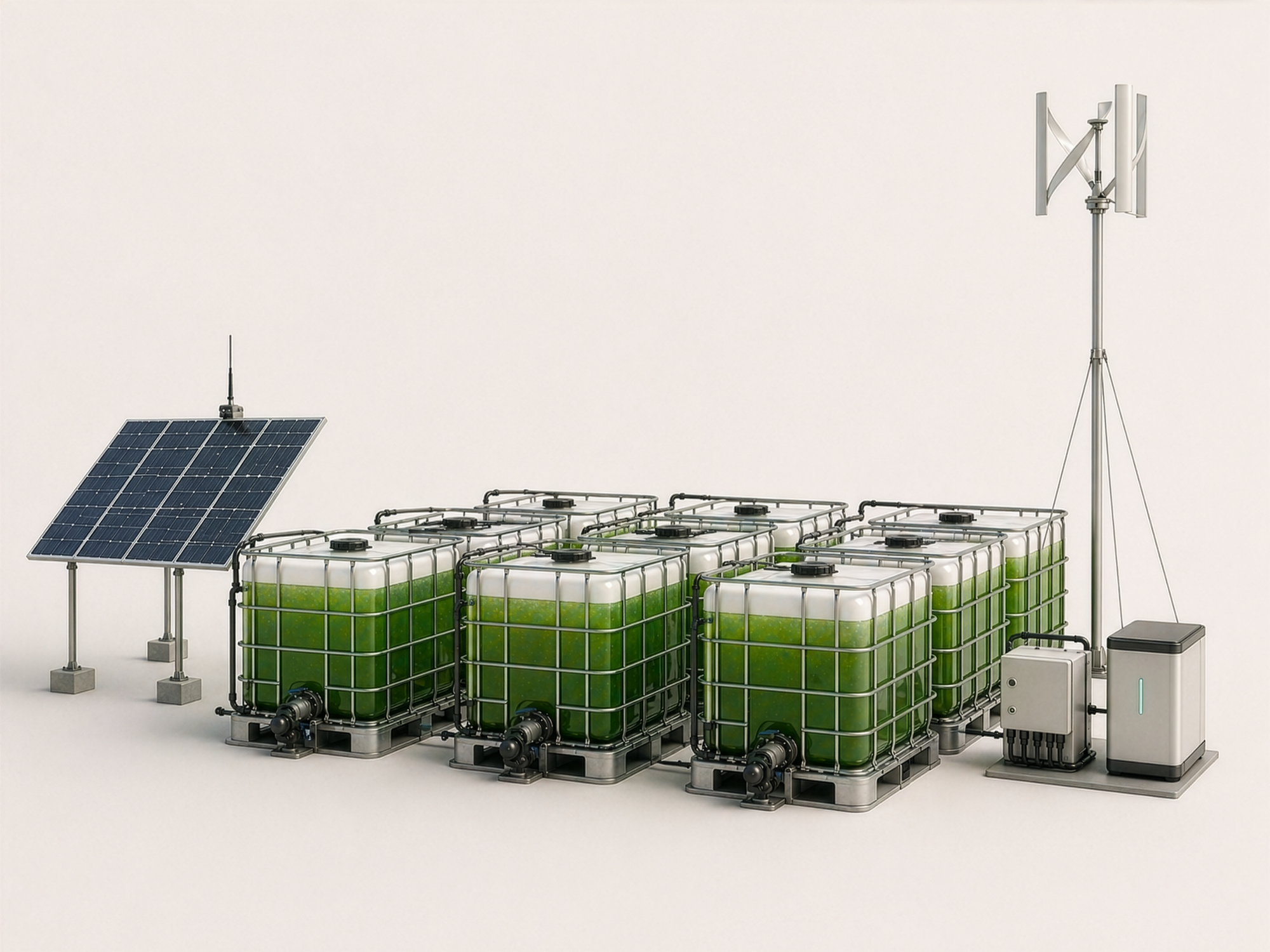
Every system begins with a controlled volume in which the culture is maintained. For most accessible setups, a 275-gallon IBC tote provides a practical starting point. These containers are widely available, structurally robust, and easy to integrate into modular layouts.
The tote defines the scale of production and sets the baseline for all other parameters. It can be modified to increase light penetration, improve access, or integrate plumbing, but its primary role remains simple: to hold a stable, manageable volume of culture that can be monitored and adjusted over time.
In this context, the container is the anchor point around which the rest of the system is built.
3. Light Input: Driving Biological Activity
Microalgae rely on light as their primary energy source. In a low-complexity configuration, natural sunlight provides this input, making outdoor placement or greenhouse integration attractive. However, sunlight introduces variability in intensity, duration, and spectral composition.
Artificial lighting offers greater control. LED arrays can be tuned to deliver consistent light profiles, enabling more predictable growth cycles. This control comes at the cost of increased energy demand, which must be accounted for in the broader system design.
The key tradeoff is straightforward: natural light reduces energy requirements but limits control, while artificial light increases control but introduces dependence on a stable power source.
4. Gas Exchange: Maintaining Growth Conditions
Algae require a steady supply of carbon dioxide and the ability to release oxygen. In an enclosed or semi-enclosed system, this exchange must be actively maintained. Without it, growth slows or stalls.
In practical terms, this is often achieved through continuous or periodic aeration. Air movement through the culture serves two purposes simultaneously: it delivers carbon dioxide and prevents stratification within the liquid. Even in simple setups, some form of gas exchange is necessary to maintain viability over time.
5. Nutrient Input: Sustaining the Culture
Microalgae growth depends on the availability of key nutrients, including nitrogen, phosphorus, and trace elements. The consistency of these inputs has a direct impact on yield and stability.
In small-scale systems, nutrient strategies can vary widely. Some rely on pre-formulated inputs, while others integrate with broader resource loops. The important consideration is not the specific formulation, but the reliability of supply and the ability to maintain balance over time.
Inconsistent nutrient availability introduces variability that can cascade through the system, affecting both growth and output quality.
6. Circulation and Mixing: Enabling Uniform Growth
Static water conditions limit productivity by creating uneven exposure to light and nutrients. Circulation ensures that cells are continuously moved through illuminated zones and that nutrients are evenly distributed.
In an IBC-based setup, this can be achieved through simple mechanical or pneumatic means. The goal is not high complexity, but consistent movement. Even modest mixing significantly improves system performance compared to a stagnant configuration.
 John D
7. Harvest and Output: From Biomass to Use
At small scales, the most immediate output is biomass itself. This can be harvested periodically and used directly, depending on the organism and intended application. More refined outputs require additional processing, which introduces further complexity.
The key distinction is between producing raw biomass and producing refined compounds. The former is accessible within simple setups, while the latter often depends on additional infrastructure and technical capability. Recognizing this boundary is essential when defining the scope of a small-scale system.
8. Energy Layer: Toward Partial Independence
Energy requirements vary depending on the level of control in the system. A sunlight-driven setup with minimal mechanical support can operate with very low power input, limited to basic aeration or circulation. In contrast, a system using artificial lighting and continuous monitoring will require a more substantial and stable energy supply.
A practical small-scale configuration might operate in the range of tens to a few hundred watts on average, depending on whether lighting is included. This makes it feasible to integrate with a modest renewable energy setup. A small solar array, supplemented by battery storage, can provide continuous operation for low-power systems, while hybrid configurations may incorporate wind generation where conditions allow.
The purpose of this energy layer is not full autonomy in all conditions, but operational continuity under variable inputs. By aligning energy demand with available generation, the system can remain functional even when external power is limited or intermittent.
9. Integrating the Layers
When combined, these components form a coherent production unit. The container defines the physical boundary, light drives biological activity, gas exchange and nutrients sustain growth, circulation maintains uniformity, and the energy layer supports continuous operation.
The IBC tote serves as a useful reference because it allows these layers to be visualized in a single, accessible format. It is not the only possible implementation, but it demonstrates how a functional system can be assembled without specialized infrastructure.
Conclusion
A small-scale algae bioproduction setup is less about specific equipment and more about understanding the constraints that govern biological output. Once these constraints are clear, a wide range of implementations becomes possible, using materials and energy sources that are locally available.
The result is not a laboratory-grade facility, but a compact, adaptable production unit capable of generating useful biological output within defined limits. By focusing on function rather than form, this framework provides a foundation for experimentation, iteration, and gradual refinement over time.
 John D
 John D
 John D
 John D
 John D