Nematodes Beyond Pest Control: Soil Health, Longevity Research, Aquaculture, and Biotech Applications
Nematodes drive soil health, power longevity research, and support aquaculture, far beyond their role in pest control.

Expanding the Role of Nematodes in Biological Systems
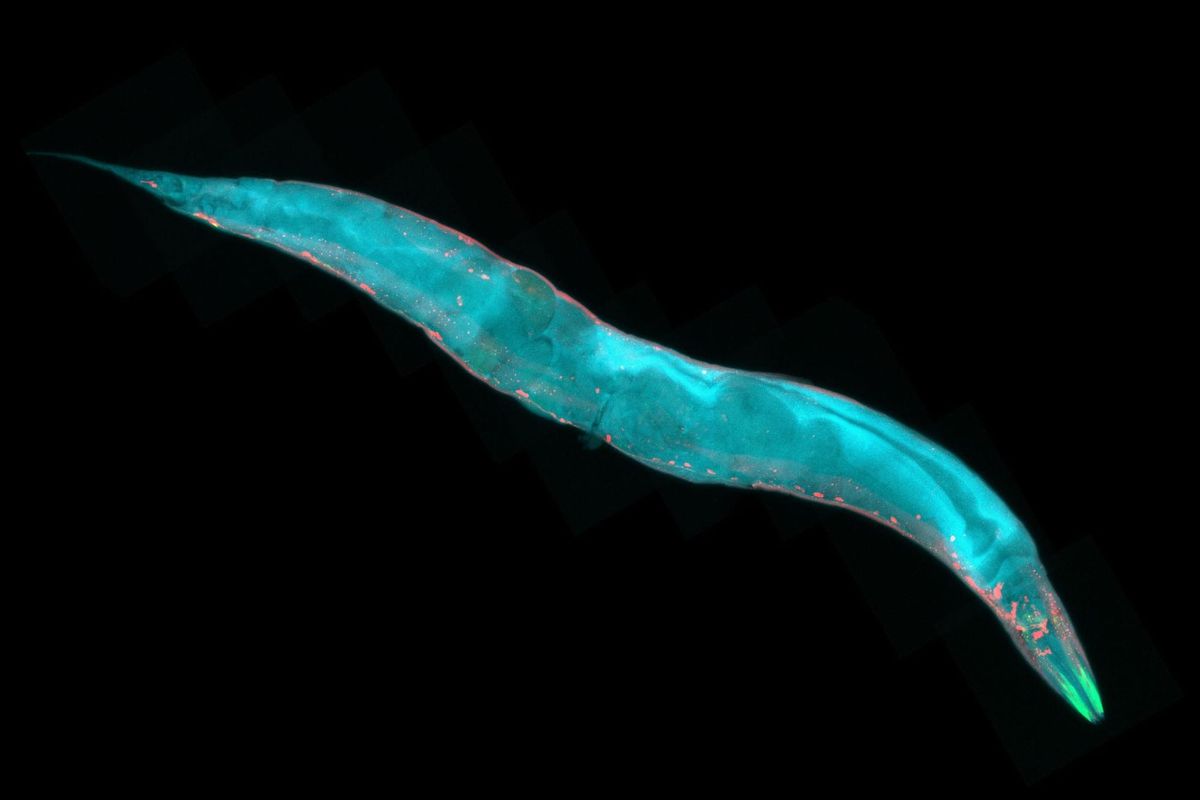
Beyond pest control, beneficial nematodes (and nematodes more broadly) have a wide range of applications across agriculture, biotechnology, medicine, and ecology. It is important to distinguish between beneficial nematodes; primarily entomopathogenic species used in pest management, and nematodes as a biological class, which represent one of the most functionally diverse and abundant groups of multicellular organisms on Earth.
This distinction matters because the latter category opens up a much broader set of system-level functions: nutrient cycling, microbial regulation, biochemical production, and even potential roles in engineered biological delivery systems. When viewed at scale, nematodes are less a niche tool and more a foundational component of soil and microbial ecosystems.
Soil Ecosystem Functions
Free-living nematodes, particularly bacterivores, fungivores, and omnivores, are among the most abundant animals in soil environments, often reaching densities of millions per square meter. Their ecological role is not passive; they actively regulate microbial populations and drive nutrient cycling at the micro-scale.
By grazing on bacteria and fungi, these nematodes accelerate the turnover of microbial biomass. In doing so, they release nitrogen in the form of ammonium (NH₄⁺), which is directly available for plant uptake. This process effectively converts immobilized microbial nutrients into plant-accessible forms, acting as a biological “mineralization layer” within the soil system.
Nematodes function as regulators of microbial efficiency. Without predation pressure, bacterial populations can immobilize nutrients within their biomass. Nematode grazing prevents this lock-up, maintaining nutrient flow through the soil food web.
Soil ecologists have formalized this role through nematode-based diagnostic tools. Community composition is used as a bioindicator of soil health:
- The ratio of bacterial-feeding to fungal-feeding nematodes indicates whether a soil is bacterially or fungally dominated, which has direct implications for crop compatibility and nutrient cycling dynamics.
- The maturity index (Bongers’ index) provides a quantitative measure of disturbance. Lower values indicate highly disturbed or recently amended soils, while higher values reflect stable, structured ecosystems with established trophic complexity.
For agricultural systems, periodic nematode community sampling represents a high-resolution method of tracking soil health. Unlike simple nutrient assays, it captures the functional state of the soil ecosystem. This allows operators to evaluate whether interventions such as cover cropping, compost addition and reduced tillage are producing durable biological improvements rather than short-term chemical gains.
In practical terms, integrating nematode analysis into soil management shifts the framework from “input optimization” to “ecosystem engineering.”
Vector for Beneficial Microbes
The same biological mechanism that enables entomopathogenic nematodes to infect and kill insect hosts, namely, their symbiotic relationship with bacteria, can be repurposed for controlled biological delivery.
In pest control systems, nematodes carry symbiotic bacteria (commonly from the genera Photorhabdus or Xenorhabdus) into insect hosts. Once inside, these bacteria proliferate rapidly, producing toxins that kill the host and create a nutrient-rich environment for nematode reproduction.
This delivery mechanism is not limited to insect lethality. It represents a generalizable biological transport system capable of introducing specific microbial payloads into targeted environments.
Researchers have explored engineered or selectively bred nematode-bacterium pairings to deliver compounds of interest. The Photorhabdus symbionts, in particular, produce a pharmacologically diverse suite of secondary metabolites, including:
- Broad-spectrum antibiotics
- Antifungal compounds
- Insecticidal toxins
- Immune-modulating molecules
Several compound classes have emerged from this research pipeline, including stilbenes, anthraquinones, and a structurally unique class known as fabclavines. These molecules exhibit activity across multiple biological domains, making them relevant not only for agriculture but also for pharmaceutical development.
From a systems standpoint, nematodes function as mobile microreactors: they transport, deploy, and amplify microbial activity in situ. This has implications for:
- Targeted soil microbiome engineering
- Localized pathogen suppression
- Biocontrol strategies beyond insects (e.g., fungal pathogens)
The constraint is control. While the delivery mechanism is efficient, ensuring specificity and preventing unintended ecological interactions remains a challenge.
Emerging Applications and System-Level Implications
Expanding beyond current use cases, nematodes occupy a unique position at the intersection of ecology and biotechnology. Their characteristics (mobility, environmental resilience, and symbiotic microbial relationships) make them candidates for several emerging applications.
In agricultural systems, nematodes could be integrated into multi-layer biological control frameworks, where they operate alongside microbial inoculants and soil amendments. Rather than acting as a single intervention, they become part of a feedback-driven system that adapts to pest pressure and soil conditions.
In bioremediation contexts, nematode-mediated microbial delivery could theoretically be used to introduce pollutant-degrading bacteria into contaminated soils. Their ability to navigate pore spaces and survive variable conditions offers an advantage over passive microbial dispersal.
In pharmaceutical and biochemical discovery, nematode-associated bacteria represent an underexplored reservoir of bioactive compounds. The evolutionary pressure of insect-pathogen interactions has driven the development of potent chemical defenses, many of which have not yet been fully characterized.
At a higher level, nematodes illustrate a broader principle: small, decentralized biological agents can perform system-critical functions that would be difficult or inefficient to replicate through centralized or purely mechanical means.
Operational Considerations and Constraints
Despite their potential, nematode-based systems are not universally applicable and introduce several constraints that must be considered.
Environmental sensitivity remains a limiting factor. Soil moisture, temperature, and pH all influence nematode survival and activity. In dry or highly disturbed soils, populations may collapse or fail to establish.
Specificity is another constraint. While beneficial nematodes can target pest species effectively, broader nematode communities include plant-parasitic species that can cause crop damage. Managing this balance requires careful monitoring rather than indiscriminate application.
From a logistical standpoint, scaling nematode-based interventions requires consistent production, storage, and distribution systems. Shelf life and viability can limit their practicality in certain contexts.
Finally, ecological complexity introduces uncertainty. Nematodes operate within a dense network of interactions involving microbes, plants, and other soil organisms. Interventions may produce indirect effects that are difficult to predict without long-term observation.
Medical and research models
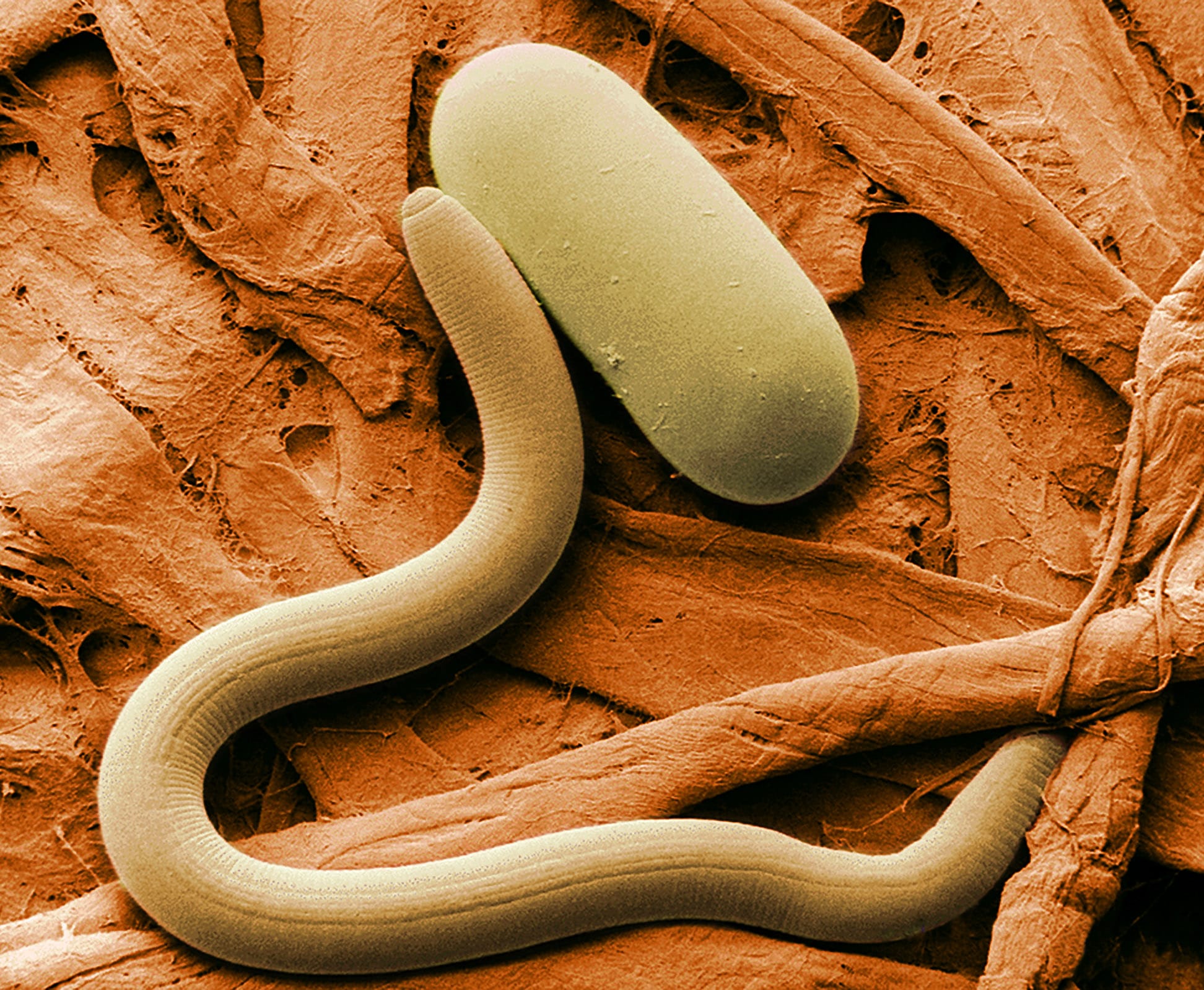
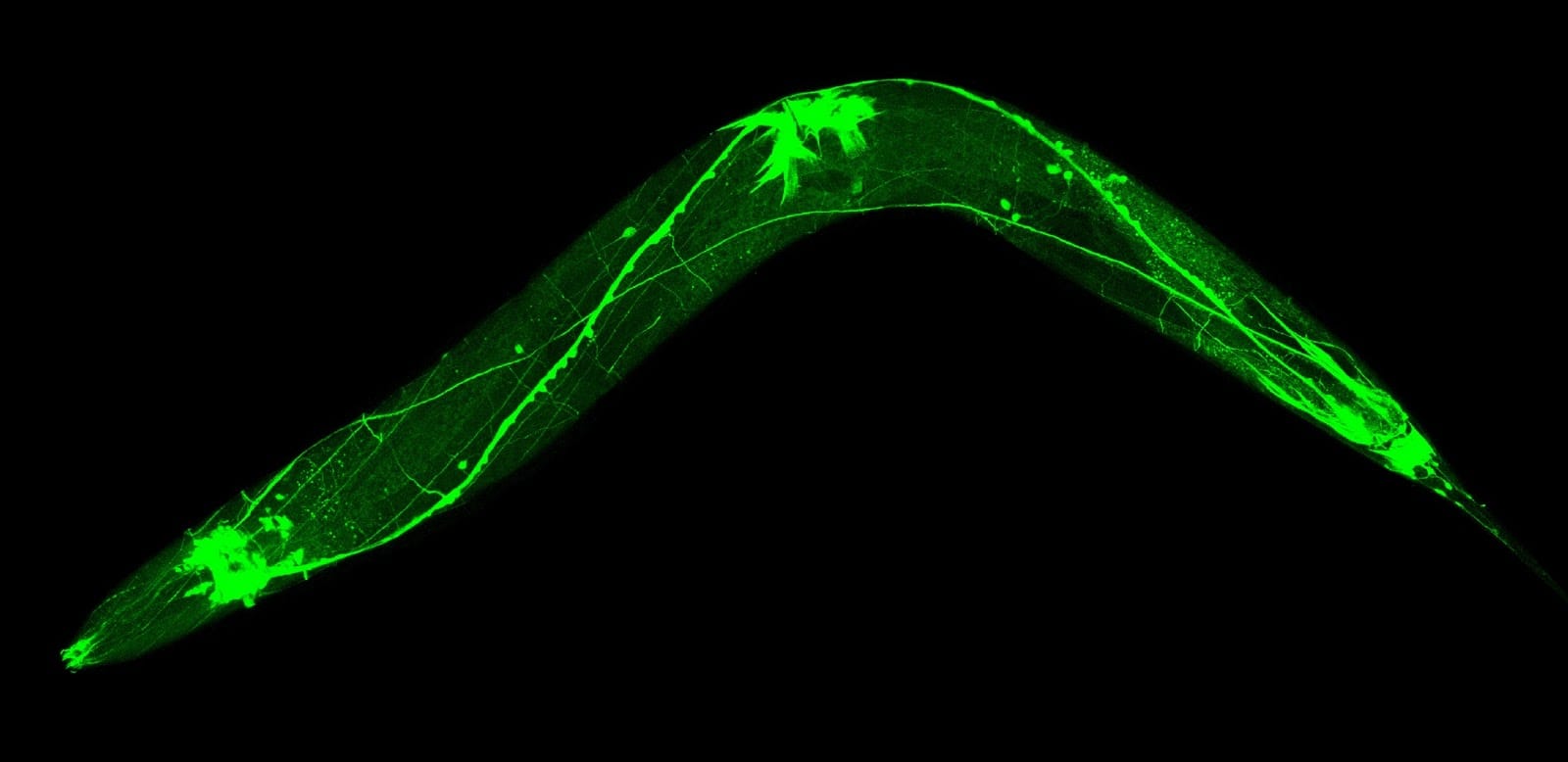
Caenorhabditis elegans remains one of the most important model organisms in modern biology, particularly in aging, neurobiology, and developmental research. It was the first multicellular organism to have its genome fully sequenced, its complete cell lineage mapped from embryo to adult, and its entire neural connectome reconstructed at the synaptic level. That level of resolution is still unmatched in more complex organisms.
What makes C. elegans operationally valuable is not just its simplicity, but its experimental throughput. With a lifespan of roughly 2–3 weeks, researchers can run full life-cycle experiments rapidly, testing genetic, environmental, and pharmacological interventions at scale. This allows for high-speed iteration on hypotheses that would take years or decades in mammalian systems.
Practically, much of the early-stage validation for lifespan-extension pathways traces back to worm models. Interventions such as caloric restriction, mTOR inhibition (rapamycin), insulin/IGF-1 signaling modulation, metformin effects, and sirtuin pathway activation were all first characterized in C. elegans before being translated into rodent and eventually human studies. The implication is that a large portion of the conceptual foundation behind modern longevity research, and by extension, many supplement stacks, originates from worm-based experiments.
From a systems perspective, C. elegans functions as a biological screening layer, enabling rapid filtering of viable interventions before committing resources to more complex models. It effectively reduces the search space in biomedical research.
Bioremediation and waste processing
Nematodes contribute to organic matter breakdown in composting and vermiculture systems by regulating microbial populations rather than directly decomposing material. Their grazing activity increases microbial turnover, accelerating the conversion of organic waste into stable, nutrient-rich end products.
In compost systems, this translates into faster mineralization rates and more efficient nutrient cycling. Nematodes indirectly improve the quality of compost by maintaining active microbial communities and preventing stagnation within the decomposition process.
In aquaponics and recirculating aquaculture systems (RAS), free-living nematodes are commonly present within biofilms that form on tank surfaces, filter media, and piping. While bacteria drive the primary nitrification process (ammonia → nitrite → nitrate), nematodes contribute to system stability by regulating bacterial populations and recycling organic detritus. They act as secondary processors within the microbial loop, helping prevent the accumulation of excess biomass that could destabilize the system.
There is also emerging interest in integrating nematodes into engineered waste-processing systems, particularly for agricultural and food waste streams. Their ability to operate in dense microbial environments and tolerate variable oxygen conditions makes them viable components in decentralized waste conversion systems, though practical deployment is still limited.
 John D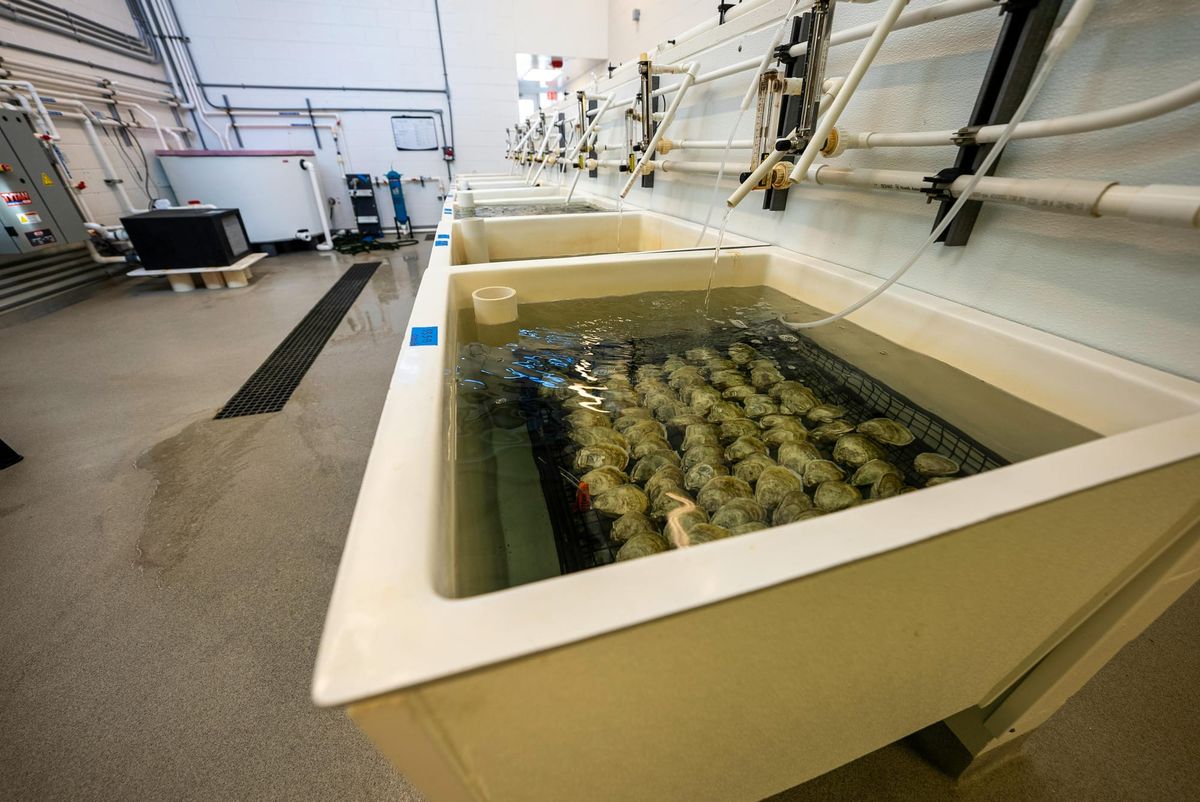
Aquaculture feed
Species such as Panagrellus redivivus (microworms) and Turbatrix aceti (vinegar eels) are widely used as live feed in aquaculture, particularly for early-stage fish fry and shrimp larvae. These organisms are nutritionally dense, containing high levels of protein and lipids relative to their size, and are easily digestible for juvenile aquatic species.
Their primary advantage is production simplicity. Microworms can be cultured on basic grain substrates (e.g., oatmeal or flour slurries), while vinegar eels are maintained in acidic liquid cultures such as apple cider vinegar. Both systems require minimal infrastructure and can be scaled from small hobby setups to semi-commercial production with low capital input.
From a systems standpoint, these organisms serve as on-site feed production units, reducing dependence on external feed supply chains. In integrated aquaculture or biorefinery systems, particularly those already incorporating black soldier fly larvae (BSFL) / nematode cultures provide a complementary live feed source that fills nutritional gaps and increases system redundancy.
This is particularly relevant for closed-loop or off-grid systems, where feed supply is often a primary bottleneck.
John D
Plant-parasitic species (the dark side)
Not all nematodes are beneficial, and plant-parasitic species represent a major constraint in agricultural systems. Root-knot nematodes (Meloidogyne spp.), cyst nematodes, and root-lesion nematodes collectively contribute to an estimated $80–150 billion in global crop losses annually.
These organisms invade plant root systems, disrupting nutrient and water uptake. Root-knot nematodes, for example, induce the formation of galls that impair root function and reduce overall plant vigor. The effects are often subtle at first, stunting, reduced yield, uneven growth; but can escalate into significant productivity losses if left unmanaged.
In regions like Texas and other warm climates, root-knot nematodes are particularly problematic for crops such as vegetables and cotton due to favorable environmental conditions that support rapid reproduction.
Importantly, beneficial nematodes do not mitigate plant-parasitic species. Control strategies operate on a different axis and include:
- Crop rotation to disrupt lifecycle continuity
- Resistant plant varieties
- Soil solarization to reduce population density
- Biological controls such as Pasteuria penetrans (a parasitic bacterium) or fungi like Purpureocillium lilacinum
From a systems perspective, this introduces a management paradox: nematodes as a class are both essential ecosystem regulators and significant agricultural threats. Effective use requires selective enhancement of beneficial populations while suppressing parasitic species through targeted interventions.
John D
Genetic and metabolic engineering substrate
Beyond their role as model organisms, nematodes are being explored as platforms for genetic and metabolic engineering. Research has investigated their use in producing recombinant proteins, expressing specific metabolic pathways, and generating targeted lipid profiles.
Compared to microbial systems (e.g., bacteria or yeast), nematodes offer the advantage of being multicellular, allowing for more complex protein folding and post-translational modifications. However, they are more difficult to scale and control, which limits their current industrial use.
This area remains niche but reflects a broader trend toward leveraging unconventional biological systems as production platforms. In specialized applications where traditional hosts are insufficient, nematodes may provide unique capabilities.
Forensic and ecological indicators
Nematodes also function as sensitive indicators of environmental conditions. In forensic contexts, the succession of nematode species on decomposing organic matter has been studied as a supplementary method for estimating time of death, complementing more established insect-based approaches.
In ecological monitoring, soil nematode communities respond measurably to environmental stressors such as heavy metal contamination, pesticide exposure, and general pollution. Changes in species composition, abundance, and trophic structure provide insight into underlying soil conditions.
Because nematodes occupy multiple trophic levels, they reflect system-wide changes rather than single-variable shifts. This makes them particularly useful for site assessment and long-term monitoring, especially in contexts where chemical testing alone may not capture functional ecosystem health.
Nematodes act as biological sensors, translating complex environmental conditions into measurable community-level signals.
Summary
Nematodes occupy a uniquely versatile position across biological and engineered systems, functioning simultaneously as regulators, processors, feedstock, research tools, and environmental indicators. At the ecological level, they drive nutrient cycling and maintain microbial balance within soils and aquatic systems. In applied contexts, they contribute to waste processing, stabilize biofilm ecosystems, and provide low-cost, scalable inputs for aquaculture through live feed cultures.
In research and biotechnology, Caenorhabditis elegans has served as a foundational model for modern biology, particularly in aging and metabolic science, enabling rapid validation of interventions that later scale into higher organisms. At the same time, nematodes and their symbiotic systems are being explored as platforms for biochemical production and targeted microbial delivery.
However, their role is not uniformly beneficial. Plant-parasitic nematodes impose significant constraints on agricultural productivity, requiring distinct management strategies and reinforcing the need for selective, system-aware integration rather than indiscriminate use.
Taken together, nematodes are best understood not as isolated tools but as components of broader biological infrastructure. Their value emerges when they are incorporated into system-level designs; whether in agriculture, aquaculture, waste processing, or research, where their distributed, high-density presence can be leveraged for resilience, efficiency, and adaptability.
John D
Citations
Bongers, T. (1990). The maturity index: An ecological measure of environmental disturbance based on nematode species composition. Oecologia, 83, 14–19. https://doi.org/10.1007/BF00324627
Ferris, H. (2010). Contribution of nematodes to the structure and function of the soil food web. Journal of Nematology, 42(1), 63–67.
Du Preez, G. C., et al. (2022). Nematode-based indices in soil ecology: Application, utility, and future directions. Soil Biology and Biochemistry, 169, 108640.
Grewal, P. S., Ehlers, R.-U., & Shapiro-Ilan, D. I. (2005). Nematodes as biocontrol agents. CABI Publishing.
Kenyon, C. (2010). The genetics of ageing. Nature, 464(7288), 504–512.
Freckman, D. W. (1988). Bacterivorous nematodes and organic matter decomposition. Agriculture, Ecosystems & Environment, 24(1–3), 195–217.