Biodomes for Synthetic Biofabrication (2026): Closed-Loop Ecological Systems and a Bamboo Biopolymer Concrete Alternative
How biodomes enable closed-loop biofabrication, and a bamboo biopolymer pathway to reduce reliance on concrete.

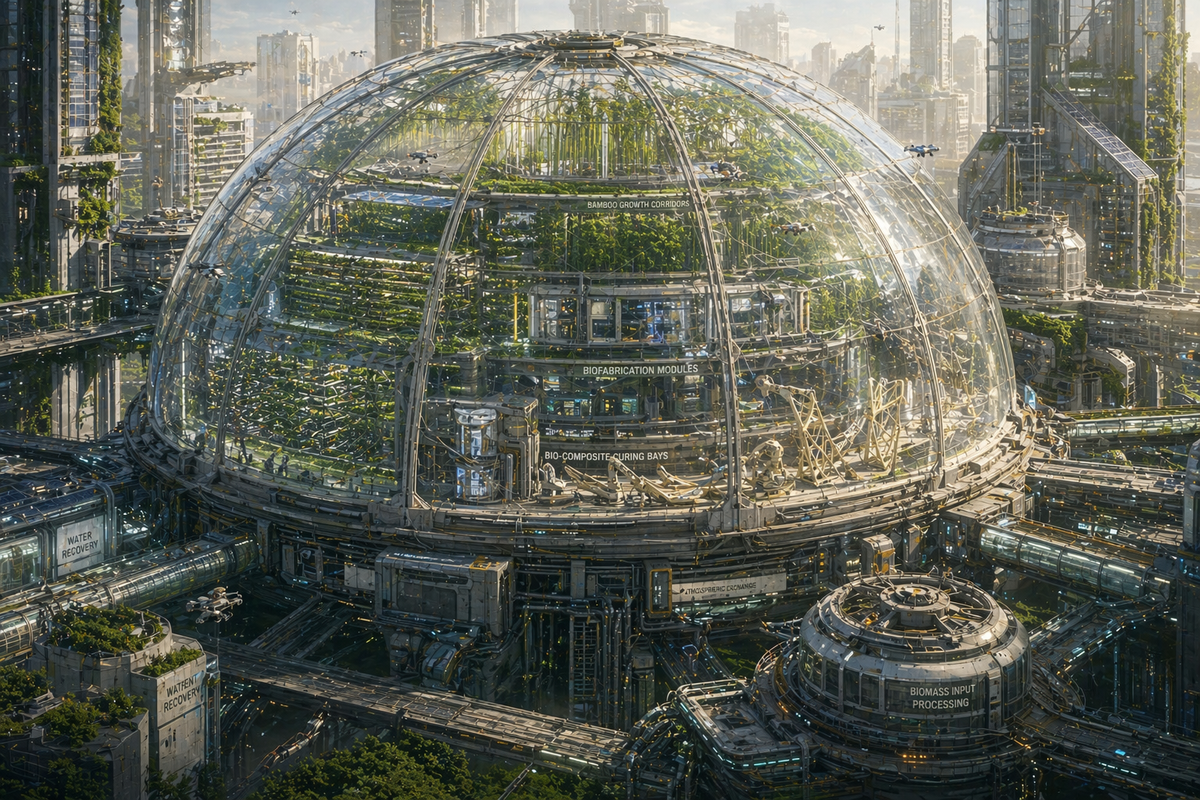
Biodomes as Platforms for Synthetic Biofabrication within Contained Ecological Systems
A Systems-Level Technical Analysis (April 2026)
1. Executive Summary
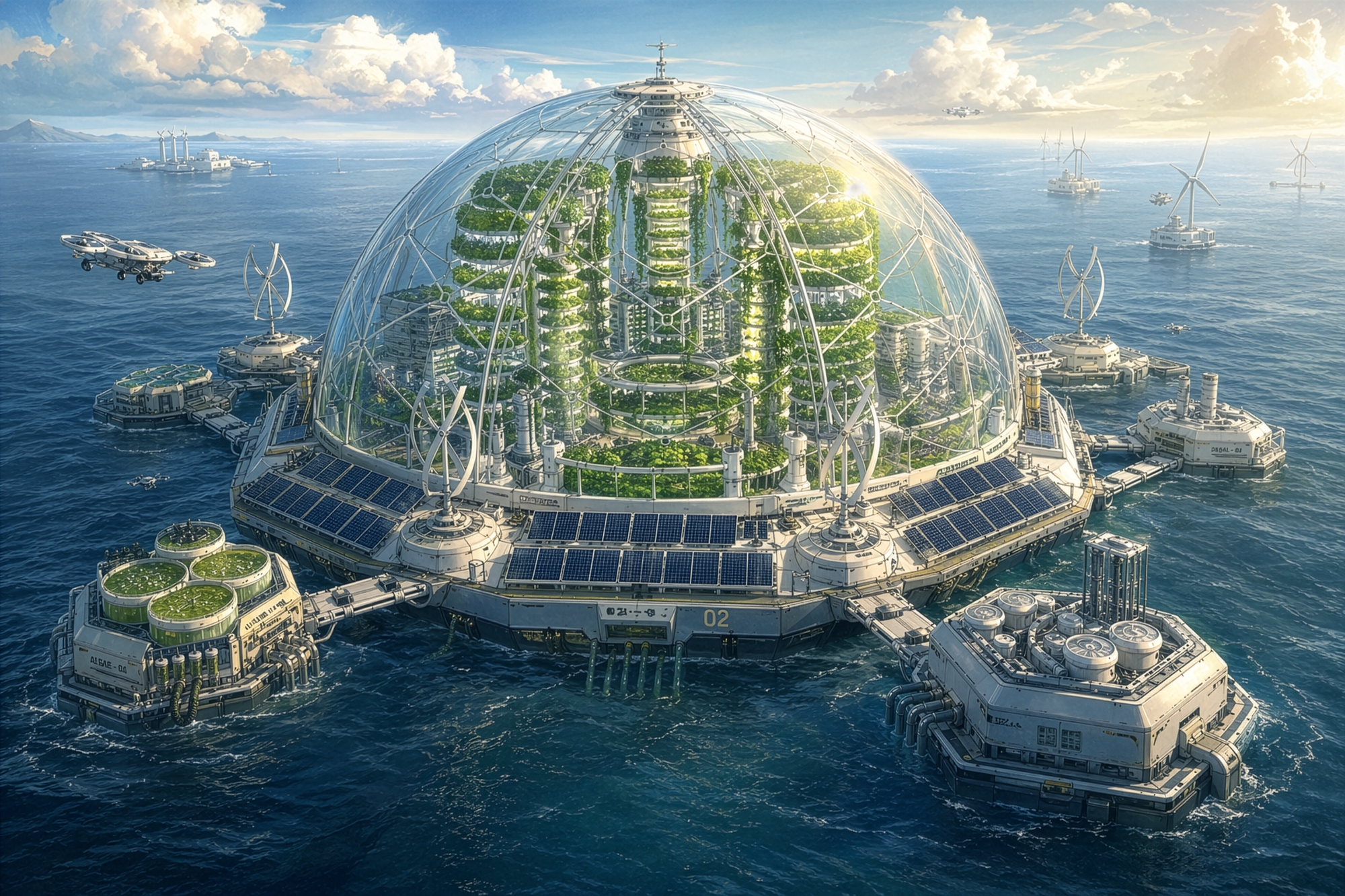
Biodomes can be defined as engineered, closed-loop or semi-closed ecological systems designed to regulate environmental variables such as atmospheric composition, temperature, humidity, and resource cycling. Synthetic biofabrication refers to the use of engineered biological systems—microorganisms, plants, or hybrid bio-processes—to produce materials, chemicals, or functional biomatter under controlled conditions.
This report evaluates biodomes as a conceptual production platform for synthetic biofabrication. The core thesis is that biodomes offer a uniquely controllable environment where biological production systems can be integrated with ecological cycles, enabling tighter control over inputs, outputs, and contamination pathways than conventional open or semi-open systems.
Key opportunities include high-purity production, localized and resilient supply chains, and the integration of waste-to-resource loops. However, constraints are substantial: system instability, high capital and operational complexity, energy intensity, and scaling limitations. Biodomes are therefore best understood as a niche, high-control infrastructure layer, suited to specialized applications rather than general industrial replacement.
2. System Definition: Biodome as an Engineered Environment
A biodome functions as an integrated environmental control system rather than a simple enclosure. Structurally, it consists of a sealed or semi-sealed shell—typically composed of glass composites, polymers, or multi-layer membranes—designed to regulate heat transfer, light transmission, and mechanical loads. Thermal management is achieved through passive insulation, active cooling systems, and heat exchange mechanisms.
Environmental control systems regulate internal conditions through:
- Atmospheric management (CO₂/O₂ balance, trace gases)
- Humidity and temperature control
- Light cycles (natural light modulation or artificial photoperiod systems)
Closed-loop resource cycling is a defining feature. Water is captured, filtered, and reused; nutrients are recirculated through soil or hydroponic systems; and organic waste is reprocessed into usable inputs via composting or bioconversion pathways.
The degree of closure varies. Fully closed systems attempt near-total isolation from external inputs, while semi-open systems allow controlled exchange of gases, energy, or materials. Existing analogs include:
- Controlled-environment greenhouses
- Industrial bioreactors
- Experimental systems such as large-scale biosphere projects
The biodome differs by attempting to integrate these functions into a unified ecological-manufacturing system.
3. Synthetic Biofabrication Layer
Within the biodome, synthetic biofabrication introduces a production layer based on engineered biological systems.
Production categories include:
- Biomaterials: bioplastics, mycelium-based composites, structural proteins
- Biochemicals: enzymes, pharmaceuticals, specialty chemicals, biofuels
- Engineered crops or microorganisms optimized for yield or functional output
Two primary production modalities exist:
- Open ecological integration (Conceptual model):
Engineered organisms operate within the broader ecosystem, interacting with plants, microbes, and nutrient cycles. - Contained bioreactors within the dome:
Production occurs in isolated vessels, with the dome providing environmental stability rather than direct ecological integration.
Ecological coupling may enable resource efficiency (e.g., CO₂ from one process feeding another), but introduces variability and risk. Isolation increases control but reduces systemic efficiency.
Synthetic biology and metabolic engineering enable the design of organisms for specific outputs, but in this context are treated as enabling technologies, not guaranteed solutions.

4. Systems Integration: Ecology + Manufacturing
The defining challenge is integrating biological production with ecological systems.
Carbon flow (Engineering assumption):
Carbon is captured via photosynthetic organisms or introduced externally, then cycled through production pathways and re-emitted or sequestered.
Waste-to-input loops:
Organic waste is converted into nutrients via microbial processing, reducing external input requirements.
Energy inputs:
Biodomes require continuous energy for:
- Climate control
- Lighting (in low-sun or high-density systems)
- Processing and automation
Energy sources may include solar, thermal systems, or external grid connections. Combined heat-and-power (CHP) systems represent a potential integration pathway.
Trade-offs:
- Stability vs productivity: Highly optimized production systems may reduce ecological resilience
- Diversity vs optimization: Diverse ecosystems improve stability but reduce efficiency
Control systems rely on sensor networks and automated feedback loops to maintain equilibrium. These include atmospheric sensors, nutrient monitors, and real-time process controls.
5. Engineering Constraints and Failure Modes
Biodomes introduce multiple failure vectors.
System instability:
Ecological systems are inherently dynamic. Small imbalances in nutrients, species populations, or environmental variables can cascade into system-wide disruption.
Biological risks:
Mutation, contamination, or unintended interactions between engineered and natural organisms may degrade output or compromise safety.
Scaling challenges:
Transitioning from laboratory-scale systems to industrial biodomes introduces nonlinear complexity. Control systems, resource flows, and failure risks increase disproportionately with scale.
Energy intensity:
Maintaining controlled conditions requires continuous energy input. If energy costs exceed output value, the system becomes economically unviable.
Material degradation:
Structural materials degrade under UV exposure, humidity, and temperature cycling, requiring ongoing maintenance.
Operational complexity:
These systems require multidisciplinary oversight, combining biology, engineering, and data systems management.
 John D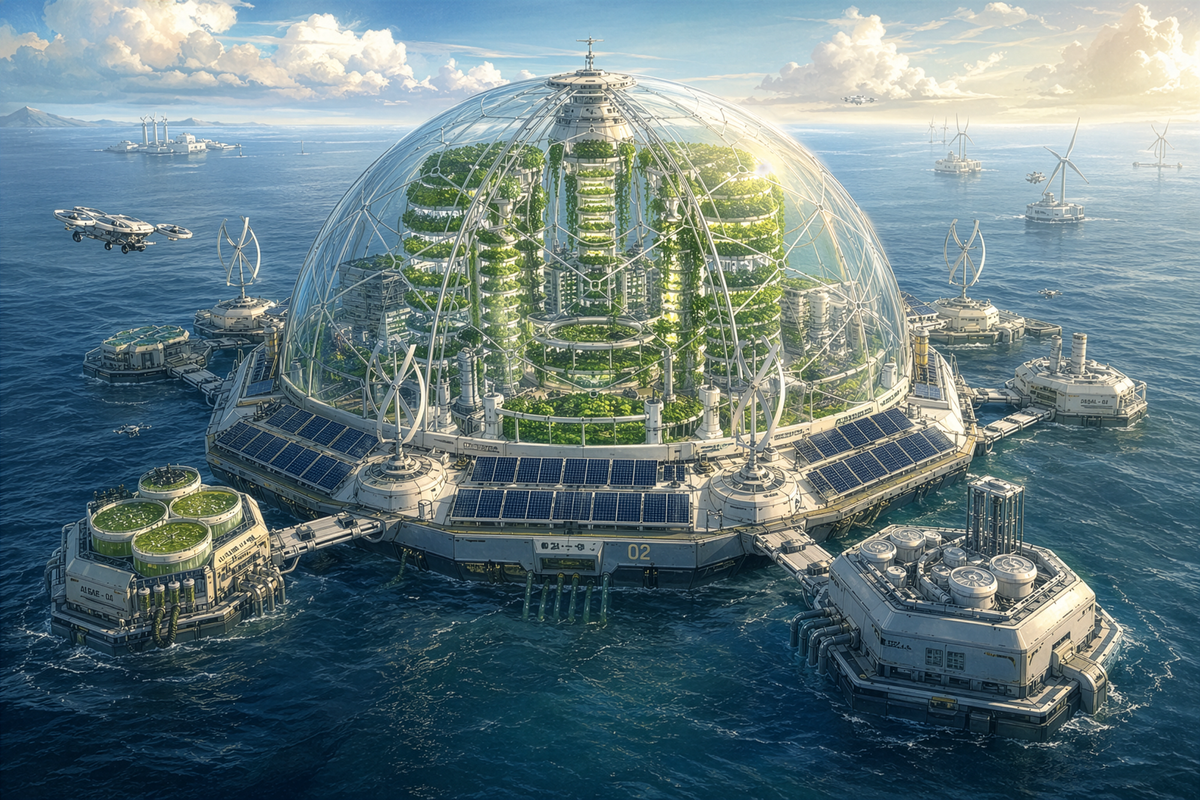
6. Comparative Analysis: Biodomes vs Conventional Production Systems
Traditional bioreactors offer high control and efficiency, but limited ecological integration. Open-field agriculture is low-cost but highly exposed to environmental conditions, while controlled-environment agriculture (CEA) provides a middle ground with moderate control and scalability, though it remains focused primarily on food production.
Biodomes outperform these systems in containment, precision environmental control, and the integration of multiple biological processes. However, they underperform in cost due to high capital expenditure, in scalability due to complex system interactions, and in operational simplicity.
They are not a replacement for existing systems but a complementary platform for specialized applications.
7. Strategic Use Cases
Remote environments (Hypothetical deployment scenario):
Biodomes enable localized production in arctic, desert, or offshore locations where traditional supply chains are unreliable.
High-purity production:
Sensitive biochemical or pharmaceutical production benefits from controlled contamination environments.
Resilience infrastructure:
Self-contained production systems reduce dependence on external supply chains during disruptions.
Urban micro-manufacturing:
Biodomes integrated into urban environments could support localized production of high-value biomaterials.
Research environments:
Controlled ecological systems provide platforms for testing new biofabrication methods under stable conditions.
Hypothetical Deployment Scenario: Biodome-Integrated Biofabrication of Bamboo-Castor Oil Biopolymer for Structural Applications
Scenario Overview
This hypothetical deployment scenario considers a construction firm seeking to reduce dependence on traditional reinforced concrete by developing a bio-derived composite material system produced within a controlled biodome environment. The objective is not immediate substitution, but a staged transition toward alternative structural materials with potentially lower supply chain exposure and reduced lifecycle emissions.
The biodome is positioned as a controlled production environment supporting both biological feedstock cultivation (bamboo and castor plants) and upstream processing stability. The resulting material is framed as an engineered composite or metamaterial system, derived from plant-based inputs but requiring substantial processing and structural optimization. This is a conceptual model, not a validated replacement for reinforced concrete.
Feedstock Production System (Within Biodome)
Within the biodome, bamboo is cultivated as a primary structural fiber source due to its rapid growth rate and favorable fiber characteristics. Castor plants are grown in parallel to supply oil used as a precursor for polymer resin systems.
The controlled environment enables:
- Growth rate optimization through regulated الضوء exposure, temperature, and humidity
- Pest and pathogen control, reducing reliance on chemical interventions
- Nutrient cycling, where organic waste streams are reprocessed into soil amendments or hydroponic inputs
Closed-loop design considerations include water capture and reuse, biomass recycling, and integration of plant waste into secondary processing streams. These features support a conceptual closed-loop feedstock system, although full closure is treated as an engineering assumption rather than an operational guarantee.
Material Processing Pipeline
The material processing pipeline follows a conceptual workflow:
- Castor oil extraction and conversion into a polymerizable resin precursor using established chemical pathways (e.g., modification of triglycerides into reactive intermediates).
- Fiber preparation, where bamboo is processed into fibers, strips, or engineered reinforcements.
- Composite formation, combining plant-derived resin with bamboo fibers to create a structural matrix.
At this stage, a distinction is required between:
- Raw biopolymer systems, which may exhibit limited structural performance
- Engineered structural composites, where fiber orientation, layering, and bonding are optimized
A hypothetical integration pathway includes metamaterial structuring through:
- Layered composite panels
- Directional fiber alignment for load-bearing optimization
- Lattice or cellular geometries to reduce weight while maintaining structural integrity
These approaches rely on known composite engineering principles but extend them into speculative configurations.
Structural Application - Hypothetical Use
The material is envisioned for use in prefabricated panels, modular structural elements, or hybrid load-bearing systems in large-scale architectural projects.
Relative to reinforced concrete, the system may offer:
- Reduced weight due to lower density of plant-based composites
- Improved corrosion resistance in certain environments
- Potential for controlled flexibility depending on fiber orientation
However, structural equivalence remains uncertain. Compressive strength, long-term durability, fire resistance, and fatigue behavior are unresolved variables. As such, deployment would likely occur initially in non-critical or hybrid structural roles, rather than full replacement.
Systems Integration with Construction Operations
Integration with construction operations can follow two primary models:
- On-site or near-site biodome production, enabling localized feedstock growth and partial material processing
- Centralized biodome facilities, supplying processed composite materials to multiple construction sites
Logistical advantages include:
- Reduced transport of raw agricultural inputs
- Increased control over material provenance and quality
- Potential alignment with modular or prefabricated construction workflows
This model supports a shift toward localized production loops, though it introduces new dependencies on energy and technical infrastructure.
John D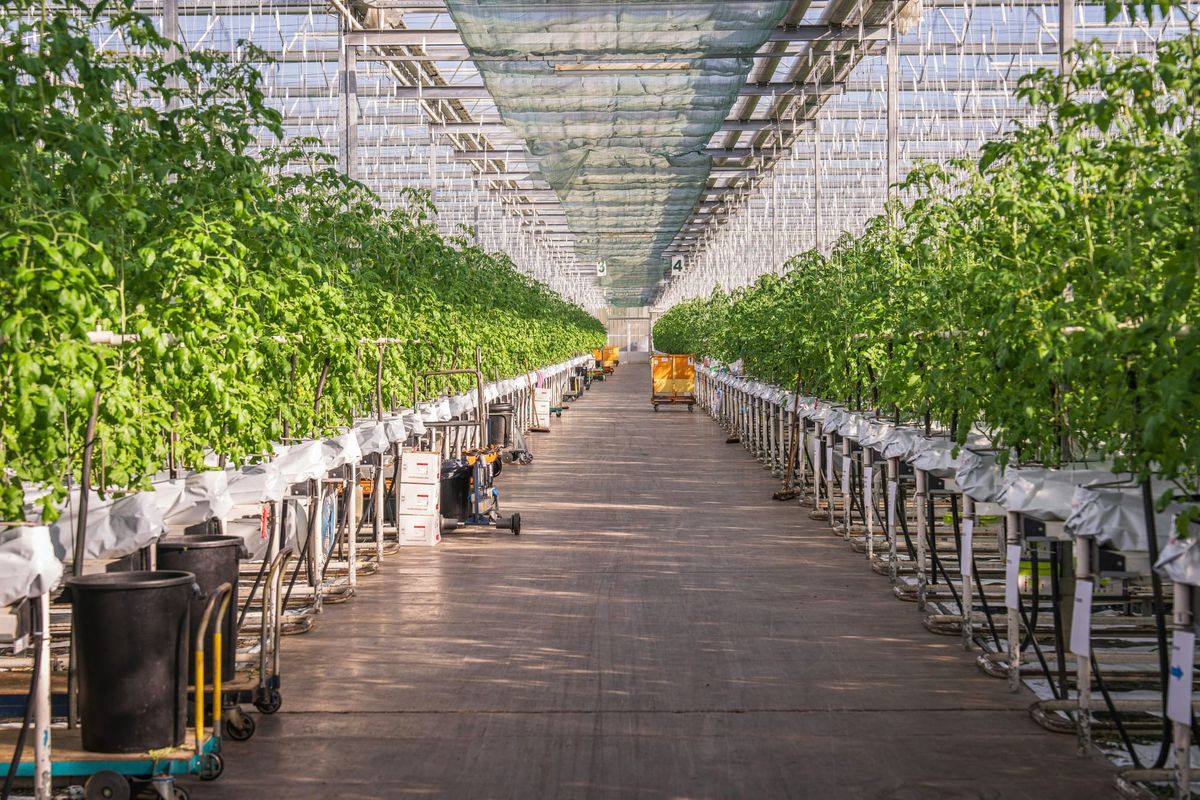
Constraints and Failure Modes
Key constraints include:
- Material performance uncertainty, particularly regarding compressive strength, fire resistance, and long-term degradation
- Scaling challenges, including maintaining consistent composite quality across large production volumes
- Biological variability, where feedstock properties fluctuate based on growth conditions
- Energy and processing demands, which may offset sustainability gains
- Regulatory barriers, as building codes are not designed for bio-derived structural metamaterials
Failure modes include inconsistent bonding between fibers and resin, moisture-related degradation, and structural unpredictability under load.
Strategic Rationale
A construction firm may pursue this pathway for several reasons:
- Supply chain independence, reducing reliance on cement, steel reinforcement, and associated global inputs
- Carbon reduction objectives, leveraging plant-based carbon capture within material production
- Material innovation positioning, aligning with emerging trends in sustainable construction
This scenario should be understood as a long-term R&D or pilot program, not an immediate industrial transition. The primary value lies in exploring alternative material systems under controlled conditions, with potential future applications contingent on demonstrated performance and regulatory acceptance.
John D
8. Economic and Logistical Considerations
Capex vs Opex (Conceptual model):
- High upfront capital investment (structure, control systems)
- Ongoing operational costs (energy, labor, maintenance)
Input dependencies:
- Energy remains the primary constraint
- Water and nutrients can be partially closed-loop
Labor requirements:
- High-skill workforce required across multiple disciplines
Supply chain implications:
- Potential decentralization of production
- Reduced reliance on long-distance logistics
ROI drivers:
- High-margin products (pharmaceuticals, specialty biomaterials)
- Applications where control and purity justify cost
9. Governance, Safety, and Regulatory Considerations
Biosafety containment:
Preventing release of engineered organisms is a primary requirement.
Environmental risk mitigation:
Systems must be designed to fail safely without external contamination.
Monitoring and traceability:
Continuous data collection is required for regulatory compliance and system management.
Ethical considerations:
Use of engineered organisms raises concerns regarding unintended consequences and long-term impacts.
Regulatory ambiguity:
Biodomes blur the boundary between agriculture, manufacturing, and laboratory systems, creating unclear regulatory frameworks.
10. Conclusion
Biodomes represent a niche but potentially strategic infrastructure layer for synthetic biofabrication. Their primary value lies in:
- High levels of environmental control
- Containment of biological systems
- Integration of ecological and industrial processes
They are not a universal solution. Their adoption depends on:
- Demonstrated reliability at scale
- Reduction in capital and energy costs
- Clear use cases where control and integration justify complexity
In practical terms, biodomes should be viewed as specialized production environments for high-value, high-sensitivity applications, rather than replacements for conventional industrial or agricultural systems.
Hypothetical Deployment Scenario: Biodome-Integrated Biofabrication of Bamboo–Castor Oil Biopolymer for Structural Applications
Scenario Overview
This hypothetical deployment scenario considers a construction firm seeking to reduce dependence on traditional reinforced concrete by developing a bio-derived composite material system produced within a controlled biodome environment. The objective is not immediate substitution, but a staged transition toward alternative structural materials with potentially lower supply chain exposure and reduced lifecycle emissions.
The biodome is positioned as a controlled production environment supporting both biological feedstock cultivation (bamboo and castor plants) and upstream processing stability. The resulting material is framed as an engineered composite or metamaterial system, derived from plant-based inputs but requiring substantial processing and structural optimization. This is a conceptual model, not a validated replacement for reinforced concrete.
Feedstock Production System (Within Biodome)
Within the biodome, bamboo is cultivated as a primary structural fiber source due to its rapid growth rate and favorable fiber characteristics. Castor plants are grown in parallel to supply oil used as a precursor for polymer resin systems.
The controlled environment enables:
- Growth rate optimization through regulated الضوء exposure, temperature, and humidity
- Pest and pathogen control, reducing reliance on chemical interventions
- Nutrient cycling, where organic waste streams are reprocessed into soil amendments or hydroponic inputs
Closed-loop design considerations include water capture and reuse, biomass recycling, and integration of plant waste into secondary processing streams. These features support a conceptual closed-loop feedstock system, although full closure is treated as an engineering assumption rather than an operational guarantee.
Material Processing Pipeline
The material processing pipeline follows a conceptual workflow:
- Castor oil extraction and conversion into a polymerizable resin precursor using established chemical pathways (e.g., modification of triglycerides into reactive intermediates).
- Fiber preparation, where bamboo is processed into fibers, strips, or engineered reinforcements.
- Composite formation, combining plant-derived resin with bamboo fibers to create a structural matrix.
At this stage, a distinction is required between:
- Raw biopolymer systems, which may exhibit limited structural performance
- Engineered structural composites, where fiber orientation, layering, and bonding are optimized
A hypothetical integration pathway includes metamaterial structuring through:
- Layered composite panels
- Directional fiber alignment for load-bearing optimization
- Lattice or cellular geometries to reduce weight while maintaining structural integrity
These approaches rely on known composite engineering principles but extend them into speculative configurations.
Structural Application
The material is envisioned for use in prefabricated panels, modular structural elements, or hybrid load-bearing systems in large-scale architectural projects.
Relative to reinforced concrete, the system may offer reduced weight due to lower density of plant-based composites. It could improve corrosion resistance in certain environments (such as floating sea platforms). It also has potential for earthquake resistance due to controlled flexibility depending on fiber orientation.
However, structural equivalence remains uncertain. Compressive strength, long-term durability, fire resistance, and fatigue behavior are unresolved variables. As such, deployment would likely occur initially in non-critical or hybrid structural roles, rather than full replacement.
Systems Integration with Construction Operations
Integration with construction operations can follow two primary models:
- On-site or near-site biodome production, enabling localized feedstock growth and partial material processing
- Centralized biodome facilities, supplying processed composite materials to multiple construction sites
Logistical advantages include:
- Reduced transport of raw agricultural inputs
- Increased control over material provenance and quality
- Potential alignment with modular or prefabricated construction workflows
This model supports a shift toward localized production loops, though it introduces new dependencies on energy and technical infrastructure.
Constraints and Failure Modes
Key constraints include:
- Material performance uncertainty, particularly regarding compressive strength, fire resistance, and long-term degradation
- Scaling challenges, including maintaining consistent composite quality across large production volumes
- Biological variability, where feedstock properties fluctuate based on growth conditions
- Energy and processing demands, which may offset sustainability gains
- Regulatory barriers, as building codes are not designed for bio-derived structural metamaterials
Failure modes include inconsistent bonding between fibers and resin, moisture-related degradation, and structural unpredictability under load.
Strategic Rationale
A construction firm may pursue this pathway for several reasons:
- Supply chain independence, reducing reliance on cement, steel reinforcement, and associated global inputs
- Carbon reduction objectives, leveraging plant-based carbon capture within material production
- Material innovation positioning, aligning with emerging trends in sustainable construction
This scenario should be understood as a long-term R&D or pilot program, not an immediate industrial transition. The primary value lies in exploring alternative material systems under controlled conditions, with potential future applications contingent on demonstrated performance and regulatory acceptance.
References
NASA. (2020). Advanced life support systems and closed ecological systems. NASA Technical Reports Server.
National Research Council. (1991). Biosphere 2: Research past and present. National Academies Press.
U.S. Geological Survey. (2025). Mineral commodity summaries 2025. U.S. Department of the Interior.
Food and Agriculture Organization of the United Nations. (2013). Bamboo: A strategic resource for sustainable development. FAO.
Organisation for Economic Co-operation and Development. (2020). The bioeconomy to 2030: Designing a policy agenda. OECD Publishing.
Ragauskas, A. J., Beckham, G. T., Biddy, M. J., Chandra, R., Chen, F., Davis, M. F., … Wyman, C. E. (2014). Lignin valorization: Improving lignin processing in the biorefinery. Science, 344(6185).
Klemm, D., Heublein, B., Fink, H.-P., & Bohn, A. (2005). Cellulose: Fascinating biopolymer and sustainable raw material. Angewandte Chemie International Edition, 44(22), 3358–3393.
Faruk, O., Bledzki, A. K., Fink, H.-P., & Sain, M. (2012). Biocomposites reinforced with natural fibers: 2000–2010. Progress in Polymer Science, 37(11), 1552–1596.
Mohanty, A. K., Misra, M., & Drzal, L. T. (2005). Natural fibers, biopolymers, and biocomposites. Boca Raton, FL: CRC Press.
Shen, L., Haufe, J., & Patel, M. K. (2009). Product overview and market projection of emerging bio-based plastics. Utrecht University Copernicus Institute.
Mutlu, H., & Meier, M. A. R. (2010). Castor oil as a renewable resource for the chemical industry. European Journal of Lipid Science and Technology, 112(1), 10–30.
European Bioplastics. (2022). Bioplastics market data 2022. European Bioplastics Association.
van der Lelie, D., Taghavi, S., & Monchy, S. (2018). Engineered microbes for bioproduction. Nature Reviews Microbiology, 16(12), 735–749.
Royal Society. (2019). Synthetic biology: Scope, applications and implications. The Royal Society.
Benke, K., & Tomkins, B. (2017). Future food-production systems: Vertical farming and controlled-environment agriculture. Sustainability, 9(6), 1–17.
Despommier, D. (2010). The vertical farm: Feeding the world in the 21st century. Thomas Dunne Books.
Jones, M., Bhat, T., Huynh, T., Kandare, E., Yuen, R., Wang, C., & John, S. (2018). Waste-derived low-cost mycelium composite construction materials. Journal of Cleaner Production, 186, 1–11.
Habert, G., Miller, S. A., John, V. M., Provis, J. L., Favier, A., Horvath, A., & Scrivener, K. L. (2020). Environmental impacts and decarbonization strategies in the cement and concrete industries. Nature Reviews Earth & Environment, 1, 559–573.

Enter the Megacity
a serialized web-fiction
 John D