
Deep-Sea Mining Robots: TMC, DSHMRA, ISA, and the CCZ Strategic Competition Between the US and China
France calls it environmental piracy. The ISA calls it a violation of international law. The US calls it a permit. Welcome to seabed geopolitics.

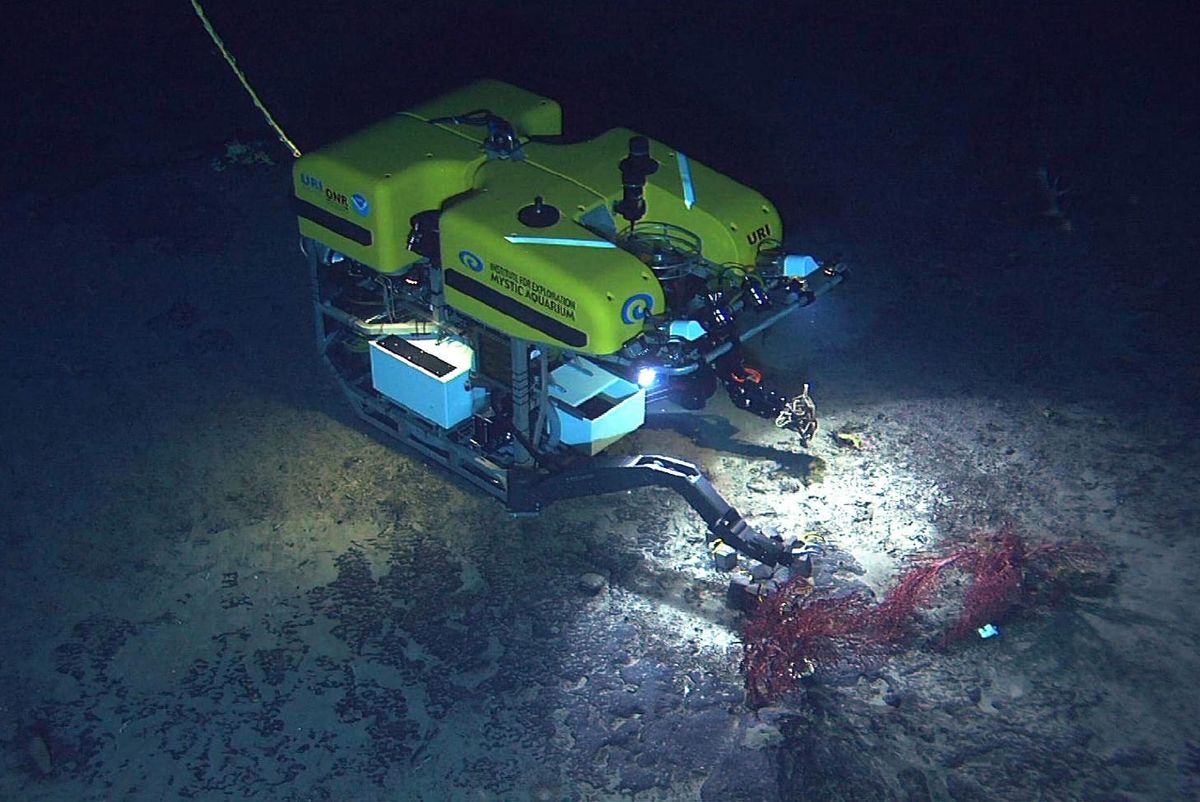
Is Deep-Sea Mining Legal? Who Controls the Robots? The US, China, ISA, and the Race for Seabed Minerals
1. Summary
Deep-sea mining stands at an unprecedented inflection point. As of mid-2026, an industry that has been on the threshold of commercial activity for more than a decade is being reshaped simultaneously by technology maturation, geopolitical realignment, regulatory fracture, and intensifying scientific scrutiny. This report assesses the current state of deep-sea mining robotics through a US/Western strategic lens, with particular attention to how the April 2025 US executive order, the consequential pivot by The Metals Company (TMC) to apply for permits under US domestic law, and the parallel acceleration of China's seabed program have re-cast what had previously been a multilateral, Kingston-centred regulatory contest into an arena of strategic competition.
The technology base is more credible than at any prior point. The 2022 Allseas–TMC integrated trial in the Clarion-Clipperton Zone (CCZ) lifted approximately 3,000 tonnes of polymetallic nodules to the surface vessel Hidden Gem using a 4.3 km riser, the first such demonstration since the 1970s [1][2]. Belgium's Global Sea Mineral Resources (GSR), a DEME subsidiary, deployed its Patania II pre-prototype in 2021 [3]. Japan's JOGMEC executed the first successful cobalt-rich crust excavation off the Takuyo No. 5 seamount in 2020 [4]. Impossible Metals has tested its Eureka II selective-harvesting autonomous underwater vehicle (AUV) at depth [5]. Yet integration readiness, sustained operations, environmental mitigation efficacy, and processing scale-up remain unproven at commercial throughput.
The regulatory landscape has fragmented sharply. Executive Order 14285 of 24 April 2025, "Unleashing America's Offshore Critical Minerals and Resources," directed the Department of Commerce, through NOAA, to expedite exploration licences and commercial recovery permits in both US waters and the Area beyond national jurisdiction under the 1980 Deep Seabed Hard Mineral Resources Act (DSHMRA) [6][7]. TMC USA submitted applications on 29 April 2025; NOAA published a final consolidated rule in January 2026; in March and May 2026 NOAA found TMC's consolidated application in substantial and then full compliance with DSHMRA [8][9]. The International Seabed Authority (ISA), under Secretary-General Leticia Carvalho (elected August 2024, in office from 1 January 2025) [10][11], has explicitly stated that any commercial recovery permit issued by the United States in the Area would be regarded as a violation of UNCLOS and that UNCLOS state parties have a duty under Article 137(3) not to recognise such claims [12]. Forty states now support a precautionary pause, moratorium, or ban [13]. The ISA's 30th and 31st Council sessions (2025-2026) ended without adoption of the Mining Code [14][15].
Three conclusions follow. First, technology risk is now lower than financial, environmental, and regulatory risk; the dominant uncertainties are no longer engineering. Second, the US-led unilateral track and the multilateral ISA track will coexist for at least the medium term, producing two parallel, partially overlapping legal regimes whose interaction is untested. Western capital allocators and downstream OEMs face material reputational and offtake risk if minerals are produced under DSHMRA permits that UNCLOS parties do not recognise. Third, China's strategy of accumulating ISA exploration contracts while building dual-use seabed robotics capability creates a long-duration strategic competition that will not be resolved by any single permit decision. Western policymakers should expect deep-sea mining to remain a high salience but structurally contested industry through at least the early 2030s. Available data are insufficient to determine whether commercial production at scale is economically viable under prevailing battery-chemistry and terrestrial-supply trends.
1. Summary
2. Introduction and Contextual Background
2.1 Historical development of deep-sea mining interest and technology
2.2 Scope, definitions, and boundaries of this report
3. Technology Landscape: Deep-Sea Mining Robotics
3.1 Categories of robotic systems
3.2 Core engineering challenges
3.3 Current state of technology readiness levels (TRL)
3.4 Emerging capabilities
3.5 Key technology gaps and unresolved engineering constraints
4. Key Players and Stakeholder Ecosystem
4.1 Commercial operators and technology developers
4.2 State-sponsored programs
4.3 ISA and its role
4.4 Scientific and environmental stakeholders
4.5 Financial stakeholders
5. Resource Economics and Market Dynamics
5.1 Target mineral deposits
5.2 Resource quantities and grades
5.3 Demand drivers
5.4 Cost structures and capex requirements
5.5 Market pricing dynamics and breakeven thresholds
5.6 Investment trends and financing structures
6. Regulatory and Legal Landscape
6.1 UNCLOS framework and the Area regime
6.2 ISA regulatory development
6.3 National regulatory frameworks for EEZ mining
6.4 Environmental impact assessment requirements and enforcement gaps
6.5 Legal uncertainty, contested jurisdiction, and the US-DSHMRA pivot
7. Environmental Considerations and Scientific Uncertainty
7.1 Known and projected impacts on benthic ecosystems
7.2 Sediment plume dynamics
7.3 State of baseline environmental data
7.4 Contested scientific claims: the dark oxygen controversy
7.5 Mitigation technologies and current effectiveness
8. Geopolitical and Strategic Dimensions
8.1 Critical minerals race
8.2 China's seabed exploration program
8.3 Role of small island developing states and Pacific nations
8.4 Maritime strategic competition
8.5 Alliances, bilateral agreements, and fragmentation
9. Risk Matrix
9.1 Short-term risks (1-3 years, through 2029)
9.2 Medium-term risks (3-7 years, 2027-2032)
9.3 Long-term risks (7+ years, post-2032)
10. Strategic Recommendations
10.1 Recommendations for institutional investors and capital allocators
10.2 Recommendations for policymakers and regulatory bodies
10.3 Recommendations for technology developers and commercial operators
10.4 Recommendations for environmental and scientific stakeholders
11. References
2. Introduction and Contextual Background
2.1 Historical development of deep-sea mining interest and technology
Interest in seabed minerals dates to the 1873-76 HMS Challenger expedition, which dredged manganese nodules from the abyssal Pacific. Modern industrial interest began in the 1960s and 1970s with multinational consortia, including US-led groups associated with Lockheed, Kennecott, Shell, and BP, conducting exploratory recovery tests in the CCZ. NOAA's Deep Ocean Mining Environmental Study (DOMES) in the late 1970s remains a foundational baseline dataset [16]. NOAA issued four DSHMRA exploration licenses in 1984; only USA-1 and USA-4 (held by Lockheed Martin) remained active as of the early 2020s [17]. Commercial interest contracted as terrestrial nickel and cobalt prices declined and the 1982 UN Convention on the Law of the Sea (UNCLOS) introduced uncertainty regarding the regulatory regime in areas beyond national jurisdiction.
A second wave began in the late 2000s, marked by Nautilus Minerals's pursuit of the Solwara 1 seafloor massive sulphide (SMS) project off Papua New Guinea; Nautilus declared bankruptcy in 2019 after community opposition, technical reverses, and the cancellation of its production support vessel contract [18]. The third and current wave was catalyzed by the prospective use of nickel, cobalt, copper and manganese in lithium-ion battery cathodes and by the elevation of "critical minerals" as a national security category in the US, EU, Japan, UK, Canada, and Australia.
2.2 The strategic and economic case for seabed resource extraction
Proponents argue that polymetallic nodules in the CCZ, cobalt-rich ferromanganese crusts on Pacific seamounts, and SMS deposits along mid-ocean ridges represent a substantial alternative source of battery and electrification metals. The US Geological Survey conservatively estimates 21.1 billion dry tonnes of polymetallic nodules in the CCZ [19]; the ISA has cited approximately 30 billion tonnes containing on the order of 70 Mt of cobalt, 400 Mt of nickel and 340 Mt of copper, although these figures are global estimates rather than commercially recoverable reserves and warrant independent verification [20]. The strategic argument combines three propositions: that demand for the relevant metals will remain elevated through the energy transition; that terrestrial supply is concentrated in jurisdictions where Western entities face geopolitical, environmental, or governance risk (notably the Democratic Republic of the Congo for cobalt and Indonesia for nickel) [21][22]; and that seabed sources can be exploited with a smaller surface footprint than terrestrial open-pit alternatives. Each of these propositions is contested; the second is most robust, the first is sensitive to battery chemistry shifts, and the third remains an empirical question.
2.3 Scope, definitions, and boundaries of this report
This report addresses robotic systems and operational concepts intended for the commercial collection or extraction of solid mineral deposits from depths greater than 200 metres, with primary emphasis on polymetallic nodules in the CCZ and secondary attention to cobalt-rich crusts and SMS. The geographic frame is US/Western strategic interests, including the EU, UK, Canada, Australia, Japan, Korea, and allied Pacific partners, with the ISA, China, Russia, India, and Pacific island developing states treated as relevant external actors. Excluded are: marine aggregate dredging in shallow coastal waters; offshore oil and gas; methane hydrate extraction; deep-sea fisheries; and seabed cable and pipeline activities, except where they intersect with mining governance. Cost figures are reported in nominal US dollars unless otherwise stated. The report draws on publicly available sources through April 2026; the regulatory and corporate environment remains highly fluid and readers should treat specific dates and figures as subject to revision.
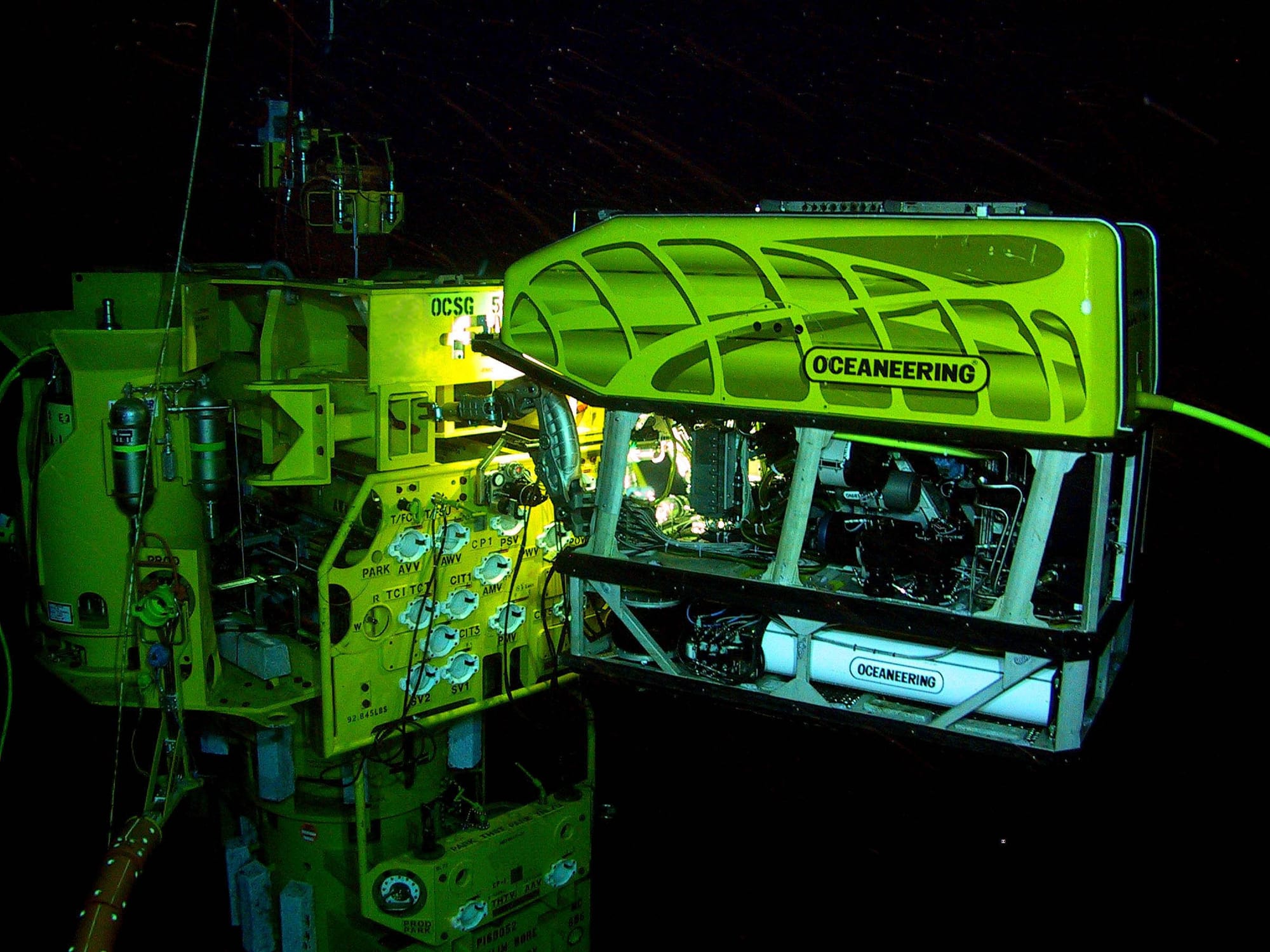
3. Technology Landscape: Deep-Sea Mining Robotics
3.1 Categories of robotic systems
Four broad categories of robotic systems are relevant. The first is the tracked nodule collector, exemplified by the Allseas vehicle deployed from Hidden Gem (a converted ultra-deepwater drillship) and by GSR's Patania II. These vehicles use seawater jets or mechanical pickup heads to lift loosely consolidated nodules from soft abyssal sediments at 4,000-6,000 m, with collected material transferred via flexible jumper hose to a vertical riser system that lifts product to the surface vessel by airlift or hydraulic pumping [1][3][23]. The second category is the autonomous underwater vehicle (AUV) for selective harvesting, represented by Impossible Metals' Eureka series, which uses computer vision and robotic arms to identify and lift individual nodules while hovering above the seafloor; the Eureka II completed deep-water testing in April 2024 [5][24]. The third category comprises SMS cutter-grinders, represented historically by the three Nautilus seafloor production tools (auxiliary cutter, bulk cutter, collecting machine) developed for Solwara 1; these remain physically extant but largely unused [18][25]. The fourth category covers cobalt-rich crust excavators, of which JOGMEC's Hakurei-supported test vehicle is the only system to have conducted a successful seamount-summit excavation, recovering 649 kg of crust from approximately 930 m water depth in 2020 [4]. Across all categories, remotely operated vehicles (ROVs) and AUVs are integral to baseline survey, environmental monitoring, and inspection.
3.2 Core engineering challenges
Deep-sea mining robotics confront a dense bundle of constraints. Pressure tolerance: at 4,500 5,000 m depth, ambient pressure exceeds 450 bar, requiring pressure-rated electronics housings, oil-compensated motors, syntactic foam buoyancy, and high-integrity mechanical seals. Navigation: GPS is unavailable; vehicles rely on inertial navigation aided by Doppler velocity logs, ultra-short baseline (USBL) acoustic positioning, and seafloor terrain matching. Power transmission: tethered vehicles require multi-kilometer umbilicals capable of transmitting megawatt-class power, with passive heave compensation systems mitigating wave-induced loads on the launch and recovery system [26]. Communications: acoustic modems offer kilobits per-second bandwidth at best; high-bandwidth links require fibre-optic tethers. Materials: cold seawater corrosion, biofouling, and abrasive sediment ingress accelerate component wear. Recovery: ship-to-vehicle launch and recovery in open ocean is constrained by sea state and is a recurrent failure mode (Patania II was temporarily stranded on the seabed in April 2021 after a cable detachment) [27].
3.3 Current state of technology readiness levels (TRL)
Using the API 17N/DNV RP-A203 framework adapted for subsea systems [28], the Allseas-TMC nodule collection system can reasonably be assessed at TRL 6-7 for the collector and riser, having been demonstrated in the relevant environment at meaningful scale, with continuous commercial operation not yet established. GSR's Patania II is TRL 5-6. Impossible Metals' Eureka II is TRL 4-5, with Eureka III in design [24]. JOGMEC's crust excavator and Korea Institute of Ocean Science and Technology's MineRo platforms are TRL 5-6 [29]. SMS cutter-grinders are arguably regression cases at TRL 5, given that the only built-and-tested examples have not been operated at scale since Nautilus's collapse. Onshore processing of nodules into battery-grade nickel and cobalt sulphates and copper cathode using rotary kiln-electric arc furnace (RKEF) and refining flowsheets remains at pilot scale; a memorandum of understanding between TMC and Pacific Metals (PAMCO) of Japan envisaged toll-treatment of 1.3 Mtpa wet nodules at PAMCO's Hachinohe facility [30]. Integration readiness for an end-to-end commercial system (collector, riser, surface production vessel, transport, processing) remains the binding constraint.
3.4 Emerging capabilities
Three capability vectors are most consequential. AI-assisted navigation and target identification: Impossible Metals reports that its Eureka platform uses computer vision to identify nodules and avoid visible megafauna [5][24]; comparable approaches are being explored by other developers. Real-time sediment plume management: MIT-led field studies on the Patania II trial showed that collector-generated plumes form near-bottom turbidity currents that remain largely within 2 m of the seafloor in the immediate wake, attenuating more rapidly than some prior modelling had predicted [31]. Subsequent MIT-led work on midwater discharge plumes has informed modelling of return-water management strategies [32]. Autonomous decision-making: untethered AUV concepts in principle eliminate single-point umbilical failures and allow distributed operations; in practice, regulatory acceptability of fully autonomous extraction is unresolved.
3.5 Key technology gaps and unresolved engineering constraints
Despite progress, fundamental gaps remain. No system has demonstrated continuous, multi year commercial collection at the throughput levels (3-12 Mtpa wet nodules per production system) assumed in current pre-feasibility studies [33]. Reliable, low-disturbance pickup of partially buried nodules has not been confirmed at scale. Riser stability and integrity over multi year operation in deep ocean conditions are unproven. Quantitative prediction of plume behaviour at commercial scale, including agglomeration dynamics and toxicological exposure for midwater organisms, remains contested. Acoustic and light disturbance impacts on cetaceans and mesopelagic fauna are not characterised. Decommissioning, abandonment, and liability frameworks for failed equipment on the seafloor are nascent.
4. Key Players and Stakeholder Ecosystem
4.1 Commercial operators and technology developers
The Metals Company (TMC), headquartered in Vancouver and listed on Nasdaq, is the most advanced commercial operator. Through its Nauru-sponsored subsidiary NORI and Tonga sponsored TOML, it holds ISA exploration contracts in the CCZ. Its NORI-D pre-feasibility study, published in August 2025, declared 51 Mt of probable mineral reserves and a project NPV of approximately USD 5.5 billion, with combined NORI-TOML estimated value of USD 23.6 billion; f irst production is targeted for Q4 2027 from the Hidden Gem [33][34]. Independent analysts have challenged TMC's commodity price assumptions and contested the assumption of zero US royalties [35]. Allseas of Switzerland/Netherlands is TMC's principal offshore engineering partner; its conversion of the Hidden Gem and design of the pilot collector vehicle constitute the most operationally tested nodule collection system [1][26]. DEME Group/Global Sea Mineral Resources (GSR) of Belgium holds ISA exploration rights covering 76,728 km² in the CCZ and has tested Patania II [3][27]. Belgian engineering firm De Meyer is a key partner. Impossible Metals (formerly Impossible Mining), based in San Jose, California, advances the AUV selective harvesting concept and has lobbied actively for the US executive order [5][36]. Ocean Minerals LLC (OML) and its subsidiary Moana Minerals, with operations in the Cook Islands, hold one of three Cook Islands EEZ exploration licences; Transocean has taken a minority interest [37][38]. Cobalt (CIC) Limited and CIIC Seabed Resources Limited (a joint venture between the Cook Islands Investment Corporation and GSR) hold the other two Cook Islands licenses [39].
The Nautilus Minerals legacy persists through Deep Sea Mining Finance, which retains the Solwara 1 lease in PNG and the three seafloor production tools, although PNG has imposed a 10 year national moratorium [40]. Lockheed Martin held UK Seabed Resources from 2013 until selling to Norway's Loke Marine Minerals in 2023; Loke entered bankruptcy in April 2025 [41]. The two UK ISA exploration licences were acquired in late 2025 by Glomar Minerals, a UK registered firm largely controlled by overseas interests, including ties to the US lobby group SAFE; the UK Business Secretary signed a deed of novation on 5 December 2025 [42][43]. Lockheed Martin separately reasserted control over US-licensed CCZ blocks following Loke's collapse [44].
4.2 State-sponsored programs
China conducts the most extensive state-backed program. Three state-affiliated entities hold ISA exploration contracts: China Ocean Mineral Resources Research and Development Association (COMRA) for polymetallic nodules in the CCZ since 2001 and for cobalt-rich crusts in the West Pacific and SMS in the Southwest Indian Ridge; China Minmetals Corporation, which signed a CCZ polymetallic nodule contract in 2017 covering 72,745 km²; and Beijing Pioneer Hi-Tech Development Corporation [45][46][47]. China holds the largest aggregate area of any sponsoring state. China Minmetals received ISA approval in 2025 to conduct CCZ test mining; Beijing Pioneer announced parallel test plans [48]. Japan, through JOGMEC and the Japan Agency for Marine-Earth Science and Technology (JAMSTEC), holds ISA contracts for cobalt-rich crusts (valid until 2029) and pursues parallel EEZ programs at Takuyo seamounts and Minamitorishima [4][49]. South Korea, through KIOST and the Ministry of Oceans and Fisheries, holds three contracts covering nodules in the CCZ, crusts in the Pacific, and SMS in the Indian Ocean, and has tested MineRo I and II nodule harvesters [29]. India operates the Deep Ocean Mission (Samudrayaan), with the Matsya-6000 manned submersible and exploration rights in the Central Indian Ocean Basin and, from 2025, the Carlsberg Ridge [50]. Russia, through JSC Yuzhmorgeologiya and direct government sponsorship, holds three ISA contracts.
4.3 ISA and its role
The ISA, established under UNCLOS Part XI and headquartered in Kingston, Jamaica, comprises 169 members (168 states plus the EU). Secretary-General Leticia Carvalho of Brazil, elected on 2 August 2024 by 79 votes to 34 over incumbent Michael Lodge, took office on 1 January 2025 [10] [11]. To date, the ISA has issued 31 exploration contracts but no exploitation contracts. The 30th Council and Assembly sessions (March and July 2025) completed a line-by-line second reading of the Draft Exploitation Regulations but did not adopt the Mining Code; key issues including environmental thresholds, equalization measures, inspection mechanisms, and benefit-sharing remain unresolved [14][51]. The 31st Council session (Part I, March 2026) elected India's Mayank Joshi as President and continued negotiations on a Further Revised Consolidated Text; Part II is scheduled for July 2026 ahead of the Assembly [15][52]. The ISA Council in July 2025 mandated an inquiry into whether contractors pursuing parallel US permits may be in breach of their ISA exploration obligations [53].
4.4 Scientific and environmental stakeholders
The Deep-Ocean Stewardship Initiative (DOSI), founded in 2013 and now comprising over 2,100 experts across 90 countries, provides the most organised scientific input to ISA processes [54]. The Deep Sea Conservation Coalition (DSCC), an alliance of more than 130 organisations, leads civil society advocacy [13]. Major research institutions include the Woods Hole Oceanographic Institution (WHOI), the Scripps Institution of Oceanography, MIT (notably Thomas Peacock's group), the UK National Oceanography Centre (NOC) Southampton, Germany's Federal Institute for Geosciences and Natural Resources (BGR), the GEOMAR Helmholtz Centre for Ocean Research Kiel, France's Institut Français de Recherche pour l'Exploitation de la Mer (Ifremer), and Japan's JAMSTEC. More than 900 scientists and policy experts have signed statements calling for a precautionary pause [13].
4.5 Financial stakeholders
Institutional investor sentiment has hardened against deep-sea mining. A March 2026 report by Seas At Risk and the Deep Sea Mining Campaign identified 82 financial institutions managing approximately EUR 24 trillion in combined assets that have adopted policies restricting or expressing concerns regarding deep-sea mining [55]. Forty financial institutions representing over EUR 3.8 trillion of assets have endorsed a joint statement urging governments not to proceed [56]. More than 65 companies and financial institutions, including BMW Group, Volvo, Google, Samsung SDI, Renault, Microsoft, and Patagonia, have pledged not to source minerals from the deep seabed [57]. TMC has obtained strategic investment from Korea Zinc; development finance involvement remains limited. Reputational risk to mainstream institutional capital is a binding constraint identified by TMC in its own SEC filings [58].
 John D
5. Resource Economics and Market Dynamics
5.1 Target mineral deposits
Three principal deposit types are commercially relevant. Polymetallic nodules rest on or partly buried in soft sediments at 3,500-6,000 m, with the CCZ between Hawaii and Mexico the largest known field [19]. Seafloor massive sulphides (SMS) form at and near hydrothermal vents at 1,000-3,000 m and contain copper, zinc, silver and gold. Cobalt-rich ferromanganese crusts form pavements on seamounts and ridges at 400-7,000 m and contain cobalt at grades approximately three times those of nodules along with platinum-group elements, rare earths, tellurium and vanadium [19][49].
5.2 Resource quantities and grades
The CCZ resource is the most fully characterised. USGS reports a conservative estimate of 21.1 billion dry tonnes of nodules in the CCZ [19]. TMC's NORI-D probable reserves are 51 Mt at average grades of 1.4% nickel, 1.1% copper, 0.13% cobalt and 31% manganese [33][34]. Germany's BGR has reported approximately 540 ± 189 Mt of dry nodules in its CCZ contract Area E1 [59]. Cook Islands EEZ resources are reported by Moana Minerals as the largest undeveloped cobalt resource globally, with technical reports filed under SEC SK-1300 in 2025 [37][60]. These figures represent inferred and indicated resources rather than reserves; commercial recoverability under prevailing technology, prices, and regulatory regimes is materially uncertain.
5.3 Demand drivers
Demand drivers are dominated by battery, semiconductor, defence and grid infrastructure applications. The IEA's Global Critical Minerals Outlook 2025 reports that LFP batteries now account for over half of EV battery deployment globally and over 90% of stationary storage, displacing nickel and cobalt-bearing NMC chemistries; LFP batteries are roughly 30-40% cheaper per kWh than NMC and require neither cobalt nor nickel [61][62]. This chemistry shift is the single most important headwind to nodule economics. Counterbalancing factors include continued NMC demand for premium and long-range EVs, defense applications, copper demand from data centers and electrification (independent estimates of 330,000-420,000 tonnes of additional copper for data centers by 2030) [36], and rare earth element supply security concerns. Critical mineral refining concentration remains acute: the IEA reports the top three refining nations averaged 86% market share in 2024, with Indonesia accounting for almost all incremental nickel growth and China dominating cobalt, graphite and rare earths refining [63] [22].
5.4 Cost structures and capex requirements
Cost data are limited and disputed. TMC's NORI-D PFS reports initial development capex of approximately USD 113 million each from TMC and Allseas to first production from Hidden Gem; subsequent capex for additional collection systems and two US-based refining facilities (12 Mtpa wet nodule equivalent each, 94% of refining capex in the 2030s) is materially larger but not fully disclosed in summary form [33][34]. Iceberg Research, a short-seller, has argued that TMC's offshore cost estimates of USD 36 per wet tonne are inconsistent with Allseas's quoted USD 136-170 per wet tonne and that PAMCO's onshore processing rate of USD 120 per wet tonne is 57% above TMC's USD 76 figure; using more conservative assumptions, Iceberg estimates a negative NPV [35][64]. These critiques are contested by TMC and warrant independent verification, but they highlight how sensitive deep-sea mining economics are to assumptions about offshore costs, processing fees, royalties, metal prices, and discount rates.
5.5 Market pricing dynamics and breakeven thresholds
Cobalt and nickel prices have declined materially from peaks. The DRC produced approximately 205,000 tonnes of cobalt in 2025 (Chinese-affiliated companies controlling roughly 63% of output) and imposed an export suspension in February 2025 followed by a quota system; Indonesia accounts for around 60% of global mined nickel and has imposed export bans, royalties and quotas [22][65][66]. The interaction of resource nationalism in terrestrial jurisdictions with battery chemistry shifts produces a wide band of plausible price scenarios. Available evidence suggests deep-sea nodule projects break even at the upper range of historical nickel and cobalt prices and at low discount rates; sensitivity to LFP penetration is high. Manganese flooding from large-scale CCZ production is a structural concern; at peak production, NORI-D alone could account for approximately 13% of global manganese supply [35].
5.6 Investment trends and financing structures
Equity markets have offered limited capital. TMC listed via SPAC in 2021. Loke Marine Minerals collapsed in April 2025 after failing to attract new investment, attributing its failure to investor wariness regarding regulatory uncertainty [41]. Impossible Metals postponed planned 2026 BGR test mining citing funding constraints [41]. Strategic and sovereign capital has emerged as a partial substitute: TMC announced a Korea Zinc strategic investment in 2025, and the US executive order directs the Department of Defense and Department of Energy to consider National Defense Stockpile and offtake arrangements [6][7]. Development finance institution involvement is minimal; UN Environment Programme Finance Initiative has stated that current deep-sea mining business models are not consistent with its Sustainable Blue Economy Finance Principles [56].
6. Regulatory and Legal Landscape
6.1 UNCLOS framework and the Area regime
UNCLOS, adopted in 1982 and entered into force in 1994, designates the seabed beyond national jurisdiction (the Area) and its mineral resources as the "common heritage of mankind" (Article 136). UNCLOS Part XI vests rights in the resources of the Area in humankind as a whole and prohibits appropriation by any state or person. The 1994 Implementation Agreement modified Part XI's commercial provisions to facilitate broader participation, addressing concerns that had led the United States and several other industrialized states to decline ratification. The ISA was established under Article 156. UNCLOS Article 137(3) imposes on state parties a duty not to recognize any claim of rights over Area minerals other than under Part XI [12].
6.2 ISA regulatory development
The ISA has adopted exploration regulations for polymetallic nodules (2000, updated 2013), polymetallic sulphides (2010), and cobalt-rich ferromanganese crusts (2012), but exploitation regulations remain in negotiation. Nauru triggered Section 1(15) of the Annex to the 1994 Implementation Agreement, the so-called two-year rule, on 25 June 2021 (operative 9 July 2021), notifying the ISA of NORI's intention to apply for an exploitation plan of work and obliging the Council to complete relevant rules within two years [67][68]. The deadline expired on 9 July 2023 without adoption. The ISA Council in July 2023 (decision ISBA/28/C/24) set a goal of finalizing the Mining Code during the 30th session in 2025 if the regulations were ready. The 30th and 31st sessions advanced text but did not adopt regulations, with substantive disagreement on environmental thresholds, the equalization measure, inspection and compliance mechanisms, the Environmental Compensation Fund, test mining provisions, and underwater cultural heritage [14][15][51]. The ISA Assembly elected Leticia Carvalho on 2 August 2024 [11].
6.3 National regulatory frameworks for EEZ mining
National regimes vary materially. The United States Deep Seabed Hard Mineral Resources Act of 1980 (DSHMRA, 30 U.S.C. § 1401 et seq.) authorizes NOAA to issue exploration licenses and commercial recovery permits in areas beyond national jurisdiction; NOAA issued implementing regulations in 1981 (exploration) and 1989 (commercial recovery) and a final consolidated rule on 21 January 2026 streamlining simultaneous applications [69][9]. Norway approved Arctic seabed mining in January 2024 covering 281,200 km² but reversed course on 1 December 2024 following political compromise tied to the 2026 budget, deferring licensing through 2029 [70] [71]. The European Parliament adopted Resolution P9_TA(2024)0068 on 7 February 2024 calling for a global moratorium [72]. The Cook Islands Seabed Minerals Authority has granted three exploration licenses (Moana Minerals/OML, CIC, CIIC) and signed a 2025 memorandum of understanding with China; authorizations for harvesting have not been granted [37][39]. Japan legislated for offshore mineral resource development under the 2007 Basic Act on Ocean Policy. Papua New Guinea issued the world's first commercial SMS exploitation license to Nautilus in 2011; the project collapsed and PNG enacted a 10-year moratorium [40]. The UK sponsors UK Seabed Resources licenses but officially supports a moratorium [42][43].
6.4 Environmental impact assessment requirements and enforcement gaps
ISA exploration contracts require contractors to conduct environmental baseline surveys and submit environmental impact statements (EISs), with Legal and Technical Commission review under guidance ISBA/25/LTC/6/Rev.3 [12]. Enforcement gaps are material: ISA inspector capacity is limited; remote-monitoring frameworks for autonomous undersea operations are nascent; and liability mechanisms for irreversible harm are unresolved. National frameworks vary in rigor, with NOAA's NEPA-driven process the most institutionally mature and many EEZ regimes still developing. The 2025-2026 ISA inquiry into TMC's potential non-compliance with exploration obligations represents the first significant test of ISA enforcement against a contractor pursuing parallel non-ISA pathways [53].
6.5 Legal uncertainty, contested jurisdiction, and the US-DSHMRA pivot
The April 2025 executive order, and TMC USA's subsequent applications, have created the most consequential legal confrontation in the regime's history. Executive Order 14285 on 24 April 2025, instructed the Secretary of Commerce, through NOAA, to expedite DSHMRA review of exploration licences and commercial recovery permits in areas beyond national jurisdiction [6]. TMC USA filed applications on 29 April 2025 covering 25,160 km² for commercial recovery and 199,895 km² across two exploration licences in the CCZ [7]. NOAA found these applications fully compliant with information requirements in December 2025; in March 2026 it found TMC's consolidated application (covering ~65,000 km²) in substantial compliance, and on 1 May 2026 in full compliance, with TMC targeting a permit before the end of Q1 2027 [8][9]. ISA Secretary-General Carvalho, the EU, China, the African Group (49 countries), France (whose ocean minister characterized TMC's plan as "environmental piracy"), and UN Special Rapporteurs have characterized any US authorization in the Area as a violation of international law; UNCLOS state parties are bound by Article 137(3) not to recognize such claims [12][73]. The US position, articulated in legal scholarship including in the United States Naval War College International Law Studies, is that DSHMRA-based authorization is consistent with international law on the basis of US persistent objector status to UNCLOS Part XI [74]. TMC's own SEC filings acknowledge that its dual-path strategy creates risk that UNCLOS parties will refuse to recognise its US-issued permits, with implications for processing, logistics, and downstream market access [75]. The probability of contentious proceedings before the International Tribunal for the Law of the Sea Seabed Disputes Chamber, or domestic litigation by environmental NGOs under NEPA and the Endangered Species Act, is materially elevated.
John D
7. Environmental Considerations and Scientific Uncertainty
7.1 Known and projected impacts on benthic ecosystems
The CCZ supports more than 5,000 unnamed metazoan species in published checklists, with estimated total richness of 6,000-8,000 species and 88-92% undescribed [76][77]. New superfamilies and families continue to be described; a March 2026 ZooKeys special issue described 24 new amphipod species including a new superfamily (Mirabestioidea) and family (Mirabestiidae) under the ISA Sustainable Seabed Knowledge Initiative [78]. Direct collector induced mortality is essentially total within the collection footprint. Slow growth and recruitment rates mean ecological recovery is protracted: the Disturbance and Recolonization (DISCOL) experiment in the Peru Basin, conducted in 1989 with an 8 m plough-harrow, showed that suspension-feeder presence remained significantly reduced 26 years later, while sediment biogeochemistry recovery in some metrics is projected to require centuries [79][80].
7.2 Sediment plume dynamics
Two plume types are relevant. Near-bottom plumes, generated by collector vehicles, were measured during the 2021 Patania II trial by MIT and Scripps researchers; results showed plumes form near-bottom turbidity currents largely confined within 2 m of the seafloor in the immediate wake, with less than 10% of disturbed material rising above 2 m, although attenuation is sensitive to vehicle speed and sediment characteristics [31]. Midwater plumes from surface vessel discharge water are modelled by MIT's PlumeX program, which validated dispersion modelling against field experiments and predicted that plume scale is influenced by sediment loading, turbulence, and environmental thresholds [32]. The biological consequences of plume exposure for mesopelagic fauna remain inadequately characterized.
7.3 State of baseline environmental data
Baseline data are improving but remain insufficient for confident impact prediction. Less than 0.001% of the deep sea has been observed by human eyes or cameras, by some estimates [81]. The ISA's nine Areas of Particular Environmental Interest (APEIs), now expanded to 13, were designed as representative reference areas; recent biodiversity surveys indicate that many recorded CCZ species occur exclusively outside APEIs, raising questions about representativeness [76]. Long time-series data are rare. Connectivity, larval dispersal, recovery dynamics, and climate-change interactions are poorly understood.
7.4 Contested scientific claims: the dark oxygen controversy
Sweetman and colleagues published in Nature Geoscience in July 2024 evidence of "dark oxygen" production at the abyssal CCZ seafloor, attributing the signal to electrolysis driven by polymetallic nodules acting as "natural batteries" [82]. The finding, if validated, would imply that nodules play a previously unrecognized role in seafloor oxygen budgets with potentially significant biogeochemical and ecological implications. The claim has been contested. Critiques published in Frontiers in Marine Science and on EarthArXiv argue that the proposed electrolysis mechanism is "fundamentally at odds with thermodynamics" and identify methodological issues including unvalidated chamber ventilation, potential equipment-induced electrolysis from chamber fans, and absence of nodule-free control experiments [83][84]. TMC, which had partially funded Sweetman's expeditions, posted a formal critique. Sweetman has stated that confirmatory work is in progress. The controversy is unresolved at time of writing; the consensus position among deep-sea biogeochemists has historically held that the abyssal seafloor functions as an oxygen sink, and the burden of proof for a novel mechanism remains with the original authors. Independent verification through replication is required.
7.5 Mitigation technologies and current effectiveness
Mitigation approaches under development include: selective harvesting (Impossible Metals' AUV approach) intended to reduce sediment disturbance and avoid visible megafauna; collector design modifications to lower hydraulic intake velocities and reduce sediment suspension; midwater plume return design (controlled discharge depth, dewatering); pre-mining set-asides and APEI networks; adaptive management with real-time monitoring; and post-mining ecosystem restoration. Effectiveness is largely unverified at commercial scale. The European Academies Science Advisory Council in 2023 concluded that deep-sea mining lacks the mitigation and remedial measures available to terrestrial mining and supported a moratorium until ecological consequences can be properly understood [13].
8. Geopolitical and Strategic Dimensions
8.1 Critical minerals race
Deep-sea mining intersects with a broader strategic competition over critical mineral supply chains in which China holds a structural advantage in refining (cobalt, graphite, rare earths, manganese sulphate, purified phosphoric acid for LFP) and Indonesia in mined nickel [22][63]. Western policy has responded through the US Inflation Reduction Act, the EU Critical Raw Materials Act, the Minerals Security Partnership, and bilateral instruments. Deep-sea mining has been positioned by US policymakers as a complementary supply diversification pathway rather than a stand-alone solution.
8.2 China's seabed exploration program
China's strategy is patient, state-coordinated, and dual-track. Through COMRA, China Minmetals and Beijing Pioneer, China holds five ISA exploration contracts across all three deposit types [45][46]. Chinese contractors have invested heavily in seabed robotics, mapping, and satellite-linked surveillance platforms, with academic and policy literature (including from the US Naval Institute and CSIS) noting both the dual-use potential of these technologies and China's apparent strategy of accumulating exploration footprint while delaying transition to exploitation [85][73]. The China-Cook Islands memorandum of understanding signed on 15 February 2025 represents an extension of this strategy into the EEZ-licensing track. China's response to the US executive order has been to position itself as a defender of the multilateral ISA process, characterizing US authorizations as violations of international law [73].
8.3 Role of small island developing states and Pacific nations
Pacific island states are divided. Nauru has sponsored NORI since 2011 and triggered the two year rule in 2021 [67]. Cook Islands, with a continental shelf of approximately 2 million km², hosts three exploration licences and is pursuing diversification beyond tourism [39]. Kiribati terminated its TMC-Marawa contract in 2025 and held discussions with China [38]. Tonga sponsors TOML. By contrast, Palau (under President Surangel Whipps Jr.), Fiji, Vanuatu, Samoa, the Federated States of Micronesia, the Marshall Islands, and Tuvalu have variously called for moratoria, precautionary pauses, or outright bans, with Palau leading the Alliance of Countries Calling for a Deep-Sea Mining Moratorium launched at the 2022 UN Ocean Conference [13]. Papua New Guinea maintains its 10-year national moratorium [40]. The intra Pacific divide is structural and unlikely to resolve.
8.4 Maritime strategic competition
Deep-sea mining intersects with broader Indo-Pacific strategic competition through several channels: dual-use sensing and AUV technologies; freedom of navigation in distant water mining operations; potential interaction with undersea cable infrastructure (the ITU launched the International Advisory Body for Submarine Cable Resilience in November 2024) [51]; and the strategic geography of the CCZ, located southeast of Hawaii and within US Indo-Pacific Command's area of responsibility. The US executive order's reference to "U.S. flagged vessels" and the Department of Defense role in National Defense Stockpile arrangements indicates emerging linkages between commercial and security domains [6][7].
8.5 Alliances, bilateral agreements, and fragmentation
The international governance regime is fragmenting. Forty states (DSCC count, April 2026) support some form of moratorium or precautionary pause, including Canada, the United Kingdom, France, Germany, Spain, New Zealand, Switzerland, Mexico, Brazil, Chile, Costa Rica, Palau, Fiji, Vanuatu, the Marshall Islands, and others [86]. The OSPAR contracting parties issued a unified statement in June 2025 defending multilateralism against the US executive order. The European Parliament's February 2024 resolution called for a global moratorium [72]. The UK position is publicly pro-moratorium, but the UK government has continued sponsorship of the UK Seabed Resources licences, transferring them to Glomar Minerals in late 2025 in a process Greenpeace has subjected to judicial review [42][43]. The August 2025 US-Cook Islands agreement to advance scientific research and seabed mineral development extends US bilateral engagement [37]. Coordinated allied policy on deep-sea mining is unlikely in the near term; expect divergence among the US (proceeding under DSHMRA), Canada and UK (publicly pro moratorium with corporate exposure), Germany and France (pro-moratorium and constraining domestic firms), Japan and Korea (proceeding cautiously in EEZ and ISA tracks), and Australia (no significant program).
9. Risk Matrix
The following matrix structures principal risks across three time horizons. Likelihood and impact are assessed on a High/Medium/Low ordinal scale; these reflect the analyst's judgment based on available evidence and warrant independent verification by readers applying their own framework.
9.1 Short-term risks (1-3 years, through 2029)
ISA non-recognition of US-issued permits:
Likelihood: High. Impact: High.
UNCLOS state parties are obligated under Article 137(3) not to recognise US-issued permits in the Area; this risk is acknowledged by TMC in SEC filings [75]. Affected stakeholders: TMC, US f lagged vessels, downstream offtakers in UNCLOS jurisdictions, EU and allied processors. Mitigation: bilateral arrangements with sympathetic jurisdictions; routing through US ports and processing.
Litigation from environmental groups under US domestic law: Likelihood: High. Impact: Medium.
NEPA and Endangered Species Act challenges are highly probable; Greenpeace has already filed pre-action protocol letters in the UK [42]. Mitigation: rigorous Programmatic Environmental Impact Statement; tightly-scoped initial permits.
Technology failure during early commercial operations:
Likelihood: Medium. Impact: High.
Riser and umbilical failures, vehicle losses, and adverse weather windows have historically caused setbacks (Patania II 2021 stranding [27]; Nautilus production support vessel cancellation [18]). Mitigation: phased ramp-up; redundant systems; expanded weather windows.
Financing withdrawal:
Likelihood: Medium-High. Impact: High.
Loke's bankruptcy and Impossible Metals' postponement illustrate fragility [41]. Mitigation: strategic and sovereign capital; offtake-linked financing.
ISA legitimacy challenge from US unilateralism:
Likelihood: High. Impact: Medium.
Described in detail in section 6.5. The ISA's response, including the LTC compliance inquiry, represents a structural test [53]. Mitigation: dual-track engagement; transparency.
9.2 Medium-term risks (3-7 years, 2027-2032)
Commercial viability uncertainty:
Likelihood: Medium-High. Impact: High.
Independent analyses suggest TMC's NPV is highly sensitive to nickel and cobalt price assumptions, royalty rates, and offshore cost realizations [35][64]. Mitigation: scaling efficiencies; selective harvesting innovations; diversified product mix.
ISA Mining Code finalization delays:
Likelihood: Medium-High. Impact: Medium.
Despite intersessional working groups and commitment to advance work in 2026-2027, fundamental disagreements persist [15]. Mitigation: scope narrowing to nodule-only initial regulations; independent dispute mechanisms.
Reputational risk to investors:
Likelihood: High. Impact: Medium.
The €24 trillion in assets under management with restrictive deep-sea mining policies is a structural constraint on capital availability [55]. Mitigation: ESG framework alignment; independent verification; staged disclosure.
Emergence of competing terrestrial supply:
Likelihood: Medium. Impact: Medium-High.
Indonesian nickel expansion, DRC and Indonesian cobalt, and emerging Canadian and Australian projects could erode the marginal-supply argument [22][87]. Mitigation: cost competitiveness; product differentiation.
Battery chemistry shifts (LFP displacing NMC):
Likelihood: High. Impact: High.
LFP already accounts for over half of EV batteries globally; sodium-ion and other emerging chemistries may further reduce nickel and cobalt demand growth [61][62]. Mitigation: emphasis on copper, manganese, and rare earth co-products; defense offtake.
9.3 Long-term risks (7+ years, post-2032)
Irreversible ecological damage and associated liability:
Likelihood: Medium. Impact: High.
DISCOL data indicate that some ecosystem functions do not recover within decades [79][80]. Liability frameworks are nascent; precedent could expose operators and sponsoring states. Mitigation: adaptive management; bond and insurance frameworks; reversible methods.
Geopolitical realignment of seabed governance:
Likelihood: Medium. Impact: High.
Persistent US-ISA divergence may produce a parallel regime, potentially involving "willing coalitions" of UNCLOS-recognizing states applying alternative arrangements. Mitigation: diplomatic engagement; potential US accession to UNCLOS (politically improbable but periodically advocated).
Stranded asset risk:
Likelihood: Medium. Impact: High.
If commercial operations begin but a future US administration or international tribunal restricts operations, capital deployed in vessels, processing facilities, and infrastructure could be impaired. Mitigation: modular and convertible asset design; offshore oil and gas vessel re-deployability.
First-mover competitive dynamics:
Likelihood: Medium. Impact: Medium.
Whether a TMC-led first commercial operation establishes a durable advantage or, alternatively, becomes a stranded pioneer depends on the trajectory of the preceding risks. Mitigation: phased entry; conservative capital structure.
John D
10. Strategic Recommendations
10.1 Recommendations for institutional investors and capital allocators
Specific monitoring thresholds matter more than general "watchfulness." Investors with exposure to deep-sea mining or to downstream battery, automotive, electronics, or defense companies should: (i) require disclosure from portfolio companies of any direct or indirect deep sea mining offtake or processing arrangements, with attention to material thresholds (5% of input by value or volume); (ii) monitor four specific signals: NOAA's permit decisions, ISA Council outcomes (next critical session July 2026), TMC's quarterly cash position and Allseas's binding versus non-binding commitments, and major OEM purchasing policy revisions; (iii) recognise that the €24 trillion of restrictive financial institution assets under management is a structural rather than cyclical constraint on capital costs for deep-sea mining ventures [55]; (iv) treat regulatory bifurcation between US-DSHMRA and ISA as a permanent feature requiring scenario analysis rather than as a transient risk; (v) for funds with biodiversity or ocean-related sustainability commitments, develop explicit position statements rather than passive exclusion.
10.2 Recommendations for policymakers and regulatory bodies
For US federal policymakers: pursue NOAA permitting under DSHMRA with robust environmental review meeting the standard of best available science, recognising that legal challenges under NEPA and the Endangered Species Act are near-certain and that a hardened evidentiary record is the most reliable defence; consider, as an alternative or complement, whether US accession to UNCLOS would better serve long-term US interests by securing a Council seat and enabling sponsored ISA exploitation contracts (a position consistent with that articulated by Coalter Lathrop and others) [88]. For EU, UK, and other allied policymakers: clarify domestic positions on sponsorship of ISA contractors that pursue parallel non-ISA pathways; the UK government's current stance, supporting a moratorium while sponsoring Glomar Minerals, is internally inconsistent and creates litigation exposure [42][43]. For ISA member states: accept that the Mining Code cannot realistically be adopted under prevailing disagreement and consider scoping narrower regulations to specific deposit types with the strongest scientific baselines (CCZ nodules); strengthen the Legal and Technical Commission's compliance inquiry capacity [53]. For Pacific Island states: develop independent capacity for environmental baselining and sovereign wealth fund design that does not presume rapid commercialization.
10.3 Recommendations for technology developers and commercial operators
Commercial operators face a binary choice between aggressive first-mover positioning (TMC's strategy) and cautious technology-development positioning (Impossible Metals' approach). Specific recommendations: (i) prioritize integration testing over component innovation; integration readiness is the binding constraint; (ii) invest disproportionately in environmental data collection beyond regulatory minima, recognizing that the burden of proof has shifted toward operators; (iii) pursue dual-path permitting (DSHMRA and ISA) where feasible and disclose risks transparently in line with TMC's recent SEC filings [75]; (iv) secure binding offtake agreements with downstream processors before committing major capex, given the structural risk that UNCLOS-party processors will refuse non-ISA-sourced material; (v) for AUV-based selective harvesting developers, invest in independent third-party verification of biodiversity protection claims, as marketing-driven assertions face increasing scrutiny; (vi) recognize that vessel and equipment design should incorporate convertibility (oil and gas, scientific research, decommissioning) to mitigate stranded asset risk.
10.4 Recommendations for environmental and scientific stakeholders
For DOSI, DSCC, and related groups: continue the strategy of high-quality scientific input to ISA processes [54]; recognise that moratorium advocacy and engaged participation in regulation development are complementary rather than substitutable. For research institutions (WHOI, NOC Southampton, GEOMAR, Ifremer, JAMSTEC): prioritize long-time-series baseline studies, replication of contested findings (notably the dark oxygen claim, where independent verification through controlled experiments is the most consequential research priority [82][83][84]), and capacity-building partnerships with Pacific Island states. For environmental NGOs: focus litigation on procedural NEPA and Endangered Species Act grounds rather than on substantive prohibition, which is unlikely to succeed; engage with offtaker policies to compress demand-side support. For Indigenous communities and Pacific civil society: continue the documentation work demonstrating the disconnect between extractive proposals and free, prior, and informed consent norms.
John D

11. References
[1] The Metals Company. (2022, October 12). TMC and Allseas achieve historic milestone: Nodules collected from the seafloor and lifted to the production vessel using 4 km riser during pilot trials in the Clarion Clipperton Zone for first time since the 1970s [Press release]. GlobeNewswire.
[2] Allseas. (2022, October). First nodules surface after 4 kilometre journey. Allseas company news.
[3] DEME Group. (2018). DEME unveils innovative nodule collector pre-prototype Patania II. DEME-GSR company news.
[4] Japan Organization for Metals and Energy Security. (2020, August). JOGMEC conducts world's first successful excavation of cobalt-rich seabed in the deep ocean [Press release]. JOGMEC.
[5] Impossible Metals. (2024, May 13). Impossible Metals announces successful deep-water test of Eureka II autonomous underwater vehicle for deep sea minerals harvesting [Press release]. Business Wire.
[6] The White House. (2025, April 24). Executive Order 14285: Unleashing America's offshore critical minerals and resources.
[7] The White House. (2025, April 24). Fact sheet: President Donald J. Trump unleashes America's offshore critical minerals and resources.
[8] National Oceanic and Atmospheric Administration. (2025, December 23). Deep seabed mining: Notice of receipt of applications for deep seabed mining exploration licenses and announcement of public comment period and virtual public hearings. Federal Register, 90(244).
[9] The Metals Company. (2026, May 1). NOAA determines TMC USA's consolidated deep-seabed mining application is in full compliance [Press release]. GlobeNewswire.
[10] International Seabed Authority. (2024, August 2). ISA Assembly elects Ms. Leticia Carvalho of Brazil as a new Secretary-General [Press release]. ISA.
[11] Alberts, E. C. (2024, August 5). Brazil's Carvalho to lead seabed-mining authority following predecessor's controversial term. Mongabay.
[13] Deep Sea Conservation Coalition. (2026). Governments and parliamentarians calling for a deep-sea mining moratorium. DSCC database.
[14] International Seabed Authority. (2025, July 30). International Seabed Authority holds a landmark 30th session: The Assembly adopts historic decisions as negotiations on the mining code progress [Press release]. ISA.
[15] International Seabed Authority. (2026, March 19). The Council of the International Seabed Authority advanced negotiations on the mining code [Press release]. ISA.
[16] Hein, J. R., Mizell, K., Koschinsky, A., & Conrad, T. A. (2013). Deep-ocean mineral deposits as a source of critical metals for high- and green-technology applications: Comparison with land-based resources. Ore Geology Reviews, 51, 1–14.
[17] Center for Strategic and International Studies. (2025). Between rocks and a hard place: Seabed mining in the Pacific. Asia Maritime Transparency Initiative.
[18] Wikipedia contributors. (2024). Nautilus Minerals. Wikipedia.
[19] Hein, J. R., & Koschinsky, A. (2014). Deep-ocean polymetallic nodules and cobalt-rich ferromanganese crusts in the global ocean: New sources for critical metals (Publication No. 70231662). US Geological Survey.
[20] International Seabed Authority. (2024). Marine mineral resources of the Area. ISA technical brief.
[21] International Energy Agency. (2025, May). Global critical minerals outlook 2025. IEA.
[22] International Energy Agency. (2025). Executive summary, global critical minerals outlook 2025. IEA.
[23] The Metals Company. (2025, July 31). SK-1300 technical report summary of pre-feasibility study of NORI-D area.
[24] Impossible Metals. (2025). Polymetallic nodules harvesting: Robotic collection system. Company technology page.
[25] Southern Fried Science. (2024, September). What is going on at Solwara I? Southern Fried Science.
[26] Allseas. (2025). Hidden Gem. Allseas fleet description.
[27] Offshore Energy. (2021, April). Deep sea mining robot gets stuck 4,500 metres beneath Pacific Ocean's surface. Offshore-Energy.biz.
[28] Yasseri, S. F. (2013). Subsea system readiness level assessment. Underwater Technology, 31(2), 77–92.
[29] Subsea Mining Knowledge Hub. (2024). Top 9 countries developing subsea minerals in international waters. Deepseamining.ac.
[30] The Metals Company. (2023, November 13). TMC and PAMCO sign binding MOU to complete feasibility study to process polymetallic nodules into battery metal feedstocks [Press release]. GlobeNewswire.
[31] Muñoz-Royo, C., Peacock, T., Alford, M. H., et al. (2022). An in situ study of abyssal turbidity-current sediment plumes generated by a deep seabed polymetallic nodule mining preprototype collector vehicle. Science Advances, 8(38).
[32] Peacock, T., et al. (2021, July 27). What will happen to sediment plumes associated with deep sea mining? MIT News.
[33] The Metals Company. (2025, August 14). TMC releases two economic studies with combined NPV of $23.6B and declares world-first nodule reserves [Press release]. GlobeNewswire.
[34] Mining Technology. (2025, August). TMC publishes pre-feasibility study for NORI-D polymetallic nodule project. Mining-Technology.com.
[35] Iceberg Research. (2025, August 18). The pre-feasibility study assumptions confirm that TMC's economics don't work. Iceberg-research.com.
[36] Gunasekara, O. (2025, April 29). Written testimony of Oliver Gunasekara, CEO and Co-Founder, Impossible Metals. US House of Representatives Committee on Natural Resources.
[37] Congressional Research Service. (2025, August). Seabed mining interests across the Pacific Islands (IF12974). Congress.gov.
[38] Asia Maritime Transparency Initiative. (2025). Between rocks and a hard place: Seabed mining in the Pacific. Center for Strategic and International Studies.
[39] Greenpeace Aotearoa. (2025, November). Cook Islands seabed mining decision delayed following local opposition [Press release]. Greenpeace.
[40] Mongabay. (2024, September). Not merely exploration: PNG deep sea mining riles critics, surprises officials. Mongabay News.
[41] Greenpeace International. (2025, April 3). Major deep sea mining company goes bankrupt [Press release]. Greenpeace.
[42] Greenpeace UK. (2026, February). Greenpeace challenges UK government transfer of licences to 'shady' deep sea mining company [Press release]. Greenpeace UK.
[43] Climate Home News. (2026, February 3). UK government faces legal challenge over deep sea mining permits to 'opaque' firm. Climate Home News.
[44] Mining.com. (2025, October). Lockheed Martin reboots Pacific seabed mining plans. MINING.COM.
[45] International Seabed Authority. (2017, May). China Minmetals Corporation signs exploration contract with the International Seabed Authority [Press release]. ISA.
[46] Yu, L. (2020, September). China's deep-sea mining, a view from the top: Interview with Liu Feng. Dialogue Earth.
[47] Mufson, S., & O'Connor, E. P. (2023, September 19). China set to dominate deep-sea mining and grab treasure of rare metals. Washington Post.
[48] Asia Maritime Transparency Initiative. (2025). Between rocks and a hard place: Seabed mining in the Pacific. CSIS AMTI.
[49] Mongabay. (2024, March). Japan prepares to mine its deep seabed by decade's end. Mongabay News.
[50] Press Information Bureau, Government of India. (2025, August 17). Deep Ocean Mission: India's gateway to the ocean floor.
[51] International Institute for Sustainable Development. (2025). Summary report 7–25 July 2025: 30th annual session of the International Seabed Authority. Earth Negotiations Bulletin.
[52] International Institute for Sustainable Development. (2026, March). 1st part of the 31st annual session of the International Seabed Authority. Earth Negotiations Bulletin.
[53] Ocean Vision Legal. (2026, March). Deep-seabed mining: Inside the ISA's March 2026 meeting — advancing regulations, confronting contractor non-compliance. Ocean Vision Legal.
[54] Deep-Ocean Stewardship Initiative. (2025). DOSI overview. DOSI-Project.org.
[55] Seas At Risk & Deep Sea Mining Campaign. (2026, March 11). Red lines in the abyss: Growing financier concern over deep-sea mining.
[56] Finance for Biodiversity Foundation. (2025, July). Global financial institutions statement to governments on deep-seabed mining.
[57] Deep Sea Conservation Coalition. (2025). Companies and finance: Momentum for a moratorium. DSCC database.
[58] The Metals Company. (2025, May). Form 10-Q quarterly report. US Securities and Exchange Commission.
[59] Kuhn, T., Rühlemann, C., & Vink, A. (2021). Exploration of polymetallic nodules and resource assessment: A case study from the German contract area in the Clarion-Clipperton Zone of the tropical northeast Pacific. Minerals, 11(6), 618.
[60] Moana Minerals/RSC Consulting. (2025, August). Mineral resource estimate for the EL3 Cook Islands polymetallic nodule deposit. SK-1300 Technical Report Summary.
[61] International Energy Agency. (2025, April). Electric vehicle batteries: Global EV outlook 2025. IEA.
[62] International Energy Agency. (2025). The battery industry has entered a new phase [Commentary]. IEA.
[63] International Energy Agency. (2025). Critical minerals: IEA topics page. IEA.
[64] Iceberg Research. (2025, May 27). The Metals Company (TMC): A remake of the Nautilus fiasco. Iceberg-research.com.
[65] Cobalt Institute. (2024, May). Cobalt market report 2023.
[66] Mining Technology. (2025). DRC and Indonesia anchor global cobalt supply growth through 2026. Mining-Technology.com.
[67] Singh, P. (2021, September). Nauru and deep-sea minerals exploitation: A legal exploration of the 2-year rule. NCLOS Blog, University of Tromsø.
[68] Government of Nauru. (2021, June). Nauru requests the International Seabed Authority Council to adopt rules and regulations within two years: FAQs on 2-year notice. Department of Foreign Affairs and Trade.
[69] Harvard Environmental and Energy Law Program. (2026). Deep sea mining tracker. EELP.law.harvard.edu.
[70] Common Dreams. (2025, December 1). In 'historic victory' for oceans, Norway pauses controversial deep-sea mining plans. Common Dreams.
[71] Northern Miner. (2025, December). Norway halts deep sea mining. Northern Miner.
[72] European Parliament. (2024, February 7). Resolution P9_TA(2024)0068 on Norway's recent decision to advance seabed mining in the Arctic.
[73] Baskaran, G., & Schwartz, M. (2025, May). Trump's deep-sea mining executive order: The race for critical minerals enters uncharted waters. Critical Questions, Center for Strategic and International Studies.
[74] Pedrozo, R. (2025). The U.S. executive order on seabed mining is consistent with international law. International Law Studies (United States Naval War College), 106, 1.
[75] The Metals Company. (2025). Annual report on Form 10-K. US Securities and Exchange Commission.
[76] Rabone, M., et al. (2023). How many metazoan species live in the world's largest mineral exploration region? Current Biology, 33, 2383–2396.
[77] World Register of Deep-Sea Species. (2024). Clarion-Clipperton Zone species checklist. MarineSpecies.org.
[78] Jażdżewska, A., Horton, T., et al. (2026, March 24). Twenty-four new deep-sea amphipod species from the Clarion-Clipperton Zone. ZooKeys special issue.
[79] Simon-Lledó, E., et al. (2019). Biological effects 26 years after simulated deep-sea mining. Scientific Reports, 9, 8040.
[80] Volz, J. B., et al. (2020). DISCOL experiment revisited: Assessing the temporal scale of deep-sea mining impacts on sediment biogeochemistry. Limnology and Oceanography.
[81] Inside Climate News. (2025, May). Trump's new executive order promotes deep sea mining in US and international waters while bypassing international law. Inside Climate News.
[82] Sweetman, A. K., Smith, A. J., de Jonge, D. S., et al. (2024). Evidence of dark oxygen production at the abyssal seafloor. Nature Geoscience, 17, 737–739.
[83] Tengberg, A., Hall, P., et al. (2025). Extraordinary claims require extraordinary evidence: Evaluating nodule-associated dark oxygen production. Frontiers in Marine Science, 12, 1721853.
[84] Clarke, M., et al. (2024). Critical review of the article: 'Evidence of dark oxygen production at the abyssal seafloor' by Sweetman et al. in Nat. Geosci. (2024). EarthArXiv preprint.
[85] US Naval Institute. (2026, January). The future of sovereignty in the deep sea. Proceedings, 152(1,475).
[86] Mongabay. (2025, June). World leaders call for deep-sea mining moratorium at UN Ocean Summit. Mongabay News.
[87] Mining Technology. (2026). DRC and Indonesia anchor global cobalt supply growth through 2026. Mining-Technology.com.
[88] Lathrop, C. (2025, May 6). The latest Trump threat to international law: Unilaterally mining the Area. EJIL: Talk!