Carbon Nanotube Magnets for Aerospace: Can CNT Technology Replace NdFeB and Reduce Rare-Earth Dependency?
China controls 94% of NdFeB production. A Virginia-class submarine contains 9,000 pounds of rare earths. Carbon nanotubes are one answer being tested.

China Controls 94% of NdFeB Magnet Manufacturing. Carbon Nanotubes Are One of the Bets Being Made Against That Dependency.
1. Summary
1.1 Synthesis of Findings
"Flightweight" carbon nanotube (CNT) magnet technology is best understood not as a single technology but as a heterogeneous portfolio of three distinct technical pathways at sharply different levels of maturity. The first pathway, intrinsic ferromagnetism in pure or defect engineered CNTs, remains a laboratory-scale phenomenon with contested experimental status; reports of room-temperature ferromagnetism in hydrogenated, vacancy-rich, or covalently functionalized CNTs are credible at the level of small magnetic moments (typically 0.3 to 1.0 Bohr magneton per defect site) but have not been translated into bulk magnetic energy products even remotely competitive with neodymium-iron-boron (NdFeB) [1][2][3][4]. The second pathway, CNT current-carrying coil and winding architectures intended to substitute for copper magnet wire in motors, generators, and electromagnets, has reached early prototype demonstration: a 40 W, 15,000 rpm motor using CNT yarn windings was demonstrated at Lappeenranta University of Technology in 2014, and CNT fibers from Rice University's wet spinning process and from floating-catalyst chemical vapor deposition (FC-CVD) routes have demonstrated specific conductivities approaching or exceeding copper on a per-mass basis, although volumetric conductivity remains roughly 15 to 20 percent that of copper [5][6][7][8]. The third pathway, hybrid CNT/rare-earth or CNT/transition-metal composite assemblies (Fe-, Co-, Ni-, FeNi-filled tubes; CNT-bonded NdFeB or SmCo composites), has produced laboratory specimens with tunable coercivity and saturation magnetization values but has not yet entered any peer-reviewed pathway to bulk-scale, aerospace-grade magnet manufacture [9][10][11].
The strategic case for sustained public and private investment in this portfolio rests heavily on the rare-earth substitution thesis. China accounted for approximately 70 percent of mined magnet rare earth supply, more than 90 percent of refining, and roughly 94 percent of sintered NdFeB magnet manufacturing capacity in 2024, and the export controls imposed in April and October 2025 on samarium, gadolinium, terbium, dysprosium, lutetium, scandium, and yttrium and on rare-earth-bearing magnets have made supply chain diversification an explicit national security priority for the United States, European Union, Japan, and other allied governments [12] [13][14][15]. However, on the available evidence, the more defensible interpretation is that f lightweight CNT magnet technology is unlikely to displace sintered NdFeB or SmCo as the primary high-energy-product permanent magnet within a 7-to-10-year horizon. Its more credible near-term value proposition is mass and Joule-loss reduction in motor windings and electromagnetic coils, where CNT-copper hybrid conductors and pure CNT yarn show defensible mass-normalized advantages, with secondary roles in radar-absorbing structures, magnetic shielding, and small-scale actuators.
1.2 Headline Implications for Industry, Defense, and Capital Markets
For aerospace and defense primes, the principal implication is bifurcated. Weight-critical electrified platforms, including electric vertical takeoff and landing (eVTOL) aircraft requiring motor-system specific power approaching or exceeding 10 to 12 kW/kg, NASA-class distributed electric-propulsion demonstrators such as the X-57 Maxwell, and uncrewed aerial systems and small satellites, represent the most defensible early-adoption envelope for CNT-based winding and shielding technology, even where the active magnetic material remains conventional NdFeB or SmCo [16][17][18]. For institutional investors, the flightweight CNT magnet thesis should be treated as adjacent to, rather than a replacement for, the rare-earth processing and rare-earth free magnet (iron nitride, manganese-bismuth, Fe-Co alloy) thesis, with capital exposure concentrated in CNT fiber producers (notably DexMat in the United States, Huntsman/Nanocomp legacy assets, and Asian floating-catalyst manufacturers), magnet substitute developers such as Niron Magnetics, and motor integrators capable of qualifying novel conductor architectures [19][20]. For policymakers, the technology fits within an established suite of Department of Defense (DoD), Department of Energy (DOE), DARPA, NASA, and European Commission programs targeting critical-minerals resilience and electrified propulsion; its strategic value is highest where it complements, rather than competes with, the mine-to-magnet rebuild now underway at MP Materials, Lynas, Noveon Magnetics, and analogous European and Japanese projects [21][22][23].
 John D
1.3 Confidence Levels and Evidentiary Caveats
Confidence in the rare-earth supply concentration data, in NdFeB and SmCo performance benchmarks, in CNT fiber conductivity values from peer-reviewed sources, and in the broad trajectory of policy responses is high. Confidence in claimed performance figures for intrinsic ferromagnetic CNTs is low; many reports remain single-laboratory results, with contested attribution between intrinsic carbon magnetism and residual transition-metal catalyst contamination [3][24]. Confidence in projected timelines for CNT-based motor windings to reach aerospace certification is moderate at best; publicly available data on flight-qualified CNT magnet wire is limited, and the most concrete demonstrations remain at the kilowatt-scale prototype level. Confidence in market sizing for "CNT magnet technology" as a discrete category is low; no peer-reviewed source has been identified that quantifies a CNT-magnet-specific market separately from broader rare-earth-free magnet, advanced-conductor, or nanocomposite categories, and figures should be treated as illustrative.
1. Summary
- 1.1 Synthesis of Finding
- 1.2 Headline Implications for Industry, Defense, and Capital Markets
- 1.3 Confidence Levels and Evidentiary Caveats
2. Contextual Background and Technological Foundations
- 2.1 Historical Trajectory of Magnetic Materials and Weight Constraints in Aerospace and Defense
- 2.2 The Carbon Nanotube Materials Class: Structural, Electronic, and Magnetic Properties
- 2.3 Pathways to Magnetism in CNT Systems: Intrinsic Defects, Functionalization, Doping, and Composite Architectures
- 2.4 Distinguishing “Flightweight” CNT Magnets from Adjacent Technologies (NdFeB, SmCo, Ferrite, HTS Coils)
- 2.5 Current Technology Readiness Level Assessment
3. Key Players and Stakeholder Landscape
- 3.1 Academic and National Laboratory Research Programs
- 3.2 Commercial Developers and Materials Startups
- 3.3 Aerospace and Defense Primes as Demand-Side Stakeholders
- 3.4 Government Funding Agencies and Strategic Sponsors
- 3.5 Standards Bodies and Certification Authorities
4. Technical and Operational Considerations
- 4.1 Manufacturing Processes: CVD Growth, Spinning, Alignment, Densification
- 4.2 Magnetic Performance Metrics: Remanence, Coercivity, Energy Product, Mass Normalized Figures of Merit
- 4.3 Thermal, Mechanical, Environmental Tolerances
- 4.4 Integration Challenges in Motors, Generators, Actuators, Magnetic Shielding
- 4.5 Failure Modes, Reliability, Lifecycle
- 4.6 Comparative Performance Benchmarking Against Incumbent Magnet Technologies
5. Economic and Market Dynamics
- 5.1 Addressable Markets: Electric Aviation, Unmanned Systems, Space Propulsion, Defense Platforms
- 5.2 Cost Structure and Learning Curve Trajectories
- 5.3 Supply Chain Architecture for Precursor Materials and CNT Feedstocks
- 5.4 Capital Requirements, Investment Flows, Venture Activity
- 5.5 Substitution Economics Versus Rare-Earth Permanent Magnets
6. Regulatory and Standards Landscape
- 6.1 Aerospace Certification Pathways (FAA, EASA) for Novel Materials
- 6.2 Defense Acquisition and Qualification Frameworks
- 6.3 EHS Regulation of Engineered Nanomaterials
- 6.4 Export Control Considerations (ITAR, EAR, Wassenaar)
- 6.5 Intellectual Property Landscape
7. Geopolitical and Strategic Dimensions
- 7.1 Rare-Earth Dependency and Strategic Logic of Substitution
- 7.2 National Industrial Policy Postures (US, EU, China, Japan, South Korea)
- 7.3 Allied Supply Chain Resilience and Friend-Shoring
- 7.4 Dual-Use Technology Risks and Technology Transfer
- 7.5 Implications for Great-Power Competition in Aerospace and Electrified Mobility
8. Risk Assessment
- 8.1 Risk Matrix or Narrative
- 8.2 Cross-Cutting Systemic Risks
- 8.3 Scenario Analysis: Optimistic, Baseline, Pessimistic Trajectories
9. Strategic Recommendations
- 9.1 For Institutional Investors and Capital Allocators
- 9.2 For Aerospace and Defense Primes and Tier-One Suppliers
- 9.3 For Government Policymakers and Program Managers
- 9.4 Cross-Cutting Strategic Postures and No-Regret Actions
10. Conclusion
11. References
Flightweight Carbon Nanotube Magnet Technology: A Strategic Assessment for Aerospace, Defense, and Electrified Mobility
2. Contextual Background and Technological Foundations
2.1 Historical Trajectory of Magnetic Materials and Weight Constraints in Aerospace and Defense
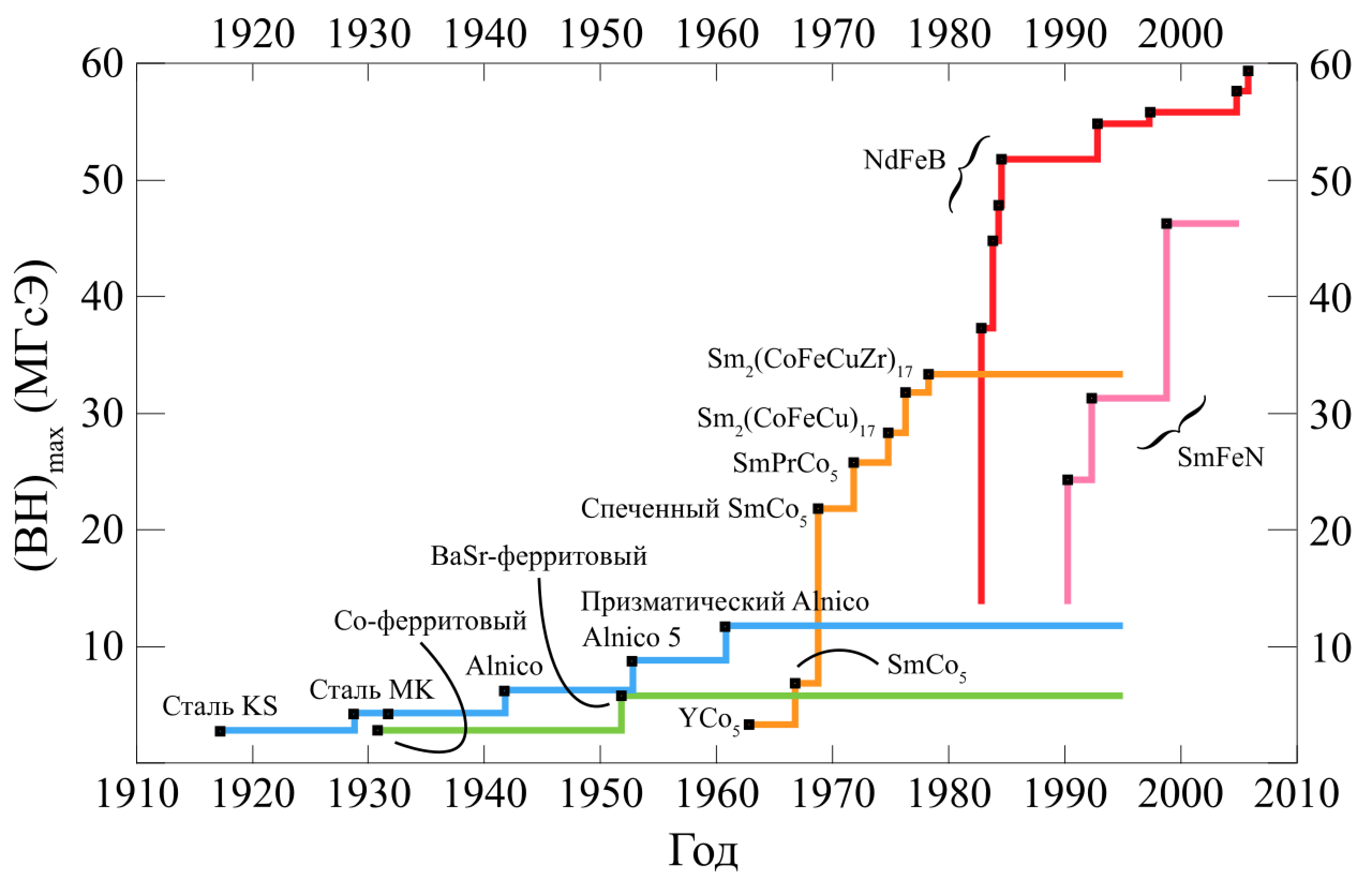
The progression of permanent magnetic materials from carbon steel and Alnico in the early twentieth century to ferrites in the 1950s, samarium-cobalt (SmCo) in the 1970s, and sintered neodymium-iron-boron (NdFeB) following the 1984 Sumitomo and General Motors discoveries has been driven principally by the search for higher maximum energy product (BHmax) per unit volume and per unit mass. Modern commercial sintered NdFeB grades range from approximately 30 to 55 megagauss-oersted (MGOe), with common N42 grades exhibiting remanence (Br) of approximately 1.28 T, intrinsic coercivity above 12 kOe, and BHmax of roughly 40 MGOe at 20 °C [25][26]. Heavy rare-earth additives, particularly dysprosium and terbium, are typically present at 0.5 to 6 weight percent to preserve coercivity at elevated temperatures, a property essential for traction motors, missile actuators, and aerospace applications operating above 150 °C [25][26].

The aerospace and defense sectors have always operated under the constraint that every kilogram of mass at altitude or in orbit imposes large lifecycle cost penalties. NASA's X-57 Maxwell distributed-electric-propulsion demonstrator illustrates the engineering envelope: each cruise motor delivered 60 kW, with 12 high-lift motors at 10.5 kW each, served by lithium-ion batteries with gravimetric energy density near 121 Wh/kg [16][17]. NASA reference studies for urban air mobility motors target water-glycol-cooled climb specific power around 11 kW/kg, with industry product disclosures from Joby, Evolito, MagniX, and others claiming peak motor specific power between roughly 6 and 28 kW/kg depending on cooling, duty cycle, and rotor topology [18][27]. Conventional motor design assigns a substantial fraction of total mass to copper windings, NdFeB magnets, electrical steel laminations, and structural housings; even modest mass reductions in any of these contribute disproportionately to platform-level range, payload, and endurance.
John D
2.2 The Carbon Nanotube Materials Class: Structural, Electronic, and Magnetic Properties
Carbon nanotubes, discovered in their multi-walled form by Iijima in 1991, are seamless cylindrical assemblies of sp²-bonded carbon atoms, classed as single-walled (SWCNT, typically 0.7 to 2 nm diameter), double-walled (DWCNT), or multi-walled (MWCNT, 2 to 100 nm) [28]. Their electronic character ranges from metallic to semiconducting depending on chirality (n,m) indices; metallic "armchair" tubes exhibit theoretical specific conductivities exceeding the best metals, with individual tubes capable of carrying current densities approaching 10⁹ A/cm² [29]. Theoretical and experimental studies converge on the conclusion that pristine, defect-free CNTs are predominantly diamagnetic, with anisotropic magnetic susceptibility that depends on field direction relative to tube axis, on metallicity, and on the position of the Fermi level [30][31].
Magnetism in CNT systems, when present, arises from one of four mechanisms: residual ferromagnetic catalyst impurities (Fe, Co, Ni), which historically have confounded many "intrinsic ferromagnetism" claims; defect-induced spin polarization at vacancies, edge states, or sp³ hybridization sites; covalent functionalization with adsorbates inducing approximately 1 µ B per molecule moments at carbon sublattice sites; and encapsulation of ferromagnetic nanowires inside the CNT lumen [1][2][3][4][32][24]. The peer-reviewed literature contains genuine disagreement on the magnitude of intrinsic carbon ferromagnetism, with some authors arguing the effect in pure graphene and pristine CNTs is negligible and that prior reports reflected impurity contamination [3].
2.3 Pathways to Magnetism in CNT Systems: Intrinsic Defects, Functionalization, Doping, and Composite Architectures
Hydrogenation of MWCNTs grown in porous alumina templates has been reported to produce ferromagnetic moments with apparent Curie temperatures near 1000 K, attributed to H-vacancy complex and adatom magnetism [1]. Density functional theory calculations indicate that monovacancies in armchair (6,6), (8,8) and zigzag (10,0), (14,0) SWCNTs produce magnetic moments of 0.3 to 0.8 µ B, while divacancies fully reconstruct without net moment [2]. Covalent functionalization with single C-C bonded adsorbates produces a "universal" 1.0 µ B per molecule moment regardless of adsorbate identity at low coverage, provided molecules occupy the same graphenic sublattice [32]. These moments are real and reproducible in the appropriate samples, but the bulk magnetization densities they produce are orders of magnitude below those required for permanent-magnet applications. The energy product of NdFeB at 40 MGOe corresponds to roughly 320 kJ/m³ of magnetic energy density; no peer-reviewed source has been identified that demonstrates an intrinsic-CNT-derived bulk material approaching even 1 percent of this figure, and any claim to the contrary should be treated as speculative until independently replicated.
Encapsulation of ferromagnetic metal nanowires inside CNTs is a more mature pathway. Fe-, Co-, Ni-, FeCo-, and FeNi-filled MWCNTs synthesized by ferrocene-based CVD or templated electrochemical deposition exhibit saturation magnetizations up to roughly 31 emu/g (with iron filling fractions reaching 40 weight percent), tunable coercivities by virtue of shape anisotropy, and corrosion resistance from the carbon shell [9][10][11]. These materials are useful for magnetic recording media, biomedical actuators, and electromagnetic interference (EMI) absorption, but the magnetic phase remains a conventional ferromagnetic metal; the CNT serves as a protective sheath rather than an intrinsically magnetic constituent. Hybrid Nd₂Fe₁₄B/Fe-Co composite nanowire arrays produced by alternating electrochemical deposition demonstrate exchange-coupling between hard and soft phases with coercivities around 4.2 kOe, illustrating the potential of nanostructured architectures, but again the rare-earth content is preserved [33].
2.4 Distinguishing "Flightweight" CNT Magnets from Adjacent Technologies (NdFeB, SmCo, Ferrite, HTS Coils)
A taxonomy is necessary to avoid conflating distinct technologies. Sintered NdFeB and SmCo permanent magnets are the incumbents, providing 30 to 55 MGOe and 15 to 33 MGOe respectively, with SmCo offering superior temperature stability above 200 °C [25][26]. Ferrites, at roughly 4 MGOe but very low cost and high temperature tolerance, dominate by mass in low-end applications. Iron nitride (Fe₁₆N₂) magnets, under commercialization by Niron Magnetics with a 1,500-tonnes-per-year facility planned in Sartell, Minnesota for 2027 commissioning, target rare-earth-free permanent magnetism with claimed performance approaching low-grade NdFeB [19][34]. High-temperature superconducting (HTS) coils, used in some experimental aerospace generators, deliver the highest field densities but require cryogenic cooling that imposes system-level mass and complexity penalties [27].
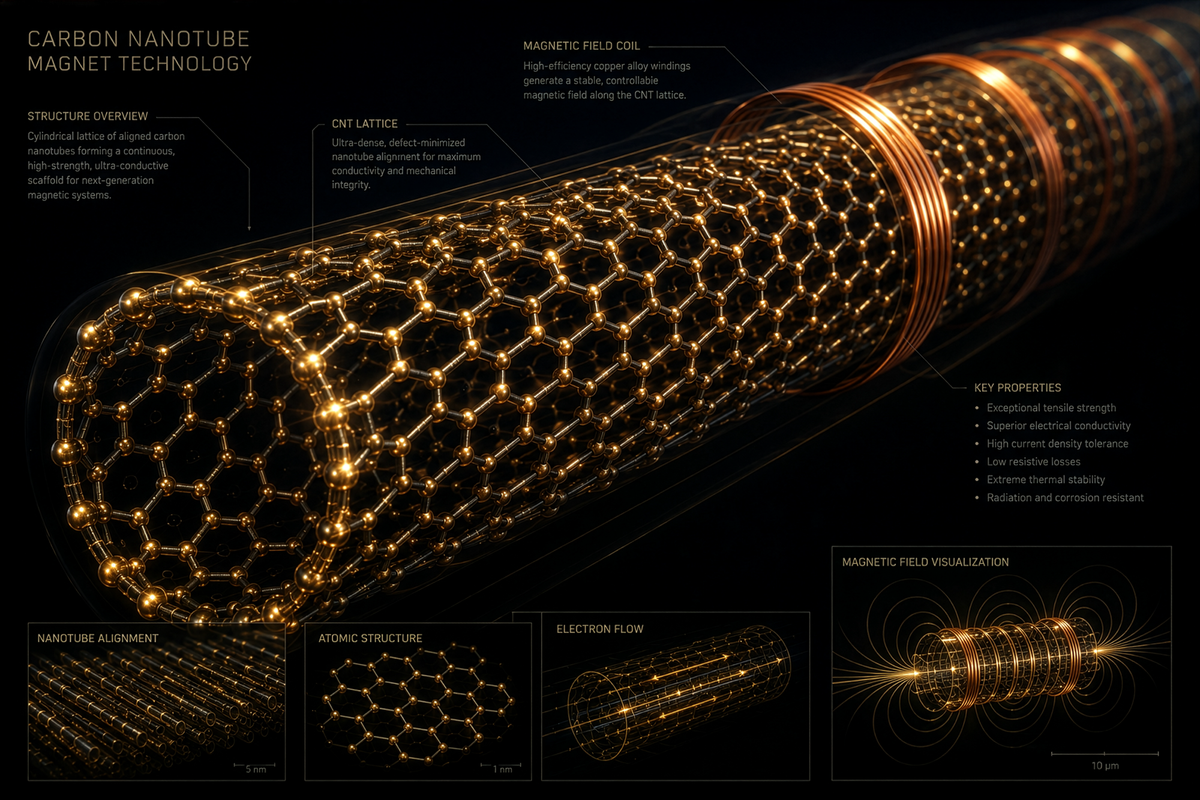
Flightweight CNT magnet technology, properly defined, addresses three different niches within this landscape: (1) intrinsic ferromagnetic CNTs as a long-horizon research bet on truly novel rare-earth-free permanent magnetism, currently far below commercial relevance; (2) CNT based current-carrying windings as a near-term mass-reduction technology for electromagnets and motor coils, where the magnetic field is generated dynamically rather than stored; and (3) CNT-rare-earth or CNT-transition-metal hybrid composites that incorporate conventional magnetic phases within a CNT matrix to improve mechanical robustness, processability, or shape anisotropy. Treating these as a single technology, as some marketing literature does, obscures the very different timelines, capital requirements, and risk profiles that apply.
2.5 Current Technology Readiness Level Assessment
On the standard NASA/DoD TRL scale, the three pathways occupy markedly different positions. Intrinsic ferromagnetic CNTs are at TRL 2-3: basic principles observed and analytical research demonstrated in laboratory environment, with no engineering demonstration of a usable bulk material. CNT current-carrying windings are at TRL 4-5: a 40 W laboratory motor was demonstrated in 2014, and commercial CNT magnet wire is offered by DexMat and others for evaluation, with TE Connectivity, NASA, DARPA, and AFRL having funded prototype development for MIL-STD-1553B and IEEE 1394 cabling, but no flight-qualified motor has been certified [5][8][20][35]. CNT-encapsulated ferromagnetic nanowires and CNT-NdFeB hybrid composites are at TRL 3-4 for specialty applications (recording media, MFM probes, EMI absorbers) and substantially lower for aerospace permanent-magnet substitution. The candid distinction matters: marketing claims that elide the gap between a 40 W bench-scale demonstration and a flight-qualified 250 kW eVTOL traction motor mislead capital allocators and policymakers.
3. Key Players and Stakeholder Landscape
3.1 Academic and National Laboratory Research Programs
Rice University's Pasquali group, building on the legacy of Richard Smalley, established the wet spinning chlorosulfonic acid process that produced the 2013 Behabtu et al. Science paper demonstrating CNT fibers with specific electrical conductivity comparable to copper, gold, and aluminum [5][36]. The University of Cambridge's Windle group developed the floating-catalyst CVD direct-spinning route, producing aerogel-drawn CNT fibers continuously [37][38]. The Korea Institute of Science and Technology, Tsinghua University, and Japan's National Institute for Materials Science (NIMS) operate parallel programs in CNT yarn densification, double drawing, and metallic doping [39]. The Weizmann Institute (Joselevich) demonstrated defect free SWCNT self-coiling into structures of more than 70 turns with free contact ends, a foundational result for nanoscale inductors and electromagnets [40]. IMDEA Materials in Madrid, in collaboration with Airbus, has produced extensive review work on aerospace-relevant nanomaterial assemblies including doped and metal-hybridized nanocarbon power transmission lines [41].
3.2 Commercial Developers and Materials Startups
DexMat Inc., spun out of Rice University and commercializing the Galvorn carbon nanotube fiber, is the most visible Western pure-play producer; its products report single-filament thermal conductivity of approximately 450 W/m·K (versus 385 W/m·K for copper), density of 1.6 g/cm³ (versus 8.96 g/cm³ for copper), and conductivity at 15 to 20 percent of copper on a volumetric basis but exceeding copper on a per-mass basis [20][35]. Teijin Aramid (Netherlands/Japan) provided the industrial wet-spinning partnership for Rice's 2013 Science paper and supplied yarns for Lappeenranta's prototype motor [5][8]. TE Connectivity has developed CNT-based MIL-STD-1553B and IEEE 1394 cables for aerospace and defense [43]. Asian producers including LG Chem-affiliated entities, Cnano Technology, and various Chinese FC-CVD operators dominate volume CNT powder production. Niron Magnetics, while not a CNT company, is a critical adjacent player as the most advanced rare-earth-free permanent magnet developer with a U.S. Department of Defense-relevant Iron Nitride product partnered with Moog for guided munitions actuators [19][34][44].

3.3 Aerospace and Defense Primes as Demand-Side Stakeholders
Boeing, Airbus, Lockheed Martin, Northrop Grumman, RTX (Raytheon Technologies, including Pratt & Whitney and Collins Aerospace), Honeywell, GE Aerospace, and Safran are demand-side stakeholders for both CNT cabling and rare-earth-free magnet substitutes. Airbus's collaboration with IMDEA on the DOMMINIO project for piezoresistive CNT sensor integration into composite components illustrates the broader pattern of CNT adoption beginning in non-load-bearing and signal-carrying roles [41][45]. Moog's partnership with Niron on iron nitride magnets for missile actuators exemplifies how Tier-1 suppliers are hedging rare-earth exposure [44]. eVTOL developers (Joby Aviation, Archer Aviation, Lilium prior to its 2024 difficulties, Volocopter, and others) and electric regional aircraft programs (Heart Aerospace, Eviation, Wright Electric) have repeatedly stated the importance of motor specific power above 5 kW/kg, with longer-term targets of 10 to 25 kW/kg [27][46].
3.4 Government Funding Agencies and Strategic Sponsors
In the United States, DARPA's Separation and Purification of Rare Earth Elements (SPREE) program, ARPA-E's various rare-earth-free magnet projects (including Niron Magnetics' iron nitride pilot production and the Alice & Bob/Los Alamos quantum-algorithm-aided magnet discovery effort), DOE's Critical Materials Innovation Hub, and the Department of Defense's Defense Production Act (DPA) Title III investments (over $439 million committed since 2020 to MP Materials, Lynas USA, Noveon Magnetics, and others, with a $400 million equity investment in MP Materials and a 10-year $110/kg NdPr price floor announced in July 2025) define the U.S. policy landscape [21][47][48][49][22]. The DOE's 2023 Critical Materials Assessment formally identified neodymium, praseodymium, dysprosium, and electrical steel as critical for energy applications [50]. NASA Glenn, NASA Langley, and NASA Armstrong have funded CNT cable, CNT-Cu ampacity, and electric propulsion motor reference designs [17][42]. AFRL has funded CNT fiber and field-emission applications [20].
In Europe, the Critical Raw Materials Act, adopted in March 2024, sets binding 2030 benchmarks of 10 percent domestic extraction, 40 percent processing, and 25 percent recycling of designated strategic raw materials, with single-country dependency capped at 65 percent across the value chain, and the December 2025 ReSourceEU action plan added recycling and trade-policy measures specifically targeting rare-earth permanent magnets [51][52]. In Japan, the Ministry of Economy, Trade and Industry (METI) has supported the Japan Organization for Metals and Energy Security (JOGMEC) in stockpiling rare earths since the 2010 Senkaku incident; Japan's October 2025 bilateral framework with the United States and February 2026 action plan on price floor coordination represent a deepening allied response [13]. South Korea has supported domestic NdFeB metallization at facilities such as the 1,300 tonnes per annum (tpa) Korean metals plant identified in industry reporting [53].
3.5 Standards Bodies and Certification Authorities
The Federal Aviation Administration (FAA) and European Union Aviation Safety Agency (EASA) certify novel materials in aerospace through special conditions and equivalent level of safety findings, as documented in the Government Accountability Office's 2011 review of FAA composite-airplane oversight [54]. SAE International's Aerospace Material Specifications (AMS) provide the industry standardization layer for materials qualification; ASTM International maintains relevant test methods for nanomaterials. NIST's nanotechnology and materials measurement programs and the National Institute for Occupational Safety and Health (NIOSH) recommended exposure limits (a 1 µ g/m³ recommended exposure limit for respirable CNTs and carbon nanofibers as an 8-hour time-weighted average, with associated workplace guidance in Current Intelligence Bulletin 65) constitute the principal U.S. environmental, health, and safety frameworks [55][56].
4. Technical and Operational Considerations
4.1 Manufacturing Processes: CVD Growth, Spinning, Alignment, Densification
CNT fibers can be produced by three principal industrial routes. Wet spinning from chlorosulfonic acid solutions of long, high-quality CNT raw material, pioneered at Rice and commercialized by DexMat and Teijin, produces fibers with high alignment, packing density, and conductivity but requires handling of corrosive superacids [5][20][36]. Direct spinning from aerogels formed during floating-catalyst CVD with ferrocene or related metallocenes plus a sulfur promoter produces continuous fibers in a single process step, as developed by the Cambridge group, and is now operated commercially by several Asian manufacturers [37][38]. Drawing from vertically aligned CNT forests grown on substrates produces yarns with very high alignment but is difficult to scale to kilometer lengths [8]. Densification post-treatments (chlorosulfonic acid, double-drawing, mechanical roll-pressing, copper or silver electrodeposition) raise specific conductivity; SWCNT/Cu core-shell fibers reported in ACS Nano achieved specific electrical conductivity of approximately 1.01 × 10⁴ S·m²/kg, 56 percent higher than copper, while CNT-Cu composites reported in Nature Communications by Subramaniam et al. demonstrated ampacity of 6 × 10⁸ A/cm², two orders of magnitude above copper or gold [57][29].
For magnet-specific architectures, two manufacturing challenges dominate. Producing the helical or spiral geometry required for solenoid and coil structures at industrially relevant lengths is non-trivial; the Joselevich self-coiling work demonstrated the principle at the single tube level but not at engineering scale [40]. Incorporating ferromagnetic phases (Fe-, FeCo-, FeNi-, NdFeB-, SmCo-particles) into CNT matrices while preserving alignment and avoiding catalyst-residue contamination has been shown at laboratory scale via templated electrodeposition and CVD with metallocene precursors but not at the volumes required for permanent-magnet motor production [9][10][11][33]
4.2 Magnetic Performance Metrics: Remanence, Coercivity, Energy Product, Mass Normalized Figures of Merit
Permanent magnet performance is conventionally specified by remanence (Br, in tesla or kilogauss), intrinsic coercivity (Hci, in kA/m or kOe), and maximum energy product (BHmax, in MGOe or kJ/m³). Sintered NdFeB N42 grades exhibit Br ≈ 1.28 T, Hci ≈ 12 kOe, BHmax ≈ 40 MGOe; high-end N52 grades reach Br ≈ 1.45 T and BHmax ≈ 52 MGOe [25][26]. SmCo (Sm₂Co₁₇) grades typically deliver BHmax of 24 to 32 MGOe with operating temperatures up to 350 °C [25].
For CNT-encapsulated ferromagnetic nanowires, reported saturation magnetizations of 31 to 100+ emu/g and coercivities ranging from 0.5 to 4 kOe (for hybrid NdFeB/Fe-Co arrays) reflect the magnetic phase rather than any intrinsic CNT contribution [9][10][11][33]. Mass-normalized figures of merit are rarely reported for these systems in formats directly comparable to bulk magnets; publicly available data on mass-normalized BHmax for CNT-hybrid magnets is limited and the figures cited in promotional literature should be treated as illustrative.
For CNT current-carrying coil applications, the relevant metrics are not BHmax but specific electrical conductivity (S·m²/kg or S·m/kg), continuous current rating, and Joule loss per unit mass. Behabtu et al. reported wet-spun CNT fibers achieving specific electrical conductivity within a factor of approximately 2 of copper on a volumetric basis and exceeding copper on a per mass basis [5]. Failure current densities of 10⁷ to 10⁹ A/m² have been measured in tightly packed aligned CNT fibers, with continuous current ratings demonstrating mass-normalized advantage over copper [29][7]. The Lappeenranta prototype operated at approximately 70 percent efficiency at 40 W and 15,000 rpm; Pyrhönen's group projected that, holding design parameters constant, CNT replacement of copper could halve Joule losses if specific conductivity targets were met [8][58].
4.3 Thermal, Mechanical, Environmental Tolerances
CNT fibers exhibit tensile strengths of 1 to 6.5 GPa and moduli of 100 to 629 GPa (the upper bound from the 2022 macromolecular coalescence work on graphitic fibers), thermal conductivity of 200 to 482 W/m·K depending on filament size and processing, and density near 1.6 g/cm³ [36][39][20]. These properties give CNT yarns advantages in flex life (DexMat reports approximately 1,000-fold improvement over copper) and abrasion resistance in vibration-rich aerospace environments [20]. Operating temperature is a more nuanced question: in oxidizing atmosphere CNTs begin to degrade above approximately 400 to 600 °C, and the cut-end oxidation temperature has been reported as low as 312 °C in dry air [59]. Encapsulated metal nanowires within CNTs benefit from the carbon shell's anti-corrosion property [10]. For permanent-magnet applications requiring 150 to 200 °C operation in motor environments, NdFeB with appropriate dysprosium content remains the established benchmark; CNT encapsulated Fe is technically capable but not demonstrated at the relevant scale.
4.4 Integration Challenges in Motors, Generators, Actuators, Magnetic Shielding
For motor windings, the principal integration challenges are: (a) joining CNT yarn to copper terminals with low contact resistance; (b) achieving uniform insulation suitable for magnet-wire enamel-equivalent breakdown voltage and thermal class; (c) achieving the bend radii and packing factors that automated winding machines require; and (d) demonstrating long-term thermal cycling and partial-discharge resistance [42][8]. NASA Glenn's 2017 NTRS report on CNT-Cu composite ampacity for hybrid-electric aviation magnet wire identified semiconducting CNT contamination as a yield-limiting factor and noted the need for sorted metallic-CNT (m-CNT) feedstocks [42]. For magnetic shielding and EMI absorption, CNT sheets and fabrics have been demonstrated to provide effective performance at lower mass than copper braids, and patents have been filed on radar-absorbing CNT composite panels for stealth applications [60].
4.5 Failure Modes, Reliability, Lifecycle
Failure modes for CNT current-carrying conductors include Joule-heating-induced oxidation in air (avoidable in vacuum or inert atmosphere up to substantially higher current densities), inter tube contact resistance increase under mechanical fatigue, and percolation-network degradation under prolonged thermal cycling [7][29][41]. For CNT-rare-earth hybrid magnets, the rare-earth phase remains susceptible to corrosion (NdFeB requires nickel, zinc, or epoxy coating in operational service) and to high-temperature demagnetization; the CNT shell provides some additional protection. Lifecycle and maintenance data at flight-qualification standards are not publicly available for any CNT magnet or CNT magnet-wire system.
4.6 Comparative Performance Benchmarking Against Incumbent Magnet Technologies
The defensible benchmarking conclusion is as follows. As permanent magnets, intrinsic ferromagnetic CNTs and CNT-rare-earth hybrid composites do not currently offer energy product, coercivity, or mass-normalized performance that displaces sintered NdFeB or SmCo. As magnet-wire substitutes in coil and winding applications, CNT and CNT-Cu hybrid conductors offer credible per-mass advantages in specific conductivity and ampacity, with documented advantages in flex life and thermal conductivity, but volumetric conductivity remains roughly 15 to 60 percent that of copper depending on specific product and process [20][57][29]. The integration economics, rather than fundamental physics, will dictate adoption rates in the near term.
John D
5. Economic and Market Dynamics
5.1 Addressable Markets: Electric Aviation, Unmanned Systems, Space Propulsion, Defense Platforms
Adamas Intelligence forecasts global NdFeB magnet demand to grow at a 7.5 to 8.7 percent CAGR through 2040, driven principally by electric vehicles, wind power, robotics, and advanced air mobility, with the market for magnet rare earth oxides projected to grow five-fold to approximately $44 to $57 billion by 2040 across competing scenarios [61][62][63]. Within this aggregate, the addressable share for flightweight CNT magnet technology specifically is concentrated in weight-critical aerospace applications. eVTOL motor production volumes remain modest (low thousands of units per year by 2030 in most analyst forecasts), but each platform requires multiple high-power-density motors and generators. Defense applications include guided-munition actuators (the Niron-Moog collaboration as a leading example), unmanned aerial systems, satellite reaction wheels and control moment gyroscopes, and electrified ground vehicles [44][12]. The most concrete near-term commercial pull is for CNT magnet wire and shielding in satellite buses, where mass savings translate directly to launch cost reduction of approximately $3,000 to $10,000 per kilogram saved depending on orbit and launch vehicle.
5.2 Cost Structure and Learning Curve Trajectories
CNT fiber costs have declined substantially from gram-scale research prices but remain considerably above copper on a per-meter basis at the conductor-equivalent diameter. DexMat publicly states a goal of doubling conductivity every three years and references kiloton-scale production aspirations, but actual production volumes are presently in the kilometers-of-fiber range [20]. Public cost data for sintered NdFeB ranges from approximately $50 to $100/kg for standard grades; high-coercivity grades incorporating heavy rare earths range higher. The Department of Defense's $110/kg NdPr oxide price floor with MP Materials sets an explicit policy benchmark for the rare-earth side [22]. CNT magnet wire is currently more expensive than copper magnet wire on both volumetric and per-meter bases for equivalent conductance, although the picture changes when mass and lifecycle costs are considered. Publicly available learning-curve data specific to CNT magnet wire at production scale is limited.
5.3 Supply Chain Architecture for Precursor Materials and CNT Feedstocks
CNT feedstock supply is dominated by Chinese producers in volume, with significant capacity in Japan, South Korea, and the United States. Hydrocarbon precursors (methane, ethylene, toluene, ethanol, methanol) are abundant globally; metallocene catalysts (ferrocene, nickelocene, cobaltocene) and sulfur promoters are commodity chemicals. The supply chain risk for CNT feedstock is materially lower than for rare earths. By contrast, the rare-earth supply chain remains heavily concentrated. China accounted for approximately 60 to 70 percent of global mined production of magnet rare earths in 2024, more than 90 percent of refining, and approximately 94 percent of sintered permanent magnet manufacturing [13][14][15]. The U.S. Geological Survey's Mineral Commodity Summaries 2025 reported global rare earth mine production of approximately 390,000 tonnes REO equivalent in 2024, with 45,000 tonnes from the United States primarily through the Mountain Pass mine, and the 2026 edition documented the April and October 2025 Chinese export controls, with the October measures suspended for one year in November 2025 while the April controls remained in effect [12][64].
5.4 Capital Requirements, Investment Flows, Venture Activity
DexMat raised more than $5 million in seed funding and has secured a landmark offtake agreement with NeuroBionics for medical applications, indicating the early-stage character of pure-play CNT financial activity [20]. Niron Magnetics has raised a series of substantial private rounds and has secured engineering, procurement, and construction management partnership with Wood for its Sartell, Minnesota Plant 1, targeting 1,500 tpa Iron Nitride magnet production from 2027 [19][34]. The IEA estimates that approximately $60 billion of investment is required over the next decade to develop diversified rare-earth supply chains outside China, modest relative to the up-to-$6.5 trillion of annual economic activity outside China potentially exposed to rare-earth supply disruption under full export-control scenarios [65]. Total venture capital flowing specifically into CNT-magnet technology is small relative to either rare-earth processing (where DoD has committed over $439 million since 2020) or rare-earth-free permanent magnet developers, such as Niron Magnetics [21]. No reliable aggregated venture-funding figure for "flightweight CNT magnet" technology specifically has been identified in publicly available sources, and any such number should be treated as illustrative.
5.5 Substitution Economics Versus Rare-Earth Permanent Magnets
The substitution economics decompose into three cases. Case 1, full replacement of NdFeB by CNT-based bulk permanent magnets, is not economically supportable on current or near-term performance data. Case 2, replacement of copper magnet wire by CNT yarn in motor windings while retaining NdFeB rotors, is supportable in mass-critical aerospace applications where the lifecycle value of weight savings exceeds the conductor cost differential; this is a credible near-term path. Case 3, partial substitution through CNT-rare-earth hybrid composites that reduce rare-earth content while improving mechanical robustness, is technically credible at laboratory scale but lacks demonstrated cost and performance advantages at production scale. The evidence supports case 2 as the most defensible near-term value proposition.
6. Regulatory and Standards Landscape
6.1 Aerospace Certification Pathways (FAA, EASA) for Novel Materials
Novel materials in commercial aircraft enter through type certification special conditions and equivalent-level-of-safety findings, as the Boeing 787 composite fuselage process illustrated [54]. EASA's Acceptable Means of Compliance for composites (AMC 20-29) and corresponding FAA Advisory Circulars provide the framework, but no specific pathway exists for CNT-based magnet wire or permanent magnets, and the qualification timeline from material specification to flight credit on a transport-category aircraft is typically 5 to 10 years. For uncrewed aerial systems and small satellites, qualification timelines compress significantly. SAE AMS specifications and ASTM nanomaterial test methods supply the underlying material-level standardization layer.
6.2 Defense Acquisition and Qualification Frameworks
The Defense Federal Acquisition Regulation Supplement (DFARS) provisions implemented under the FY 2019, FY 2023, and FY 2024 National Defense Authorization Acts prohibit DoD-procured samarium-cobalt and neodymium-iron-boron magnets sourced, refined, melted, or produced in China, Russia, Iran, or North Korea, with full implementation phasing through 2027 [66]. This creates a substantial procurement-driven pull for non-Chinese magnet supply, including potentially CNT-hybrid magnet developments. The MIL-HDBK series and MIL-STD 810 environmental testing provide qualification frameworks for defense electronic materials.
6.3 EHS Regulation of Engineered Nanomaterials
NIOSH issued Current Intelligence Bulletin 65 in 2013 establishing a recommended exposure limit of 1 µ g/m³ as an 8-hour time-weighted average for respirable carbon nanotubes and nanofibers (later widely cited as 7 µ g/m³ in some references reflecting an earlier draft figure), with workplace control guidance [55][56]. The peer-reviewed toxicology literature is consistent with the assessment that long, biopersistent fibrous CNTs can elicit asbestos-like pulmonary inflammation, granuloma formation, and mesothelioma-relevant molecular pathways in animal models, while compact-particle and short-tube forms present substantially lower hazard [67] [68]. The International Agency for Research on Cancer classified one type of MWCNT as Group 2B (possibly carcinogenic to humans) in 2014; classification of other CNT types remained unresolved due to data limitations [67]. EU REACH registration applies to CNTs above the 1 tpa import threshold. These constraints are material for production-scale deployment but are tractable through standard industrial hygiene practice.
6.4 Export Control Considerations (ITAR, EAR, Wassenaar)
CNT-based components in defense systems are subject to International Traffic in Arms Regulations (ITAR) and Export Administration Regulations (EAR) controls when integrated into munitions or radar-absorbing structures. Chinese export controls instituted in April 2025 (covering samarium, gadolinium, terbium, dysprosium, lutetium, scandium, yttrium and finished SmCo and high-coercivity NdFeB magnets) and October 2025 (extending coverage to europium, holmium, erbium, thulium, ytterbium, related processing technologies, and asserting extraterritorial jurisdiction over foreign-made products containing more than 0.1 percent Chinese-origin heavy rare earths or produced using Chinese rare-earth technology) constitute a fundamental shift in the export-control landscape [69][70][14][66]. China's November 2025 one-year suspension of the October expansion did not reverse the April measures [64]. The Wassenaar Arrangement governs multilateral controls on dual-use materials including certain magnetic materials for missile and torpedo applications.
6.5 Intellectual Property Landscape
The CNT patent landscape is widely characterized in the legal and academic literature as a "patent thicket," with substantial overlap among synthesis, purification, functionalization, and application claims, and with major holdings by Rice University and licensees, Cambridge and licensees, Nantero, Hyperion Catalysis legacy assets, and large corporate filers including Tsinghua University, Samsung, IBM, GE, and various Chinese institutions [71][72]. Specific patents covering CNT-based inductors and magnetic structures have been filed (USPTO 7,982,570 on high-performance low-volume inductors using aligned CNTs; USPTO 9,793,039 on CNT-based integrated power inductors for switching converters; USPTO 7,109,703 and 6,878,444 on intrinsically magnetic CNTs; USPTO 7,335,408 on CNT composite materials with continuous metal coating) [73][74][75][76]. Freedom-to-operate analysis is non-trivial and constitutes a material due-diligence requirement for any commercial entrant.
7. Geopolitical and Strategic Dimensions
7.1 Rare-Earth Dependency and Strategic Logic of Substitution
The strategic logic for substitution rests on hard data: China's 60 to 70 percent share of mined magnet-rare-earth production, more than 90 percent share of refining, 94 percent share of sintered permanent magnet manufacturing, and demonstrated willingness to use export controls for diplomatic and economic leverage as in the 2010 Senkaku incident, the December 2023 rare-earth processing technology export ban, and the April and October 2025 export controls [13][14][15][64]. CSIS analysis identifies metal-and-alloy production as the least developed and most-difficult-to-rebuild capability outside China, with North America and Europe substantially behind in metallization and alloying capacity [12]. A single Virginia-class submarine reportedly contains over 9,000 pounds of rare earths; F-35 production, Tomahawk missile guidance, radar systems, and Joint Direct Attack Munition smart bombs all rely on rare earth permanent magnets [12][14].
The counterargument deserves equal weight. NdFeB and SmCo deliver energy product and temperature stability that no proven substitute matches across the full operating envelope. Rare earth-free alternatives (iron nitride, manganese-bismuth, Mn-Al, ferrite) and CNT-based architectures offer credible partial substitution, but a complete substitution thesis applied across all magnet-using applications is not supported by current performance data. The defensible policy posture is to pursue diversification of rare-earth supply (mine-to-magnet rebuild outside China) in parallel with substitution research (rare-earth-free magnets, CNT-hybrid architectures, design optimization to reduce magnet content) rather than to treat substitution as a near-term replacement for diversification.
7.2 National Industrial Policy Postures (US, EU, China, Japan, South Korea)
The United States has adopted a whole-of-government posture combining Defense Production Act Title III investments, the DoD-MP Materials equity stake and price-floor commitment, EXIM and DFC financing, State Department critical-minerals partnerships with Australia, Saudi Arabia, Malaysia, and Japan, and the 2025 List of Critical Minerals expanded to 60 entries including 15 rare earths [21][12][22][77]. The European Union's Critical Raw Materials Act sets binding 2030 targets, and the December 2025 ReSourceEU action plan adds permanent-magnet-specific recycling and trade measures [51][52]. China has pursued a coordinated industrial policy posture combining production quotas (240,000 tonnes mining and 230,000 tonnes separation in 2023, increased to 250,000 tonnes mining in 2024), export controls, and continued investment in downstream magnet manufacturing [12][64]. Japan has combined long-standing strategic stockpiling, the JOGMEC program, and active industrial policy through METI; the October 2025 U.S.-Japan bilateral framework formalized coordination [13]. South Korea has invested in domestic magnet metallization including the 1,300 tpa Korean metals plant, with the broader posture coordinated through ministry-level critical-minerals strategy.
7.3 Allied Supply Chain Resilience and Friend-Shoring
The U.S.-Australia-Saudi Arabia-Japan-Malaysia critical-minerals coalition emerging in 2025-2026 represents a coordinated friend-shoring posture, with MP Materials' MoU with Saudi Arabian Mining Company (Maaden), Lynas Rare Earths' U.S. and Malaysian operations, and Solvay's French rare-earth processing facility opened in April 2025 as concrete elements [12][51]. CNT supply chains are presently less concentrated and less politicized than rare-earth supply chains, providing a counterweight: U.S. and European CNT producers face fewer geopolitical bottlenecks than rare-earth-dependent magnet manufacturers, although Chinese and Korean CNT volumes remain significant.
7.4 Dual-Use Technology Risks and Technology Transfer
CNT-based magnet wire, electromagnetic coils, and hybrid composite magnets are inherently dual-use, with applications spanning commercial electric mobility, defense actuators, missile guidance, satellite buses, and electromagnetic warfare. Technology-transfer risk is meaningful, particularly given the active Chinese, Russian, and other state-affiliated research programs. Export-control classification for finished CNT magnet-wire products and hybrid magnet assemblies will need to be developed; presently no specific Export Control Classification Number (ECCN) addresses CNT magnetic materials, with classification proceeding by analogy and end-use.
7.5 Implications for Great-Power Competition in Aerospace and Electrified Mobility
The strategic competition dimension is sharpest in three areas: electric and hybrid-electric propulsion for next-generation military aircraft, where motor specific power and thermal management are platform-defining; uncrewed systems and loitering munitions, where mass energy density determines range and persistence; and electrified naval propulsion and directed energy weapon power supplies, where electromagnetic actuator and coil performance directly translate to capability. Whichever bloc achieves earliest qualification of CNT-based magnet wire or hybrid magnet architectures in these platforms gains a tangible, although not transformational, military-industrial advantage.
John D
8. Risk Assessment
8.1 Risk Matrix or Narrative
The analytically appropriate format for this risk assessment is a structured narrative across short-term (1-3 year), medium-term (3-7 year), and long-term (7+ year) horizons rather than a tabular matrix. Narrative is preferred because the technical, regulatory, financial, and adoption related risks are tightly interdependent (technical-readiness shortfalls drive financial risk and regulatory delay simultaneously), because the three CNT magnet pathways have materially different risk profiles that a single matrix would misleadingly aggregate, and because the principal uncertainties are qualitative path dependencies (which technical pathway prevails, which government program survives political turnover, which prime adopts first) that resist meaningful numerical risk-scoring.
In the short term (1-3 years through approximately 2029), the dominant risks are technical: failure of CNT magnet-wire prototypes to scale from kilowatt to hundreds-of-kilowatt motor demonstrations; inability of CNT-rare-earth hybrid magnet specimens to maintain coercivity and energy product at production scale; and inability of intrinsic ferromagnetic CNT samples to be replicated independently of catalyst contamination. Regulatory risks are moderate, dominated by NIOSH-style occupational exposure compliance and emerging EU REACH classifications. Financial risks are concentrated in the small number of pure-play CNT producers, where capital intensity is high and revenue scale is low. Adoption risks include continued reluctance of aerospace primes to qualify novel materials without flight heritage.
In the medium term (3-7 years, approximately 2029-2033), the dominant risks shift toward integration and qualification: the decade-typical timeline for FAA/EASA certification of novel materials in commercial aircraft means that CNT magnet wire qualified for flight credit by 2030 must enter formal certification campaigns by 2026-2027, an aggressive timeline given the prototype state of the technology. Financial risks center on whether CNT producers achieve industrial scale before either capital exhaustion or competitive pressure from improved rare earth-free magnets (Niron's iron nitride at 1,500 tpa from 2027 is a salient benchmark) [19]. Regulatory risks include the possibility that Chinese export controls drive accelerated DoD specification rewrites that favor specific non-Chinese rare-earth-free alternatives at the expense of CNT-hybrid options.
In the long term (7+ years, beyond 2033), the dominant risks are competitive and structural: the possibility that high-throughput density-functional-theory and machine-learning-guided rare earth-free magnet discovery (as in the Vishina et al. work on Co₃Mn₂Ge and similar compounds, or the various transition-metal-compound screening studies) produces a non-CNT permanent magnet superior to current options [78][79]; the possibility that recycling capacity and rare earth supply diversification reduce the strategic premium for substitution; and the possibility that superconducting motor topologies or alternative architectures (axial flux, distributed propulsion with smaller motors) reduce the per-platform demand for high-energy-product magnets.
8.2 Cross-Cutting Systemic Risks
Three cross-cutting systemic risks deserve specific identification. First, the CNT toxicology question, while currently tractable through industrial hygiene practice, could be reopened by new epidemiological evidence at any point in the next decade, with potential to materially constrain manufacturing economics [67][68]. Second, the freedom-to-operate question in the dense CNT patent thicket creates ongoing legal-cost burden and could result in injunctions or royalty stacks that materially change unit economics [71]. Third, the dual-use export-control question creates the possibility of allied-side restrictions on CNT magnet technology transfer in addition to Chinese-side restrictions on rare-earth inputs, a compounding rather than offsetting risk.
8.3 Scenario Analysis: Optimistic, Baseline, Pessimistic Trajectories
In the optimistic scenario, by 2032: a leading aerospace prime certifies CNT magnet-wire-based traction motors for an eVTOL or regional electric aircraft, achieving 2-3 kW/kg specific power improvement; CNT-rare-earth hybrid magnets reduce dysprosium content by 30 to 50 percent at equivalent performance in defense actuators; rare-earth-free permanent magnets (likely iron nitride or a transition-metal alloy) capture 10 to 15 percent of new motor production. Investment returns to early CNT producers and integrators are substantial.
In the baseline scenario, by 2032: CNT magnet wire achieves modest commercial penetration in satellite buses, military UAVs, and specialty motors, with global volume in the kilometers-per year to low hundreds of tonnes range; CNT-hybrid permanent magnets remain in the laboratory and pilot phase; rare-earth-free magnets capture a few percent of new motor production at the lower-performance end. Rare-earth supply diversification proceeds slowly with Chinese dominance reduced from 94 to perhaps 75 to 80 percent of magnet manufacturing. CNT producer economics improve gradually
In the pessimistic scenario, by 2032: CNT magnet wire qualification stalls due to thermal cycling, contact resistance, or insulation issues; alternative rare-earth-free magnets (notably iron nitride from Niron and competitors) capture the rare-earth-substitution market; Chinese supply chains adapt to export controls without significant market loss; CNT producers consolidate or exit. The strategic case for sustained investment in CNT magnet technology weakens, although CNT cabling and shielding applications continue.

9. Strategic Recommendations
9.1 For Institutional Investors and Capital Allocators
First, treat the three CNT magnet pathways as distinct investment theses with different risk return profiles rather than as a single technology. Within a diversified critical-materials and electrified-mobility portfolio, the most defensible exposure is to CNT fiber producers with credible aerospace and defense commercial traction (DexMat as the U.S. pure-play exemplar, with parallel exposure to Asian FC-CVD producers for cost benchmarking), with portfolio sizing reflecting the early-stage character of pure-play CNT economics. Second, pair any CNT-magnet exposure with rare-earth processing exposure (MP Materials, Lynas, Energy Fuels, REalloys) and with rare-earth-free magnet developer exposure (Niron Magnetics most prominent) to capture the realistic outcome that diversification, substitution, and CNT integration will all contribute partially to the eventual supply-chain reconfiguration. Third, engage with motor system integrators and aerospace primes to identify which platforms qualify CNT-based winding architectures first; investment exposure to qualified Tier-1 suppliers (Moog, GKN, Honeywell) may capture more value than direct exposure to CNT producers if qualification proves the binding constraint. Fourth, time-bound the thesis: if CNT magnet-wire-based motors have not entered formal aerospace certification campaigns by end of 2027, reduce CNT-specific exposure in favor of rare-earth-free permanent magnet exposure.
9.2 For Aerospace and Defense Primes and Tier-One Suppliers
First, initiate qualification campaigns for CNT magnet wire in non-flight-critical applications (auxiliary power, signal cabling, EMI shielding, satellite bus wiring) within 12 months to build f light heritage and material-allowable databases. Second, establish multi-year supply agreements with at least two qualified CNT fiber producers to ensure source diversity and competitive pressure on cost reduction; the DexMat-NeuroBionics offtake model is a useful template [20]. Third, by 2027, complete trade studies comparing total platform-level mass and lifecycle cost of (a) conventional copper-NdFeB motors, (b) CNT-magnet-wire/NdFeB motors, (c) copper/iron-nitride motors, and (d) CNT-magnet-wire/iron-nitride motors across representative use cases (eVTOL traction, missile actuator, satellite reaction wheel, electric regional aircraft); use these trade studies to inform supplier development investments. Fourth, engage with FAA, EASA, and DoD procurement authorities on the certification pathway for novel magnet and conductor materials; advocate for accelerated qualification protocols where dual-use national-security benefits justify investment in test programs.
9.3 For Government Policymakers and Program Managers
First, sustain DARPA, ARPA-E, NASA, AFRL, and DOE Critical Materials Innovation Hub funding for both rare-earth-free permanent magnet research and CNT-based magnet wire and hybrid architectures, recognizing these as complementary rather than competing strands [47] [50][55]. Second, expand DPA Title III authorities to cover CNT fiber production capacity scaling in cases where a credible defense-relevant motor or actuator qualification pathway exists, mirroring the structure of MP Materials, Lynas, and Niron support [21]. Third, coordinate transatlantic and trans-Pacific standards work with EASA, METI, and NEDO counterparts to harmonize aerospace qualification criteria for CNT-based magnetic and conductive components, reducing duplicative testing burdens. Fourth, integrate CNT magnet technology assessments explicitly into the National Defense Industrial Strategy "mine-to-magnet" framework, distinguishing the substitution and weight-reduction roles that CNT can play from the diversification role that rare-earth processing capacity must play [12]. Fifth, support occupational health surveillance and exposure-monitoring programs for CNT manufacturing workers to forestall a regulatory shock that could compromise industrial scale-up [55][67].
9.4 Cross-Cutting Strategic Postures and No-Regret Actions
Across all stakeholder categories, four no-regret actions emerge. Invest in mass-normalized performance benchmarking infrastructure: independent, peer-reviewed comparison of CNT magnet wire, CNT-hybrid magnets, and rare-earth-free alternatives against incumbent NdFeB and SmCo at standardized aerospace-relevant operating conditions, because the present literature is fragmented across single-laboratory studies that cannot be aggregated into reliable trend statements. Develop allied workforce capacity in metallization, alloying, and CNT manufacturing, because skilled-personnel constraints (rather than capital) are likely the binding constraint on Western mine-to-magnet rebuild. Accelerate recycling infrastructure for both rare earth permanent magnets and CNT-containing components, because secondary supply meaningfully reduces both supply-chain risk and lifecycle environmental burden. Maintain analytical neutrality on technology winners: it is too early to identify whether CNT, iron nitride, MnBi, transition-metal compounds, or improved sintered NdFeB with reduced heavy-rare-earth content captures the largest share of substitution demand, and policy or investment commitments that prematurely pick winners risk substantial misallocation.
John D
10. Conclusion
Flightweight carbon nanotube magnet technology is a real but heterogeneous research and engineering portfolio whose principal credible near-term value lies in mass-reducing copper substitution for motor windings and electromagnetic coils in aerospace and defense applications, with secondary roles in EMI shielding, magnetic actuators, and specialty composite magnets. As a wholesale replacement for sintered neodymium-iron-boron and samarium-cobalt permanent magnets, the technology is not supported by current performance data and should be regarded as a long-horizon research bet rather than an investible substitution thesis. The strategic logic for sustained investment is robust because of the documented vulnerabilities in rare-earth supply chains, the demonstrated willingness of Chinese authorities to use export controls as leverage, and the parallel maturation of complementary rare-earth-free magnet technologies. The defensible posture for senior executives, investors, and policymakers is to support CNT magnet technology as one component of a diversified critical-materials portfolio that simultaneously addresses rare-earth supply diversification, rare-earth-free magnet substitution, recycling infrastructure, and weight-critical motor architecture innovation. Premature commitment to any single pathway, including a maximalist CNT magnet substitution thesis, would risk significant misallocation of capital and political capital in an environment where multiple parallel solutions are likely to share the eventual addressable market.
 John D
References
[1] Friedman, A. L., Chun, D., Jung, Y. J., & Menon, L. (2010). Possible room-temperature ferromagnetism in hydrogenated carbon nanotubes. Physical Review B, 81(11), 115461. https://doi.org/10.1103/PhysRevB.81.115461
[2] Orellana, W., & Fuentealba, P. (2006). Structural, electronic and magnetic properties of vacancies in single-walled carbon nanotubes. Surface Science, 600(18), 4305–4309.
[3] Sepioni, M., Nair, R. R., Rablen, S., Narayanan, J., Tuna, F., Winpenny, R., Geim, A. K., & Grigorieva, I. V. (2010). Limits on intrinsic magnetism in graphene. Physical Review Letters, 105(20), 207205.
[4] Banhart, F., Kotakoski, J., & Krasheninnikov, A. V. (2011). Structural defects in graphene. ACS Nano, 5(1), 26–41.
[5] Behabtu, N., Young, C. C., Tsentalovich, D. E., Kleinerman, O., Wang, X., Ma, A. W. K., Bengio, E. A., et al. (2013). Strong, light, multifunctional fibers of carbon nanotubes with ultrahigh conductivity. Science, 339(6116), 182–186. https://doi.org/10.1126/science.1228061
[6] Wang, X., Behabtu, N., Young, C. C., Tsentalovich, D. E., Pasquali, M., & Kono, J. (2014). High ampacity power cables of tightly-packed and aligned carbon nanotubes. Advanced Functional Materials, 24(21), 3241–3249.
[7] Subramaniam, C., Yamada, T., Kobashi, K., Sekiguchi, A., Futaba, D. N., Yumura, M., & Hata, K. (2013). One hundred fold increase in current carrying capacity in a carbon nanotube-copper composite. Nature Communications, 4, 2202. https://doi.org/10.1038/ncomms3202
[8] Pyrhönen, J., Montonen, H., Lindh, P., Vauterin, J., & Otto, M. (2015). Replacing copper with new carbon nanomaterials in electrical machine windings. International Review of Electrical Engineering, 10(1), 12–21.
[9] Lv, R., Kang, F., Gu, J., Gui, X., Wei, J., Wang, K., & Wu, D. (2009). Improved filling rate and enhanced magnetic properties of Fe-filled carbon nanotubes by annealing and magnetic separation. Materials Research Bulletin, 44(10), 2127–2131.
[10] Jeong, J., Lee, G., Kim, J., & Choi, J. (2008). Magnetism of Fe, Co, and Ni nanowires encapsulated in carbon nanotubes. Journal of Magnetism and Magnetic Materials, 320(22), 3256–3261.
[11] Boi, F. S., Mountjoy, G., & Baxendale, M. (2018). Fe1-xNix alloy nanoparticles encapsulated inside carbon nanotubes: Controlled synthesis, structure and magnetic properties. Nanomaterials, 8(9), 655.
[12] Baskaran, G., & Schwartz, M. (2025). The consequences of China's new rare earths export restrictions. Center for Strategic and International Studies.
[13] International Energy Agency. (2025). Global critical minerals outlook 2025. IEA. https://www.iea.org/reports/global-critical-minerals-outlook-2025
[14] Baskaran, G. (2025). China's new rare earth and magnet restrictions threaten U.S. defense supply chains. Center for Strategic and International Studies.
[15] International Energy Agency. (2025, October). With new export controls on critical minerals, supply concentration risks become reality [IEA Commentary]. IEA.
[16] Borer, N. K., Patterson, M. D., Viken, J. K., Moore, M. D., Bevirt, J., Stoll, A. M., & Gibson, A. R. (2024). Flight performance estimates for the NASA X-57 distributed electric propulsion flight demonstrator (NTRS-20240010931). NASA Technical Reports Server.
[17] Kowalewski, S. R., Garrett, M. J., & Granger, M. G. (2019). Development of a Maxwell X-57 high lift motor reference design (NTRS-20190029267). NASA Technical Reports Server.
[18] Jansen, R. H., Brown, G. V., Felder, J. L., & Duffy, K. P. (2021). NASA reference motor designs for electric vertical takeoff and landing aircraft (NTRS-20210017935). NASA Technical Reports Server.
[19] Niron Magnetics. (2025, December 11). Niron Magnetics and Moog Inc. partner to produce rare-earth free actuator designs for defense applications. Business Wire.
[20] DexMat, Inc. (2025). Galvorn carbon nanotube wiring for aerospace and defense [Technical white paper]. DexMat.
[21] U.S. Government Accountability Office. (2024). Critical materials: DOD has initiated some actions to implement statutory procurement requirements (GAO-24-107176). GAO.
[22] Federation of American Scientists. (2025, July). Unpacking the DoD and MP Materials critical minerals partnership. FAS.
[23] U.S. Department of War. (2024). DOD looks to establish 'mine-to-magnet' supply chain for rare earth materials. Department of War News.
[24] Zhao, G.-M., & Beeli, P. (2008). Magnetic studies of multi-walled carbon nanotube mats: Evidence for the paramagnetic Meissner effect. arXiv:cond-mat/0802.4108.
[25] Coey, J. M. D. (2010). Magnetism and magnetic materials. Cambridge University Press.
[26] Eclipse Magnetics. (2023). NdFeB magnets / neodymium iron boron magnets datasheet. Eclipse Magnetics Ltd.
[27] Low Altitude Economy Aero. (2025). Power generation systems for VTOL aircraft: Powering the low altitude economy [Industry Analysis Report].
[28] Iijima, S. (1991). Helical microtubules of graphitic carbon. Nature, 354(6348), 56–58.
[29] Behabtu, N., Green, M. J., & Pasquali, M. (2008). Carbon nanotube-based neat fibers. Nano Today, 3(5–6), 24–34.
[30] Lu, J. P. (1995). Novel magnetic properties of carbon nanotubes. Physical Review Letters, 74(7), 1123–1126.
[31] Tsuchiya, K., Hirahara, R., Ito, K., Maruyama, T., & Naritsuka, S. (2015). Observation of the intrinsic magnetic susceptibility of highly purified single-wall carbon nanotubes. arXiv:1507.00424.
[32] Santos, E. J. G., Sánchez-Portal, D., & Ayuela, A. (2010). Magnetism of covalently functionalized carbon nanotubes. Applied Physics Letters, 96(39), 042101.
[33] Kang, L., Yang, W., Zhao, L., Cui, C., & Cao, F. (2023). Study on the microstructure and magnetic properties of Nd-Fe-B/Fe-Co composite nanowires. Materials, 16(16), 5541.
[34] ChemAnalyst. (2025). Wood partners with Niron Magnetics to build the world's first iron nitride permanent magnet facility. ChemAnalyst Industry Report.
[35] Harvey, S. (2018). Carbon nanotube technology promises a revolution in cabling [White paper]. TE Connectivity.
[36] Lee, D., Lee, D. M., Jung, Y., Park, J., Lee, H. S., Kim, Y. K., Park, C. R., et al. (2022). Ultrahigh strength, modulus, and conductivity of graphitic fibers by macromolecular coalescence. Science Advances, 8(16), eabq3515.
[37] Li, Y.-L., Kinloch, I. A., & Windle, A. H. (2004). Direct spinning of carbon nanotube fibers from chemical vapor deposition synthesis. Science, 304(5668), 276–278.
[38] Gspann, T. S., Smail, F. R., & Windle, A. H. (2014). Spinning of carbon nanotube fibres using the floating catalyst high temperature route: Purity issues and the critical role of sulphur. Faraday Discussions, 173, 47–65.
[39] Lee, J., Lee, D. M., Jung, Y., Park, J., Lee, H. S., Kim, Y. K., Park, C. R., Jeong, H. S., & Kim, S. M. (2019). Direct spinning and densification method for high-performance carbon nanotube fibers. Nature Communications, 10, 2962.
[40] Shadmi, N., Kremen, A., Frenkel, Y., Lapin, Z. J., Machado, L. D., Legoas, S. B., Bitton, O., et al. (2016). Defect-free carbon nanotube coils. Nano Letters, 16(4), 2152–2158. https://doi.org/10.1021/acs.nanolett.5b03417
[41] Pendashteh, A., Mikhalchan, A., Blanco Varela, T., & Vilatela, J. J. (2024). Opportunities for nanomaterials in more sustainable aviation. Discover Nano, 19(1), 198. https://doi.org/10.1186/s11671-024-04087-5
[42] de Groh, H. C., III. (2017). Highly conductive wire: Cu carbon nanotube composite ampacity and metallic CNT buckypaper conductivity (NTRS-20170003881). NASA Technical Reports Server.
[43] Fairchild, S. B., & Maruyama, B. (2015). Carbon nanotube materials for aerospace applications. Air Force Research Laboratory Materials and Manufacturing Directorate.
[44] National Defense Magazine. (2024, September 26). Minnesota company developing rare earth free permanent magnets. National Defense.
[45] Issman, L., Kloza, P. A., Portas, J. T., Collins, B., Pendashteh, A., Pick, M., Vilatela, J. J., Elliott, J. A., & Boies, A. (2022). Highly oriented direct-spun carbon nanotube textiles aligned by in situ radio-frequency fields. ACS Nano, 16(6), 9583–9597.
[46] Roland Berger. (2020). Aircraft electrical propulsion: The next chapter of aviation? Roland Berger GmbH.
[47] ARPA-E. (2024). Pilot production for commercial sampling of rare-earth-free iron nitride permanent magnets. Advanced Research Projects Agency-Energy, U.S. Department of Energy.
[48] DARPA. (2023, July). DARPA seeks input on novel methods to separate, purify rare earth elements [News release]. DARPA.
[49] Vishina, A., Vekilova, O. Yu., Björkman, T., Bergman, A., Herper, H. C., & Eriksson, O. (2020). High-throughput and data-mining approach to predict new rare-earth free permanent magnets. Physical Review B, 101(9), 094408.
[50] U.S. Department of Energy. (2023). Critical materials assessment (DOE/EE-2756). U.S. Department of Energy.
[51] European Commission. (2024). Critical Raw Materials Act (Regulation (EU) 2024/1252). Official Journal of the European Union.
[52] European Commission. (2025, December 3). ReSourceEU action plan (COM(2025) 945 final).
[53] Investing News Network. (2025, October). From mines to magnets: How Australia is shaping the future of rare earths supply chain. Investing News Network.
[54] U.S. Government Accountability Office. (2011). Aviation safety: Status of FAA's actions to oversee the safety of composite airplanes (GAO-11-849). GAO.
[55] National Institute for Occupational Safety and Health. (2013). Current intelligence bulletin 65: Occupational exposure to carbon nanotubes and nanofibers (DHHS (NIOSH) Publication No. 2013-145). NIOSH.
[56] Neu-Baker, N. M., Eastlake, A., & Hodson, L. (2022). Results of the 2019 survey of engineered nanomaterial occupational health and safety practices. International Journal of Environmental Research and Public Health, 19(13), 7676.
[57] Han, B., Guan, Y., Tan, J., Li, W., Yan, S., Zhang, X., Mu, J., et al. (2023). Single-walled carbon nanotube/copper core-shell fibers with a high specific electrical conductivity. ACS Nano, 17(11), 10172–10183.
[58] Pyrhönen, J., et al. (2014, October 13). Nanotechnology enters electric motors at LUT [Press release]. Lappeenranta University of Technology.
[59] Liu, Y., Wang, S., & Liu, Z. (2018). Ultrahigh magnetic fields produced by shearing carbon nanotubes. arXiv:1806.09891.
[60] Shah, T. K., Alberding, M. R., Adcock, M. J., & Morber, J. J. (2012). CNT-based signature control material (U.S. Patent 8,325,079). U.S. Patent and Trademark Office.
[61] Adamas Intelligence. (2024). Rare earth magnet market outlook to 2040. Adamas Intelligence.
[62] Adamas Intelligence. (2025). Conference takeaways from Rare Earth Mines, Magnets and Motors 2025. Adamas Intelligence.
[63] Green Car Congress. (2024, September 2). Adamas Intelligence: Market for magnet rare earth oxides to increase five-fold by 2040; robotics and advanced air mobility to be demand drivers. Green Car Congress.
[64] U.S. Geological Survey. (2026). Rare earths. In Mineral commodity summaries 2026. USGS.
[65] International Energy Agency. (2025). Rare earth elements: Pathways to secure and diversified supply chains. IEA.
[66] White & Case LLP. (2025, October). China imposes extraterritorial jurisdiction and a 50% rule for export controls on rare earth elements and other items. White & Case Insight Alert.
[67] Barbarino, M., & Giordano, A. (2021). Assessment of the carcinogenicity of carbon nanotubes in the respiratory system. Cancers, 13(6), 1318.
[68] Donaldson, K., Murphy, F. A., Duffin, R., & Poland, C. A. (2013). Pulmonary toxicity of carbon nanotubes and asbestos: Similarities and differences. Advanced Drug Delivery Reviews, 65(15), 2078–2086.
[69] Trade Practitioner. (2025, October). China expands export control on rare earth minerals and more. Squire Patton Boggs Trade Practitioner Blog.
[70] Taylor Wessing. (2025, October). China's expanded export controls on rare earths. Taylor Wessing Insights.
[71] Heller, M. A., & Tsai, B. M. (2009). Carbon nanotube patent thickets. In S. Hauser & J. Eisler (Eds.), Nanotechnology and the public: Risk perception and risk communication (pp. 145–170). CRC Press.
[72] Harris, D. L. (2006). The carbon nanotube patent landscape. Nanotechnology Law and Business, 3(4), 427–440.
[73] Loud, R. L., Patel, V., & Park, B. K. (2011). High performance low volume inductor and method of making same (U.S. Patent 7,982,570). U.S. Patent and Trademark Office.
[74] Burnett, J. W., Cantoro, M., & Heyns, M. (2017). Carbon nanotube-based integrated power inductor for on-chip switching power converters (U.S. Patent 9,793,039). U.S. Patent and Trademark Office.
[75] Hatakeyama, R., & Sato, Y. (2006). Magnetic carbon nanotube (U.S. Patent 7,109,703). U.S. Patent and Trademark Office.
[76] Yazawa, K., et al. (2008). Carbon nanotube composite material comprising a continuous metal coating in the inner surface, magnetic material and production thereof (U.S. Patent 7,335,408). U.S. Patent and Trademark Office.
[77] U.S. Geological Survey. (2025). 2025 list of critical minerals. USGS National Minerals Information Center.
[78] Vishina, A., Hedlund, D., Shtender, V., Delczeg-Czirjak, E. K., Larsen, S. R., Vekilova, O. Yu., Huang, S., et al. (2021). Data-driven design of a new class of rare-earth free permanent magnets. Acta Materialia, 212, 116913.
[79] Jami, J., Bhagat, N., & Bhattacharya, A. (2025). Data-driven high-throughput search for the accelerated discovery of rare-earth-free permanent magnets. arXiv:2507.01849.
[80] Mikhalchan, A., & Vilatela, J. J. (2019). A perspective on high-performance CNT fibres for structural composites. Carbon, 150, 191–215.
[81] U.S. Geological Survey. (2025). Mineral commodity summaries 2025. USGS.
[82] CSIS. (2025). Developing rare earth processing hubs: An analytical approach. Center for Strategic and International Studies.
[83] CSIS. (2026, April). Rare earth export restrictions one year later. Center for Strategic and International Studies.
[84] Alvarenga, J., Jamison, P. G., Sumida, K. R., & Riley, M. F. (2010). Carbon nanotube materials for aerospace wiring [Master's thesis]. Rochester Institute of Technology.