Mobile Nuclear Reactors: Road Transport, Permitting, and the SMR Deployment Ecosystem
Project Pele, eVinci, and Kaleidos are engineering the reactor. The logistics ecosystem (routes, permits, crews, depots) is still missing.

How Do You Move a Nuclear Reactor?
MOBILE NUCLEAR REACTORS
The Logistics of Road-Transportable SMRs
THE STRATEGIC CONVERGENCE
For most of the nuclear era, the relationship between a reactor and its site was permanent; a marriage of concrete, steel, and regulatory commitment measured in decades. That assumption is now being challenged by a class of technologies that reframe nuclear energy not as fixed infrastructure but as deployable equipment. Road-transportable microreactors and small modular reactors (SMRs), ranging from roughly 1 to 20 megawatts of electrical output, have advanced from paper concepts to funded prototyping programs within the span of a single decade, driven by a convergence of strategic needs that no other energy technology adequately addresses. The United States Department of Defense, through its Project Pele initiative managed by the Strategic Capabilities Office, has invested in a transportable microreactor explicitly designed to reduce the logistics burden of fuel convoys to forward operating bases, convoys that have historically represented one of the most dangerous and resource-intensive elements of expeditionary operations. Simultaneously, civilian planners confronting increasingly fragile electrical grids, stressed by climate-driven extreme weather, wildfire-related transmission shutdowns, and aging distribution infrastructure, have begun exploring mobile nuclear as a resilience asset capable of sustained, baseload-equivalent output in scenarios where diesel generators and battery storage fall short.
A third driver emerges from remote industrial operations: mining sites in northern Canada and Alaska, island nations dependent on imported diesel, and Arctic logistics corridors where grid extension is economically prohibitive. The unifying proposition across all three domains is deceptively simple: a nuclear reactor that can be disaggregated into road-legal modules, transported over public highways on commercial vehicles, and reassembled at a destination site within days to weeks. The engineering required to fulfill that proposition, however, is inseparable from a logistics challenge of considerable complexity.

DESIGN CONSTRAINTS IMPOSED BY ROAD TRANSPORT
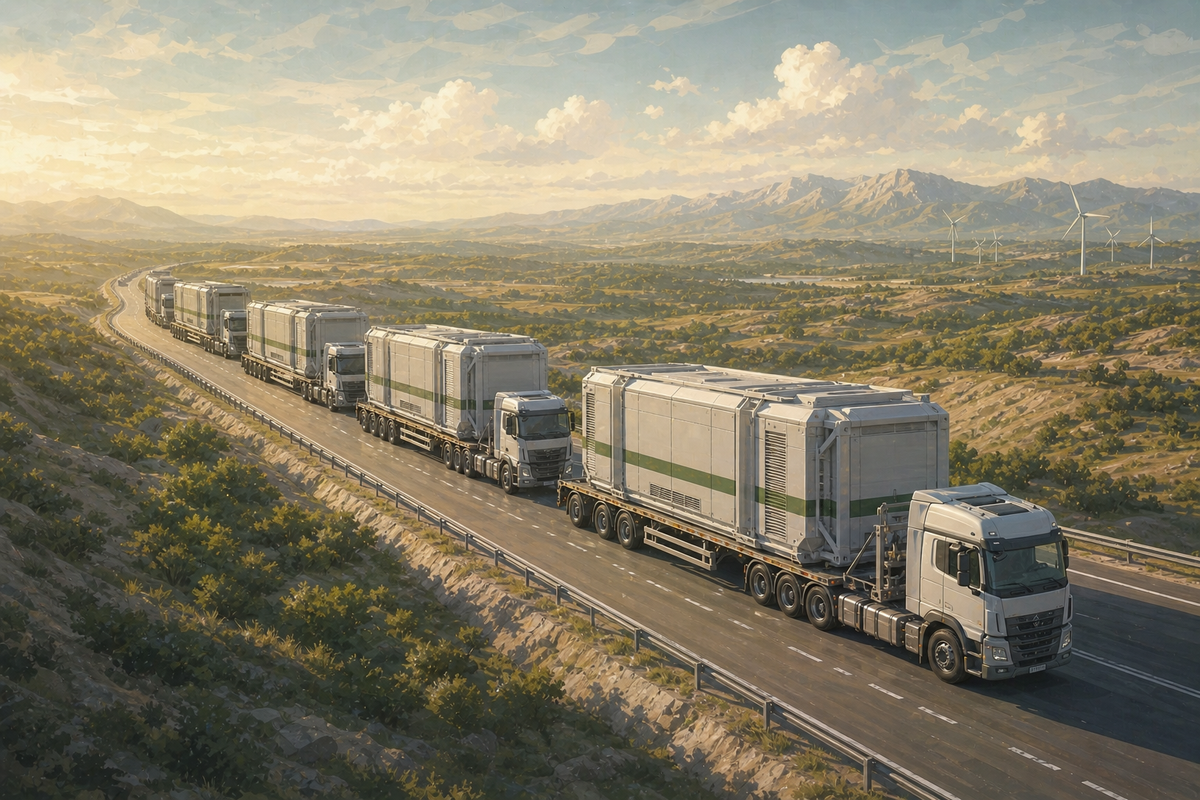
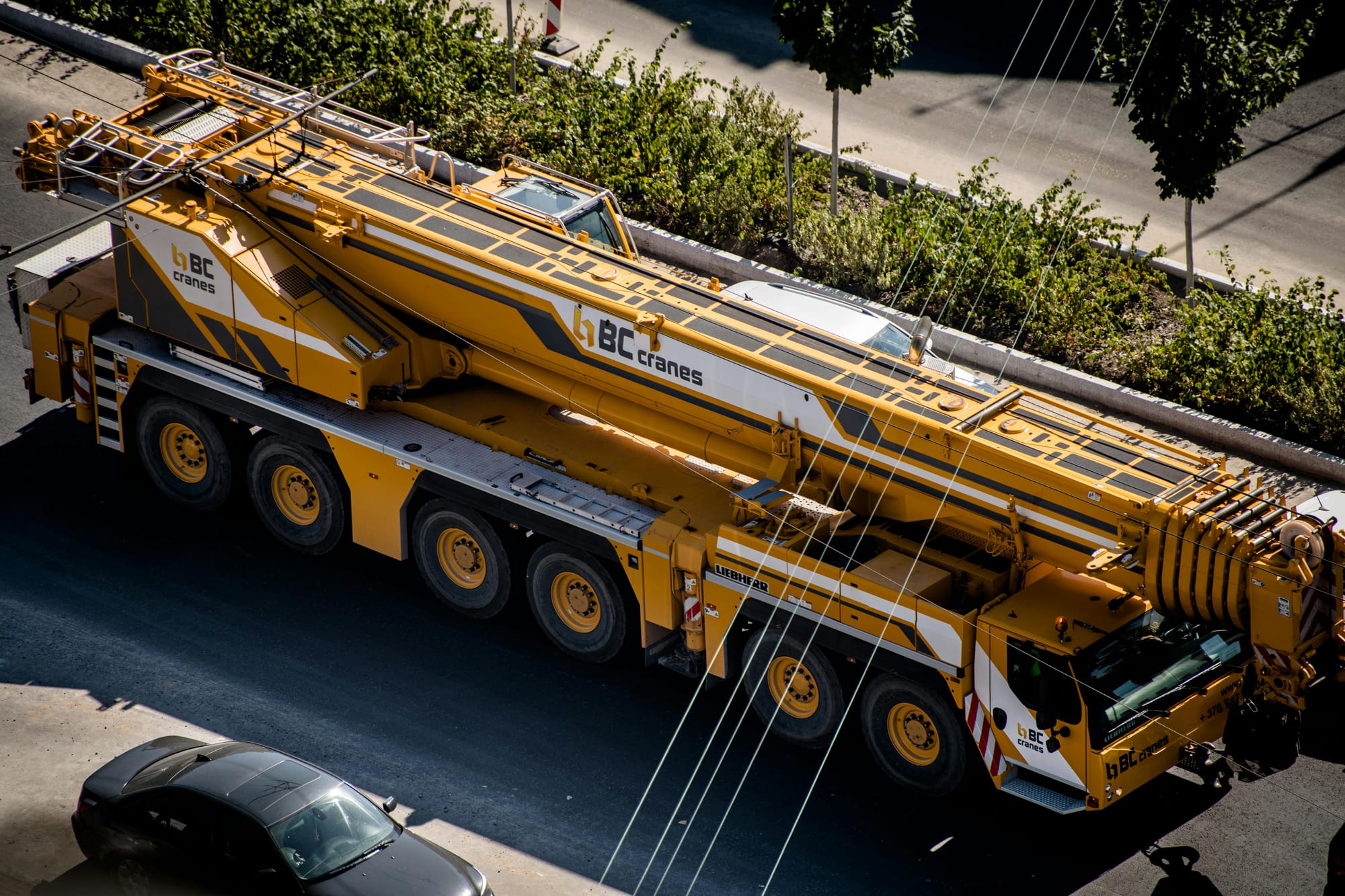
The physics of highway transport impose a rigid dimensional and mass envelope that fundamentally shapes reactor architecture. Federal regulations under 23 CFR § 658 establish a standard gross vehicle weight limit of 80,000 pounds for interstate highways, with oversize and overweight permits available on a state-by-state basis, though permitted loads exceeding 200,000 pounds require extensive route surveys, bridge load analyses, and often infrastructure modifications. The dimensional constraints are equally binding: standard flatbed trailers accommodate loads within approximately 8 feet 6 inches of width, 13 feet 6 inches of total height from road surface, and 48 to 53 feet of length, while lowboy configurations can gain additional height clearance at the cost of reduced deck length. Oversize permits can extend these envelopes; loads of 12 to 16 feet in width and 14 feet 6 inches in height are routinely permitted for heavy industrial cargo, but each departure from standard dimensions triggers escort requirements, restricted travel windows, and route-specific engineering reviews that add cost and time to deployment.
These constraints have produced a consistent design philosophy across the leading mobile reactor programs: radical modularity. Rather than transporting a monolithic reactor system, current designs decompose the plant into a reactor core and primary heat transport module, a biological shielding and containment module, a power conversion unit, balance-of-plant systems including heat rejection, and a separate command-and-control module; each sized and weighted to fit within the heavy-haul transport envelope. This modularity, in turn, favors reactor technologies with inherently compact core geometries and passive safety architectures that minimize the volume and mass of required shielding. High-temperature gas-cooled reactors using TRISO (tristructural isotropic) fuel particles, heat-pipe-cooled designs that eliminate primary coolant loops and their associated pumps and piping, and some molten salt configurations offer superior power density within the transportable envelope compared to conventional light-water reactor configurations, which require larger pressure vessels and more extensive emergency cooling infrastructure. The BWXT-manufactured prototype under Project Pele employs a TRISO-fueled, gas-cooled design reportedly targeting transport on three to four standard military cargo vehicles. Westinghouse’s eVinci microreactor uses heat-pipe technology to achieve a design reportedly transportable on a small number of commercial trailers. Radiant Industries’ Kaleidos similarly emphasizes a single-truck-transportable architecture, while X-energy’s Xe-Mobile concept extends the company’s pebble-bed TRISO platform into a deployable configuration. In each case, the road envelope is a primary design driver.
 Baba Tamim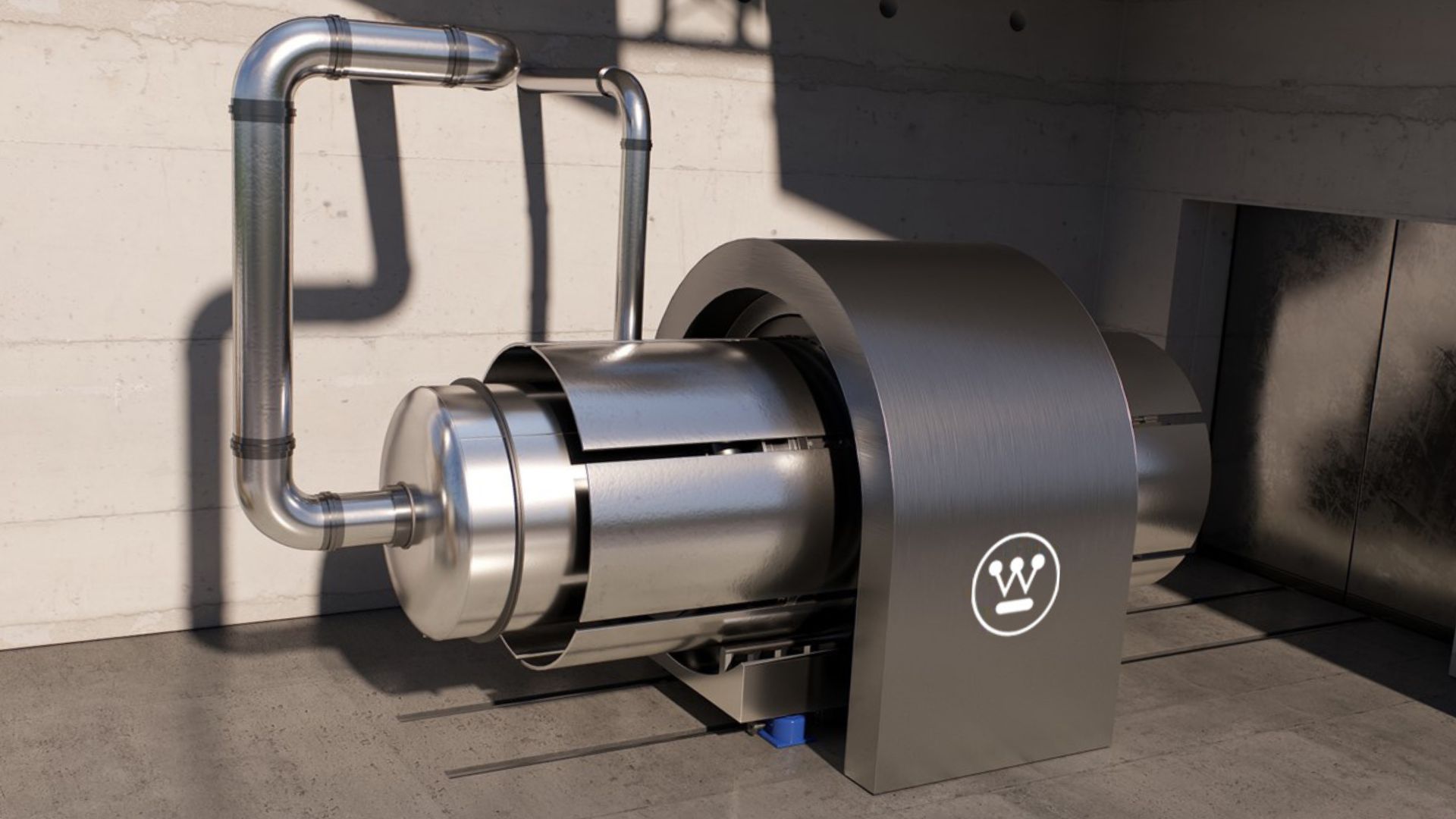


ROUTE PLANNING, PERMITTING, AND THE REGULATORY PATCHWORK
Designing a reactor to fit on a trailer is a necessary but insufficient condition for actual road deployment. The logistics of moving a nuclear reactor module across public highways involve a dual regulatory burden that has no close precedent in commercial heavy-haul operations. The first layer is the standard Department of Transportation (DOT) permitting framework that governs any oversize or overweight shipment: route surveys to identify bridge load-rating limitations, vertical clearance restrictions from overpasses and utility lines, horizontal clearance constraints on narrow roads and through urban corridors, escort vehicle requirements, restricted travel hours; typically prohibiting movement during peak traffic, darkness, or adverse weather, and coordination with state highway patrols and local law enforcement along the route. For a multi-state shipment, each jurisdiction issues its own permits under its own timelines, fee structures, and conditions, creating a planning challenge that heavy-haul logistics firms manage routinely for turbine rotors and refinery columns but that grows substantially more complex when nuclear material is involved.
The second regulatory layer is unique to the nuclear cargo. The Nuclear Regulatory Commission (NRC) governs the transport of radioactive materials under 10 CFR Part 71, which establishes packaging and containment standards, thermal and impact performance requirements for transport casks, and dose-rate limits at the package surface and at specified distances. For a fueled reactor (one transported with fissile material loaded) the regulatory posture is considerably more demanding than for an unfueled module shipped as conventional industrial equipment. This distinction creates a consequential design fork: “factory-fueled” or “sealed-core” concepts, in which the reactor leaves the manufacturing facility with fuel loaded and the core sealed for its operational lifetime, must satisfy both Part 71 transport packaging standards and the security and safeguards requirements of 10 CFR Part 73 during transit. “Fuel-on-site” designs, by contrast, ship the reactor structure as industrial hardware and deliver fuel separately under existing spent nuclear fuel and special nuclear material transport protocols, a logistically more complex two-stream approach but one that operates within better-established regulatory channels. The NRC has acknowledged this emerging category through the development of a regulatory pathway for transportable and relocatable reactors, but the framework remains incomplete. The state-by-state fragmentation compounds the challenge: bridge weight tolerances that vary by jurisdiction, seasonal road restrictions in northern states that prohibit heavy loads during spring thaw periods, and differing escort mandates create a permitting mosaic that must be navigated for each deployment, a planning burden that static SMR projects, sited once and licensed in place, never encounter.
John D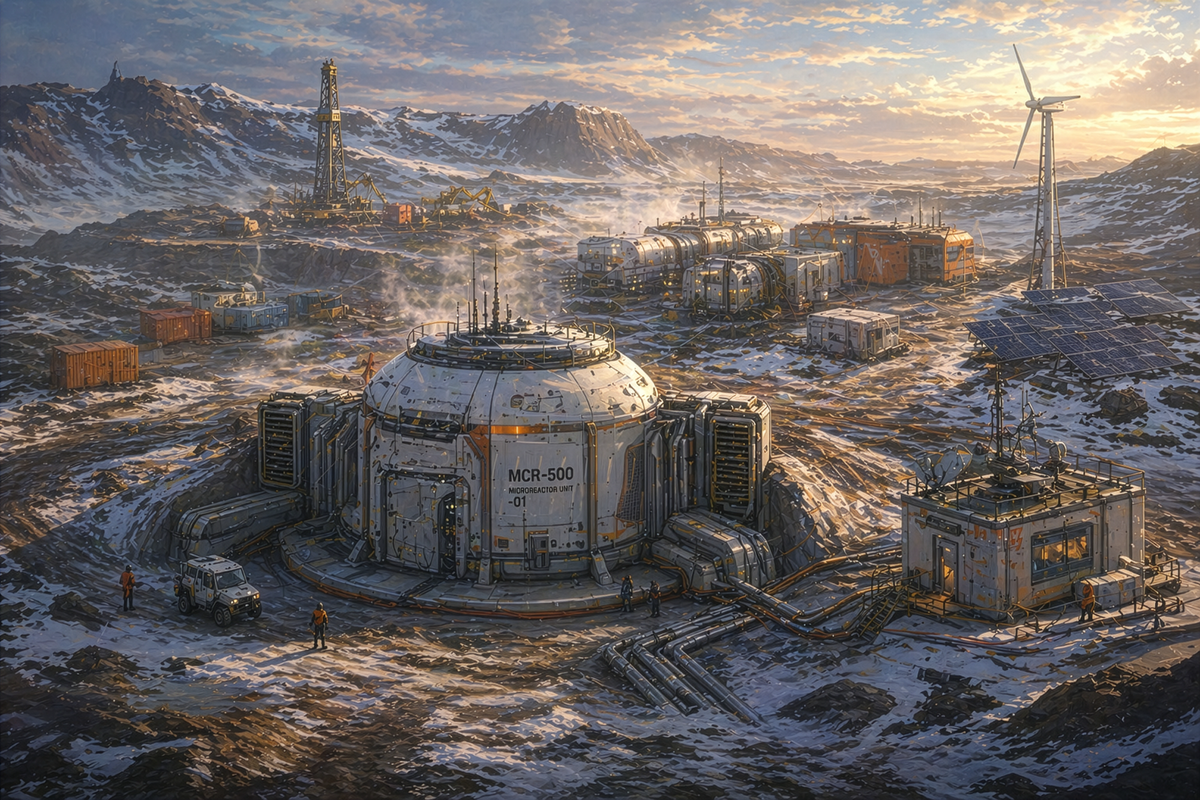
SITE PREPARATION, EMPLACEMENT, AND OPERATIONAL STANDUP
The value proposition of mobile nuclear reactors rests substantially on reduced site infrastructure requirements relative to conventional plants, but “reduced” should not be confused with “negligible.” Even the most deployment-optimized microreactor designs require a prepared foundation (typically a reinforced concrete pad) engineered to bear the combined static and dynamic loads of the reactor and shielding modules, often on the order of several hundred thousand pounds concentrated over a modest footprint. Biological shielding at the site, whether pre-emplaced or transported as a module, must meet dose-rate requirements for workers and the public at the site boundary. Crane access is essential for lifting and positioning reactor modules that may individually weigh between 40,000 and 80,000 pounds; the specific crane capacity required depends on module weight, lift radius, and site geometry, but mobile hydraulic cranes in the 200- to 300-ton class are generally indicated. Electrical interconnection, whether to an existing distribution grid, a military camp power system, or an industrial load center, requires switchgear, transformers, and protective relaying that must be specified for the reactor’s output characteristics and the receiving system’s configuration.
Target timelines for operational standup vary significantly by application context. The Project Pele prototype targets a 72-hour window from convoy arrival to initial criticality and power output; a benchmark driven by military operational tempo and enabled by a design philosophy that minimizes on-site assembly. Civilian deployments, subject to NRC inspection and commissioning protocols, local permitting, and utility interconnection agreements, will likely require weeks to months even for the most streamlined designs. This timeline differential underscores a broader tension in the mobile reactor concept: the sites where rapid deployment is most operationally valuable, such as disaster zones with damaged infrastructure, forward military bases in contested logistics environments, or remote mining operations accessible only by seasonal roads. These are precisely the sites where the logistical prerequisites for emplacement are hardest to satisfy. Degraded road surfaces may not support heavy-haul transport without remediation, crane access may be constrained by terrain or the absence of suitable staging areas, and the skilled labor required for reactor assembly and commissioning may be difficult to position on short notice. This “last mile” problem is not unique to nuclear technology, but the regulatory and safety stakes amplify its consequences.
SECURITY, SAFEGUARDS, AND PUBLIC ACCEPTANCE
The transport of a nuclear reactor (whether fueled or unfueled) across public roadways introduces security and public perception challenges that are qualitatively different from those associated with stationary nuclear facilities. Physical protection during transit requires armed escort, continuous GPS tracking and communication with a central monitoring facility, coordination with federal and state law enforcement, pre-planned response protocols for accident, breakdown, disaster scenarios, and route security assessments that evaluate vulnerability to interdiction at chokepoints such as bridges, tunnels, and urban corridors. These requirements exist in established form for spent nuclear fuel and related material shipments managed by the Department of Energy’s Office of Secure Transportation but extending them to a potentially routine cycle of microreactor deployments would demand a significant expansion of transport security capacity and infrastructure.
The fuel composition of most advanced microreactor designs introduces an additional layer of complexity. High-assay low-enriched uranium (HALEU), enriched to between 5 and 20 percent uranium-235, is the reference fuel for many leading designs, including the Project Pele prototype and the eVinci concept. HALEU occupies a regulatory and security category above conventional low-enriched uranium (LEU, below 5 percent enrichment), requiring enhanced physical protection, material control, and accounting measures during transport and storage. The domestic HALEU supply chain itself remains nascent, adding a fuel logistics constraint atop the reactor transport challenge. From a nonproliferation standpoint, the routine movement of HALEU-fueled reactor modules on public highways raises questions that the International Atomic Energy Agency (IAEA) safeguards framework, designed primarily for fixed facilities, has not yet fully addressed.
Public acceptance presents a distinct but intersecting challenge. Stationary nuclear plants are sited through processes that, however imperfect, involve years of environmental review, public comment, and community engagement. A mobile reactor convoy transiting through communities that had no role in the deployment decision and may receive no direct benefit from the reactor’s output creates a fundamentally different social contract. Public perception of risk during transport, shaped by decades of cultural associations with nuclear hazard, regardless of the engineered safety margins of modern transport cask designs, may prove a more binding constraint on deployment tempo than any regulatory or engineering limitation.
John D
THE LOGISTICS ECOSYSTEM THAT DOESN’T YET EXIST
The tendency in policy and industry discourse is to frame the mobile reactor challenge primarily as an engineering problem: to focus on core design, fuel performance, and passive safety demonstration. This framing, while necessary, is incomplete. The engineering is one dimension of a multi-dimensional system challenge; the logistics, regulatory, and institutional ecosystem required to routinely transport, deploy, operate, and retrieve nuclear reactors on a repeatable, scalable basis does not yet exist and will not emerge as a natural byproduct of successful hardware demonstration. It must be deliberately designed and capitalized.
That ecosystem encompasses trained and cleared transport crews operating under nuclear security protocols, specialized heavy-haul contractors holding both DOT certifications and NRC-relevant clearances, pre-surveyed and pre-permitted route corridors that can be activated on operationally relevant timelines rather than negotiated from scratch for each deployment, forward-staging depots where reactor modules can be stored and maintained in a ready-to-deploy posture, standardized site preparation kits that reduce the civil engineering burden at the destination, and rapid-deployment operations and maintenance teams capable of commissioning a reactor in austere conditions. Perhaps most critically, it requires a regulatory framework, spanning the NRC, DOT, DOE, and state authorities, that enables deployment-speed licensing and transport authorization rather than the multi-year, site-specific review processes designed for permanent installations. The analogy to military logistics is instructive: the value of a weapons system is not determined solely by its performance specifications but by the sustainment architecture, including maintenance, supply chain, training pipeline, and doctrine, that enables its repeated, reliable employment. Mobile nuclear reactors will be evaluated by the same standard. The logistical architecture surrounding these systems will ultimately determine whether they remain a compelling but narrowly demonstrated technology or mature into a scalable operational capability with strategic impact across defense, disaster response, and remote energy markets.
Citations
Project Pele & BWXT
BWX Technologies. (2025, July 24). Project Pele begins taking shape with start of core manufacturing. https://www.bwxt.com/project-pele-begins-taking-shape-with-start-of-core-manufacturing/
BWX Technologies. (2025, December 2). BWXT delivers full core of TRISO nuclear fuel for Project Pele microreactor. https://www.bwxt.com/bwxt-delivers-full-core-of-triso-nuclear-fuel-for-project-pele-microreactor/
U.S. Department of Energy. (2024, September 24). Department of Defense breaks ground on Project Pele microreactor. Office of Nuclear Energy. https://www.energy.gov/ne/articles/department-defense-breaks-ground-project-pele-microreactor
Idaho National Laboratory. (2025, December). INL advances Department of War's Project Pele demonstration microreactor with first TRISO fuel delivery. https://inl.gov/news-release/inl-advances-department-of-wars-project-pele-demonstration-microreactor-with-first-triso-fuel-delivery/
Westinghouse eVinci
Westinghouse Electric Company. (n.d.). eVinci™ microreactor. https://westinghousenuclear.com/innovation/evinci-microreactor/
U.S. Department of Energy. (2023, February 27). Westinghouse makes major component for eVinci microreactor project. Office of Nuclear Energy. https://www.energy.gov/ne/articles/westinghouse-makes-major-component-evinci-microreactor-project
U.S. Department of Energy. (2024, September 16). Westinghouse completes study for first eVinci microreactor experiment. Office of Nuclear Energy. https://www.energy.gov/ne/articles/westinghouse-completes-study-first-evinci-microreactor-experiment
Radiant Industries / Kaleidos
Radiant Industries. (2024, June 27). Radiant Industries, Inc. completes conceptual design review of Kaleidos microreactor. https://www.radiantnuclear.com/blog/cdr-announcement/
U.S. Department of Energy. (2025). Radiant completes study for first Kaleidos microreactor experiment. Office of Nuclear Energy. https://www.energy.gov/ne/articles/radiant-completes-study-first-kaleidos-microreactor-experiment
NRC Transport Regulations (10 CFR Part 71)
U.S. Nuclear Regulatory Commission. (2025). 10 CFR Part 71 — Packaging and transportation of radioactive material. https://www.nrc.gov/reading-rm/doc-collections/cfr/part071/full-text
U.S. Department of Energy. (n.d.). Fact sheet: Packaging and transportation. https://www.energy.gov/em/articles/fact-sheet-packaging-and-transportation
HALEU Supply Chain & Nonproliferation
U.S. Nuclear Regulatory Commission. (2024, October 8). High-assay low-enriched uranium (HALEU). https://www.nrc.gov/materials/new-fuels/haleu
U.S. Department of Energy. (n.d.). HALEU availability program. Office of Nuclear Energy. https://www.energy.gov/ne/haleu-availability-program
U.S. Department of Energy. (2024). What is high-assay low-enriched uranium (HALEU)? Office of Nuclear Energy. https://www.energy.gov/ne/articles/what-high-assay-low-enriched-uranium-haleu
World Nuclear Association. (2026, February). High-assay low-enriched uranium (HALEU). https://world-nuclear.org/information-library/nuclear-fuel-cycle/conversion-enrichment-and-fabrication/high-assay-low-enriched-uranium-haleu
Nuclear Energy Agency. (2024). High-assay low-enriched uranium: Drivers, implications and security of supply (NEA No. 7685). OECD Publishing. https://www.oecd-nea.org/jcms/pl_96126/high-assay-low-enriched-uranium-drivers-implications-and-security-of-supply
Federal Motor Carrier Safety Administration. (2024). 23 C.F.R. § 658 — Truck size and weight, route designations. U.S. Government Publishing Office.
U.S. Nuclear Regulatory Commission. (2024). 10 C.F.R. Part 73 — Physical protection of plants and materials. U.S. Government Publishing Office.