Sangdong Tungsten Mine (2026): Non-China Supply, Defense Demand, and Allied Tungsten Reindustrialization
Sangdong is entering production as a major non-China tungsten source, with real value tied to ramp-up, recovery, and allied processing.

Sangdong Tungsten Mine: Can Korea Become a Non-China Tungsten Supply Anchor in 2026?
Summary
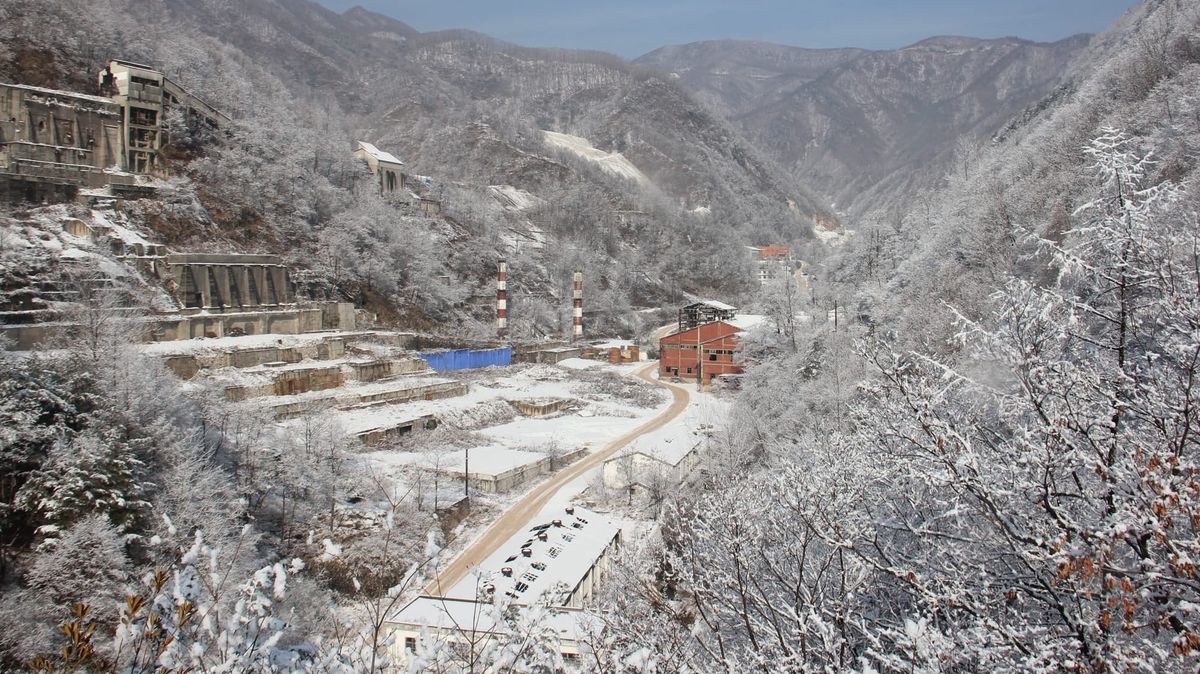
Sangdong should now be treated as a real operating asset rather than strategic optionality, but not yet as a fully de-risked source of allied tungsten supply. Phase 1 commissioning was completed in March 2026, first ore had already reached the run-of-mine pad in December 2025, and the project has moved from development into the commercial ramp window. That is a material shift. It means the key question is no longer whether the mine can be financed, permitted, and built, but whether it can sustain throughput, recovery, and product quality through the first operating cycle. The strategic case is strong because the deposit is unusually large, high-grade, long-life, and already linked to allied financing and downstream customers. The operational case, however, will only be validated by stable plant performance over 2026–2027. [1]
On the facts available, Sangdong is a credible non-China supply anchor in early execution. Its ore grade of roughly 0.51% WO₃ is materially above many global peers; its tabular, gently dipping skarn horizons are more amenable to mechanized mining than many vein-style tungsten systems; and its Phase 1 design basis is now tied to long-term offtake and export-credit-backed project finance. At the same time, the mine still faces the standard but decisive risks of any restart: metallurgical recovery under industrial conditions, underground stope productivity, workforce formation, water and reagent control, and debt service discipline once ramp-up gives way to repayment. The correct institutional posture is therefore neither skepticism nor triumphalism. Sangdong is best understood as a critical operational asset whose strategic value is already evident, but whose full system value depends on execution through the ramp. [2]
Strategic Context
China remained the dominant force in tungsten in 2025, accounting for about 67,000 tonnes of the world’s 85,000 tonnes of mine production, while new Chinese export controls on selected tungsten items introduced in February 2025 helped drive a sharp rise in prices through the year. That concentration sits on top of a much older structural problem: since the late twentieth century, much of the Western tungsten mining base was either shut, downsized, or pushed into care and maintenance as Chinese supply set the marginal price. Sangdong matters in that context not because it “solves” tungsten dependence on its own, but because it is the clearest current test of whether an allied economy can rebuild upstream tungsten mining with modern project finance, industrial offtake, and downstream integration after decades of erosion. It is, in practical terms, a reindustrialization case study. [3]
 John D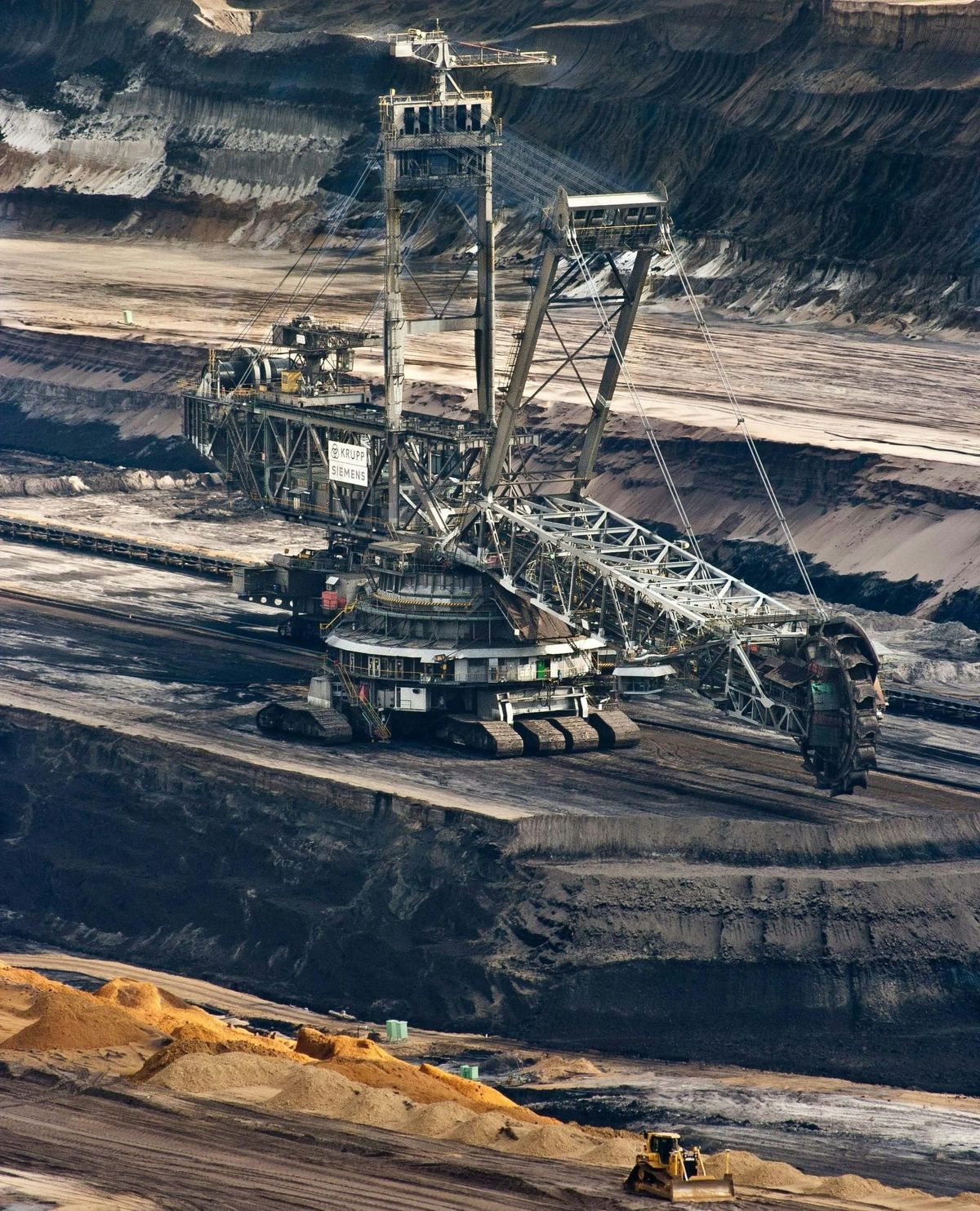
Asset Characteristics
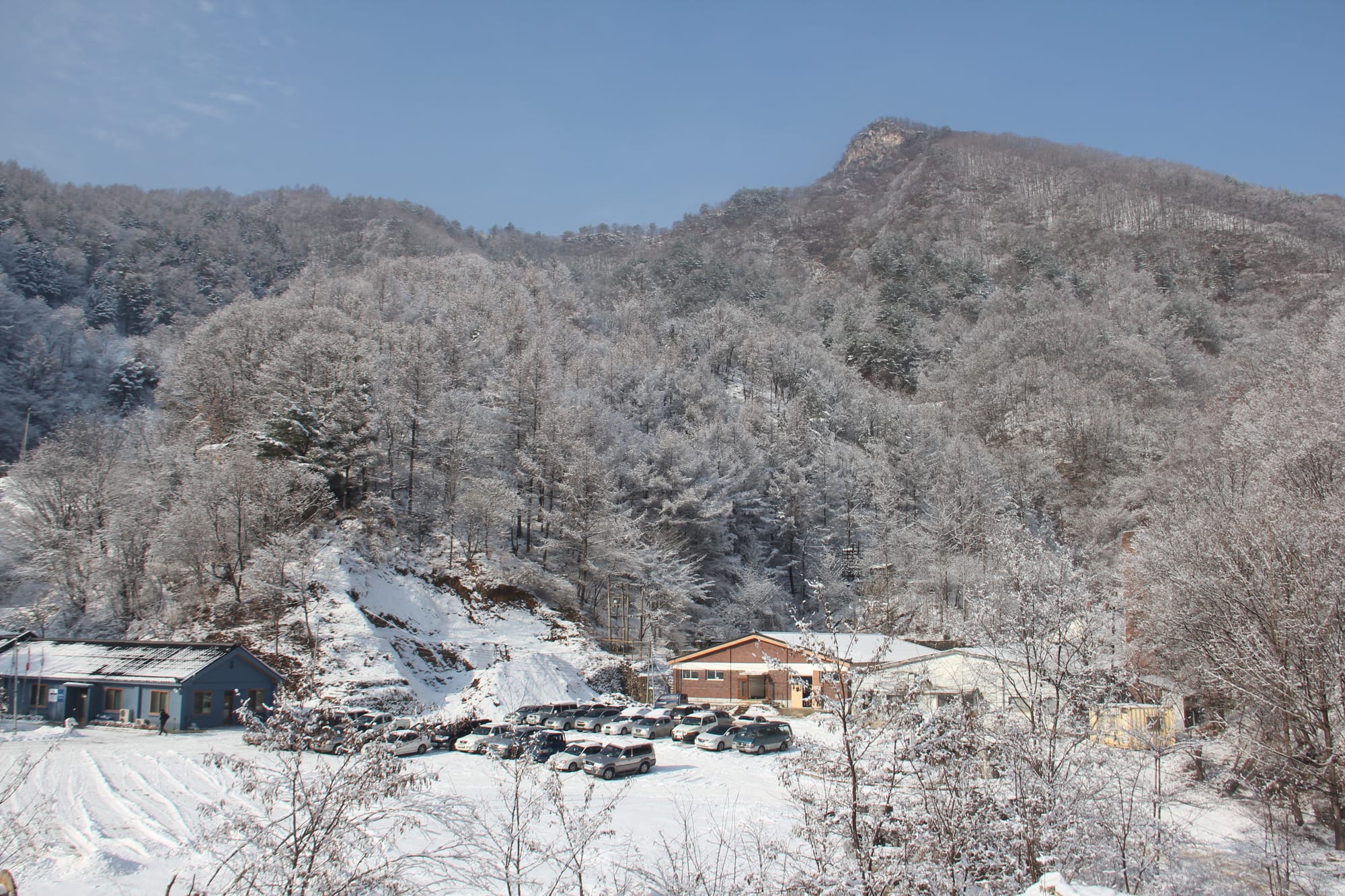
Sangdong is structurally differentiated by the combination of grade, scale, geometry, and operating history. Public 2026 company disclosures describe an average ore grade of about 0.51% WO₃, roughly three times the global average, while the 2025 technical summary describes one of the largest tungsten deposits in the world by inferred mineral resource and a mine life exceeding 45 years under Phase II assumptions. Older NI 43-101 work reported indicated resources of about 8.0 Mt at 0.51% WO₃ and inferred resources of about 50.7 Mt at 0.43% WO₃; the 2025 summary points to a probable reserve grade of 0.42% with assumed recovery of 85%. Those figures are not interchangeable, but they point in the same direction: Sangdong is not just “good for a non-China project.” It is large enough and rich enough to matter at system scale. [4]
The geology is equally important. The 2025 technical summary describes the orebody as several tabular, bedding-conformable skarn horizons hosted in the Myobong formation, with three principal mineralized packages: a Hangingwall zone, a Main zone, and multiple Footwall zones. The Hangingwall varies from roughly 5 to 30 meters in thickness; the Main zone has strike length above 1,300 meters, dips about 15° to 30°, and is typically 5 to 6 meters thick; F2 and F3 average around 3 to 4 meters thick. The mining layout is therefore built around broad, gently dipping, laterally continuous horizons rather than discontinuous narrow veins. The company’s selected methods (stepped drift-and-fill for thinner beds and post-pillar cut-and-fill for thicker zones) fit that geometry and are explicitly designed around high recovery and ground stability. [5]
That does not make Sangdong a low-complexity mine. Cut-and-fill with paste backfill is operationally demanding, particularly in a restart setting. But it does mean the asset is better suited to mechanization than many tungsten operations where narrow or irregular vein geometry constrains productivity. That distinction matters when comparing Sangdong with the broader Chinese tungsten endowment. China hosts multiple deposit types, including wolframite-quartz vein, skarn, greisen, and porphyry systems; quartz-vein deposits are especially prominent in southern China. Sangdong’s bedded skarn geometry gives it a more industrial mine-planning profile than a typical vein-led restart and helps explain why the project can plausibly be scaled beyond the initial Phase 1 design. [6]
The historical record reinforces, rather than substitutes for, the technical case. The mine operated for decades, with annual ore production historically reaching as much as 600,000 to 750,200 tonnes depending on the source and period cited, and the site had already been developed across 20 levels with extensive underground workings before closure. The closure itself was not caused by ore exhaustion. Historical technical reports attribute it to the tungsten price collapse of the mid-1980s and the subsequent loss of economic viability, which is exactly why Sangdong is strategically relevant today: it is a previous global producer re-entering the market because the pricing and geopolitical logic have reversed. [7]
A rough cost-screen confirms why this asset attracts attention. The 2025 technical summary puts average life-of-mine operating cost at about US$47.51 per tonne of ore, with roughly US$15.55/t for processing and tailings and total operating costs built on a reserve grade of 0.42% and 85% recovery. On those assumptions, the implied mine-site cash cost is about US$133 per MTU of WO₃ before financing and downstream conversion. That is an inference rather than a published company metric, but it is directionally important because the USGS reported average 2025 Rotterdam prices of US$551/MTU for 65% concentrate and US$675/MTU for APT after the 2025 market shock. Even allowing for price normalization, Sangdong appears structurally capable of sitting in the lower part of the non-China cost curve if it actually delivers modeled grade and recovery. [8]
Operational Status
The central issue in 2026 is ramp-up. Construction and financing milestones are largely behind the project: the final drawdown of the US$75.1 million project loan from KfW IPEX-Bank [9] was received in January 2025; soft commissioning was underway by late 2025; first ore was delivered to the ROM pad in December 2025; and Phase 1 commissioning was declared complete in March 2026, with the project transitioning toward commercial operation. That sequence is significant because it marks the end of development risk and the beginning of integration risk. From this point forward, value creation depends on how effectively underground ore delivery, plant availability, reagent control, and concentrate shipment are synchronized. [10]
The processing chain is far from trivial. The 2025 technical summary describes a conventional but still sensitive scheme: primary, secondary, and tertiary crushing; two-stage SAG and ball milling; sulphide flotation; scheelite flotation; concentrate thickening and filtration; tailings thickening; wastewater treatment; and reagent handling. The plant is designed around an 80 tph nominal feed rate with provision to extend to 100 tph, which corresponds to the company’s 640,000 tpa Phase 1 target and supports the staged path toward 1.2 million tpa in Phase 2. The design also includes stockpiles, inline sampling, heated cleaner stages, and a scavenger circuit intended to reduce tungsten losses. This is not a single-bottleneck plant. It is a chain in which underperformance in grind control, flotation chemistry, water quality, or mechanical uptime can propagate quickly into lower recovery and higher unit cost. [11]
Metallurgy is the first critical friction point. The technical work is encouraging, but not self-executing. The 2025 report states that locked-cycle projections support recoveries in the 83.6% to 85.0% range, and the project economic model assumes 85% overall recovery at roughly 65% WO₃ concentrate. Pilot-plant work performed to support process guarantees from Metso [12] showed four-day results ranging from 81.8% to 82.5% recovery, while 2024 pilot work cited by the annual information form reported about 82% recovery in Portugal and 86.3% recovery in on-site work under different conditions. Those are solid numbers, but they are still testwork numbers. Industrial ramp-up has a different failure mode: recovery can slip not because the flowsheet is wrong, but because ore blending, particle size, reagent dosage, aeration, temperature control, and operator response are inconsistent during the first months of operation. [13]
Workforce formation is the second friction point. Historical reports noted explicitly that the local skilled mining labor pool had largely dissipated after the 1992 closure, even if labor could be sourced and trained from elsewhere in Korea. The 2025 technical summary indicates that AKTC intends to house 95 full-time employees in the town and surrounding region, with additional personnel on site, and contemplates 27 people in management and administration alone. That is a meaningful organizational build for a newly restarted underground mine and concentrator. Restart projects often underestimate the difficulty of converting construction teams, contractor crews, and technically capable hires into a stable operating culture with routine maintenance discipline and predictable shift productivity. Sangdong’s advantage is that the broader district still has mining infrastructure and transport access; its vulnerability is that an operating mine workforce is not something that restarts automatically with the portal. [14]
Water and process chemistry are the third friction point and are easy to overlook. Earlier technical work anticipated significant water flow in current excavations during the rainy season, the use of mine water as part of process supply, recycling of more than 75% of plant water, and treatment steps including aeration and reverse osmosis to manage hardness and chemical contaminants. The 2025 process design also depends on controlled pulp density, pH, depressant dosing, and temperature-controlled flotation conditions around 30–32.5°C in the cleaner circuit. In a laboratory or pilot setting those are controllable variables. In a live plant tied to a newly reopened underground system, they are common sources of start-up instability. For Sangdong, stable water handling is not an environmental side issue; it sits inside the recovery equation. [15]
Phase 2 should therefore be viewed as contingent, not automatic. The company states that some components were built to support higher throughput and that Phase 2 could be advanced as early as 2026, with first ore in 2027 if approved. But the same filing makes clear that the decision depends on positive Phase 1 operating results and market conditions. That is the right sequencing. A disciplined operator proves nameplate stability first, then scales. A premature expansion decision would convert a manageable ramp into a compound integration risk. [16]
Industrial Backing and Supply Chain Integration
Sangdong is not a standalone mine. It is already embedded in an allied industrial chain. First, the project carries export-credit-backed debt and long-term offtake. Second, the customer base being assembled is explicitly tied to defense, aerospace, tooling, electronics, and advanced manufacturing rather than generic spot concentrate sales. Third, the company is actively planning a downstream tungsten oxide plant in Yeongwol to keep more value-add inside an allied processing network. In institutional terms, Sangdong is best understood as a node in a coordinated supply architecture rather than a conventional junior-mining restart. [17]
The European and German linkage is particularly important. Almonty Industries [18] has long-term floor-priced offtake agreements tied to Plansee Group [19] and its U.S. processor subsidiary Global Tungsten & Powders, a pennsylvania tungsten processor. Plansee states that Sangdong could eventually produce up to 20% of tungsten ore concentrates outside China and that, once production is established, Sangdong concentrate will be processed in the United States at GTP into tungsten intermediates. Public securities filings add that the GTP agreement runs for 15 years, includes a guaranteed floor price, and is linked to defense-only programs under U.S. Department of Defense guidelines. That combination matters because it reduces marketing risk, supports financeability, and connects Korean upstream production to a U.S.- and EU-aligned midstream channel. [20]
The U.S. defense linkage is no longer hypothetical. In May 2025 the company signed a binding offtake agreement with Tungsten Parts Wyoming [21] and Metal Tech [22] for a minimum of 40 metric tons per month of tungsten oxide, with end use restricted to U.S. defense applications such as missile, drone, and ordnance systems. In parallel, U.S. law and congressional guidance continue to tighten sourcing standards for sensitive and covered materials, with 2027 implementation timelines now central to defense procurement planning. That does not mean Sangdong alone will satisfy U.S. defense demand. It does mean the mine sits inside an increasingly favorable policy and procurement environment for allied, non-China tungsten units. [23]
The unresolved constraint is midstream concentration. Sangdong will ship concentrate and, later, potentially tungsten oxide; but concentrate is not the same thing as strategic autonomy. The planned Yeongwol tungsten oxide facility would process scheelite and wolframite concentrates into high-purity WO₃ with an initial nameplate capacity of 4,000 tpa and the option to scale to 6,000 tpa, while local agreements envisage roughly 100 billion won for the plant and another 40 billion won for mine upgrades. Until that facility is actually built and commissioned, Sangdong reduces upstream concentration but does not fully eliminate dependence on a small number of processors and converters. The mine improves the chain materially. It does not yet complete it. [24]

Failure Modes and Execution Risk
The main technical failure mode is a persistent recovery gap. Sangdong’s economics are sensitive to the difference between modeled and realized metallurgy because the plant is designed around a relatively finely tuned flotation regime. If industrial recovery stabilizes closer to the low-80s than to the assumed 85%, output falls and cost per recovered unit rises. A second technical failure mode is ore response heterogeneity across the Hangingwall, Main, and Footwall zones. The deposit’s geometry supports scale, but different horizons can still present different operational behaviors, especially during early blending and stope sequencing. In other words, Sangdong’s geological strength does not remove metallurgical execution risk; it only gives the project a stronger base case from which to absorb it. [25]
The main operational failure mode is not catastrophic breakdown but chronic underperformance: lower development advance, slower stope turnover, unreliable paste fill cycles, mill stoppages, or inconsistent concentrate quality. The mining method itself is rational, but it is not forgiving. Stepped drift-and-fill requires disciplined sequencing along gently dipping beds, while post-pillar cut-and-fill in the Hangingwall depends on controlled lift design and backfill support. The plant, meanwhile, relies on a multi-stage flotation circuit with scavenger and cleaner sections, heated conditions in the final cleaning stages, and active water treatment. If underground and plant systems ramp at different speeds, the project can still “operate” while missing design capacity for an extended period. That is the operational condition under which Sangdong underperforms without technically failing. [26]
The financial failure mode is timing. Project finance is already in place and the funding picture is materially stronger than it was before the 2025 equity raises, with the company reporting C$268.4 million of cash at year-end 2025. Even so, the KfW facility carries quarterly principal repayment over a 6.25-year term, and company disclosures explicitly warn that delays in reaching production can affect repayment ability. This means Sangdong does not need a commodity-price collapse to face financial pressure. It only needs a long enough lag between declared commissioning and stable sales-grade output. Phase 2 and the downstream oxide plant sharpen this point further: both may be strategically sensible, but neither should be financed on the assumption that Phase 1 ramp risk has already been retired. [27]
The market failure mode is more ambiguous and, in some respects, more dangerous. In 2025, Chinese export controls on selected tungsten items and broader trade tensions helped drive Rotterdam concentrate prices from US$266 to US$551 per MTU and APT prices from US$331 to US$675 per MTU. That is favorable for early cash margins if it persists. But tungsten history suggests that project economics cannot be built around stress pricing alone. Sangdong itself was previously shut because sustained price pressure made the operation uneconomic. If Chinese licensing normalizes, if incremental non-China supply comes in, or if China chooses to blunt new entrants through output and pricing behavior, Sangdong’s margin cushion could narrow even while the mine remains operationally sound. That is why the asset’s structural merits matter more than the current price spike. [28]
The geopolitical failure mode is subtle. Sangdong benefits from allied policy alignment, but it also becomes exposed to it. U.S. defense procurement preferences, Korean industrial policy, German and Austrian export-credit logic, and Israeli/U.S. processing arrangements all support the project. Yet the more Sangdong becomes politically salient, the more it is drawn into export-control, local-content, and end-use compliance questions. None of those issues appears existential in 2026. But they can affect where material can move, how quickly it can be converted, and whether oxide or powder streams are reserved for specific end users. Strategic relevance, in this case, is an asset and a constraint at the same time. [29]
Strategic Implications and Comparative Positioning
If Sangdong performs to design, the effect on the non-China tungsten system is significant even under conservative assumptions. Public estimates vary: the company frames full-capacity Sangdong as capable of supplying roughly 40% of tungsten demand outside China, while Plansee describes the mine as potentially producing up to 20% of tungsten ore concentrates outside China. The difference reflects differing denominators and should caution against overly precise narrative claims. But the directional conclusion is the same under either figure: Sangdong is large enough to alter procurement behavior, term-contract structures, and investment assumptions across the allied tungsten market. [30]
That would have three system-level effects. First, it would improve the physical credibility of non-China supply for defense and advanced industry, especially when paired with U.S.-aligned conversion through GTP and planned Korean downstream oxide capacity. Second, it would reduce the perception that every non-China tungsten project is condemned to remain either too small or too late to matter. Third, it would strengthen the commercial case for later-stage North American and European projects by proving that long-term offtake, export-credit debt, and downstream allied processing can be assembled around a restart mine. Sangdong, in this sense, is the proof-of-execution asset for the broader pipeline. [31]
But success also redistributes concentration risk. The current structure channels significant strategic value through one mine, one operator, one principal export-credit debt package, and a relatively narrow set of processors and defense-linked customers. That is much better than dependency on a single country controlling most global mine output, but it is not the same thing as a broad, redundant allied supply base. Upstream dependence on China would be reduced; dependence on Sangdong’s flawless execution would rise. For governments and prime contractors, that argues for treating Sangdong as an anchor asset around which redundancy should be built, not as a complete substitute for wider supply diversification. [32]
The project’s current positioning against other non-China assets is therefore straightforward. Sangdong is the immediate operational anchor because it is financed, built, commissioned, and entering its production ramp. Most other non-China opportunities remain either smaller, less integrated, earlier in the permitting cycle, or still primarily valuation stories rather than operating systems. That relative position matters for European processing capacity in particular. A functioning Sangdong-GTP-Plansee corridor provides more than ore; it provides confidence that concentrate can move into allied intermediate production. If the planned Korean oxide plant is added later, the system gains another layer of geographic diversification. Until then, the mine is strategically consequential but still partly dependent on external conversion nodes. [33]
Conclusion
The correct call is that Sangdong is a critical operational asset in early-stage execution. It is no longer a hypothetical answer to Chinese dominance and no longer just a financing story. The mine has crossed the threshold into production and now sits inside a credible allied supply chain linking Korean mining, German-backed project finance, U.S. and Israeli defense processing channels, and prospective domestic Korean oxide conversion. Its deposit quality, scale, geometry, and infrastructure base are strong enough to support that role. [34]
What Sangdong has not yet achieved is operating certainty. Public disclosures reviewed here document commissioning, design assumptions, financing, and offtake structure, but they do not yet provide a sustained public record of 2026 monthly throughput, plant availability, realized recovery, or commercial unit costs. That is the remaining verification gap. Even so, the strategic judgment is clear: Sangdong should be treated as the first serious non-China tungsten supply anchor to re-enter production at meaningful scale in decades. It is an operational asset first and a strategic signal second. If it executes through ramp, it becomes the reference case for allied tungsten reindustrialization. If it stumbles, the lesson will not be that the deposit lacked quality, but that rebuilding a critical-mineral system requires more than reopening a mine. [35]

Citations
[1] [2] [4] [12] [19] [34] Almonty Industries. (2026). Almonty completes Phase 1 of Sangdong. https://almonty.com/almonty-completes-phase-1-of-sangdong/
[3] [28] [32] U.S. Geological Survey. (2026). Mineral Commodity Summaries 2026: Tungsten. https://pubs.usgs.gov/periodicals/mcs2026/mcs2026-tungsten.pdf
[5] [8] [9] [11] [13] [16] [17] [24] [25] [26] Almonty Industries Inc. (2025). Form F-10 registration statement. U.S. Securities and Exchange Commission. https://www.sec.gov/Archives/edgar/data/1670061/000164117225017947/formf-10.htm
[6] China Geochemical Baselines Project. (2024). Continental-scale distribution of tungsten in catchment sediments throughout China: Prospecting implications from the China Geochemical Baselines project. ResearchGate. https://www.researchgate.net/publication/379721104_Continental-scale_distribution_of_tungsten_in_catchment_sediments_throughout_China_Prospecting_implications_from_the_China_geochemical_Baselines_project
[7] [14] [15] Almonty Industries. (2024). Sangdong Project NI 43-101 technical report. https://almonty.com/wp-content/uploads/2024/05/Sangdong_43-101_Tech_Rep_July16_final-1.pdf
[10] Almonty Industries Inc. (2025). Exhibit 4.1. U.S. Securities and Exchange Commission. https://www.sec.gov/Archives/edgar/data/1670061/000164117225017947/ex4-1.htm
[18] [23] [29] Almonty Industries. (2025). Binding offtake agreement to supply tungsten oxide solely for U.S. defense applications. https://almonty.com/binding-offtake-agreement-to-supply-tungsten-oxide-solely-for-us-defense-applications/
[20] [31] [33] Plansee Group. (n.d.). Stable and independent supply of tungsten. https://plansee-group.com/en/articles/detail/stabile-und-unabhangige-versorgung-mit-wolfram
[21] [22] [27] [35] Almonty Industries. (2026). Fourth quarter and full-year 2025 financial results. https://almonty.com/fourth-quarter-and-full-year-2025-financial-results/
[30] Almonty Industries. (2026). Almonty Industries news release, March 16, 2026. https://almonty.com/wp-content/uploads/2026/03/ALM_NR260316.pdf
 John D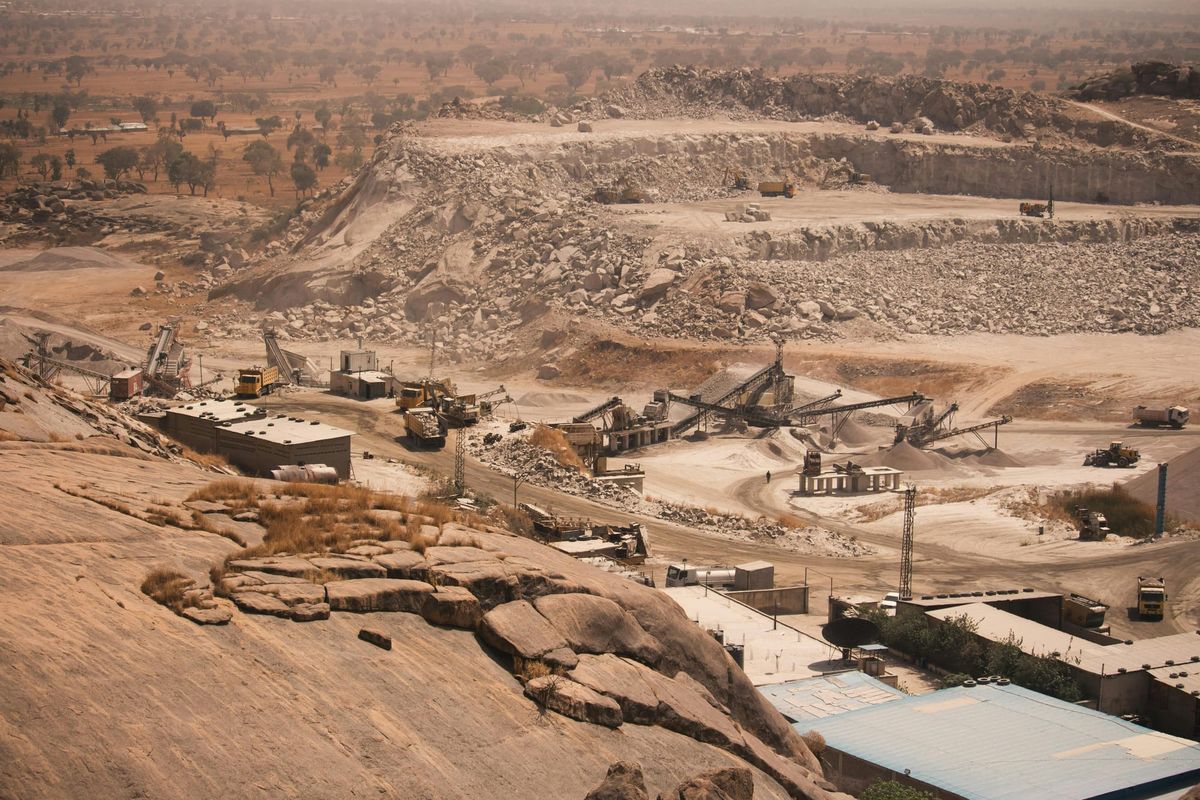
 John D
 John D
 John D