Quantum Computing in Smart Cities: 7 High-Impact Use Cases for 2035
How will quantum computing revolutionize smart cities by 2035? Explore high-impact use cases for traffic, energy, and security.


Quantum Computing and the Smart City of 2035: Strategic Utility and High-Impact Use Cases
Summary
Quantum computing is emerging as a strategically significant capability for next-generation smart cities, particularly in domains where classical systems face intractable optimization, simulation, and cryptographic challenges. While near-term utility (2026–2030) will largely rely on hybrid quantum-classical workflows within noisy intermediate-scale quantum (NISQ) systems, meaningful operational advantage is expected to materialize between 2030 and 2035, particularly for combinatorial optimization and materials science. Fault-tolerant quantum systems capable of broad-scale disruption are likely to remain beyond 2035, consistent with industry roadmaps from IBM and Google.
Three high-impact use cases stand out: (1) urban mobility optimization through quantum-enhanced routing and signal control, (2) energy grid resilience via quantum optimization and advanced material simulation, and (3) quantum-secure infrastructure to address emerging cryptographic risks. Early evidence from pilot programs and modeling suggests potential efficiency gains of 20–60 percent in selected domains, although results remain context-specific.
Municipal leaders should adopt a phased strategy: invest in pilot programs via cloud-based quantum platforms, integrate quantum capabilities into digital twins, and prioritize workforce and governance readiness. Early movers are likely to capture disproportionate benefits in sustainability, resilience, and long-term cost efficiency.
Introduction: Smart Cities at an Inflection Point
Smart cities are entering a new phase of technological maturity, characterized by dense networks of IoT sensors, edge-enabled 6G communications, and AI-driven urban digital twins. These systems enable real-time monitoring and predictive decision-making across transportation, energy, public safety, and environmental management. Concurrently, cities are under increasing pressure to meet net-zero emissions targets, improve resilience to climate shocks, and deliver equitable access to services.
However, the computational demands of these systems are growing exponentially. Many core urban challenges, such as traffic routing across millions of nodes, dynamic energy balancing in distributed grids, and high-resolution climate modeling, are inherently combinatorial or simulation intensive. Classical high-performance computing (HPC) systems, even when augmented with AI, face scaling limitations in solving these problems optimally within real-time constraints.
Quantum computing introduces a fundamentally different computational paradigm that can address certain classes of problems more efficiently. Specifically, quantum systems show promise in solving NP-hard optimization problems, simulating complex physical systems, and enabling new cryptographic frameworks. According to the 2025 Deloitte Quantum Readiness Survey, over 60 percent of public-sector technology leaders expect quantum computing to become relevant to infrastructure planning within the next decade.
As cities evolve into increasingly complex cyber-physical systems, quantum computing is poised to act as an enabling layer, complementing classical AI and edge computing, to unlock new levels of efficiency, resilience, and sustainability.
Quantum Computing Fundamentals Relevant to Urban Systems
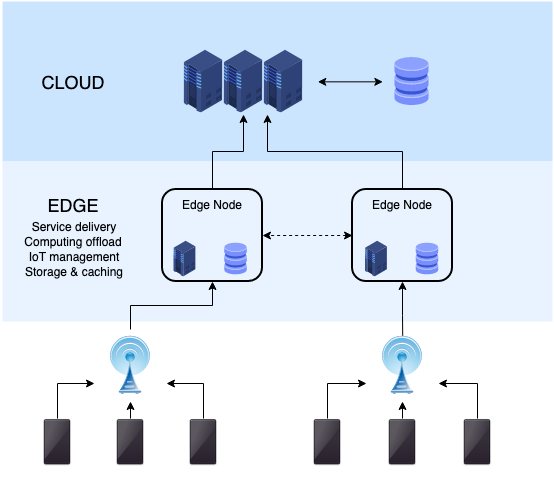
Quantum computing derives its potential advantage from phenomena such as superposition and entanglement, enabling quantum bits (qubits) to represent and process multiple states simultaneously. Rather than replacing classical systems, quantum computing is expected to operate within hybrid architectures, where quantum processors handle specific subproblems embedded within broader classical workflows.
Two dominant paradigms are relevant to urban applications. Gate-based quantum computing, pursued by IBM, Google, and IonQ, supports algorithms such as the Quantum Approximate Optimization Algorithm (QAOA) and quantum machine learning techniques. Quantum annealing, commercialized by D-Wave, is already being applied to optimization problems such as traffic flow and logistics.
Key algorithmic advantages include:
- QAOA and Grover-inspired methods for optimization and search problems.
- Quantum simulation for modeling materials, chemical processes, and environmental systems.
- Shor’s algorithm, which has implications for breaking classical cryptographic systems, necessitating post-quantum security measures.
As of 2026, quantum systems remain constrained by noise, limited qubit counts (typically 100–1,000 logical qubits), and error rates. IBM’s roadmap targets systems exceeding 10,000 physical qubits by the early 2030s, with error correction enabling more reliable computation. RAND (RR-A1234-1, 2024) assesses that practical quantum advantage in optimization may emerge in the early 2030s, particularly when integrated with classical HPC and AI systems.
For smart cities, the near-term focus is not full quantum transformation but targeted augmentation; embedding quantum capabilities into existing digital infrastructure where they can provide measurable gains.
High-Impact Use Cases
1. Urban Traffic and Mobility Optimization
Urban traffic systems involve highly complex, dynamic optimization across millions of variables, including vehicle flows, public transit schedules, and pedestrian patterns. Classical algorithms struggle to achieve real-time global optimization.
Quantum approaches, particularly QAOA and quantum annealing, can evaluate multiple routing configurations simultaneously. Pilot studies in cities such as Singapore have demonstrated early-stage improvements in traffic signal optimization using quantum-inspired algorithms.
Projected benefits include a 30–50 percent reduction in congestion-related delays and associated emissions, based on RAND mobility modeling. Implementation pathways involve integrating quantum optimization modules into AI-driven traffic digital twins via cloud platforms such as AWS Braket.
Key risks include data integration challenges and the need for real-time system orchestration.



2. Smart Energy Grid Resilience and Renewable Integration
Modern energy grids must balance distributed renewable sources, storage systems, and fluctuating demand. This represents a high-dimensional optimization problem that becomes increasingly complex as renewable penetration increases.
Quantum computing can enhance demand-response optimization and enable simulation of advanced battery materials. Utilities in Europe and North America are already exploring quantum-assisted grid optimization pilots.
Potential benefits include 20–40 percent improvements in grid efficiency and accelerated discovery of next-generation battery materials. Hybrid implementations using Azure Quantum and existing grid management platforms are emerging.
Prerequisites include robust data infrastructure and regulatory alignment for grid modernization.
3. Climate and Environmental Modeling
Urban climate systems involve complex interactions between atmospheric conditions, built environments, and human activity. High-resolution modeling remains computationally intensive.
Quantum simulation techniques can improve the accuracy and speed of micro-climate and pollution models. According to recent academic studies, quantum-enhanced models could reduce simulation time by an order of magnitude for certain fluid dynamics problems.
Cities such as Barcelona are exploring integration of advanced modeling into urban planning systems. Benefits include more precise heat mitigation strategies and improved air quality forecasting.
Challenges include model validation and integration with existing climate data systems.
4. Cybersecurity and Critical Infrastructure Protection
Quantum computing poses both a threat and an opportunity for cybersecurity. Shor’s algorithm could render widely used encryption methods obsolete, exposing urban infrastructure systems.
Cities must transition to post-quantum cryptography (PQC) while exploring quantum key distribution (QKD) for high-security applications. National governments are already mandating PQC readiness by the early 2030s.
Benefits include future-proofed security for IoT networks and critical infrastructure. Implementation requires large-scale cryptographic upgrades across millions of devices.
Risks include high transition costs and interoperability challenges.
Discover how quantum entanglement and LEO signals-of-opportunity are creating ultra-secure, picosecond-precision PNT systems resilient to jamming and spoofing threats.
John D
5. Predictive Infrastructure Maintenance and Materials Science
Urban infrastructure systems, such as roads, bridges, water networks; require predictive maintenance to minimize costs and disruptions. Classical simulations of material degradation are computationally limited.
Quantum simulation can model molecular-level interactions in materials such as concrete and asphalt, enabling the development of self-healing or more durable materials.
Early-stage research suggests potential for extending infrastructure lifespan by 20–30 percent. Integration with digital twins enables predictive maintenance at scale.
Challenges include long development timelines and the need for interdisciplinary collaboration.

6. Public Health and Emergency Response Logistics
Urban emergency response involves real-time allocation of limited resources under uncertainty. Classical optimization struggles with scale and speed during crises.
Quantum-enhanced optimization can improve ambulance routing, hospital resource allocation, and epidemic modeling. During COVID-19, early quantum-inspired models demonstrated improved logistics planning in constrained environments.
Projected benefits include 15–25 percent faster response times and improved resource utilization. Implementation requires integration with public health data systems and emergency management platforms.
Risks include data privacy concerns and operational complexity.
7. Circular Economy and Waste Logistics Optimization
Waste collection and urban logistics involve complex routing and scheduling problems with environmental and economic implications.
Quantum optimization can improve fleet routing, recycling logistics, and supply chain efficiency. Pilot programs in logistics companies have shown promising early results.
Potential benefits include 20–35 percent reductions in fuel consumption and operational costs. Integration pathways include cloud-based quantum services and existing logistics platforms.
Challenges include scalability and data standardization.
Use Case Summary Table
| Use Case | Impact Level | Timeline | ROI Category |
|---|---|---|---|
| Traffic Optimization | High | 2030–2035 | Cost savings, emissions reduction |
| Energy Grid | High | 2030–2035 | Efficiency, resilience |
| Climate Modeling | Medium-High | 2030+ | Sustainability planning |
| Cybersecurity | High | Immediate–2035 | Risk mitigation |
| Infrastructure Materials | Medium | 2035+ | Long-term cost savings |
| Public Health | Medium-High | 2030+ | Service efficiency |
| Waste Logistics | Medium | 2030+ | Operational savings |
Barriers, Risks, and Ethical Considerations
Despite its potential, quantum computing faces significant barriers. Technically, challenges include qubit decoherence, error rates, and scalability. Economically, quantum systems require substantial capital investment and specialized talent, both of which are in short supply.
Regulatory challenges include the need for standards in post-quantum cryptography and data governance. According to RAND (2024), the absence of unified standards could delay adoption by several years.
Societal risks must also be addressed. Unequal access to quantum capabilities could exacerbate the digital divide between cities. Additionally, quantum systems are dual-use technologies with potential national security implications.
Energy consumption is another consideration. While quantum computers may solve certain problems more efficiently, their supporting infrastructure (e.g., cryogenic systems) can be energy-intensive.
Cities should adopt governance frameworks that emphasize transparency, equitable access, and alignment with sustainability goals.
Strategic Recommendations and Roadmap
Cities should adopt a phased approach to quantum integration:
2026–2030: Exploration and Pilots
- Launch pilot projects using cloud-based quantum platforms.
- Build internal awareness and workforce capabilities.
- Identify high-value use cases aligned with city priorities.
2030–2035: Targeted Deployment
- Integrate quantum modules into digital twins and AI systems.
- Expand public-private partnerships with technology providers.
- Begin transitioning to post-quantum cybersecurity standards.
Beyond 2035: Scaled Adoption
- Deploy fault-tolerant quantum systems as they become viable.
- Optimize city-wide systems using quantum-enhanced platforms.
Investment priorities should focus on hybrid infrastructure, data integration, and talent development.
Conclusion
Quantum computing is unlikely to replace classical systems but will serve as a powerful complement in solving specific, high-impact urban challenges. For smart cities, the opportunity lies in early experimentation, strategic integration, and proactive governance.
Cities that invest in quantum readiness today are likely to achieve significant advantages in efficiency, sustainability, and resilience by 2035. While uncertainties remain, the trajectory is clear: quantum computing will become an integral component of the smart city technology stack.
Implications for Decision-Makers
- Prioritize hybrid quantum-classical pilot programs in high-impact domains.
- Begin immediate transition planning for post-quantum cybersecurity.
- Invest in workforce development and cross-sector partnerships.
- Align quantum strategies with sustainability and equity objectives.
John D John D
 John D