MeshCore Split (April 2026): Schism Explained - Trademark Dispute, AI Firmware Concerns, and Who Controls the Network
MeshCore’s 2026 split exposes a clash over code ownership, AI firmware trust, and control of a rapidly growing mesh network.


MeshCore Schism (2026): Governance Failure, AI Trust Boundaries, and Control in Decentralized Mesh Infrastructure
Summary
In April 2026, the MeshCore project experienced a structural split between its core development team and a prominent ecosystem contributor. The conflict centers on three interrelated issues: ownership and control of the MeshCore brand, the role of AI-assisted software development in infrastructure systems, and the absence of formal governance mechanisms in a rapidly scaling open-source project.
MeshCore, a mesh networking ecosystem built on low-power radio infrastructure and companion software, has grown to over 38,000 nodes and 100,000 active users in under 18 months. This rapid expansion has outpaced the project’s institutional maturity. Without defined legal structures, contributor agreements, or trademark clarity, authority has fragmented across code repositories, distribution channels, and branding assets.
The resulting schism reflects a broader systemic challenge: decentralized infrastructure projects require stronger governance than typical software communities due to their role in communications resilience, off-grid networking, and potential emergency use cases. Trust, code integrity, and coordination are foundational requirements.
This report analyzes the MeshCore split as a case study in open-source governance failure, evaluates the risks associated with AI-generated infrastructure code, and outlines implications for future decentralized network development.
Introduction: Context and Scope
MeshCore represents a new class of decentralized communication infrastructure. Built atop low-power mesh networking principles similar to Meshtastic, it enables devices to communicate directly without reliance on centralized internet infrastructure.
The project’s rapid growth has been driven by:
- Increasing interest in off-grid communication systems
- Accessibility of low-cost radio hardware (e.g., LoRa-based devices)
- Community-driven firmware and tooling development
However, as with many open-source ecosystems, growth has introduced structural strain. The April 2026 split highlights a transition point where informal coordination is no longer sufficient to maintain cohesion.
Mesh Networking Overview
To understand the significance of the conflict, it is necessary to briefly outline the underlying technology.
Core Architecture
Mesh networking systems such as Meshtastic and MeshCore operate on three primary layers:
- Physical Layer: Low-power, long-range radio communication (commonly LoRa)
- Network Layer: Peer-to-peer routing where nodes relay messages across the network
- Application Layer: User-facing interfaces (chat, sensors, and adverts)
Each node functions as both:
- a transmitter/receiver
- a relay point for other nodes
This creates a self-healing network topology capable of functioning without centralized infrastructure.
Use Cases
Mesh networks are deployed in scenarios where traditional connectivity is unreliable or unavailable:
- Disaster response and emergency communications
- Rural or remote connectivity
- Urban resilience during outages
- Tactical or field operations
- Hobbyist and experimental networking communities
The critical characteristic is infrastructure independence. This elevates the importance of software reliability, security and trust in firmware integrity.
Why Trust Matters More Here
Unlike typical consumer software:
- Mesh firmware directly affects network behavior
- Bugs in one node can affect reliability across nodes
- Malicious or flawed code can degrade or partition the network
As a result:
Mesh networking software operates closer to infrastructure than application software, requiring higher standards of verification and trust.
Timeline of the MeshCore Split
Based on public disclosures, the conflict developed along the following trajectory:
- January 2025 – Early 2026: Rapid growth of MeshCore ecosystem
- Early 2026: Increasing use of AI-assisted development for ecosystem components
- March 29, 2026: Trademark application filed by a community member without consent from the original development team.
- April 2026: Breakdown in communication between contributor and core development team
- April 23, 2026: Public announcement of split and migration to new infrastructure (meshcore.io)
The split resulted in two parallel ecosystems:
- Developer-led ecosystem:
- GitHub repository (source of firmware)
- meshcore.io infrastructure
- Core contributors maintaining codebase
- MeshOS-fork ecosystem:
- Control of original website and Discord
- Alternative product line and branding claims
- Does not provide a repeater firmware implementation, and only targets a limited subset of standalone client hardware

Core Conflict Dimensions
Code vs Brand: Competing Sources of Authority
At the center of the dispute is a fundamental question:
What defines the “real” project?
Two competing models emerge:
Code-Centric Authority
- Legitimacy derived from:
- authorship of firmware
- maintenance of core repositories
- technical continuity
Brand/Distribution Authority
- Legitimacy derived from:
- public visibility
- community channels (Discord, websites)
- trademark ownership
In traditional software ecosystems, these often overlap. In MeshCore, they diverged.
Key Insight:
In decentralized infrastructure projects, code provenance tends to represent a more stable and verifiable source of authority than branding alone.
This is particularly true where:
- security is critical
- firmware defines system behavior
- users rely on technical integrity rather than marketing signals
AI-Assisted Development and Trust Boundaries
A second axis of conflict concerns the use of AI-generated or AI-assisted code.
The core team’s position emphasizes human-authored firmware, traceability of logic and design decisions, as well as a cautious approach to automation
The opposing approach leverages rapid iteration via AI tools and expansion of ecosystem components (apps, tools, interfaces).
Risk Analysis
AI-assisted development introduces several concerns in infrastructure contexts:
Verification becomes more complex, as generated code may lack clear authorship and its underlying logic may not be fully understood by maintainers. This, in turn, expands the security surface, increasing the likelihood of subtle vulnerabilities while making large volumes of code more difficult to audit effectively.
Accountability also becomes less defined, with unclear responsibility for defects and reduced ability to trace original design intent. Taken together, these factors contribute to an erosion of community trust, as users may be hesitant to adopt firmware without transparency into how it was produced.
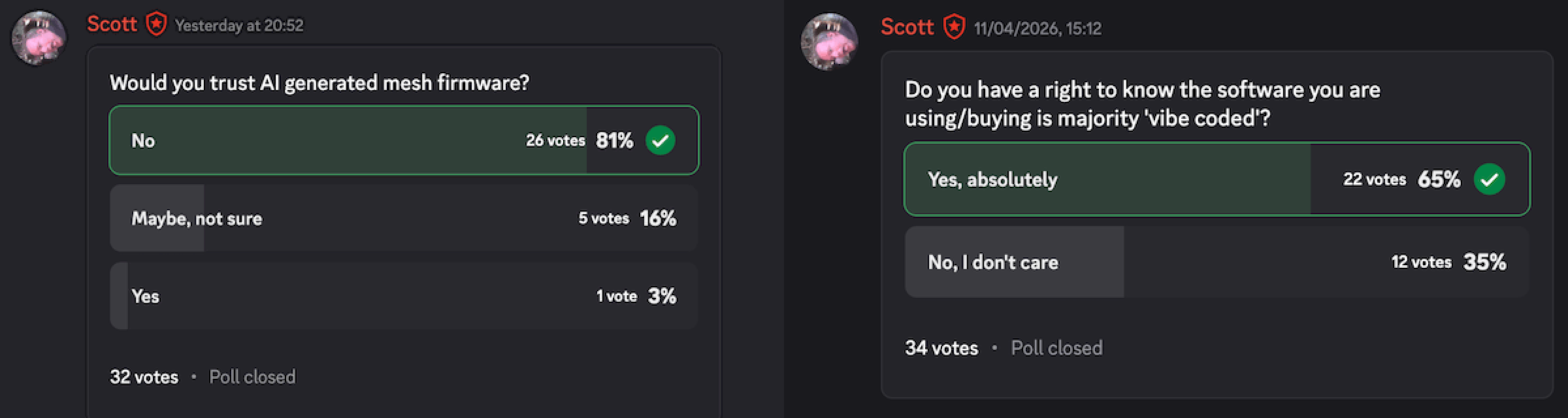
The community poll among MeshCore users shows that 81% expressed distrust of AI-generated firmware, which reflects this broader concern.
Balanced View:
AI tools are not inherently incompatible with infrastructure development. However:
Their use in critical systems requires explicit disclosure, rigorous validation, and strong governance controls.
Governance Failure
The underlying driver of the conflict is structural:
MeshCore lacked:
- formal governance framework
- contributor agreements
- trademark ownership clarity
- decision-making processes
This created conditions where:
- individuals could act independently on critical matters (e.g., trademark filings)
- disputes had no resolution mechanism
- authority fragmented across different system layers
Key Insight:
Decentralization without governance does not eliminate power struggles—it obscures and delays them.
Structural Analysis: Why the Split Occurred
The MeshCore schism can be understood as the interaction of three forces:
Rapid Growth Without Institutionalization
- User base and node count scaled quickly
- Organizational structure did not evolve accordingly
Multi-Layer Ownership Ambiguity
- Code, brand, and community channels were controlled by different actors
Divergent Philosophies
- Engineering-first vs growth-first approaches
- Human-authored vs AI-accelerated development
These factors combined to create a system that proved to be operationally successful while structurally unstable.

Implications for Decentralized Infrastructure Projects
The MeshCore case has broader relevance beyond a single project.
Governance is Not Optional
Decentralized systems still require:
- clear ownership structures
- defined decision-making processes
- legal clarity on branding and IP
Without these core tenets, fragmentation becomes likely and user trust is compromised.
Code Provenance as a Trust Anchor
For infrastructure-level systems, code authorship and maintenance history are critical signals. Repositories function as the “source of truth”
Projects should prioritize transparent development workflows and maintain clear contribution records, while ensuring the continuity of core maintainers
AI in Infrastructure Requires Guardrails
AI-assisted development will continue to expand, but:
Minimum requirements should include:
- explicit disclosure of AI involvement
- mandatory code review processes
- reproducibility and auditability standards
Without these guardrails, adoption of AI causes friction and community trust may decline.
Separation of Layers Increases Risk
When different parties control firmware, distribution platforms, and branding, the system becomes vulnerable to fragmentation, conflicting narratives and user confusion. Integrated governance across layers is essential.
Forward Outlook
The MeshCore ecosystem now faces a bifurcation scenario:
- Developer-led path:
Likely to emphasize:- stability
- technical integrity
- gradual, controlled growth
- Alternative ecosystem path:
Likely to emphasize:- rapid expansion
- productization
- broader user acquisition
The long-term outcome will depend on:
- which model users trust more
- which ecosystem maintains network coherence
- the ability to attract and retain contributors
Conclusion
The MeshCore split is not an isolated incident but a representative case of a broader structural challenge in decentralized systems.
It demonstrates that:
- rapid growth amplifies governance gaps
- infrastructure-level software requires higher trust standards
- authority in open systems ultimately converges around verifiable technical foundations
While branding, distribution, and visibility play important roles, they are secondary in systems where reliability, security and continuity are critical.
Final Insight:
In decentralized infrastructure, the enduring source of legitimacy is not visibility or control of platforms, but the integrity, continuity, and stewardship of the codebase itself.
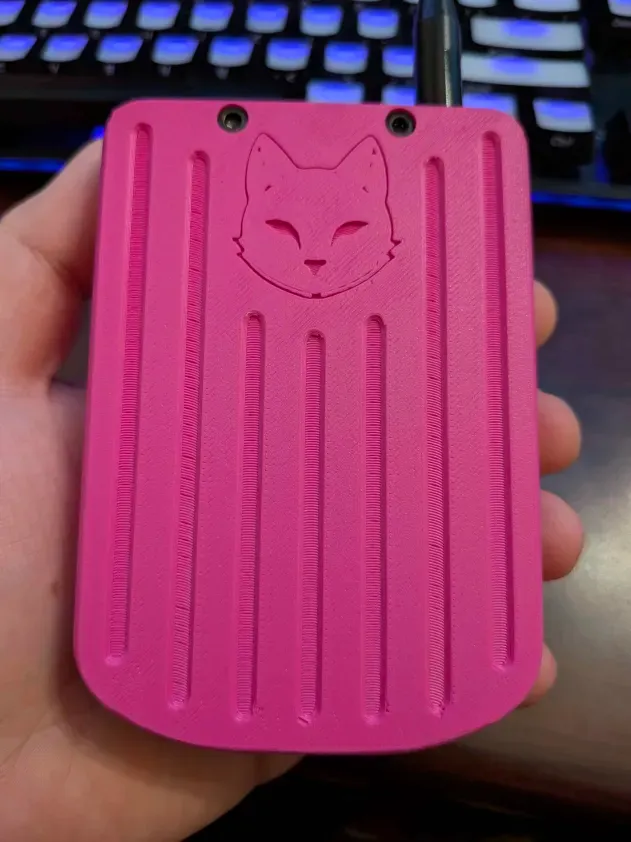
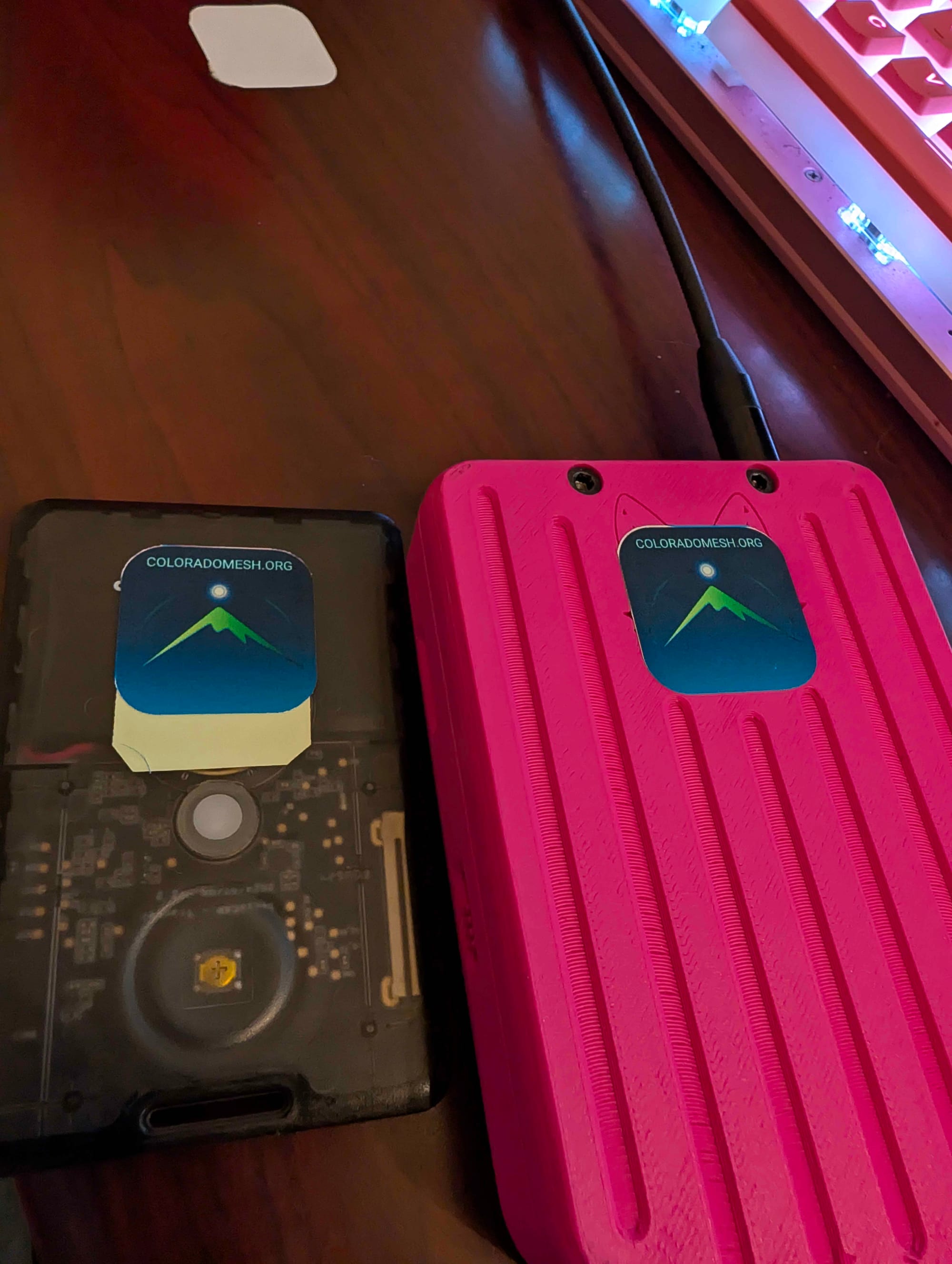
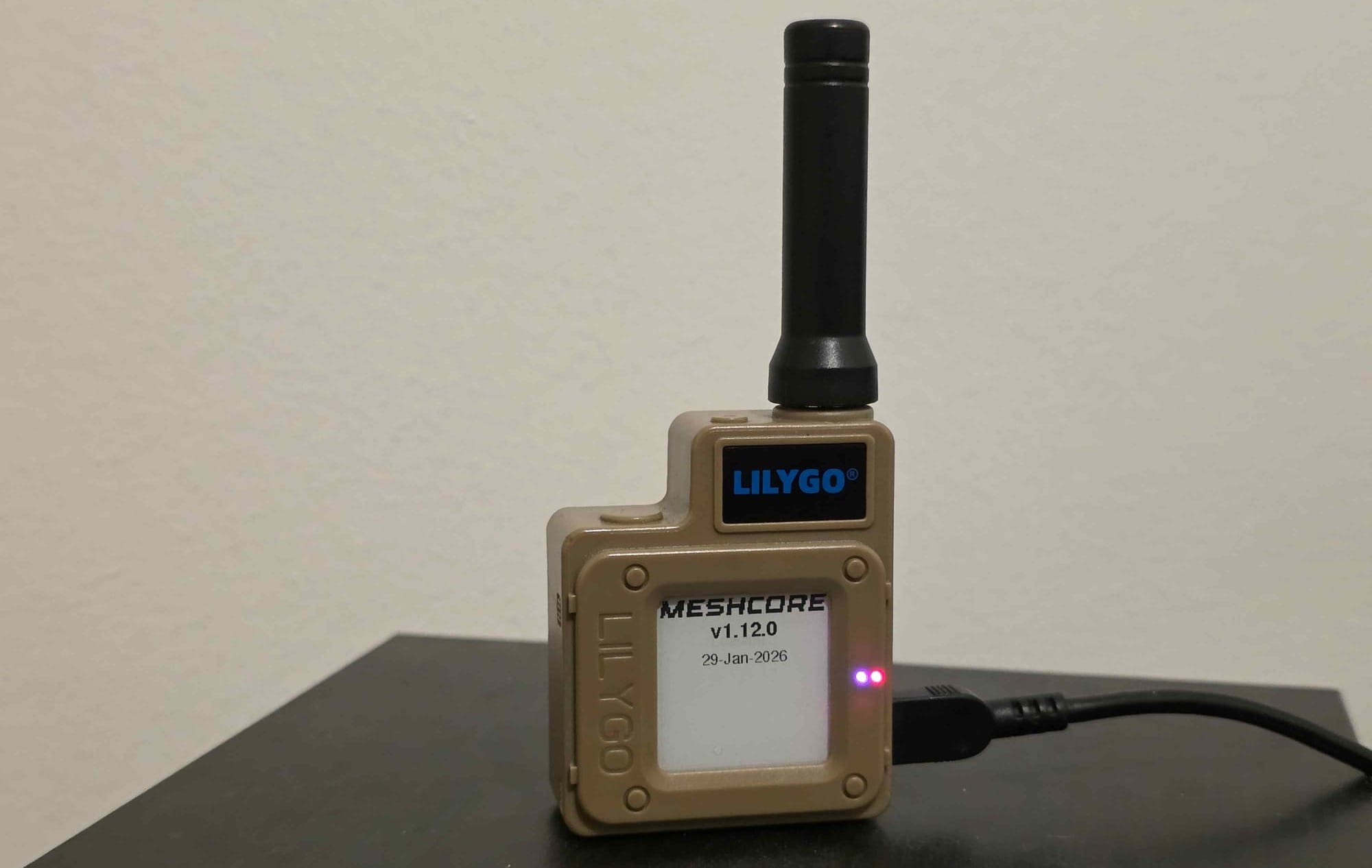
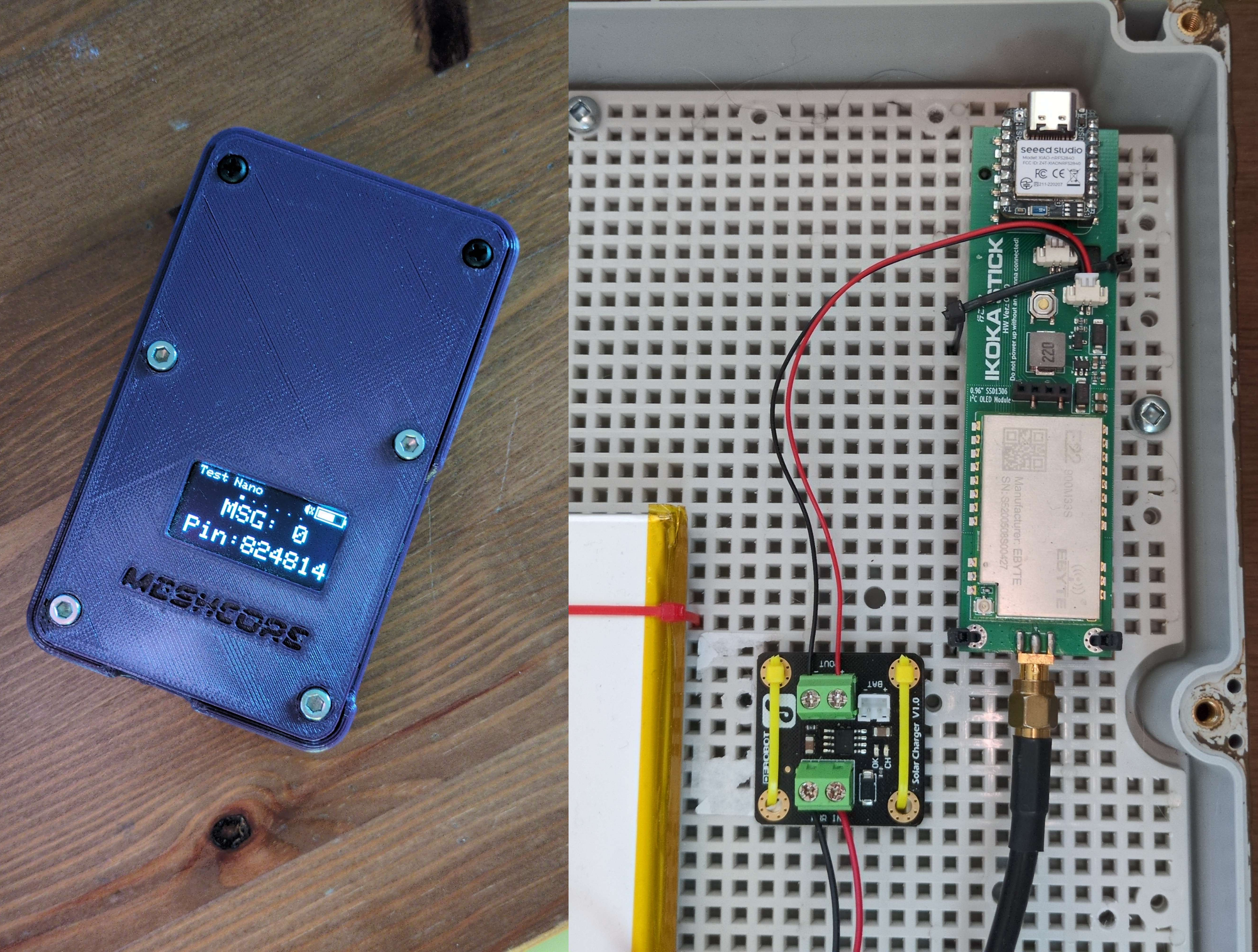
Mesh Devices - Photo by Zeva
Core MeshCore Resources
- MeshCore GitHub
Primary source of truth for firmware, routing logic, and active development.
https://github.com/meshcore-dev/MeshCore - MeshCore Documentation (Wiki / FAQ)
Technical breakdown of firmware roles, setup, and supported hardware.
https://github.com/meshcore-dev/MeshCore/wiki - MeshCore Official Site (Core Team)
Central hub for releases, updates, and project direction.
https://meshcore.io - MeshCore Blog
Development updates, announcements, and technical insights.
https://blog.meshcore.io - MeshCore Docs Portal
Structured documentation and guides.
https://docs.meshcore.io - MeshCore Web Flasher
Browser-based firmware flashing tool for supported devices.
https://flasher.meshcore.co.uk - Awesome MeshCore (Community Resource List)
Curated tools, integrations, and ecosystem resources.⚠️ Currently associated with the alternate MeshCore ecosystem following the April 2026 split. Verify firmware source before use.
https://github.com/samuk/awesome-meshcore
Related Mesh Ecosystem
- Meshtastic
Widely used LoRa mesh platform; useful baseline for comparison and hybrid setups.
https://meshtastic.org - Mesh API (MeshCore ↔ Meshtastic Bridge)
Enables interoperability between mesh ecosystems.
https://github.com/mr-tbot/mesh-api - Colorado Mesh
Grassroots community building a decentralized LoRa mesh network across Colorado with MeshCore and Meshtastic nodes.
https://coloradomesh.org/
Supported Hardware Platforms
These are widely used across MeshCore-compatible deployments:
- Heltec LoRa Boards (V3 / V4)
https://heltec.org - RAK Wireless WisBlock (RAK4631 series)
https://store.rakwireless.com - LILYGO / TTGO Devices (T-Beam, T-Deck, etc.)
https://www.lilygo.cc - Seeed Studio (Wio Tracker / Xiao LoRa)
https://www.seeedstudio.com
Hardware Vendors / Stores
- RAKwireless Store
https://store.rakwireless.com - Heltec Automation Store
https://heltec.org - LILYGO Official Store
https://www.lilygo.cc - Seeed Studio Store
https://www.seeedstudio.com - KeepTeen
https://www.keepteen.com - Meshnology
Community-driven mesh networking initiative focused on hardware deployments, education, and real-world node expansion.
https://meshnology.com
 John D
 John D