The Essentials of Archery (1942): A Complete Guide to Traditional Bowcraft, Shooting, and Survival Skills
A complete breakdown of a 1942 archery manual, covering bowcraft, shooting, and survival skills for modern self-reliance.

Summary (TL;DR)
The Essentials of Archery (1942) by L.E. Stemmler is more than a beginner’s guide; it’s a complete system covering:
- Archery fundamentals (shooting, aiming, technique)
- Equipment selection and setup
- DIY bow, arrow, and string construction
- Field skills like roving and hunting
- Archery as both sport and survival craft
At its core, the book treats archery as a fusion of skill, discipline, and craftsmanship, not just a hobby.
Why This Book Still Matters (2026 Perspective)
Despite being written in 1942, this manual is highly relevant for:
- Homesteaders
- Preppers / survivalists
- Bushcraft enthusiasts
- DIY makers and craftsmen
The key reason:
It teaches self-reliance through tool mastery, not just consumption.
Modern guides often focus on buying gear. This book teaches:
- how to build
- how to repair
- how to adapt in the field
Core Philosophy of the Book
The author frames archery as something deeply human:
- It connects to primitive survival instincts
- It builds self-reliance and discipline
- It combines physical skill + craftsmanship
Archery involves multiple domains:
- hunting
- exploration
- toolmaking
- physical training
The Three Pillars of Archery
According to the book, all archery falls into three categories:
1. Target Shooting (Precision & Discipline)
- Structured competition format
- Standardized scoring system
- Focus on repeatable accuracy
Example:
- Gold (center): 9 points
- Red: 7
- Blue: 5
- Black: 3
- White: 1
Key takeaway:
Target shooting builds mechanical consistency and control
2. Roving (Practical Skill Development)
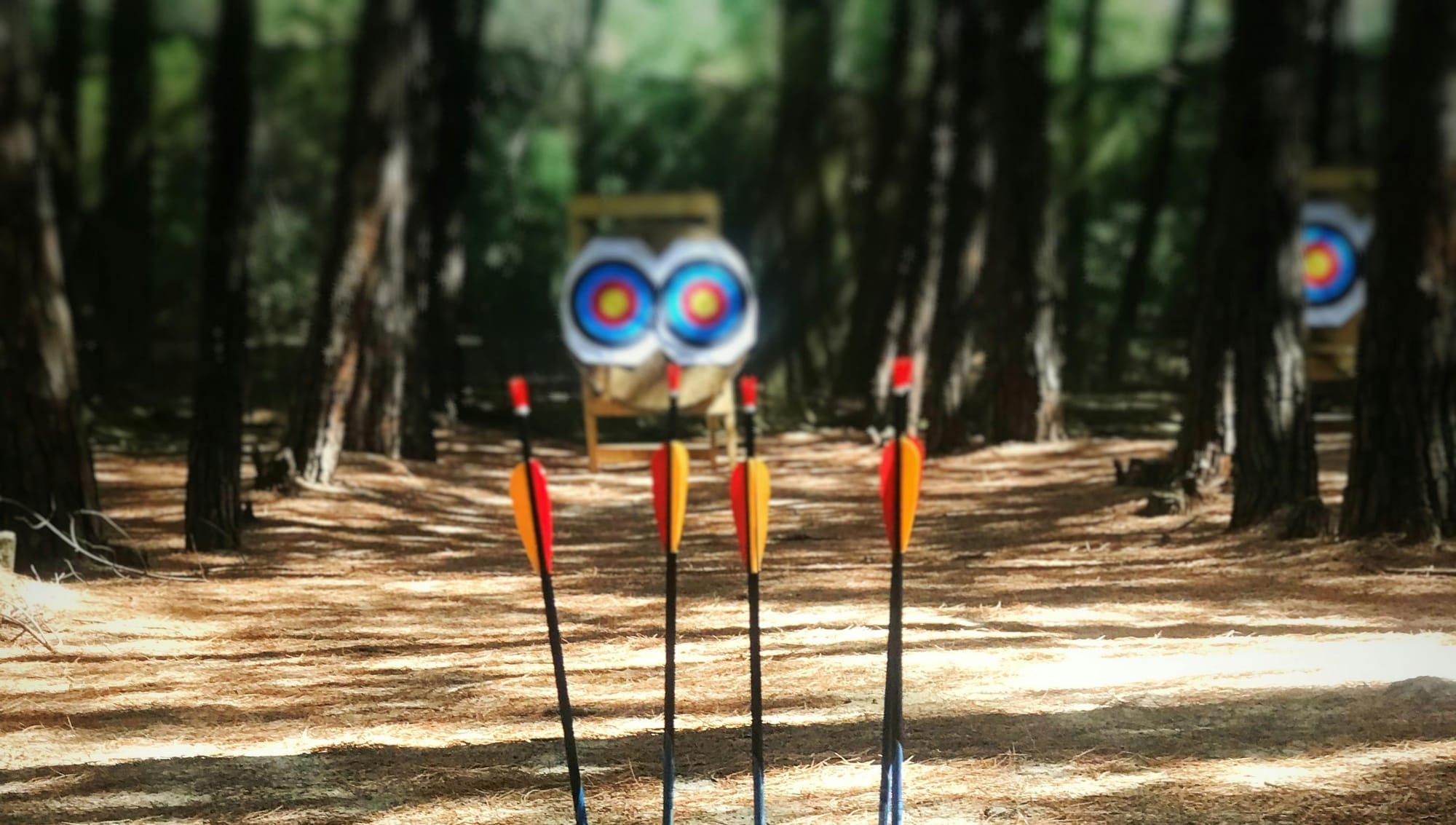
Roving = shooting at random natural targets (within a safely designated training area)
- tree stumps
- bushes
- improvised objects
This is essentially:
real-world training disguised as fun
Benefits:
- Improves instinctive aiming
- Simulates hunting conditions
- Builds adaptability
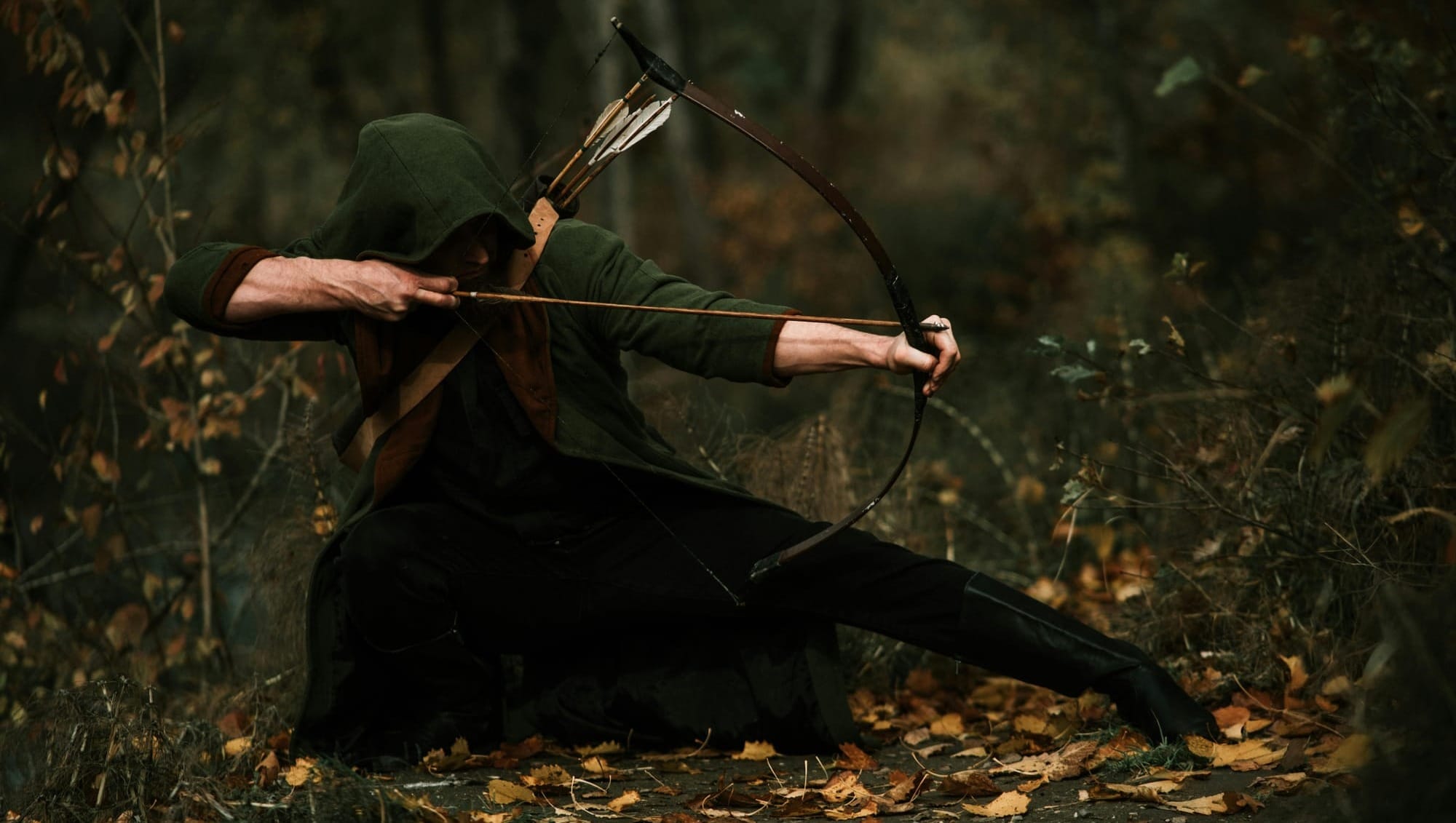
3. Hunting (Applied Skill)
Hunting is described as the natural progression of roving:
- Requires stealth, patience, and positioning
- Precision matters more than power
- Environment awareness is critical
Key insight:
Archery hunting is about skill advantage, not technological advantage
Archery Equipment (What You Actually Need)
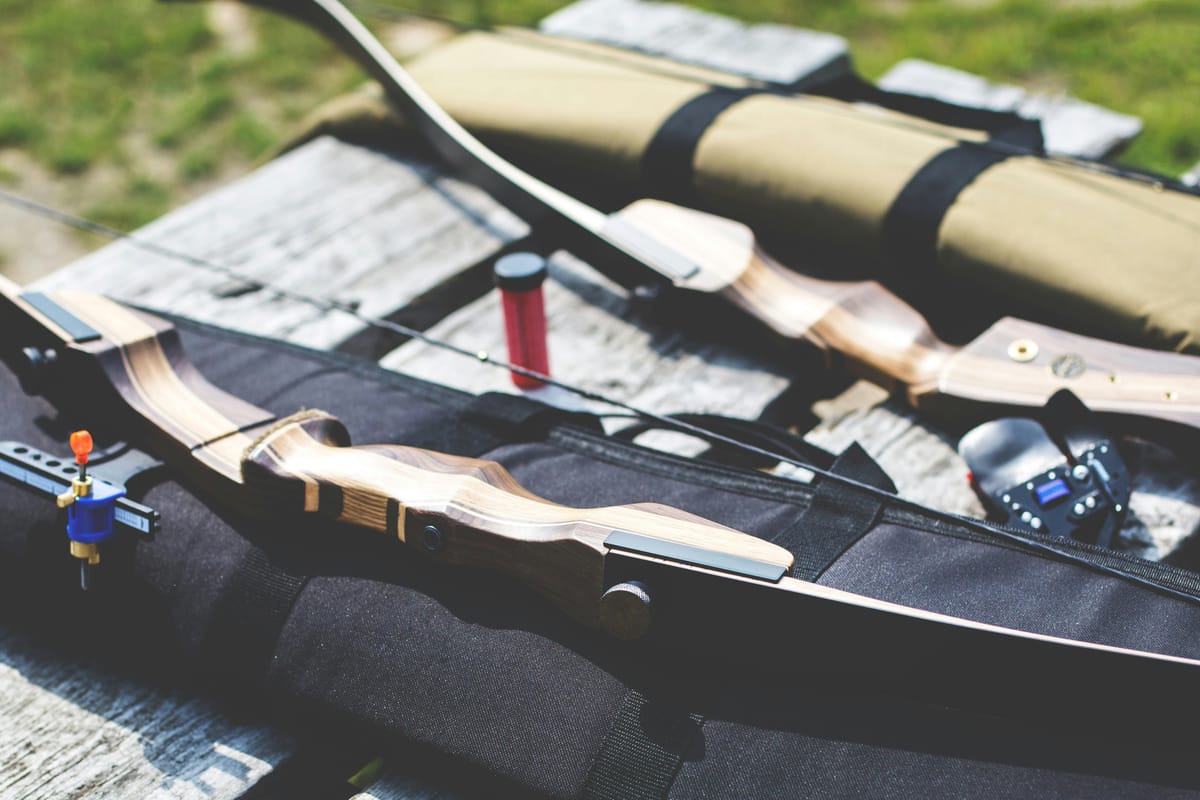
The Bow
Most common materials:
- Lemonwood (recommended for beginners)
- Osage Orange (durable, high performance)
- Yew (traditional but temperamental)
Recommended draw weight:
- Beginners: 35–45 lbs (men), 20–35 lbs (women)
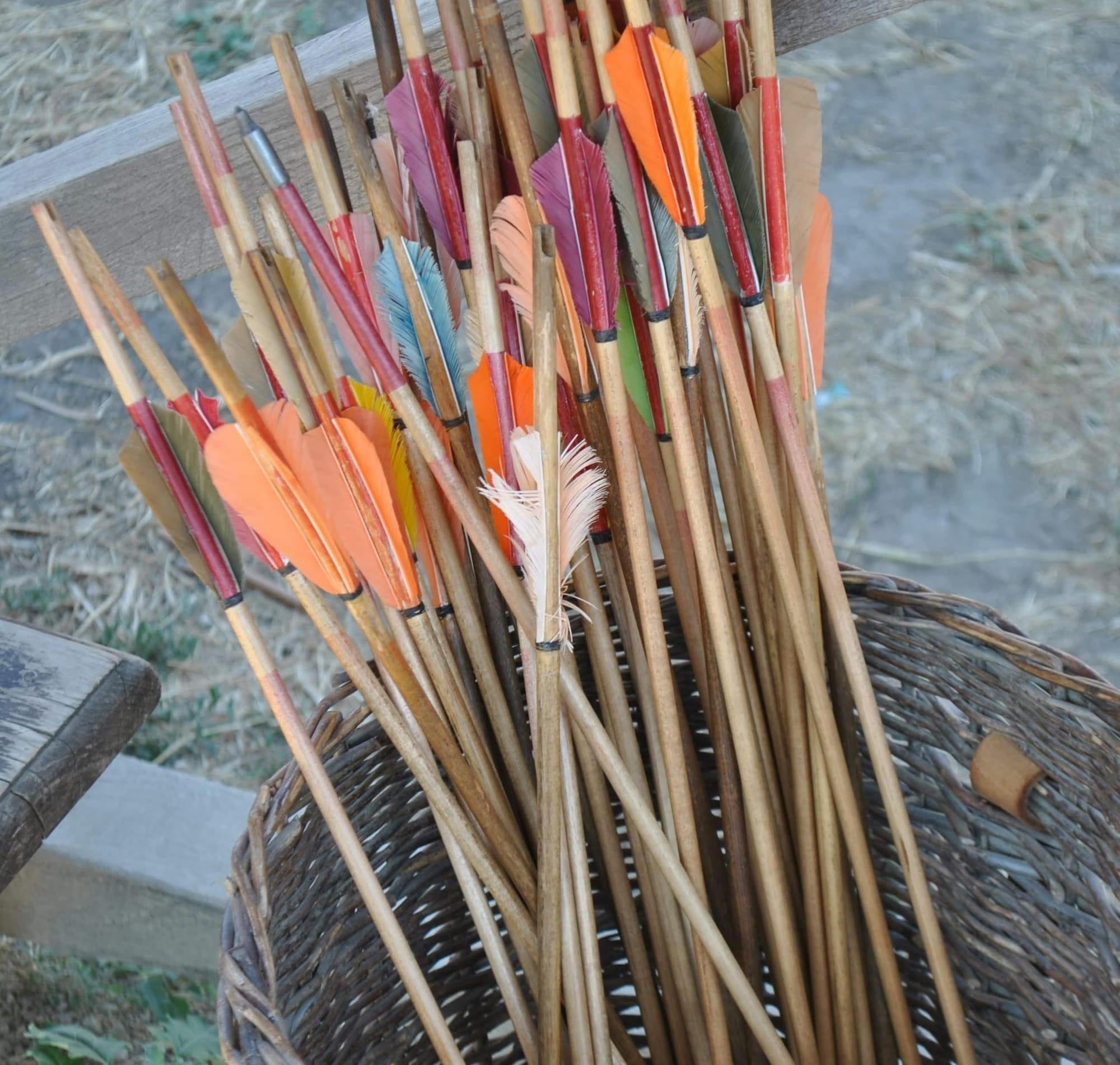
The Arrows
- Beginners should use cheaper arrows (they break often)
- Advanced users use Port Orford Cedar
Types:
- Target arrows
- Hunting arrows (broadheads)
- Roving arrows (durable tips)
Essential Accessories
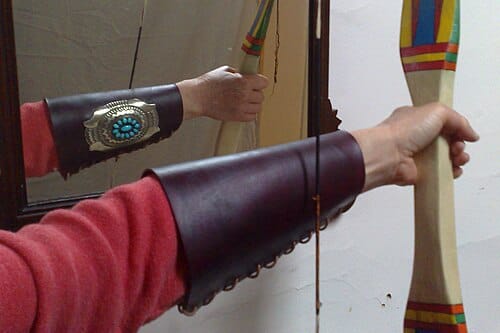
- Armguard / Bracer (prevents injury)
- Finger tab/glove (protects fingers)
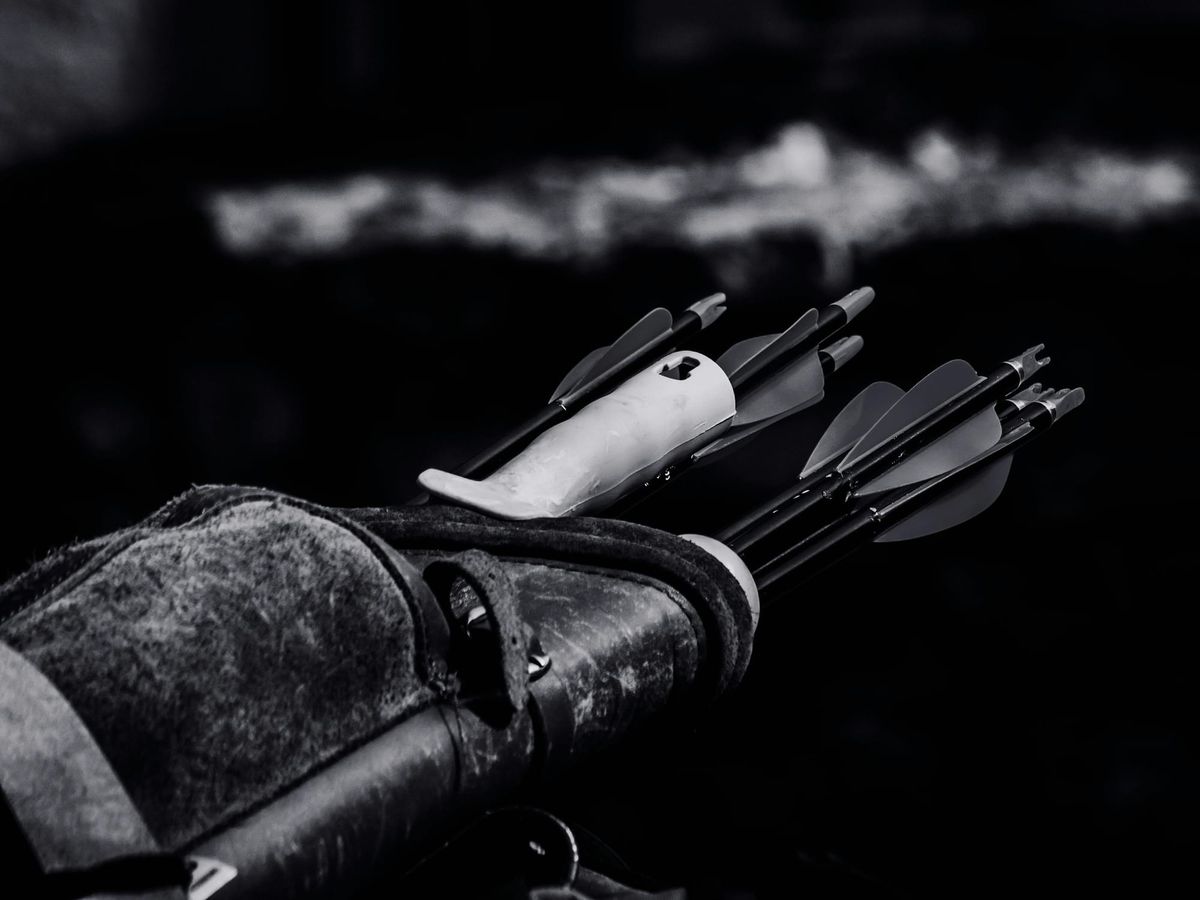
- Quiver (arrow storage)
- Target (straw or burlap)
Fundamentals of Shooting (The 5-Step System)
The book reinforces a classic framework (still used today):
1. Standing
- Square stance
- Body perpendicular to target
2. Nocking
- Proper arrow placement
- Correct feather orientation
3. Drawing
- Smooth, consistent pull
- Anchor at jaw/cheek
4. Holding
- Brief stabilization before release
5. Loosing (Release)
- Clean, simultaneous finger release
These five steps define all good shooting technique
Aiming Methods Explained
Instinctive Shooting
- Fast, reactive
- Used in hunting and roving
- Requires practice and muscle memory
Point-of-Aim Shooting
- Uses a visual reference point
- More precise for target shooting
Key insight:
Accuracy improves dramatically once a consistent aiming method is used
The Hidden Value: Physical Conditioning
Archery is deceptively demanding.
Example from the book:
- 90 shots with a 45 lb bow = 4,050 lbs of total draw force
- Walking during shooting = 1–2+ miles
This makes archery:
- strength training
- endurance training
- coordination training
DIY Bowcraft: The Most Valuable Section
This is where the book becomes extremely relevant for survivalists.
Why Make Your Own Equipment?
The author strongly emphasizes:
You should learn to build your own gear.
Benefits:
- Independence from supply chains
- Repair capability
- Deep understanding of tools
Bow Materials Breakdown
Best Woods
- Lemonwood → affordable, reliable
- Osage Orange → durable, high-performance
- Yew → high quality but unpredictable
Lower Tier Woods
- Hickory, ash, walnut
- Workable but degrade faster
Key Bow Design Principles
- Bow must bend evenly across limbs
- Handle should remain relatively stiff
- Avoid weak spots near center
Poor weight distribution = broken bow
Bowstring Construction (Critical Skill)
Materials:
- Linen / flax (preferred)
Key requirements:
- Strong
- Minimal stretch
- Properly waxed
Techniques:
- Eye splicing
- Multi-strand twisting
- Reinforced ends
Important concept:
A bowstring must maintain consistent length, stretch causes issues
Archery as a Survival Skill
This is where the book aligns with modern preparedness.
Why Archery Matters in Survival Contexts
- Silent hunting tool
- Renewable ammunition (arrows can be reused)
- No dependency on modern supply chains
Skills You Gain
- Wood selection and processing
- Tool making
- Precision and patience
- Environmental awareness
Archery as a System (Modern Interpretation)
If we translate the book into modern systems thinking:
Inputs
- Materials (wood, fiber, tools)
Processes
- Crafting
- Practice
- Adjustment
Outputs
- Reliable tool
- Skill mastery
- Food acquisition capability
 John D
Key Takeaways
1. Start Simple
- Use a basic bow
- Focus on technique first
2. Learn One Skill at a Time
- Shooting → then crafting
- Not both at once
3. Practice Instinctively
- Roving is highly effective training
4. Build Your Own Gear Eventually
- This is where real mastery happens
5. Treat It as a System
- Not just a hobby
- A skill stack
Final Verdict
Strengths
- Extremely practical
- Focus on self-reliance
- Covers both theory and application
- Timeless fundamentals
Limitations
- Some materials and methods are dated
- Assumes access to certain tools
- Lacks modern safety considerations
Conclusion
The Essentials of Archery is a blueprint for:
- mastering a tool
- understanding materials
- developing self-reliance
In a modern world dependent on complex systems, this book teaches something rare:
How to operate effectively with almost none of them.
The book explains string making in depth, but here is a summary on bow strings:
Wax is to a string maker what tar is to a sailor. A string should be always well waxed and the best wax for a bowstring is pure beeswax to which sufficient resin has been added to give it body and stickiness.
--L.E. Stemmler, author of The Essentials of Archery
Critical Skill: Bowstring Construction and Field Repair
One of the most overlooked aspects of archery is the bowstring, but in practice, it is the most failure-prone component of the entire system.
A bow can last years. Arrows can be repaired or replaced.
But a worn or broken string renders the bow completely useless.
Why Bowstrings Fail
Bowstrings experience:
- constant tension
- friction from fingers and arrows
- environmental wear (moisture, dirt, heat)
Over time, this leads to:
- fraying
- stretching
- eventual failure
In a field or survival context, string failure is far more likely than bow failure.
What Makes a Good Bowstring
According to traditional archery principles:
- Low stretch → maintains accuracy and brace height
- High strength → withstands repeated draws
- Reinforced ends and center → protect high-wear areas
- Proper waxing → extends lifespan and durability
Linen or flax fibers are ideal because they are:
- strong
- stable under tension
- resistant to stretching
Basic Construction Overview
A functional bowstring consists of:
- Two loops (“eyes”)
- bottom loop: tight and fixed
- top loop: larger and adjustable
- Central serving (wrapped section)
- protects the area where fingers and arrows contact the string
- Twisted or spliced strands
- form the main load-bearing structure
Even a simple field-made string can be created by:
- splicing natural fiber cordage
- or twisting multiple strands into a rope-like structure
Field Adjustments and Maintenance
In practical use:
- If the string stretches → twist it tighter
- If fraying appears → rewax immediately
- If length changes → adjust loops or add twists
A properly maintained string can last significantly longer than an untreated one.
Survival Insight
A bow without a string is just a piece of wood.
For this reason:
- always carry spare cordage
- understand at least one method of string construction
- regularly inspect and maintain your string
Learn the Full Process
This section only covers the fundamentals.
For a complete step-by-step breakdown, including multi-strand construction, reinforced loops, and waxing methods:
 John D