
Airbus Zephyr HAPS: AALTO, 67-Day Endurance Record, NTT DOCOMO, and the Stratospheric ISR Market Assessment
The Zephyr is a solar drone that flies at 70,000 feet for months at a time. Here is what it does, who operates it, and whether it will reach market.

The Airbus Zephyr High-Altitude Platform Station Program: Strategic, Technical, and Market Assessment
It broke the world flight endurance record. It also crashed on the way home. The Airbus Zephyr program is both more impressive and fragile than it looks.
1. Summary
1.1 Program overview at a glance
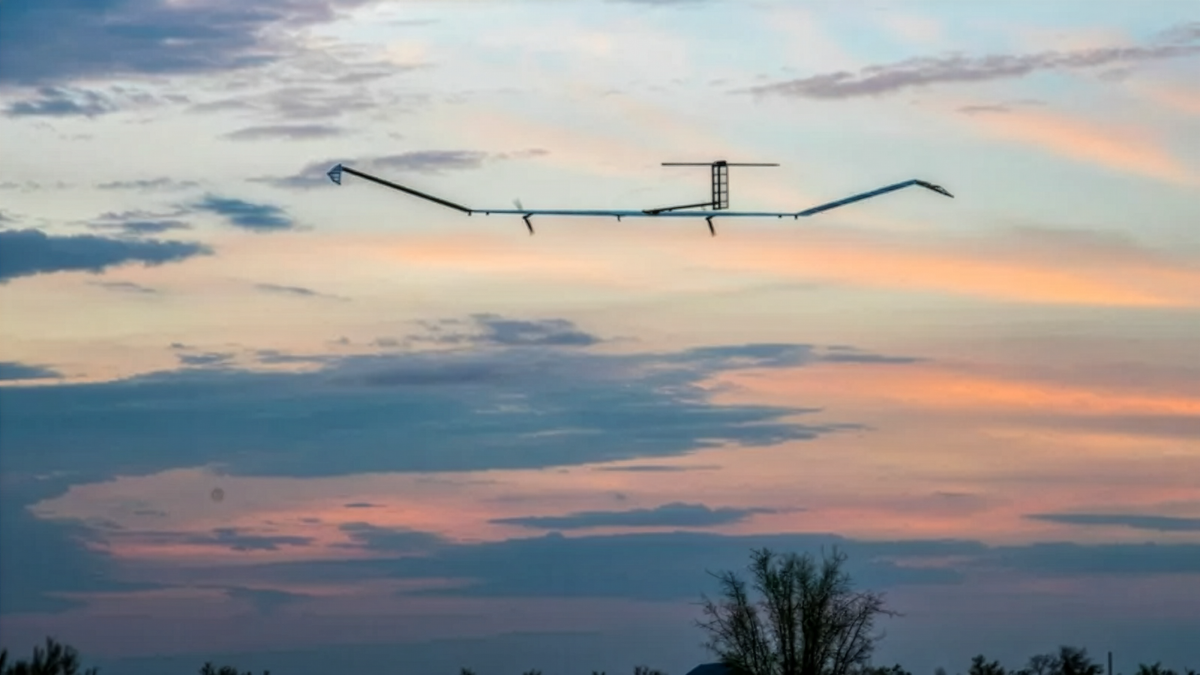
The Airbus Zephyr is a solar-electric, fixed-wing High-Altitude Platform Station (HAPS), classified by Airbus as a high-altitude pseudo-satellite, designed for persistent stratospheric f light at altitudes typically between 60,000 and 76,000 feet (approximately 18 to 23 kilometres) [1][2][3]. The program traces a roughly two-decade lineage from initial concept work at the United Kingdom defence technology firm QinetiQ in the early 2000s, through its acquisition by EADS Astrium (later Airbus Defence and Space) in March 2013, to its 2023 transition into AALTO HAPS Limited, an Airbus majority-owned subsidiary based in Farnborough, United Kingdom [4][5][6]. The current operational variant, the Zephyr 8 (also designated Zephyr S, with the upgraded Z8B model used for record flights), has a wingspan of 25 metres, a maximum take off mass typically reported between 60 and 75 kilograms, and a payload capacity of approximately 5 kilograms [1][3][7]. As of the drafting date, AALTO holds the publicly verified world endurance record for an aircraft, having flown for 67 days, 6 hours and 52 minutes between 20 February and 28 April 2025, on a mission launched from its AALTOPORT in Laikipia County, Kenya [8][9][10].
1.2 Key findings
Publicly available evidence indicates that Zephyr has matured from a research demonstrator into a near-operational, commercially marketed platform, but with material residual risk. Three Zephyr airframes have been lost in publicly documented flight events: two in Australia in 2019 (15 March and 28 September) following adverse weather encounters during climb, and one near Yuma, Arizona, on 19 August 2022, after 64 days aloft and within hours of breaking the absolute aviation endurance record [11][12][13]. The 2025 record-setting flight also concluded with the loss of the airframe in a controlled descent into a designated Indian Ocean sanctuary area following an undisclosed in-flight problem [9][10]. Airbus and AALTO have characterised these events as either weather-induced or component-related, but no equivalent of a National Transportation Safety Board public final report exists for the 2022 Arizona event in publicly accessible sources; the available record relies on Airbus and US Army statements together with an Australian Transport Safety Bureau (ATSB) final report covering only the second 2019 Australian incident [12][14]. AALTO secured a UK Civil Aviation Authority Design Organisation Approval in July 2024 (the first awarded to a HAPS entity in the UK), and is targeting Type Certification of the Zephyr Z8 in support of a stated entry-into-service in 2026 [15]. A Japanese consortium led by NTT DOCOMO and Space Compass, with Mizuho Bank and the Development Bank of Japan, committed USD 100 million to AALTO under the Tokyo Stratospheric Declaration of 29 May 2024 [16][17].
1.3 Strategic implications for stakeholders
For defence customers, Zephyr offers a complementary intelligence, surveillance and reconnaissance (ISR) and communications relay layer between low-Earth-orbit (LEO) constellations and conventional medium- and high-altitude unmanned aerial systems, with the principal value proposition being persistence over a fixed area of operations at a lower capital cost than a comparable satellite asset [18][19]. For telecommunications operators, Zephyr is positioned as a "tower in the sky" capable of delivering low-latency 4G/5G direct-to-device services over coverage footprints of up to roughly 7,500 square kilometres per platform [20][21]. For institutional investors, the platform sits within a HAPS market for which credible third-party estimates diverge by more than an order of magnitude (from approximately USD 99 million to over USD 1 billion in 2024-2025), reflecting genuine uncertainty about whether HAPS will achieve scale economics competitive with LEO constellations [22][23][24]. The program's geopolitical significance lies in its provision of a sovereign European stratospheric capability, particularly relevant given the dominance of US LEO constellations and the parallel emergence of large-scale Chinese HAPS (notably the AVIC Qimingxing-50) [25][26].
1. Summary
1.1 Program overview at a glance
1.2 Key findings
1.3 Strategic implications for stakeholders
2. Contextual Background
2.1 Origins of the Zephyr program
2.2 Definition and classification of HAPS within the stratospheric platform ecosystem
2.3 Evolution of program milestones and flight records
2.4 Position within the broader unmanned aerial systems and pseudo-satellite landscape
3. Key Players and Stakeholders
3.1 Airbus Defence and Space and the AALTO HAPS subsidiary
3.2 Government and military customers
3.3 Commercial and telecommunications partners
3.4 Competitor platforms
3.5 Regulatory and standards bodies
4. Technical and Operational Considerations
4.1 Airframe design and structural characteristics
4.2 Propulsion, solar generation, and energy storage architecture
4.3 Stratospheric flight envelope and station-keeping
4.4 Payload capacity and mission configurations
4.5 Launch, recovery, and ground operations
4.6 Endurance records and operational limitations
5. Economic and Market Dynamics
5.1 HAPS market sizing and growth projections
5.2 Cost structure relative to satellites and conventional UAS
5.3 Revenue models
5.4 Investment landscape and capital intensity
5.5 Adjacent market interactions
6. Regulatory Landscape
6.1 ICAO and national aviation authority frameworks for stratospheric operations
6.2 Spectrum allocation and ITU coordination (WRC-19 outcomes for HAPS)
6.3 Airspace integration challenges
6.4 Export controls and dual-use considerations
7. Geopolitical and Strategic Dimensions
7.1 Sovereign capability and strategic autonomy considerations for European defense
7.2 Persistent ISR and the changing reconnaissance paradigm
7.3 Connectivity for underserved regions and digital sovereignty
7.4 Comparative national HAPS programs
7.5 Implications for contested airspace and great-power competition
8. Structured Risk Matrix
8.1 Technical and operational risks
8.1.1 Installation and ground-handling failures
8.1.2 Battery fires and thermal runaway events
8.1.3 Lightning strikes and convective weather encounters
8.1.4 Faulty equipment, structural failure, and the documented Zephyr loss events
8.1.5 Stratospheric turbulence and jet stream exposure
8.2 Programmatic and financial risks
8.3 Regulatory and certification risks
8.4 Geopolitical and customer-concentration risks
8.5 Competitive and technology-substitution risks
9. Strategic Recommendations
9.1 Recommendations for institutional investors and capital allocators
9.2 Recommendations for defense and government policymakers
9.3 Recommendations for telecommunications operators and infrastructure planners
10. Conclusion and Forward Outlook
2. Contextual Background
2.1 Origins of the Zephyr program (QinetiQ heritage through Airbus acquisition)
The Zephyr program originated within QinetiQ, the commercial offshoot of the UK Ministry of Defence's Defence Evaluation and Research Agency, with concept work dating to the early 2000s [4][5]. The earliest variant, the Zephyr 3, was originally designed in 2003 to be released from a high-altitude balloon (the QinetiQ 1) at approximately 9 kilometres before climbing to 40 kilometres on solar-electric propulsion, an ambition that was never realised because the balloon programme failed to launch [4][27]. Subsequent QinetiQ-led variants (Zephyr 4 through Zephyr 7) progressively refined the airframe and energy architecture; the Zephyr 6 demonstrated 82 hours and 37 minutes of flight at the US Army's Yuma Proving Ground in July 2008, and the Zephyr 7 achieved 14 days aloft in July 2010 [4][27]. EADS Astrium, soon rebranded as Airbus Defence and Space, acquired the program from QinetiQ in March 2013, and substantive work on the production-orientated Zephyr 8 (also designated Zephyr S) began in April 2014 [5][6][7]. The f irst production Zephyr S took its maiden flight from Yuma Proving Ground in July 2018 and remained aloft for 25 days, 23 hours and 57 minutes, an unmanned aviation endurance record at the time [3][7].
2.2 Definition and classification of HAPS within the stratospheric platform ecosystem
The International Telecommunication Union (ITU) defines a High-Altitude Platform Station as "a station on an object at an altitude of 20 to 50 km and at a specified, nominal, fixed point relative to the Earth" within its Radio Regulations [27]. The HAPS category encompasses heavier-than air (HTA) fixed-wing solar aircraft (such as Zephyr, BAE Systems' PHASA-35, AeroVironment's Sunglider, and Mira Aerospace's ApusDuo), lighter-than-air (LTA) airships (such as Sceye's SE2 and the now-discontinued Thales Stratobus concept), and free-floating or controlled high altitude balloons (such as Aerostar's Thunderhead and the now-defunct Loon platform) [27][28] [29]. The Royal Aeronautical Society and Royal Air Force literature note that HAPS occupy what is increasingly described as an "Air-Space continuum," operating above almost all civil air traffic but well below the lowest sustainable orbital altitudes, and offering persistence measured in weeks or months rather than the hours typical of conventional unmanned aerial systems [18] [19].
2.3 Evolution of program milestones and flight records
A chronology of publicly documented Zephyr milestones, drawn from independent or customer corroborated sources rather than Airbus marketing material alone, points to a steady but nonlinear trajectory. The Zephyr 7 set an early benchmark of 14 days in 2010 [27]. The Zephyr S achieved 25 days, 23 hours and 57 minutes in 2018, verified through external observers and reported in the trade press [3][7]. In summer 2022, the Zephyr 8 (callsign ZULU82, serial Z8-2) f lew for 64 days from Castle Dome Heliport at Yuma Proving Ground, traversing international airspace for the first time, transiting to Belize and back, before being lost on 19 August 2022 over the Kofa National Wildlife Refuge near Yuma, Arizona [11][13][30]. This flight exceeded 30,000 nautical miles and accumulated more than 1,500 hours of stratospheric mission data per Airbus statements [13]. The 67-day flight in 2025, also independently corroborated through ADS-B tracking and Amprius supplier announcements, brought the verified record to 67 days, 6 hours and 52 minutes, surpassing the 1959 manned endurance record set by the Cessna 172 "Hacienda" f light [8][10][31]. AALTO has stated an internal aspiration to reach a 200-day flight, although that figure remains an Airbus/AALTO claim rather than independently verified performance [4].
2.4 Position within the broader unmanned aerial systems and pseudo-satellite landscape
Zephyr operates in a crowded but commercially nascent stratospheric ecosystem. Within the heavier-than-air fixed-wing segment, BAE Systems' PHASA-35 (developed via its FalconWorks unit and Prismatic, which BAE acquired in 2019) has progressed from low-altitude flights in 2020 to a 24-hour stratospheric flight at 66,000 feet from Spaceport America, New Mexico, in June 2023, with a stated target of operational availability from 2026 or 2027 [32][33]. AeroVironment's Sunglider, developed under the now-absorbed HAPSMobile joint venture with SoftBank Corp. (which dissolved HAPSMobile into the parent on 1 October 2023), achieved its first stratospheric f light at 62,500 feet in September 2020 and conducted further trials with the US Department of Defense in New Mexico in August 2024 [34][35]. Within the lighter-than-air segment, Sceye Inc. of New Mexico has flown its SE2 airship for 12 days at over 52,000 feet, including a transit from New Mexico towards the Brazilian coast in 2025 [36]. Mira Aerospace, a UAVOS-Bayanat joint venture, has flown its ApusDuo and ApusNeo solar HAPS in Rwanda and the United Arab Emirates [37][38].
3. Key Players and Stakeholders
3.1 Airbus Defence and Space and the AALTO HAPS subsidiary
The current programmatic structure reflects a deliberate corporate restructuring. Airbus first established a dedicated HAPS Connectivity Solutions business unit at the beginning of 2022, and that unit was incorporated as AALTO HAPS Limited (an acronym for "Airbus, high ALTitude, zerO emissions") in January 2023 [4][39]. AALTO is headquartered in Farnborough, UK, manufactures the Zephyr at the Kelleher facility opened on the same site in July 2018, and remains majority-owned by Airbus Defence and Space [7][40]. The CEO position has rotated: Samer Halawi, a former Intelsat and OneWeb executive, was appointed in 2023 and led AALTO through the Tokyo Stratospheric Declaration; he was succeeded by Hughes Boulnois, identified as Chief Executive Officer in 2025 communications surrounding the 67-day flight and the Australia AALTOPORT site selection [9][10][41]. Pierre-Antoine Aubourg serves as Chief Technology Officer [9][31].
3.2 Government and military customers
The UK Ministry of Defence has been the principal disclosed military customer since contracting for two Zephyr S aircraft in February 2016, with a third unit ordered in August 2016 [7]. Zephyr has been a participant in the UK MOD's Project Aether (also rendered "AETHER"), a stratospheric ultra-persistent ISR and communications programme run by Defence Equipment and Support; the second phase, announced in late 2023, paired AALTO's Zephyr 8 with Sierra Nevada Corporation's high-altitude balloon for trials lasting at least 30 days in the North America and Atlantic operational area [42][43].
The US Army's Assured Positioning, Navigation and Timing/Space Cross-Functional Team (APNT/Space CFT) within Army Futures Command is the principal documented United States customer, having sponsored the 2021 and 2022 flight campaigns at Yuma Proving Ground, including the 64-day mission terminated on 19 August 2022 [13][30]. The US Army, through the Space and Missile Defense Command Technical Center, has separately sponsored BAE Systems' PHASA-35 testing at Spaceport America [33].
3.3 Commercial and telecommunications partners
The 3 June 2024 announcement of a USD 100 million investment in AALTO by a Japanese consortium comprising NTT DOCOMO, Space Compass Corporation (a joint venture of NTT and SKY Perfect JSAT), Mizuho Bank, and the Development Bank of Japan, conducted through a vehicle named HAPS JAPAN Corporation, formalised the most significant publicly disclosed commercial partnership in the program's history [16][17]. Airbus Defence and Space remained AALTO's majority shareholder [16]. Earlier collaboration agreements traced to a January 2022 memorandum of understanding among Airbus, NTT, NTT DOCOMO and SKY Perfect JSAT, followed by a November 2022 agreement specifically pairing Airbus with Space Compass [44]. On 3 March 2025, Space Compass and NTT DOCOMO announced what they described as the world's first successful establishment of wireless LTE communication between a fixed-wing HAPS in the stratosphere (Zephyr) and a smartphone on the ground in Laikipia County, Kenya, with throughput exceeding 4.66 Mbps on the forward link [45]. Additional partnerships have been disclosed with Saudi Arabia's Salam (announced October 2022) and with extension of services to the Caribbean region [46].
3.4 Competitor platforms
Quantitatively, the principal HAPS competitors to Zephyr exhibit a range of design choices that make like-for-like comparison difficult. BAE Systems' PHASA-35 has a 35-metre wingspan, an approximate mass of 150 kilograms, and a stated payload capacity of 15 kilograms, three times that of Zephyr's 5 kilograms; it operates at 65,000 to 70,000 feet and has demonstrated 24 hours of stratospheric flight, but has not yet matched Zephyr's multi-day endurance [32][33][47]. AeroVironment's Sunglider, in its larger configuration, has a wingspan of 78 metres and a stated payload capacity of up to 75 kilograms in some communications, although a separate AeroVironment update describes its "Horus A" derivative as carrying up to 70 kilograms with 1.5 kW of available power [34][48]. Sceye's SE2 airship measures 270 feet in length, uses lithium sulfur batteries with stated specific energy of 425 Wh/kg, and has demonstrated station-keeping radii as low as 1 kilometre at 52,000 feet over multi-day missions [36]. Mira Aerospace's ApusDuo has a 14-15 metre wingspan and a maximum take-off mass of approximately 43 kilograms with a 3.6 to 6 kilogram payload capacity, having reached 16,686 metres on a 10.5-hour test flight in Rwanda in June 2023; the larger ApusNeo 18 has an 18-metre wingspan [37][38]. Stratospheric Platforms Limited (now operating commercially as World Mobile Stratospheric) has pursued a hydrogen fuel-cell architecture rather than solar; the planned vehicle, built by Scaled Composites, is intended to have a 60-metre wingspan, fly for approximately eight to nine days at 60,000 feet, and carry a 140-kilogram payload, supporting a 3-metre phased-array antenna for 5G connectivity [49][50]. China's AVIC Qimingxing-50, which flew for 26 minutes from Yulin, Shaanxi province, on 3 September 2022, has a wingspan of 50 metres and a twin fuselage configuration; AVIC has stated an intent for stratospheric flight at altitudes exceeding 20 kilometres [25][26].
3.5 Regulatory and standards bodies
The principal international standards setter for HAPS spectrum is the ITU, whose World Radiocommunication Conferences govern frequency allocations [51]. National aviation authorities, particularly the UK Civil Aviation Authority (which granted AALTO Design Organisation Approval on 25 July 2024), the US Federal Aviation Administration, the European Union Aviation Safety Agency (EASA), and the Australian Civil Aviation Safety Authority (CASA), define airworthiness regimes [15][52][53]. The HAPS Alliance, an industry association founded in 2020 whose members include Airbus, AALTO, SoftBank, Nokia, Aerostar and others, publishes technical reference architectures and certification pathway white papers (notably the February 2024 "HAPS Certification Pathways" document) intended to influence ICAO, EASA and FAA regulatory development [54][55].
 John D
4. Technical and Operational Considerations
4.1 Airframe design and structural characteristics
Zephyr 8's airframe is constructed almost entirely of carbon-fibre composites with a very high aspect-ratio wing of 25 metres. The all-up mass is 60 to 75 kilograms depending on the source and battery configuration, of which approximately 24 kilograms are batteries and 5 kilograms are payload, with the primary structure weighing approximately 30 kilograms [3][27][56]. The aircraft is unable to accelerate from a standing start because its fixed-pitch propellers (designed for high helix angle to maintain efficiency in the thin air of the stratosphere) cannot produce sufficient thrust at low speed, requiring it to be hand-launched by a coordinated team of approximately five technicians spread along the wingspan [56]. Cruise speed is approximately 12 knots indicated airspeed (KIAS), with a never-exceed speed (Vne) of 20 KIAS; at 60,000 feet, this corresponds to a true airspeed of approximately 45 knots [56]. The structural fragility implicit in this mass-to-span ratio creates a narrow operating envelope and constitutes the principal driver of the program's loss-event history.
4.2 Propulsion, solar generation, and energy storage architecture
Zephyr 8 uses two electric motors driving fixed-pitch propellers, powered during the day by inverted metamorphic multi-junction gallium arsenide solar sheets manufactured by MicroLink Devices, with claimed specific power exceeding 1,500 W/kg and areal power densities greater than 350 W/m² [27]. Energy storage has evolved through generations of battery chemistry. Earlier Zephyr variants used lithium-sulfur cells from Sion Power, with stated energy density approximately twice that of contemporaneous lithium-polymer alternatives [27]. From 2018 onward, Airbus transitioned to Amprius lithium-ion cells based on a 100 percent silicon nanowire anode, with reported specific energy of 435 Wh/kg, and subsequently to Amprius SiCore and SiMaxx cells delivering up to 450 Wh/kg commercially and 500 Wh/kg under third party validation; Airbus has stated publicly that it discontinued lithium-sulfur because it "did not see the performance we require" [56][57][58]. The 2025 67-day flight was powered by Amprius silicon-anode cells [10][31]. This chemistry is generally robust against the deep cycling required for multi-month stratospheric flight, but fragility, thermal management at temperatures from approximately minus 60°C to 50°C, and the risk of thermal runaway in the lithium chemistry remain engineering challenges that AALTO addresses through redundant power architecture and a "soft termination" protocol that disables battery charging in the event of an emergency descent to reduce post-crash fire risk [11][14][59].
4.3 Stratospheric flight envelope and station-keeping
Zephyr's nominal operating altitude is 60,000 to 70,000 feet, with an absolute altitude record of 76,100 feet (23,200 metres) demonstrated during the 2021 flight campaign [3][41]. The aircraft is designed to remain in the stratosphere "throughout a mission," meaning above the tropopause, where turbulence is generally minimal even though jet-stream winds can reach 130 knots in the polar vortices and average 20 to 40 knots in the mid-latitudes [56]. Station-keeping is achieved through autonomous flight control optimising aircraft heading and bank against wind drift; the platform's relatively low true airspeed limits its ability to hold a tight geographic point in strong winds, but the 2025 mission demonstrated controlled transit across seven flight information regions and two crossings of the Intertropical Convergence Zone [9][31]. AALTO has stated that year-round operation is feasible between 40 degrees North and South latitudes, with winter operation becoming progressively more difficult at higher latitudes due to reduced solar incidence [27].
4.4 Payload capacity and mission configurations
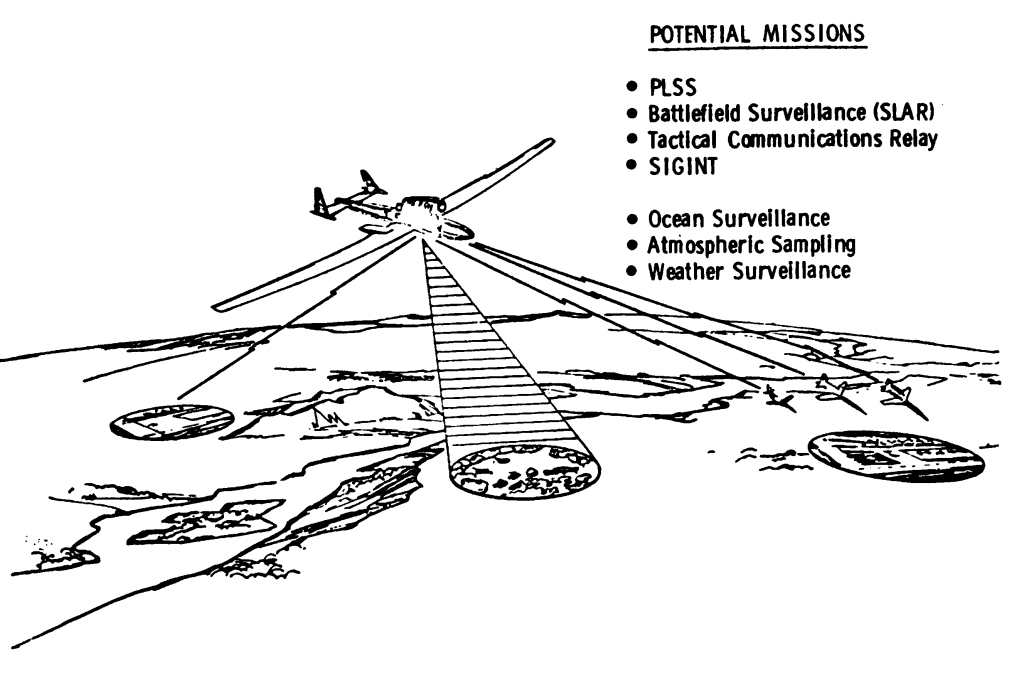
The Zephyr 8 5-kilogram payload capacity supports three principal mission archetypes. First, optical and electro-optical/infrared (EO/IR) Earth observation payloads (marketed by Airbus under the OPAZ and Strat-Observer service brands) can deliver imagery at approximately 18 cm resolution over a 1 km² footprint, with steerability across a 40 by 30 km area, and aggregate daily coverage of approximately 2,500 km² [20][60]. Second, communications payloads can act as a "tower in the sky" providing direct-to-device 4G/5G services with stated coverage of approximately 7,500 km² (corresponding roughly to a 50-kilometre radius) and end-to-end latency materially lower than that of geostationary satellites [20][45][60]. Third, signals intelligence (SIGINT), synthetic aperture radar (SAR), automatic identification system (AIS) tracking, and electronic intelligence (ELINT) payloads have been publicly identified as feasible mission configurations, although specific details of UK MOD payloads remain restricted [18][19] [41].
4.5 Launch, recovery, and ground operations
Zephyr requires conventional surface infrastructure for launch and recovery. AALTO operates from purpose-built sites it brands as "AALTOPORTs," with the first operational site established in Laikipia County, Kenya (used for both the 2025 13-day debut flight and the subsequent 67-day record flight), and a second site under selection in northern Australia, with construction targeted to begin by mid-2026 [9][41][61]. Earlier flight campaigns operated from Yuma Proving Ground in Arizona (2018-2022 US Army campaigns) and Wyndham airport in Western Australia (2018 2019 UK MOD campaigns) [11][12][62]. The Australian Civil Aviation Safety Authority issued Airbus an authorisation to operate beyond visual line of sight at altitudes from the surface to 90,000 feet over the Wyndham movement area, contingent on issuance of a Notice to Airmen (NOTAM) for operations above 400 feet above ground level [12]. Ground operations involve hand-launch by approximately five personnel, with descent and recovery similarly requiring calm surface wind conditions due to the airframe's structural fragility [56].
4.6 Endurance records and operational limitations
The platform's endurance has progressed from 14 days (2010) to 25 days, 23 hours and 57 minutes (2018), to 64 days (2022, Airbus and US Army-corroborated), to the current 67-day, 6 hour, 52-minute world record (2025, corroborated by Amprius and trade publications including Aviation Week and Flight Global) [4][8][10][31]. Independent observers note that the 2022 and 2025 record flights both ended in airframe loss, indicating that the platform's reliability remains a function of weather exposure and battery cycle life rather than structural longevity. Royal Aeronautical Society analysis published shortly after the 2022 loss specifically identified the practical endurance limit as a function of battery efficiency over multiple discharge-recharge cycles, noting that the cells must function for the equivalent of "satellite reliability" rather than that of conventional aviation components [13]. AALTO's stated near-term aspiration is a 3,000 hour (approximately four-month) flight, with the company describing 200 days as a longer-term target; the available record does not yet permit an independent assessment of whether this is achievable on the current Zephyr 8 airframe [56].
5. Economic and Market Dynamics
5.1 HAPS market sizing and growth projections
Estimates of the HAPS market size diverge widely across reputable industry sources, reflecting the technology's pre-commercial state. MarknTel Advisors valued the HAPS market at approximately USD 99 million in 2024, with a projection to USD 240 million by 2030 (16 percent compound annual growth rate, or CAGR) [22]. Mordor Intelligence estimated the HAPS market at approximately USD 102 million in 2026, projecting USD 256 million by 2031 (20.13 percent CAGR) [24]. Grand View Research valued the broader high-altitude platforms market at USD 1.54 billion in 2023 (an order of magnitude larger), projecting USD 2.66 billion by 2030 (8.4 percent CAGR) [63]. Dataintelo's higher-end estimate placed the market at USD 8.6 billion in 2025, growing to USD 24.3 billion by 2034 [64]. The order-of-magnitude divergence reflects definitional differences (some estimates include only solar UAVs while others encompass airships, balloons, and ground-based equipment) and should be treated as illustrative rather than authoritative. Evidence on the precise total addressable market remains contested in publicly available literature.
5.2 Cost structure relative to satellites and conventional UAS
Defense News reporting in 2018 placed the unit cost of a Zephyr at "more than USD 5 million," compared with USD 50 million to USD 400 million for a comparable orbital satellite mission [65]. A 2023 US Naval Institute Proceedings analysis cited a 2016 estimate of USD 10 million to USD 20 million per Zephyr unit, though Airbus indicated those figures were dated and that revised lower estimates were forthcoming; updated unit pricing is not publicly disclosed [19]. Mordor Intelligence's 2025 industry analysis estimated platform-level capital expenditure across the HAPS sector at USD 10 million to USD 50 million per unit, compared with USD 500 million to USD 5 billion for a replenishable LEO satellite constellation, with operating costs of USD 1,000 to USD 5,000 per flight hour [24]. Whether these figures reflect Zephyr specifically or industry averages is not specified; readers should treat them as indicative.
5.3 Revenue models
AALTO's commercial model, as publicly described, comprises three principal revenue streams. The first is government and defence service contracts, including UK MOD Project Aether work and US Army APNT/Space CFT engagements [13][42]. The second is connectivity-as-a-service agreements with mobile network operators, prominently the multi-year arrangement with NTT DOCOMO and Space Compass targeting Japanese commercial entry-into-service in 2026 [16] [17]. The third is Earth observation services delivered under the Airbus Strat-Observer brand, leveraging Zephyr as one of several possible platforms for the underlying optical payload [60]. AALTO has publicly described an operational model based on "pay-per-mission" services rather than platform sales, although a specific source confirming this commercial structure as Airbus or AALTO official policy could not be verified beyond secondary trade reporting.
5.4 Investment landscape and capital intensity
The most material publicly documented external investment is the USD 100 million Japanese consortium commitment of June 2024 [16][17]. Beyond this, Wall Street Journal reporting (cited in industry trade press) indicated that AALTO's chief executive considered an initial public offering in the medium term, although no concrete IPO timetable has been publicly announced [39]. Airbus Defence and Space remains the controlling shareholder; the 2024 Japanese investment closed in 2024 subject to regulatory approvals through HAPS JAPAN Corporation [17]. By comparison, Sceye received New Mexico state economic development funding of up to USD 5 million when it located there [36], and SoftBank's HAPSMobile spend on the Sunglider programme had reached approximately USD 129 million by 2019 before HAPSMobile was absorbed into SoftBank in October 2023 [34][66]. The capital intensity of the HAPS sector therefore appears modest relative to LEO satellite manufacturing, but high relative to conventional UAS development, with AALTO benefiting from Airbus's incumbent industrial platform.
5.5 Adjacent market interactions
The principal adjacency is with non-terrestrial networks (NTN) within 5G and emerging 6G architectures, where HAPS occupies a layer between terrestrial macro-towers and LEO/GEO satellites. NTT DOCOMO, in its public partnership with AALTO, characterises HAPS as a key element of a "space-based radio access network" and as complementary rather than competitive with LEO assets [45]. Industry analysis suggests that LEO constellations (Starlink, OneWeb, Amazon Project Kuiper) are inefficient for sustained, geographically-targeted regional service because their capacity is "spread uniformly" across the orbital plane; HAPS, by contrast, can concentrate capacity over a defined area for prolonged periods [29]. Latency comparison favours HAPS: round-trip signal latency from a 20-kilometre stratospheric platform is below 1 millisecond, compared with approximately 20 to 40 milliseconds for typical LEO and approximately 600 milliseconds for geostationary satellites [64]. However, LEO providers benefit from substantially deeper deployed capacity, demonstrated commercial track record, and significantly larger end-user bases, against which HAPS players must position as a complementary rather than substitute service.
6. Regulatory Landscape
6.1 ICAO and national aviation authority frameworks for stratospheric operations
Civil aviation regulation of HAPS remains in formative development. EASA's 2024 review of higher airspace operations (HAO) identified that traditional airspace classification frameworks are not designed for stratospheric vehicles operating above flight level (FL) 600, and the European SESAR ECHO project together with the HAPS Alliance Aviation Working Group are developing concepts of operation specifically for this domain [52][53]. A peer-reviewed analysis in the CEAS Aeronautical Journal observed that HAPS, when descending through ICAO Class A or Class C airspaces, must comply with either Instrument Flight Rules or Visual Flight Rules, neither of which has been adapted to unmanned, ultra-lightweight stratospheric aircraft [67]. AALTO's UK CAA Design Organisation Approval of 25 July 2024 is the first such approval issued to a HAPS company by the UK CAA and is a prerequisite for the Type Certification of the Zephyr Z8 that AALTO is now pursuing in support of its 2026 commercial entry-into-service [15][68].
6.2 Spectrum allocation and ITU coordination (WRC-19 outcomes for HAPS)
The 2019 World Radiocommunication Conference (WRC-19) produced the principal HAPS-specific spectrum allocations currently in force. Allocations to the fixed service in the bands 31-31.3 GHz and 38-39.5 GHz were identified for worldwide use by HAPS, and existing identifications in 47.2-47.5 GHz and 47.9-48.2 GHz were confirmed [51][69]. In ITU Region 2 (the Americas), the bands 21.4-22 GHz and 24.25-27.5 GHz were additionally identified for HAPS use in the fixed service, on a sharing basis with fixed-satellite services already operating in those bands [51][70]. Subsequent WRC processes have considered additional bands (notably the 700-900 MHz, 1.7 GHz and 2.6 GHz mobile spectrum bands as IMT base stations on HAPS), although the precise treaty status of these later identifications requires verification against the relevant Final Acts and remains evolving in publicly available sources [55].
6.3 Airspace integration challenges
The principal airspace integration challenge for Zephyr is the climb and descent through controlled airspace (Class A) and the transition layers to and from the stratosphere [56][67]. Above FL600, civil airspace is largely unregulated and lightly trafficked, but the ascent typically takes approximately eight hours and exposes the airframe to convective weather, jet-stream gradients, and conventional commercial air traffic [13][56]. The ATSB final report on the September 2019 Zephyr loss explicitly identified the climb phase through 8,000 feet as the locus of the uncommanded turns and subsequent in-flight break-up [12]. National aviation authorities have addressed this through segregated airspace authorisations, NOTAM publication, and beyond-visual-line-of-sight permits, but these remain ad hoc rather than standardised arrangements.
6.4 Export controls and dual-use considerations
Specific export-control treatment of the Zephyr platform has not been comprehensively disclosed in publicly available literature. The platform's capability to host SIGINT, ELINT, and high-resolution Earth observation payloads, and its participation in UK MOD and US Army programmes, suggest that sensitive payload integration would fall under UK and US export control regimes (including the UK Strategic Export Control Lists and the US International Traffic in Arms Regulations or the Export Administration Regulations, depending on the payload) and the multilateral Wassenaar Arrangement and Missile Technology Control Regime where applicable. A specific source enumerating Zephyr-specific export control classifications could not be verified.
7. Geopolitical and Strategic Dimensions
7.1 Sovereign capability and strategic autonomy considerations for European defense
Zephyr's UK-based design and manufacturing footprint, its UK MOD heritage, and its Airbus parentage position it as a sovereign European stratospheric capability at a moment when European defence planners are increasingly concerned about reliance on US-controlled space based ISR and connectivity assets [71]. AALTO CEO Hughes Boulnois noted publicly in 2025 that "many countries now... are looking at HAPS in general but us in particular, because they are relying on technology that is not European or sovereign-controlled" [9]. The platform's position within the wider Airbus Defence and Space portfolio, alongside the Airbus-owned Surrey Satellite Technology Limited (SSTL) supplying the UK Space Command's separate Project Tyche LEO ISR satellite, illustrates Airbus's positioning as a multi-domain ISR provider [72].
7.2 Persistent ISR and the changing reconnaissance paradigm
A US Naval Institute Proceedings analysis published in February 2023 argued that HAPS "fill a niche between more capable but more vulnerable, shorter-range air-breathing assets and expensive satellites that are better protected but lack flexibility, numbers, and replaceability" [19]. The persistence parameter is the critical differentiator: a Zephyr can loiter on station over a defined area for tens of days, an unattainable mission profile for either a Reaper-class medium altitude long-endurance UAS or for a satellite in any orbital regime [18][19]. The strategic implication is a shift from episodic, satellite-tasked reconnaissance towards continuous, area-of interest persistent stare, with a payload mix that can be physically refreshed between missions, an option not available to operational satellites.
7.3 Connectivity for underserved regions and digital sovereignty
The connectivity case for HAPS, particularly in Sub-Saharan Africa, the Indo-Pacific archipelagic states, and remote Latin American and Andean regions, rests on the platform's ability to extend cellular coverage at substantially lower marginal cost than conventional terrestrial tower deployment. AALTO's selection of Kenya for its first operational AALTOPORT, conducted in cooperation with the Kenya Space Agency and the Kenya Civil Aviation Authority, illustrates the model: a single Zephyr is described in industry literature as offering a coverage footprint equivalent to approximately 200 to 250 conventional cellular towers [46][73]. The March 2025 Kenya demonstration with Space Compass and NTT DOCOMO served approximately 1,000 users across a 140-kilometre coverage radius, providing some empirical validation, though at modest throughput (above 4.66 Mbps) [24][45]. For digital sovereignty, the implication is that nations can lease HAPS-based connectivity from European or Japanese providers as an alternative to depending on US-based LEO megaconstellations.
7.4 Comparative national HAPS programs
The most substantively documented non-Western HAPS programme is China's, where the AVIC Qimingxing-50 first flew on 3 September 2022 from Yulin, Shaanxi province, with a wingspan of 50 metres and twin-fuselage configuration; AVIC has stated objectives of stratospheric flight at altitudes exceeding 20 kilometres for ostensibly civilian missions but with clear potential for ISR and communications relay [25][26][74]. Earlier Chinese programmes from China Aerospace Science and Technology Corporation and China Aerospace Science and Industry Corporation have produced solar-powered drones capable of flight in near space [25]. Japan's HAPS effort has shifted from the AeroVironment-built HAPSMobile Sunglider (now consolidated into SoftBank Corp.) to the AALTO-NTT DOCOMO partnership using Zephyr [16][34]. Other state-affiliated programmes include the United Arab Emirates' Bayanat-G42 stake in Mira Aerospace (the ApusDuo/ApusNeo platforms) [37], India's Larsen and Toubro solar HAP announced in February 2024 [63], and Russia's Lavochkin design bureau's LA-252 (an 82-foot wingspan, 255 pound solar UAV designed for 100-day stratospheric flight, status uncertain in publicly available sources) [27].
7.5 Implications for contested airspace and great-power competition
Zephyr's stratospheric operating altitude provides limited protection against modern air defence systems. While 60,000 to 70,000 feet remains above the engagement envelope of most short and medium-range surface-to-air missiles, modern long-range and high-altitude systems (including Russian S-400 and Chinese HQ-9 derivatives) are capable of reaching the stratosphere [19]. Strategic competitors have also publicly invested in directed-energy systems, including high-power microwaves and laser dazzlers, that could disable HAPS electronics from beyond conventional missile range [19]. A US Naval Institute analysis concluded that HAPS "are not completely immune" to such threats and would best be employed in support of expeditionary advanced base operations from outside contested anti-access/area-denial bubbles, a role for which the platform's persistence and connectivity capabilities are particularly suited [19].
8. Structured Risk Matrix
This section aggregates the principal categories of risk to the Zephyr program and the broader AALTO commercial proposition. For each category, probability is assessed against publicly documented precedent, severity against demonstrated programmatic impact, and mitigation posture against publicly stated AALTO actions.
8.1 Technical and operational risks
8.1.1 Installation and ground-handling failures
Probability: Moderate. Severity: Moderate.
The Zephyr 8 must be hand-launched by a coordinated five-person team, and its near-zero structural margin makes it intolerant of ground handling errors. Trade-press accounts of the 15 March 2019 Australia loss describe a crash near Wyndham within hours of take-off attributed to "severe adverse weather" during the launch sequence [62]. Mitigation posture rests primarily on weather-window discipline and the introduction of a 30 percent-scale "low-level test article" used by AALTO for pre-deployment validation [4][41]. Historical precedent supports characterising launch-phase risk as a principal residual exposure rather than a residual but resolved engineering issue.
8.1.2 Battery fires and thermal runaway events
Probability: Low to Moderate. Severity: High
The Zephyr's batteries (currently Amprius silicon-anode lithium-ion, previously Sion Power lithium-sulfur) operate across an extreme temperature range from approximately minus 60°C to 50°C and undergo deep daily discharge-recharge cycles for up to 67 days [27][57][58]. The lithium-sulfur chemistry historically used by Zephyr has been observed in industry literature to suffer from polysulphide shuttle and capacity fade under deep cycling, while silicon-anode lithium-ion cells require careful thermal management to prevent dendritic instability and runaway [57]. AALTO's "soft termination" protocol disables battery charging in emergency descent specifically to mitigate post-crash fire risk, as documented in the ATSB's 2019 final report [12]. No publicly documented battery fire event has been confirmed in flight, but given the platform's exposure to combinations of thin-air convective cooling failure and sustained discharge demand, evidence suggests this remains a category-of-concern risk that has not yet materialised.
8.1.3 Lightning strikes and convective weather encounters
Probability: Moderate during climb and descent; low at cruise. Severity: Catastrophic
Royal Aeronautical Society analysis explicitly identifies the climb and descent phases through tropospheric convective weather as the period of greatest exposure to catastrophic loss [13]. Once at stratospheric altitude, the airframe is largely above weather, although jet-stream encounters can pose station-keeping difficulties [56]. Mitigation rests on launch-site selection (favouring sites with reliable weather such as northern Australia and equatorial Kenya), real-time atmospheric forecasting integrated into mission planning, and the soft-termination protocol [4][12][41].
8.1.4 Faulty equipment, structural failure, and the documented Zephyr loss events
Probability: Demonstrated in three publicly documented events plus the 2025 controlled termination. Severity: Catastrophic
The 15 March 2019 loss near Wyndham occurred approximately four hours into an experimental demonstration flight, attributed by Airbus to severe adverse weather; the airframe was UK MOD-owned and Airbus has not publicly confirmed whether it was repairable [62]. The 28 September 2019 loss of Z8B-03, also from Wyndham, is the subject of the most thoroughly documented public investigation: the ATSB final report determined that during climb through 8,000 feet, the aircraft experienced uncommanded turns of 14 to 17 degrees, self-recovered twice, and then entered an uncontrolled spiral descent on the third upset, exceeding structural limits and breaking up in flight; the rudder was never recovered [12]. The 19 August 2022 loss of Z8-2 (callsign ZULU82) over the Kofa National Wildlife Refuge near Yuma, Arizona, occurred after 64 days of flight; ADS-B tracking showed the aircraft descending at rates topping 4,544 feet per minute [11][13]. Airbus subsequently attributed this event to the failure of "one engine component (redesigned since)" in unusual high-altitude storm turbulence at 17 kilometres [27]. No National Transportation Safety Board public final report on this event was located in the available record. The 28 April 2025 termination over the Indian Ocean ended the 67-day record flight; AALTO has described it as a controlled descent into a designated aviation sanctuary area, with the cause not publicly disclosed pending investigation [9][10]. Mitigation rests on structural redesign of identified failure points (per Airbus's reference to the redesigned engine component) and on continued airworthiness investment under the UK CAA Design Organisation Approval framework [15].
8.1.5 Stratospheric turbulence and jet stream exposure
Probability: Continuous during all flight phases; severity variable.
Stratospheric winds in mid latitudes typically peak at 30 to 40 knots and average approximately 20 knots, but polar vortex winds can reach 130 knots [56]. Given Zephyr's 12-knot indicated airspeed cruise, station keeping is genuinely challenging in adverse wind regimes and the platform's freedom of manoeuvre is constrained. The 2025 record flight specifically included two crossings of the Intertropical Convergence Zone, an aerologically active region, demonstrating some increased robustness; AALTO has framed this as evidence of platform maturity [9].
8.2 Programmatic and financial risks
Probability: Moderate. Severity: Material.
AALTO's path to commercial entry-into-service in 2026 rests on the conjunction of UK CAA Type Certification, customer mission delivery, and the build-out of a second AALTOPORT in northern Australia [15][41]. Any material delay to certification, or a recurrence of catastrophic in-flight loss prior to certification, would likely defer commercial revenue and increase the cash burn against the USD 100 million Japanese investment runway [16]. Airbus's continued majority ownership provides funding stability but also subjects AALTO to parent-company portfolio prioritisation. Publicly available evidence does not yet permit a definitive assessment of AALTO's standalone viability outside Airbus group support.
8.3 Regulatory and certification risks
Probability: Moderate. Severity: Material.
The Type Certification of an ultra-lightweight, autonomous stratospheric aircraft is unprecedented in Western jurisdictions, and the relevant standards (CS-23, ASTM consensus standards, FAA Part 23) were not designed for HAPS [54] [67]. The HAPS Alliance has formally requested that regulators adopt a "scalable and holistic" approach combining airworthiness, operational, airspace, and personnel approvals; this remains an aspiration rather than an in-force regulatory framework [54]. Spectrum coordination beyond the WRC-19 allocations remains a continuing process at successive World Radiocommunication Conferences [51][55]. Cross-border operations such as the 2022 Yuma-Belize transit and the 2025 Kenya-Australia transit currently rely on bilateral arrangements rather than harmonised ICAO standards [9][30].
8.4 Geopolitical and customer-concentration risks
Probability: Moderate. Severity: Material.
AALTO's revenue concentration is currently weighted towards UK MOD, US Army, and the Japanese consortium led by NTT DOCOMO [13][16][42]. Any material change in UK or US defence procurement priorities, or in Japan's NTN strategy, would have outsized programme impact. Conversely, expansion into European, Middle Eastern, and Latin American markets, while flagged by AALTO leadership, remains aspirational [9]
8.5 Competitive and technology-substitution risks
Probability: High. Severity: Variable.
Zephyr competes against three principal substitution threats: (a) BAE Systems' PHASA-35, with a substantially greater 15-kilogram payload capacity targeting operational availability from 2026-2027 [32][33]; (b) lighter-than-air HAPS such as Sceye's SE2, with much higher payload capacity and demonstrated 12-day endurance [36]; and (c) LEO direct-to-cell satellite constellations from Starlink, OneWeb, and AST SpaceMobile, which have substantially deeper deployed capacity and demonstrated commercial revenue. Industry analysis suggests that HAPS will likely complement rather than substitute for LEO, but the specific commercial split between the layers is not yet determined [29][64].
9. Strategic Recommendations
9.1 Recommendations for institutional investors and capital allocators
For institutional investors considering exposure to AALTO directly (in a possible future IPO scenario flagged by AALTO leadership in 2024 trade press) or to upstream suppliers, the following considerations apply [39]. First, treat 2026 entry-into-service as an aspiration rather than a base-case timeline, given the unprecedented certification pathway and the demonstrated loss-event history. Second, model revenue ramp scenarios against the Japanese consortium's stated launch in 2026 and against the demonstrated reality that approximately 12 Zephyr 8 airframes have been built across the program's lifetime, with three lost in-flight events plus the 2025 controlled termination [4][9][12]. Third, evaluate exposure to Amprius Technologies (NYSE: AMPX) as the principal battery supplier, where the 2025 flight provides a significant performance validation that is likely to support broader commercial adoption of silicon-anode chemistry in adjacent UAS markets [10][57]. Fourth, recognise that competing market sizing estimates differ by an order of magnitude across reputable sources, and apply commensurate discount factors to forward-looking revenue projections.

9.2 Recommendations for defense and government policymakers
For defence ministries and policymakers, four recommendations follow. First, treat HAPS as a complementary rather than substitute layer in multi-domain ISR architectures, deploying it specifically for missions where persistence over a defined area exceeds the duration achievable with crewed or conventional unmanned aircraft. Second, invest in payload modularity: the Zephyr 8's 5-kilogram payload limit is materially below that of competing platforms, and procurement should be sized accordingly, potentially in mixed fleets including PHASA-35 (15 kilograms) and lighter-than-air HAPS for heavier sensor packages [32][36]. Third, support multilateral certification harmonisation through ICAO and the HAPS Alliance to avoid the current ad hoc bilateral airspace arrangements that constrain operational flexibility [54][55]. Fourth, address the contested-airspace gap in HAPS doctrine, recognising that current platforms are not survivable against modern long-range air-defence systems and that their operational concept must be developed accordingly [19].
9.3 Recommendations for telecommunications operators and infrastructure planners
For mobile network operators evaluating HAPS partnerships, three recommendations emerge. First, structure pilot programmes around defined coverage gaps (rural, mountainous, archipelagic) rather than as substitutes for terrestrial macro-tower deployment in dense markets, where HAPS economics are not yet competitive. Second, pursue regulatory engagement on WRC-23 and WRC-27 spectrum allocations specifically supporting direct-to device 4G/5G operations, where the WRC-19 fixed-service allocations (notably 31-31.3 GHz and 38-39.5 GHz globally) are insufficient for consumer mobile services [51]. Third, treat the 2025 Space Compass-NTT DOCOMO 4.66 Mbps Kenya demonstration as a proof-of-concept rather than a commercial benchmark, and structure agreements with AALTO and competitor providers around throughput, latency, and availability metrics that can be independently validated [45].
10. Conclusion and Forward Outlook
The Airbus Zephyr program, now operating under the AALTO HAPS subsidiary, has progressed in 2024 and 2025 from a research demonstrator into a near-commercial platform with demonstrated 67-day endurance, UK CAA Design Organisation Approval, USD 100 million in committed Japanese investment, and operational launch sites in Kenya and (planned) northern Australia [9][15][16][41]. The program's principal residual risks are the demonstrated fragility of the airframe (three losses in three years across 2019-2022, plus the 2025 controlled termination), the dependence on a single Japanese commercial customer for near-term revenue, and the unsettled regulatory framework for stratospheric Type Certification and airspace integration. Its principal strategic value is by providing a sovereign European stratospheric capability complementary to LEO and GEO satellite constellations, in offering persistent ISR and connectivity over defined areas of operation, and in serving as a lower-cost alternative to bespoke satellite missions for governments and operators with focused regional requirements. Whether AALTO can deliver on its 2026 commercial entry-into-service target, whether the platform's loss-event rate can be brought within commercial insurance norms, and whether the broader HAPS market can scale to match the more optimistic industry forecasts, all remain open questions that the available record does not yet permit to be answered definitively. The program merits continued close attention from defence planners, telecommunications strategists, and institutional investors, but should be evaluated against a realistic appraisal of its demonstrated rather than promised performance.
References
Sure! Here it is:
[1] Aerospace America. (2024). Meet the next pseudo satellites. Aerospace America. https://aerospaceamerica.aiaa.org/features/meet-the-next-pseudo-satellites/
[2] Aerospace Testing International. (2020, November). Airbus Zephyr high altitude persistent drone concludes 2020 test flight campaign. Aerospace Testing International. https://www.aerospacetestinginternational.com/news/drones-air-taxis/airbus-zephyr-high-altitude-persistent-drone-concludes-test-flight-campaign.html
[3] Aerospace Testing International. (2023). Airbus brands stratospheric drone business as Aalto. Aerospace Testing International. https://www.aerospacetestinginternational.com/news/drones-air-taxis/airbus-brands-stratospheric-drone-zephyr-business-as-aalto.html
[4] Airbus. (2024, June 3). NTT DOCOMO and Space Compass partners with Airbus on HAPS, committing to a USD$100 million investment in AALTO [Press release]. https://www.airbus.com/en/newsroom/press-releases/2024-06-ntt-docomo-and-space-compass-partners-with-airbus-on-haps
[5] Airbus. (2025). Zephyr high altitude platform station (HAPS). Airbus Defence and Space. https://www.airbus.com/en/products-services/defence/uas/zephyr
[6] Airforce Technology. (2018). PHASA-35 solar-powered HALE UAV. Airforce Technology. https://www.airforce-technology.com/projects/phasa-35-solar-powered-hale-uav/
[7] Airforce Technology. (2019, October). Second Airbus Zephyr UAS crashes during a test flight. Airforce Technology. https://www.airforce-technology.com/news/second-airbus-zephyr-uas-crashes-during-a-test-flight/
[8] Airforce Technology. (2022). Zephyr S high-altitude pseudo-satellite (HAPS). Airforce Technology. https://www.airforce-technology.com/projects/zephyr-s-high-altitude-pseudo-satellite-haps/
[9] Amprius Technologies. (2018, December 4). Amprius silicon nanowire lithium-ion batteries power Airbus Zephyr S HAPS solar aircraft [Press release]. https://amprius.com/amprius-silicon-nanowire-lithium-ion-batteries-power-airbus-zephyr-s-haps-solar-aircraft/
[10] Amprius Technologies. (2025, May 21). AALTO Zephyr achieves world-record 67-day flight powered by Amprius ultra-high-energy batteries [Press release]. https://amprius.com/aalto-zephyr-achieves-world-record-67-day-flight-powered-by-amprius-ultra-high-energy-batteries/
[11] Australian Transport Safety Bureau. (2020). In-flight break-up involving Airbus Zephyr unmanned aerial vehicle, near Wyndham Airport, Western Australia, on 28 September 2019 (Investigation Report AO-2019-056). https://www.atsb.gov.au/publications/investigation_reports/2019/aair/ao-2019-056
[12] Aviation A2Z. (2022, August 21). The Airbus Zephyr crash down in Arizona: Exclusive. Aviation A2Z. https://aviationa2z.com/index.php/2022/08/21/the-airbus-zephyr-crash-down-in-arizona-exclusive/
[13] Aviation News Europe. (2026, February). Airbus subsidiary AALTO HAPS to establish stratospheric hub in northern Australia. Aviation News Europe. https://aviationnews.eu/news/2026/02/airbus-subsidiary-aalto-haps-to-establish-stratospheric-hub-in-northern-australia/
[14] Aviation Week Network. (2024, June). Japanese consortium invests in Airbus-owned HAPS provider Aalto. Aviation Week Network. https://aviationweek.com/defense/aircraft-propulsion/japanese-consortium-invests-airbus-owned-haps-provider-aalto
[15] Aviation Week Network. (2025, April). Sceye flies 12-day, high-altitude airship mission to Brazil. Aviation Week Network. https://aviationweek.com/aerospace/aircraft-propulsion/sceye-flies-12-day-high-altitude-airship-mission-brazil
[16] Aviation Week Network. (2025, May). Zephyr claims flight endurance record after 67-day sortie. Aviation Week Network. https://aviationweek.com/space/satellites/zephyr-claims-flight-endurance-record-after-67-day-sortie
[17] BAE Systems. (2020, February). PHASA-35 first flight. BAE Systems Newsroom. https://www.baesystems.com/en/article/ground-breaking-solar-powered-unmanned-aircraft-makes-first-flight
[18] BAE Systems. (2024). PHASA-35. https://www.baesystems.com/en/product/phasa-35
[19] Breaking Defense. (2022, July 22). After setting ultra-endurance record, Army Zephyr drone keeps flying, whether it wants to or not. Breaking Defense. https://breakingdefense.com/2022/07/after-setting-ultra-endurance-record-army-zephyr-drone-keeps-flying-whether-it-wants-to-or-not/
[20] Capacity Media. (2023, January). Airbus relaunches flying base station business as Aalto HAPS. Capacity Media. https://www.capacitymedia.com/article/2b6pgcjmu9djmyudewzy8/news/airbus-relaunches-flying-base-station-business-as-aalto-haps
[21] Chemical & Engineering News. (2019). In the battery materials world, the anode's time has come. C&EN. https://cen.acs.org/materials/energy-storage/battery-materials-world-anodes-time/97/i14
[22] CompositesWorld. (2024). Aalto HAPS extends Zephyr UAS connectivity to the Caribbean. CompositesWorld. https://www.compositesworld.com/news/aalto-haps-extends-zephyr-uas-connectivity-to-the-caribbean
[23] CompositesWorld. (2025, November). Uavos, Mira Composites perform test flight of ApusNeo HAPS aircraft. CompositesWorld. https://www.compositesworld.com/news/uavos-mira-composites-perform-test-flight-of-apusneo-haps-aircraft
[24] Data Bridge Market Research. (2025). High altitude platforms market – global market size, share, and trends analysis report. https://www.databridgemarketresearch.com/reports/global-high-altitude-platforms-market
[25] Data Center Dynamics. (2022). Airbus to spin-out Zephyr HAPS business as a separate company. Data Center Dynamics. https://www.datacenterdynamics.com/en/news/airbus-to-spin-out-zephyr-haps-business-as-a-seperate-company/
[26] Data Center Dynamics. (2022). Airbus high-altitude drone crashes in Arizona desert. Data Center Dynamics. https://www.datacenterdynamics.com/en/news/airbus-high-altitude-drone-crashes-in-arizona-desert/
[27] Data Center Dynamics. (2023). BT and Stratospheric Platforms trial high-altitude 5G in the UK. Data Center Dynamics. https://www.datacenterdynamics.com/en/news/bt-and-stratospheric-platforms-trial-high-altitude-5g-in-the-uk/
[28] Data Center Dynamics. (2023). Mira Aerospace completes HAPS test flight in Rwanda. Data Center Dynamics. https://www.datacenterdynamics.com/en/news/mira-aerospace-completes-haps-test-flight-in-rwanda/
[29] Data Center Dynamics. (2024, October). SoftBank conducts HAPS trial flight for next generation Sunglider platform. Data Center Dynamics. https://www.datacenterdynamics.com/en/news/softbank-conducts-haps-trial-flight-for-next-generation-sunglider-platform/
[30] Dataintelo. (2026). High-altitude platform stations (HAPS) market research report 2034. https://dataintelo.com/report/high-altitude-platform-stations-market
[31] Defense News. (2022, July 22). Up, up and away: Airbus' Zephyr drone breaks flight record high above Arizona. Defense News. https://www.defensenews.com/unmanned/2022/07/22/up-up-and-away-airbus-zephyr-drone-breaks-flight-record-high-above-arizona/
[32] DroneXL. (2024, April 4). Airbus's high-flying drone unit eyes potential IPO. DroneXL. https://dronexl.co/2024/04/04/airbus-drone-unit-ipo/
[33] EASA. (2024). Preparatory action on higher airspace operations (HAO). https://www.easa.europa.eu/en/downloads/142425/en
[34] Engineer, The. (2024). Zephyr high-altitude solar powered aircraft gears up for commercial service. The Engineer. https://www.theengineer.co.uk/content/in-depth/zephyr-high-altitude-solar-powered-aircraft-gears-up-for-commercial-service
[35] Eurocontrol. (2024). Regulatory perspectives on emerging higher airspace users. https://www.eurocontrol.int/article/regulatory-perspectives-emerging-higher-airspace-users
[36] Flight Global. (2019, April). Analysis: Zephyr soars high despite Australia crash. Flight Global. https://www.flightglobal.com/analysis/analysis-zephyr-soars-high-despite-australia-crash/132259.article
[37] Flight Global. (2020, September). Turbulence again blamed for loss of second Zephyr UAV in Australia. Flight Global. https://www.flightglobal.com/military-uavs/turbulence-again-blamed-for-loss-of-second-zephyr-uav-in-australia/140339.article
[38] Flight Global. (2024). BAE details latest test success with high-flying PHASA-35. Flight Global. https://www.flightglobal.com/defence/bae-details-latest-test-success-with-high-flying-phasa-35/161180.article
[39] Flight Global. (2025, May). AALTO buoyed by Zephyr's record 67-day flight, despite vehicle's loss. Flight Global. https://www.flightglobal.com/aerospace/aalto-buoyed-by-zephyrs-record-67-day-flight-despite-vehicles-loss/162847.article
[40] Flight Global. (2026, February). Airbus AALTO closes on Australian site for second Zephyr launch location. Flight Global. https://www.flightglobal.com/aerospace/airbus-aalto-closes-on-australian-site-for-second-zephyr-launch-location/166338.article
[41] Future Warfare Magazine. (2025). High altitude balloons 'constellation' tested by the UK MoD under Project AETHER. Future Warfare Magazine. https://www.fw-mag.com/shownews/661/high-altitude-balloons-ldquo-constellation-rdquo-tested-by-the-uk-mod-under-project-aether
[42] Government of China. (2022, September 5). Solar-powered high-altitude drone makes maiden flight. https://english.www.gov.cn/news/topnews/202209/05/content_WS63155495c6d0a757729df9e2.html
[43] Grand View Research. (2024). High altitude platforms market size & share report, 2030. https://www.grandviewresearch.com/industry-analysis/high-altitude-platforms-market-report
[44] HAPS Alliance. (2021). Bridging the digital divide with aviation in the stratosphere [White paper]. https://hapsalliance.org/wp-content/uploads/formidable/12/SpA_Flight_Communication_Tests_White_Paper_English_Final_2021.pdf
[45] HAPS Alliance. (2024, February). HAPS certification pathways [White paper]. https://hapsalliance.org/wp-content/uploads/formidable/12/HAPS_Certification_Pathways_2024-3.pdf
[46] IEEE Spectrum. (2025). Sceye and SoftBank test high-altitude platform station. IEEE Spectrum. https://spectrum.ieee.org/sceye-high-altitude-platform-station
[47] International Telecommunication Union. (2020). WRC-19 identifies additional frequency bands for high altitude platform station systems. ITU. https://www.itu.int/hub/2020/02/wrc-19-identifies-additional-frequency-bands-for-high-altitude-platform-station-systems/
[48] International Telecommunication Union. (2019). WRC-19 wrap-up: Additional spectrum allocations agreed for IMT-2020 (5G mobile). https://techblog.comsoc.org/2019/11/22/wrc-19-wrap-up-additional-spectrum-allocations-agreed-for-imt-2020-5g-mobile/
[49] Janes. (2022, October). Airbus, UK MoD cites Zephyr trials success on path to 'operationalising pseudo satellite.' Janes. https://www.janes.com/osint-insights/defence-news/air/airbus-uk-mod-cites-zephyr-trials-success-on-path-to-operationalising-pseudo-satellite
[50] Janes. (2023, September). UK stratospheric HAPS project enters next phase. Janes. https://www.janes.com/osint-insights/defence-news/defence/uk-stratospheric-haps-project-enters-next-phase
[51] Janes. (2024, July 25). Farnborough 2024: Zephyr HAPS receives CAA approval. Janes. https://www.janes.com/osint-insights/defence-news/air/farnborough-2024-zephyr-haps-receives-caa-approval
[52] Marketdataforecast. (2025). High-altitude pseudo satellites market size & share, 2034. https://www.marketdataforecast.com/market-reports/high-altitude-pseudo-satellites-market
[53] Marknetel Advisors. (2024). High altitude pseudo satellites (HAPS) market size & forecast to 2030. https://www.marknteladvisors.com/research-library/high-altitude-pseudo-satellites-market.html
[54] Mobile World Live. (2024, June). Docomo, partners invest $100M in HAPS supplier. Mobile World Live. https://www.mobileworldlive.com/docomo/docomo-partners-invest-100m-in-haps-supplier
[55] Mordor Intelligence. (2026). High altitude pseudo satellites market report 2031. https://www.mordorintelligence.com/industry-reports/high-altitude-pseudo-satellites-market
[56] NASA. (2021). Sunglider builds on legacy of solar aircraft. NASA. https://www.nasa.gov/centers-and-facilities/armstrong/sunglider-builds-on-legacy-of-solar-aircraft/
[57] NBC News. (2018). This 'pseudo-satellite' drone can fly 70,000 feet up in the sky. NBC News. https://www.nbcnews.com/mach/science/pseudo-satellite-drone-can-fly-70-000-feet-sky-ncna894071
[58] NTT DOCOMO. (2025, March 3). Space Compass and NTT DOCOMO successfully demonstrate data connectivity to 4G devices via HAPS at 20 km above Kenya [Press release]. https://www.docomo.ne.jp/english/info/media_center/pr/2025/0303_01.html
[59] Overt Defense. (2022, August 20). Airbus Zephyr crashes in Arizona. Overt Defense. https://www.overtdefense.com/2022/08/20/airbus-zephyr-crashes-in-arizona/
[60] Pamuk, O., et al. (2020). Operation and operation approval of high-altitude platforms. CEAS Aeronautical Journal, 12, 19–31. https://link.springer.com/article/10.1007/s13272-020-00464-9
[61] Popular Science. (2022). The Army's Zephyr drone has now flown for 40 days. Popular Science. https://www.popsci.com/technology/army-zephyr-drone-sets-records/
[62] Prismatic Limited. (2024). PHASA-35. https://www.prismaticltd.co.uk/phasa-35/
[63] RCR Wireless. (2021). What are HAPS and what role will they play in future networks? RCR Wireless. https://www.rcrwireless.com/20211220/5g/what-are-haps-and-what-role-will-they-play-in-future-networks
[64] RCR Wireless. (2024, June). Docomo-led consortium invests $100 million in HAPS supplier. RCR Wireless. https://www.rcrwireless.com/20240604/featured/docomo-led-consortium-invests-100-million-haps-supplier
[65] Robinson, T. (2020). Hydrogen-powered UAV to fly 'beast' of the world's biggest airborne 5G antenna. Royal Aeronautical Society. https://www.aerosociety.com/news/hydrogen-powered-uav-to-fly-beast-of-the-worlds-biggest-airborne-5g-antenna/
[66] Robinson, T. (2022). Zephyr – down but definitely not out. Royal Aeronautical Society. https://www.aerosociety.com/news/zephyr-down-but-definitely-not-out/
[67] Robinson, T. (2023). Exclusive – BAE Systems' Phasa-35 makes breakthrough stratospheric flight. Royal Aeronautical Society. https://www.aerosociety.com/news/exclusive-bae-systems-phasa-35-makes-breakthrough-stratospheric-flight/
[68] Royal Air Force. (2019). Zephyr and the future of high altitude pseudo-satellites. Air & Space Power Review, 22(2). https://www.raf.mod.uk/what-we-do/centre-for-air-and-space-power-studies/aspr/aspr-vol22-iss2-5-pdf/
[69] Sceye Inc. (2025). About Sceye. https://sceye.com/about-sceye/
[70] SoftBank Corp. (2024, October 2). SoftBank Corp.'s large-scale 'Sunglider' solar HAPS aircraft succeeds in stratospheric flight during field trial conducted by AeroVironment and US Department of Defense [Press release]. https://www.softbank.jp/en/corp/news/press/sbkk/2024/20241002_01/
[71] sUAS News. (2023, April). AALTO HAPS and Space Compass strengthen strategic HAPS partnership by signing contract for 2023 flight. sUAS News. https://www.suasnews.com/2023/04/aalto-haps-and-space-compass-strengthen-strategic-haps-partnership-by-signing-contract-for-2023-flight/
[72] sUAS News. (2025, May). Zephyr sets world-record for longest continuous flight, flying 67 days in stratosphere. sUAS News. https://www.suasnews.com/2025/05/zephyr-sets-world-record-for-longest-continuous-flight-flying-67-days-in-stratosphere/
[73] The Drive / War Zone. (2022). Zephyr drone has been flying for 17 days from Arizona to Belize. The Drive. https://www.twz.com/zephyr-high-flying-drone-has-been-up-for-17-days-as-part-of-army-test
[74] The Drive / War Zone. (2022). China's new super long-endurance drone has flown, mirroring U.S. efforts. The Drive. https://www.twz.com/chinas-new-super-long-endurance-drone-has-flown-mirroring-u-s-efforts
[75] The Register. (2019, October 9). Second MoD Airbus Zephyr spy drone crashes on Aussie test flight. The Register. https://www.theregister.com/2019/10/09/airbus_zephyr_drone_second_crash_australia/
[76] The Register. (2020, September 29). Airbus drone broke up in-flight because it couldn't handle Australian weather. The Register. https://www.theregister.com/2020/09/29/airbus_zephyr_accident_report/
[77] UAVOS. (2023). Mira Aerospace, a joint venture of UAVOS and Bayanat, successfully completed ApusDuo solar aircraft test flight. UAVOS. https://www.uavos.com/mira-aerospace-a-joint-venture-of-uavos-and-bayanat-successfully-completed-apusduo-solar-aircraft-test-flight/
[78] UK Civil Aviation Authority. (2024). Design organisation approvals. https://www.caa.co.uk/commercial-industry/aircraft/airworthiness/organisation-and-maintenance-programme-approvals/design-organisation-approvals/
[79] UK Parliament. (2021). SPDF0011 written evidence submitted by Airbus. House of Commons Defence Committee. https://committees.parliament.uk/writtenevidence/37734/pdf/
[80] Uncrewed Systems Technology. (2024). AALTO Zephyr 8: Development of this solar-powered UAV. Uncrewed Systems Technology. https://www.uncrewed-systems.com/explores-the-development-of-this-solar-powered-uav-engineered-to-deliver-a-variety-of-services-from-the-stratosphere/
[81] US Naval Institute. (2023, February). High-altitude pseudo-satellites are ready for launch. Proceedings, 149(2/1,440). https://www.usni.org/magazines/proceedings/2023/february/high-altitude-pseudo-satellites-are-ready-launch
[82] Via Satellite. (2024, July 25). Aalto receives regulatory approval from the UK's CAA. Via Satellite. https://www.satellitetoday.com/technology/2024/07/25/aalto-receives-regulatory-approval-from-the-uks-caa/
[83] Via Satellite. (2024, June 3). Japanese telco-led consortium invests in Airbus' AALTO HAPS. Via Satellite. https://www.satellitetoday.com/finance/2024/06/03/japanese-telco-led-consortium-invests-in-airbus-aalto-haps/
[84] Wikipedia contributors. (2025). Airbus Zephyr. Wikipedia. https://en.wikipedia.org/wiki/Airbus_Zephyr
[85] Wikipedia contributors. (2025). BAE Systems PHASA-35. Wikipedia. https://en.wikipedia.org/wiki/BAE_Systems_PHASA-35
[86] Wikipedia contributors. (2025). HAPSMobile. Wikipedia. https://en.wikipedia.org/wiki/HAPSMobile
[87] Wikipedia contributors. (2025). High-altitude platform station. Wikipedia. https://en.wikipedia.org/wiki/High-altitude_platform_station
[88] World Mobile Stratospheric (Stratospheric Platforms Limited). (2024). Demonstrating 5G infrastructure from the sky. https://www.stratosphericplatforms.com/news/demonstrating-5g-infrastructure-from-the-sky