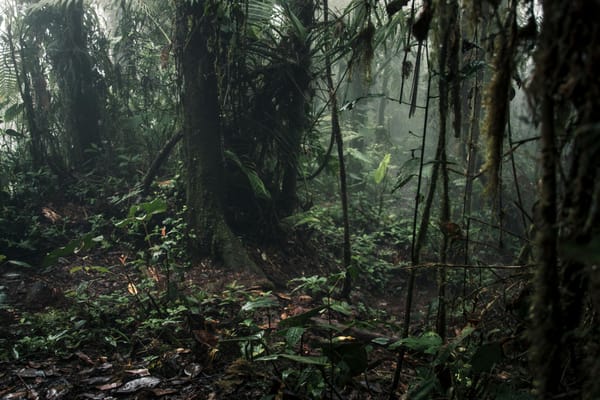
The Knowledge Engine: Distributed AI, Reversible Computing, and the Narva-G Sector Battle (Detroit Megacity)
Engineers build a distributed AI knowledge network as a brutal battle in Narva-G Sector threatens the power grid of Detroit Megacity.

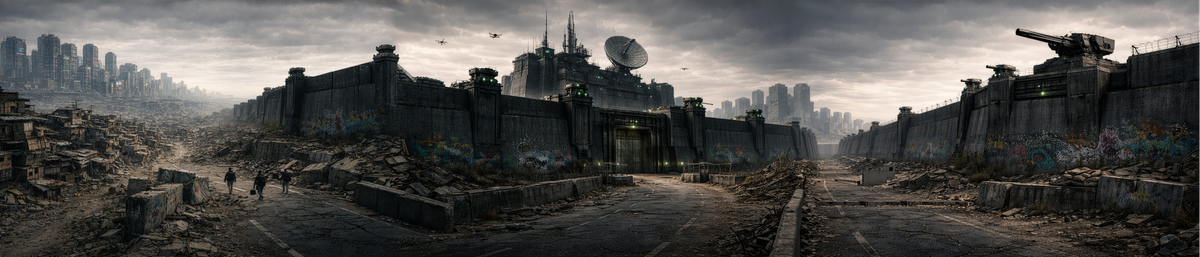
2047, Zephyrion Enclave. Technologist Institute, Subterranean Complex 70
Virtu had been awake for nearly sixteen hours. The chamber around him hummed with the quiet energy of machines that had been running continuously for years. Six monitors floated in staggered arcs around his workstation, each one feeding a different stream of data into the room’s dim blue light. Fiber conduits ran along the walls like exposed arteries, disappearing into server vaults deeper in the complex.
Mad Trace stood behind him, leaning over the back of the chair with the loose posture of someone who had been working long before Virtu was born. The old engineer had been talking for nearly ten minutes. Virtu understood perhaps half of it.
Mad Trace tapped a key on the terminal, and a lattice of nodes appeared across the primary display. Hundreds of small points glowed in uneven clusters, connected by thin lines that pulsed as data flowed between them.
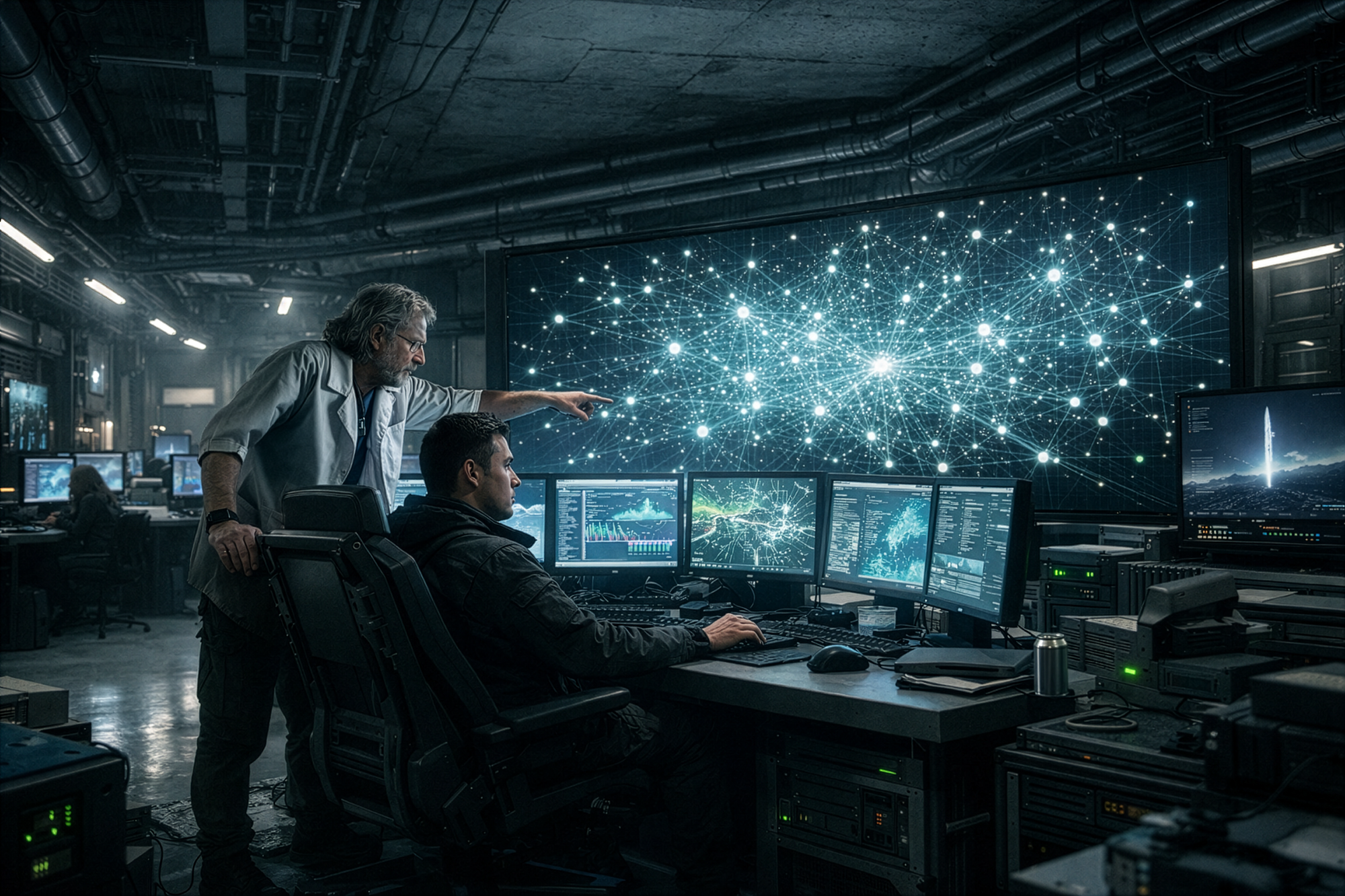
“This,” Mad Trace said, gesturing toward the screen, “I've got a few servers scraping the web. It is energy intensive; we're converting sunlight into data aggregate. "
Virtu studied the screen. “Wow. This could help us distribute reports, keep track of news and... possibly bolster our financial research datasets too.”
Mad Trace said. “Here, look how this works.”
He expanded the diagram. The node network multiplied outward, splitting into thousands of smaller branching systems.
“Corporate media is centralized,” he continued. “A few massive models, massive compute, massive influence. That’s why their narratives spread so fast.
He zoomed further into the graph. “Instead of one giant model, we built thousands of small ones. Each one specializes... logistics, finance, infrastructure, civilian chatter, sensor data, battle telemetry. Each agent knows one domain well and ignores everything else.”
“And they talk to each other?” Virtu asked.
Mad Trace grinned. “Constantly.”
Another command rippled through the interface. The lattice began shifting dynamically, connections forming and dissolving as signals traveled across the network.

“Instead of a black-box model guessing answers from compressed training data, we externalize the knowledge.”
Virtu became curious
“Think of it like this,” Mad Trace continued.
“Instead of asking one giant brain to solve a problem, we send the question into a city. The agents route the problem to whoever understands it best. Finance agents talk to market sensors. Logistics agents talk to shipping telemetry. Combat feeds route to warband analysts.”
Virtu watched the signals move through the lattice. “A distributed reasoning system?”
Mad Trace answered “Exactly, technically it’s a neurosymbolic inversion.”
Virtu blinked, confused.
Mad Trace chuckled. “Traditional agentic AI compresses knowledge into weights. Ours spreads knowledge across a living network. Routing happens outside the model.”
Virtu leaned back slightly. “So, a knowledge engine.”
Mad Trace snapped his fingers. “Exactly.”
Virtu began thinking out loud
“If this integrates with the financial prediction tools, it could multiply our research capacity.”
“That’s the idea” Mad Trace said.
Virtu hesitated a moment. “Any progress on the reverse computing?”
Mad Trace pulled another window onto the display. A processor schematic appeared, surrounded by cooling diagrams and experimental architecture notes.
“We’re improving thermal efficiency,” he said. “Still theoretical in some areas. Less heat and entropy.”
Mad Trace rotated the diagram slightly. “Cooling is still the real bottleneck.”
Virtu thought for a moment.
“Have you considered oil immersion? I heard rumors the Old Order runs some of their computing nodes submerged in mineral oil tanks. They build their own hardware.”
Mad Trace scratched his chin thoughtfully. “The mystics?”
“They’re skeptical about AI systems, Old tech sometimes solves new problems.” Virtu said.
“I’ll look into it,” Mad Trace said.
Before Virtu could respond, a sharp alert tone sounded from one of the upper monitors. Both men turned. A red priority notification flashed across the display. The message header identified a Warband command relay. He read silently, then again.
Mad Trace watched his face. “Bad?”
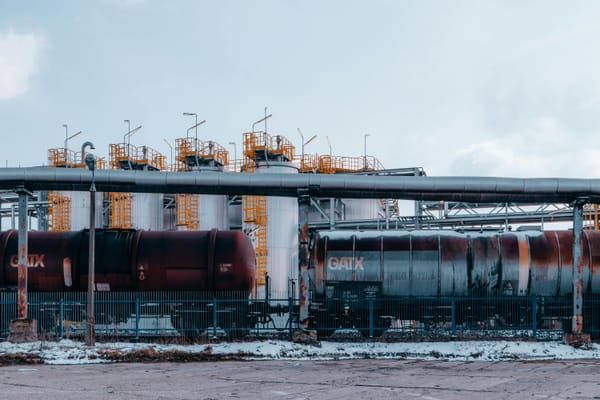
Virtu nodded slowly. “Narva-G sector. A fuel storage site just fell to corporate raiders.”
Mad Trace swore quietly.
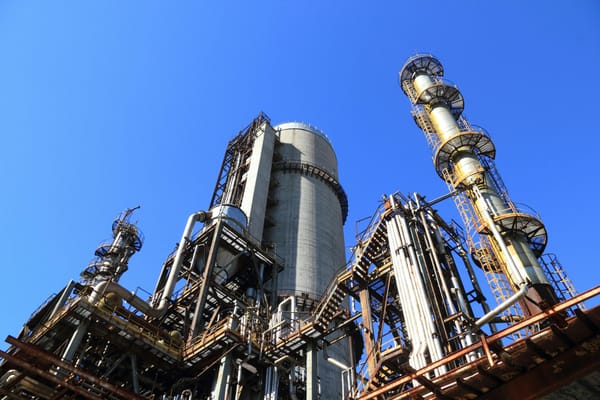
“The defenders are retreating to a nearby power station,” Virtu continued, expanding a tactical map across the screen. “That facility powers the logistics hub for the entire sector. There’s a Thunder Medium-Lift VTOL base built into the station.”
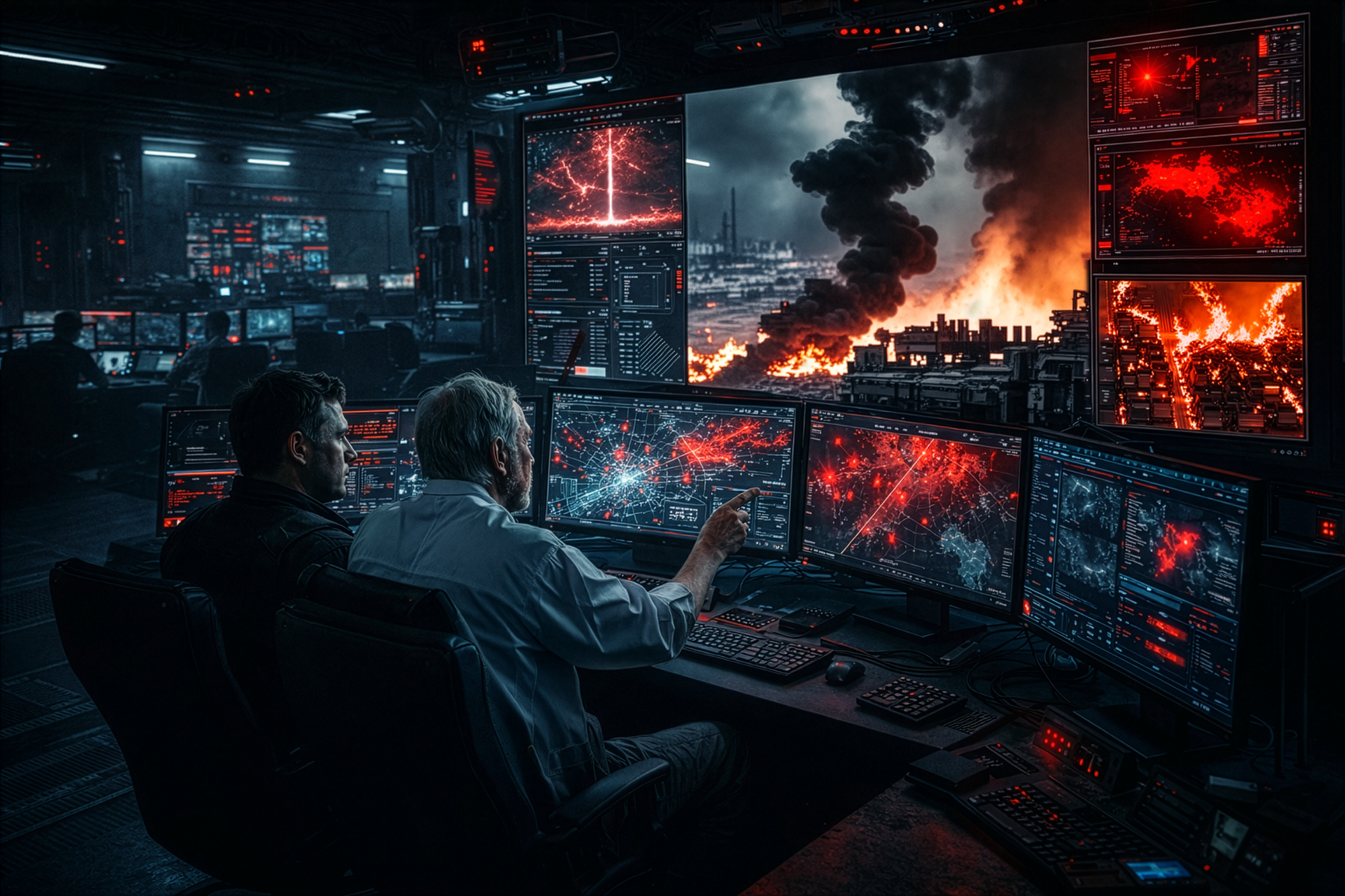
The telemetry stream updated again. Helmet cameras, drone feeds, thermal overlays; dozens of fragmented battlefield perspectives flooding the monitors.
Smoke generators filled the launch platform with thick gray clouds. Through the haze, a gunship rose vertically from the base. Romeo-1 cleared the smoke and pivoted for a wide-angle approach.
As it lifted off, vid feed showed armored trucks smashing against the barricades.
“They’re ramming the perimeter,” Mad Trace said.
Virtu nodded. “Shock entry.”
Romeo-1 rolled into its first strafing run. Tracer fire streaked across the defensive wall.
Minutes passed. Twenty. Then forty. The defenders held.
Virtu opened another channel. “Mobile artillery battery just arrived. They’re looking at a corporate mech repair station.”
Moments later the artillery strike landed. A plume of fire rose from the station.
“That’ll slow them down,” Mad Trace said. Another alert appeared. He opened it, and his expression tightened.
“Reinforcements got cut off,” Virtu said quietly. The map updated. Red markers closed around the power station.
“The defenders are trapped.”
Helmet cam feeds erupted into chaos, explosions, shouting, metal impacts echoing through narrow corridors.
Virtu opened a command channel and read the text slowly.
“The commander is ordering Romeo-1 to fire on everything outside the defensive line.”
“Friendly risk?” Mad Trace asked.
Virtu hesitated. “They’re saying everyone outside the walls is corporate.”
Romeo-1 approached again. The gunship unleashed another barrage across the perimeter. Vehicles burned. Mechs advanced through the smoke. The fight continued. Then one of the drone feeds zoomed sharply. Mad Trace saw it immediately. A corporate mech stepped from behind a smashed apartment tower. Compact, angular, autocannon mounted to its arm. The weapon fired.
Romeo-1 exploded in midair, spinning as it crashed into a small grassy rooftop.
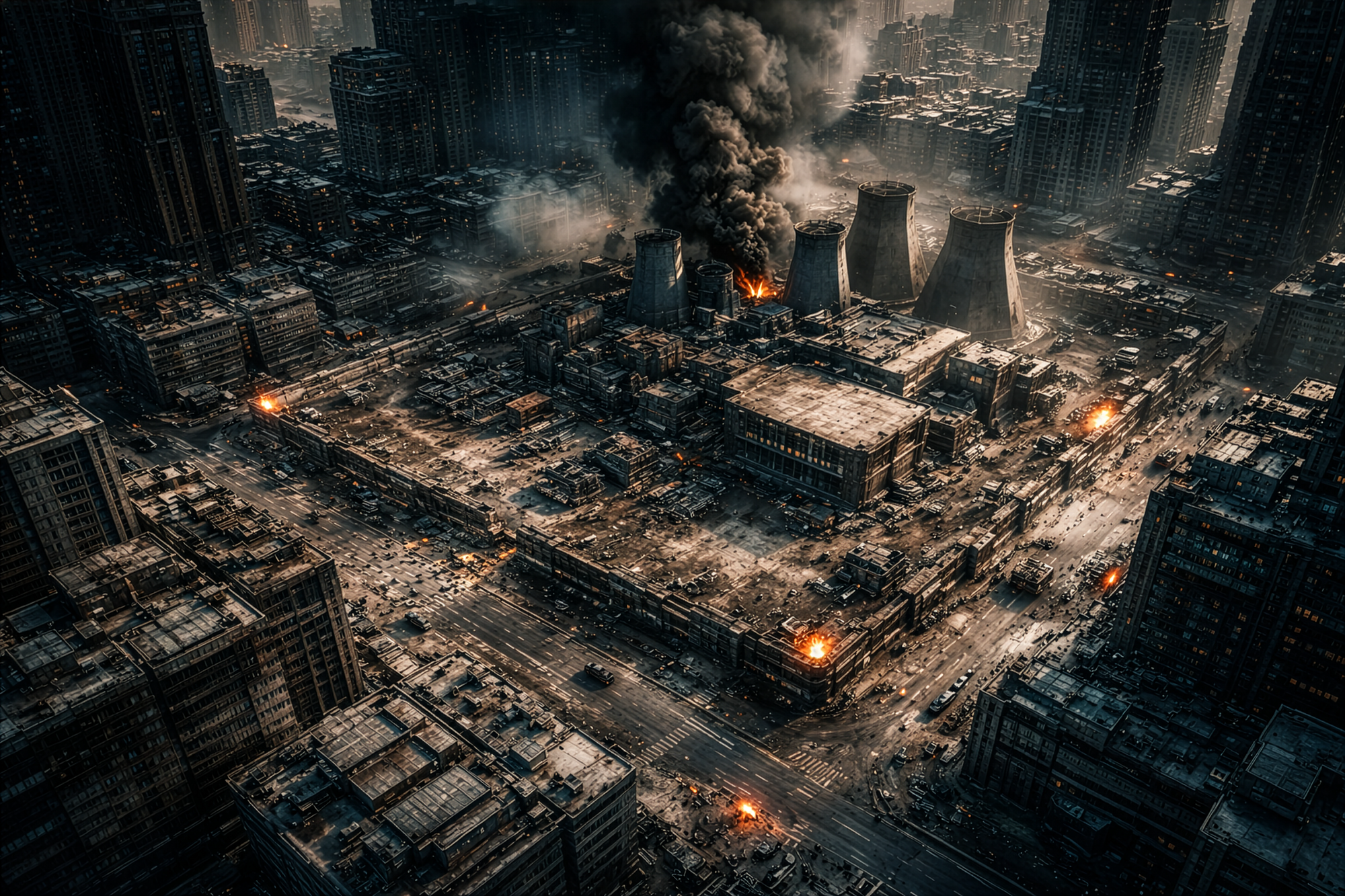
The next drone image showed the power station engulfed in flames. Smoke poured upward into the sky. The warband counterattack began and quickly failed.
Minutes later the command channel updated again. The battle was lost. Mad Trace waited.
“How bad?”
Virtu spoke solemnly: “At least seven hundred dead.”
Mad Trace looked back at the burning power station on the screen.
Virtu leaned back in his chair. Staring at the tactical map.
“Narva-G sector just lost their primary power station. Electrical demand across the entire region is about to collapse.”
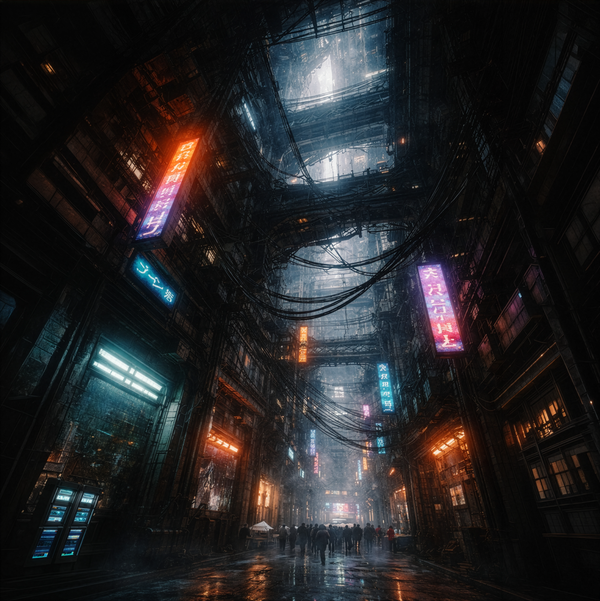
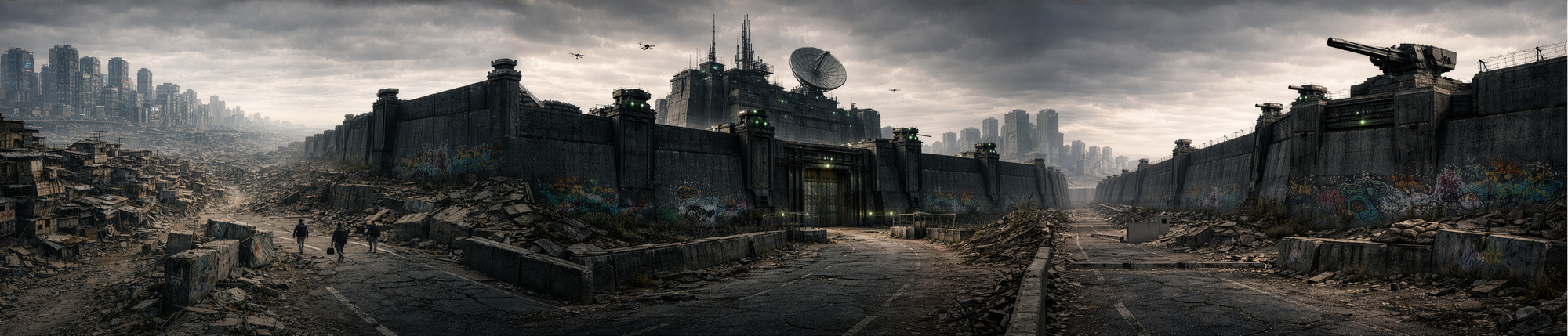
Far above them, somewhere in the layered skyline of Detroit Megacity, a new column of smoke began rising into the sky.