The Fortress and the Knight: A Treatise on the Human Element of Stasis and Change
Everyone agrees something is broken. Almost no one fixes it. Here’s why, and what it means.

In every human endeavor, from the creation of art to the governance of nations, a fundamental and predictable dynamic unfolds. It is a pattern of complaint and inaction, of widespread agreement and profound inertia. We see it in online forums where fifteen users will passionately agree that a new game is a soulless corporate product, yet not a single one will open a game engine. We see it in political discourse where a chorus of voices bemoans the state of the world, yet the ballot box remains a lonely place and community organizing a thankless task. This is neither a modern phenomenon nor merely a failure of character, but a deeply ingrained aspect of the human element, a behavioral algorithm rooted in our psychology, our evolution, and the very structure of stable societies. To understand this is to understand the eternal tension between the fortress and the knight.
The foundation of this dynamic is the stark asymmetry of effort and risk. Complaining is a low-cost, low-risk activity that offers immediate and tangible social rewards. To voice a criticism is to perform the role of the sentinel, a position that requires no capital investment, no technical expertise, and no exposure to the possibility of catastrophic failure. The reward is instantaneous: a sense of solidarity with like-minded individuals, the validation of one’s own taste and intellect, and the moral high ground of a principled critic. It is a highly efficient method for generating social capital and reinforcing one’s identity within a group.
Creating, or attempting to change the system, is the diametric opposite. It is a high-cost, high-risk endeavor with delayed and profoundly uncertain outcomes. The creator—the one who deviates from the wall to attempt a fix—must invest immense resources of time, money, and emotional energy. They must acquire years of skill, face the constant threat of failure, and grapple with the messy compromises of reality that tarnish the purity of any initial vision. The creator’s reward is distant and never guaranteed. For every successful project, there are countless others that end in financial ruin and obscurity. From a purely rational, self-interested perspective, the choice to complain is often the more logical one. It is the path of least resistance to a feeling of agency.
This behavior is not merely a rational calculation; it is an expression of an evolutionary imperative. Our minds are wired for survival on the savanna, not for building startups or coding indie games. In a prehistoric tribe, two roles were critical for survival. There was the hunter, the one who ventured into the wilderness, took on the predator, and risked everything to acquire resources. This is the creator. And there was the sentinel, the one who remained by the fire, watching the horizon and alerting the tribe to danger. This is the complainer. The sentinel’s job was not to solve the problem, but to identify it. Their value was in their vigilance, not their action. A tribe that ignored its sentinels was a tribe that was quickly eaten. In our modern world, we have an overabundance of sentinels and a critical shortage of hunters. The instinct to point out what is wrong is far more developed and more easily activated than the instinct to risk everything to make it right.
This dynamic is amplified by the psychological principle of diffusion of responsibility. When fifteen people agree that something is wrong, the collective will to act is diluted across the group. Each individual feels less personally responsible for initiating change. The thought process is universal: "Someone should do something, but why must it be me? There are fourteen others who are just as capable, perhaps more so." The responsibility becomes a shared, and therefore unowned, burden.
This is the bystander effect on a societal scale, where everyone waits for someone else to be the hero, and in the waiting, nothing is done. The fortress walls remain crowded with soldiers: all watching, none charging.
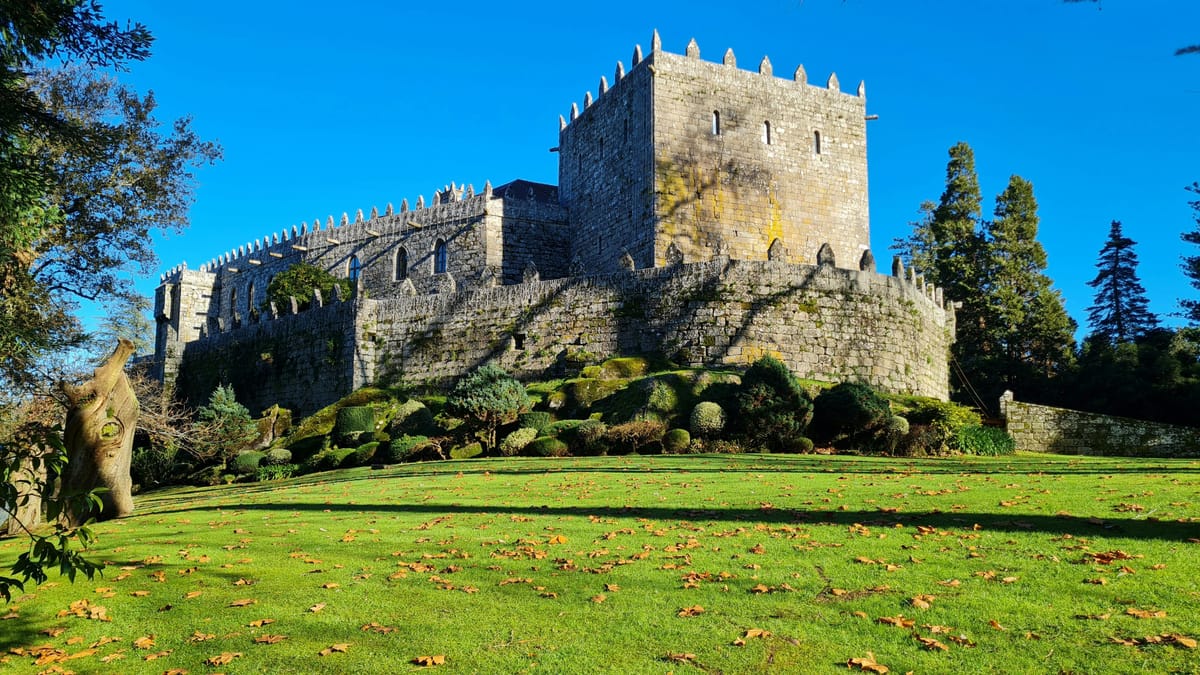
This leads to a powerful and practical analogy: the fortress and the knight. The fortress represents society, the established order, the status quo. Its walls are built from tradition, culture, and existing systems. The vast majority of its population are the soldiers on the walls. They are essential for the fortress’s survival. Their job is to watch, to defend, and to preserve what is already there. They are the force of stability. They will fight, but only when the enemy is at the gate, when there is no other choice. Their orientation is defensive and conservative.
The knights are the creators, the innovators, the revolutionaries. They are the ones who look out from the walls and see not just a threat, but an opportunity. They are willing to saddle the horse, ride out into the open field, and risk a direct assault on the enemy siege camp. They are the force of change. By the cold logic of population statistics, there will always be far more soldiers than knights. This is not a flaw in human design, but a feature of societal homeostasis.
A fortress populated only by knights would be a chaotic, self-destructive entity, constantly charging off in a hundred different directions, leaving its home undefended.
It would burn itself out in a blaze of reckless glory. The soldiers provide the necessary ballast, the gravitational pull that keeps the entire system from flying apart.
And here we arrive at the bigger chessboard, the grander logic that the individual soldier or knight cannot fully perceive. This distribution of roles is not a failure to be corrected, but a symbiosis of Order and Chaos. The fortress is Order. It represents stability, predictability, and preservation. It is the known and the safe. It is the force that maintains the integrity of the system, allowing knowledge to be preserved and a sense of identity to endure. The knights are Chaos. They represent disruption, innovation, and the unknown. They are the creative spark that pushes the society forward, preventing it from stagnating into a brittle relic that will eventually crumble.
A healthy civilization requires both in a delicate balance. Too much Order, and the society becomes a sterile, oppressive regime that cannot adapt. Too much Chaos, and it tears itself apart with constant, reckless revolution. The population’s natural tendency to favor the role of the soldier is the universe’s way of ensuring that the force of Order remains stronger than the force of Chaos. It is a system for ensuring long-term stability by placing a limited number of high-risk bets on change.
Even the act of complaining itself serves a function in this grand design. The chorus of criticism from the soldiers on the wall acts as a crucible for the knight’s ideas. For a new vision to succeed, it must first survive the onslaught of skepticism and fear from the sentinels. This criticism, while often defeatist in tone, serves as a brutal but effective quality-control mechanism. It forces the creator to refine their argument, strengthen their resolve, and harden their idea against the inevitable resistance it will face. An idea that cannot withstand the jeers from the wall is likely not strong enough to survive in the world.
Ultimately, the human element in society is defined by this constant, quiet tension. Most of us are, by nature and by necessity, soldiers on the wall, contributing to the vital work of preservation. We find comfort in the known and safety in the collective. We complain because it is our instinct to identify threats to the stability we cherish. But the progress of all humanity rests on the few, the rare, the seemingly reckless souls who choose to be the knights.
They are the ones who accept the asymmetry of risk, who defy the diffusion of responsibility, and who ride out into the uncertain field, driven by a vision that the soldiers on the wall cannot see. They do not do it because it is easy, but because the alternative, a world forever trapped within the same walls, is unthinkable.
But understanding the system is only half the equation. The harder question remains: can one step beyond the wall?
 John D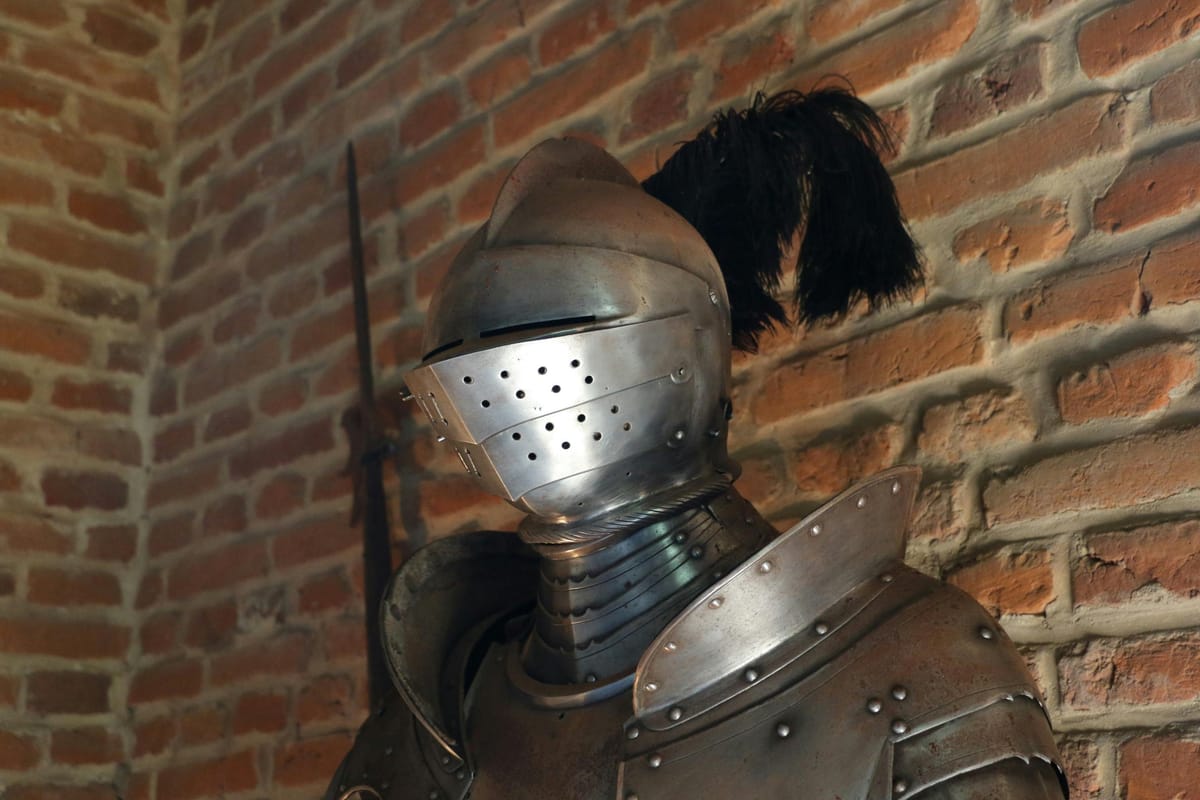
More Philosophy You Might Be Interested In:
 John D
 John D
 John D