Lake Erie Megaport Blockade: Signals Through a Fractured Grid
Supply chain shortages and missing network infrastructure leave the Free Cities of Detroit Megacity vulnerable to communication disruption

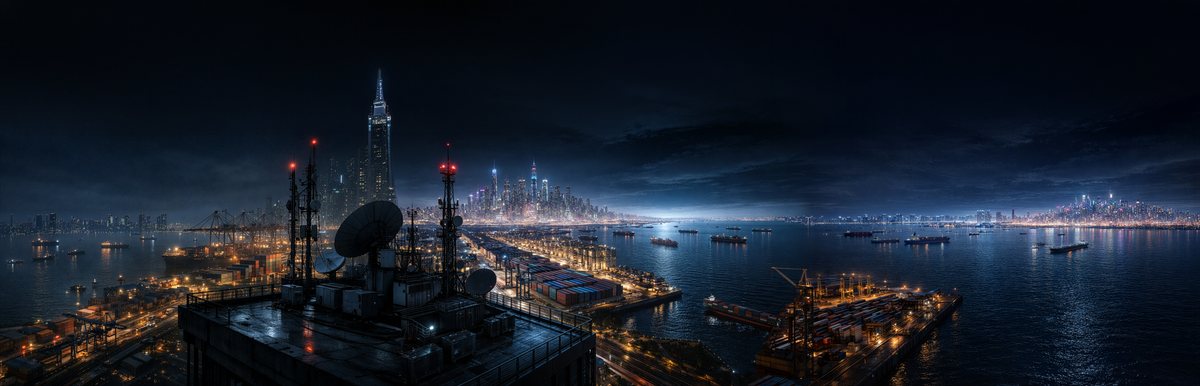
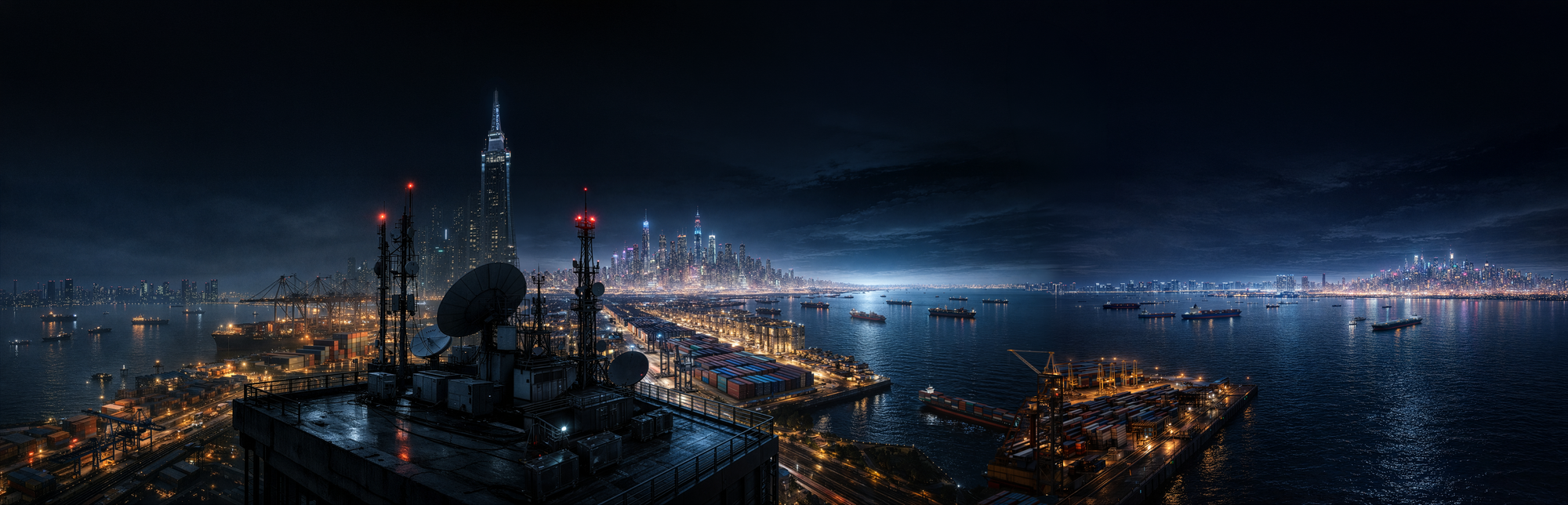
Lake Erie Megaport - Maritime Blockade
2047, Zephyrion Enclave, Technologist Institute. Subterranean Complex 70.
Virtu sent a message to C-Doc
You may want to divert some funds to Atlantic Nautical Systems. There’s a market slump right now. Corpo traders are worried about the whole “Acropolis blockading the Lake Erie Megaport" situation.
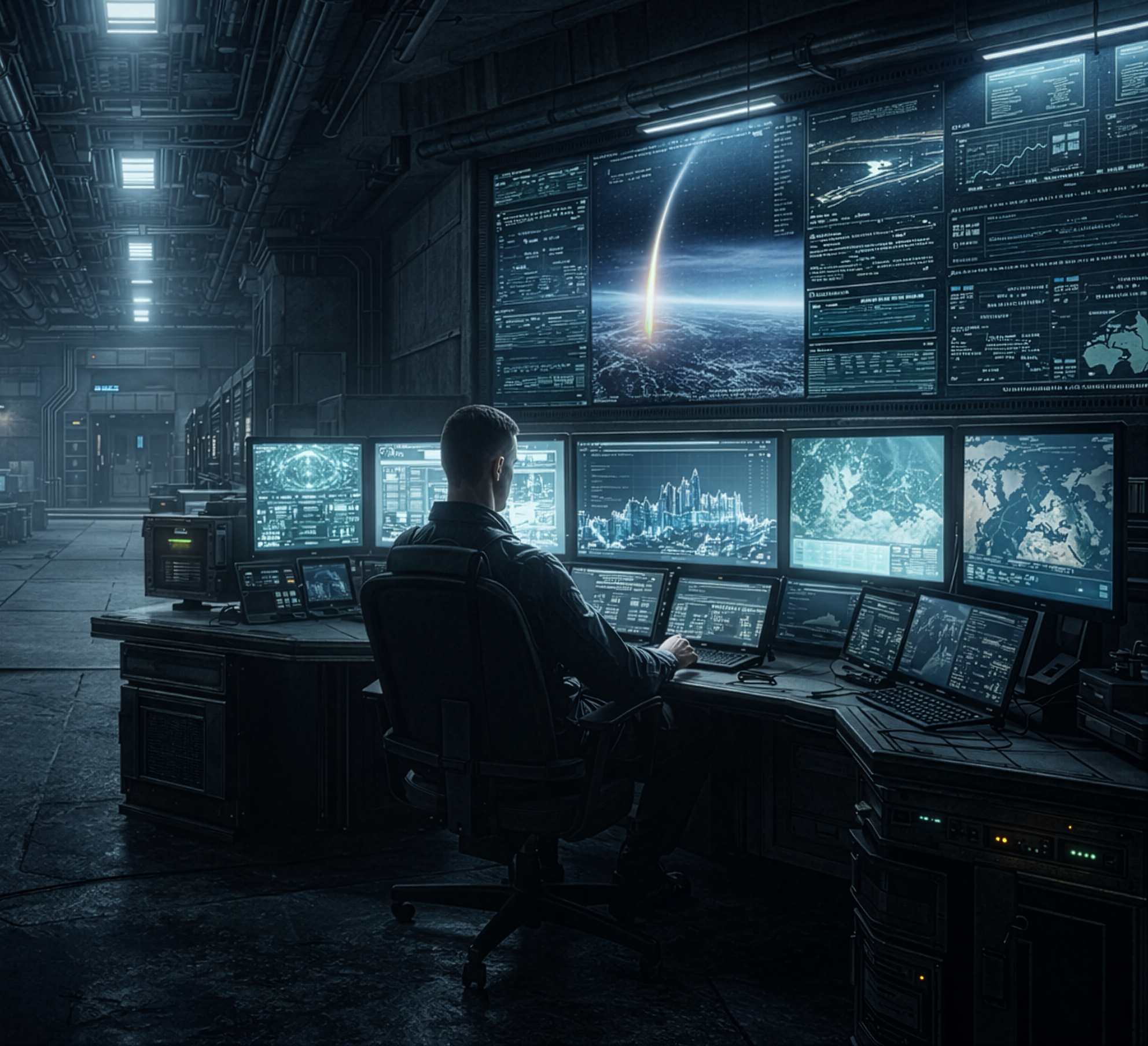
C-Doc responded almost immediately, adjusting one of the automated allocations within the resistance’s financial network. A small stream of funds began flowing toward the foreign shipbuilder corporation. Detroit Megacity imported many consumer goods from foreign megacorporations across the Atlantic, particularly North Africa and Europe.
Virtu stepped away from his computer. He thought about Mad Trace's progress on the knowledge engine. The recent upgrades had been exceptionally promising. If this panned out, the resistance might gain a technological advantage the corporations hadn’t anticipated. However, funding limitations, hardware availability, compute times and fierce emergent competition from corporate research labs were challenging this opportunity. Technologist Institute think-tanks had recently upgraded all cybersecurity systems within allied computers. New encryption protocols, dark fiber redundancies installed, and ongoing migration of operating systems for high security missions. Virtu opened a project diagram. The decentralized grid map filled the screen; symbols scattered across rooftops throughout the Free Cities. Each icon represented the status of one of the relays the Technologist Institute teams had been installing for weeks.
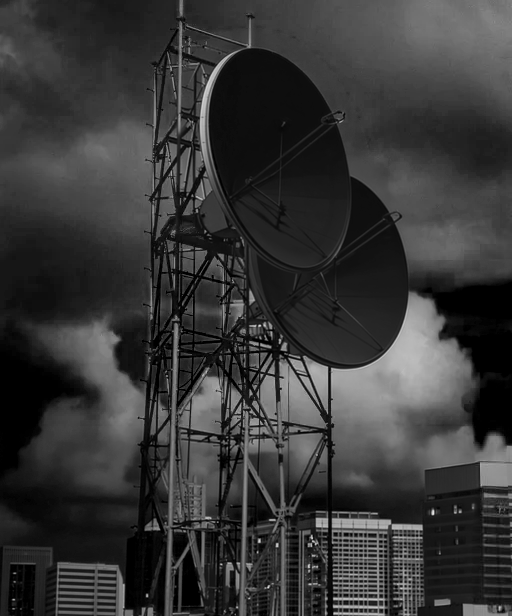
Imported network chips, small, hardened modules designed for long-range encrypted transmission, were being mounted across rooftops throughout the Free Cities and the Contested Regions. Warband special joint taskforce units escorted installation teams while Technologist engineers climbed towers and infrastructure scaffolding, wiring the devices into the megacity’s tangled web of fiberoptic lines and RF relay systems. This would take some time, a period of months or longer. Once the network was established; on-going software upgrades would be deployed to enhance the capabilities and data transmission efficiency. Virtu stared at the deployment map. Over half of the grid nodes were still missing. Without the chip supply chain, those slots would stay empty.
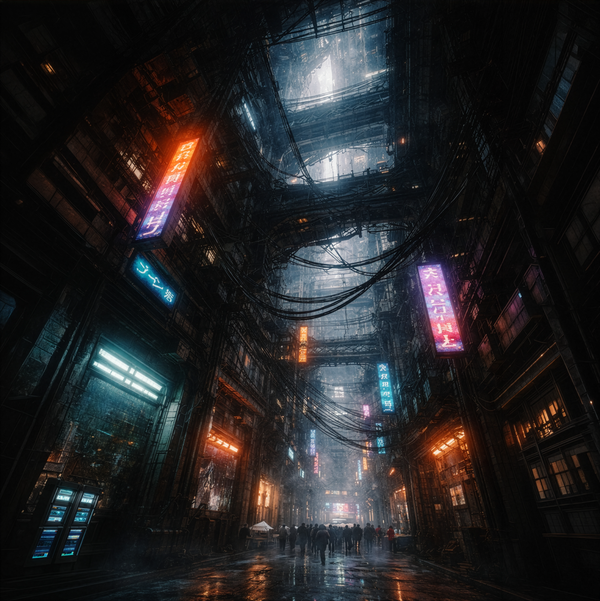
Virtu looked through a reinforced window; observing the dark concrete jungle, shrouded in the familiar neon haze he had always known.
For a moment, he remembered what his life was like before the War. The families he grew up with, the turn of fate from his street urchin upbringing to an aristocratic adolescence. His time studying at the academy.
Virtu blinked and snapped out of his memories; he flicked on his cyberdeck. He scrolled to the the institute forums and data channels. Virtu flicked through the forum feed. A helium-3 mining contract thread scrolled past.
Someone had posted photos of a fungal textile bioreactor, showcasing the growing graphene spindles inside a glass tank. He saw a video report of strange gravital anomalies somewhere in the northern territories. Another long thread debated experimental invisibility cloaks. Someone posted a blurry photo of a rooftop relay node in the Contested Regions. The comments were arguing whether the corporate drones had already mapped the signal pattern. This chatter was relatively typical.
The Free City of Panopa had become a global hub for advanced biotextiles. Its graphene-infused smart fabrics had exploded into popularity during the war. Students in elite academies and young corporate executives across Detroit, Chicago, and even the far eastern megacities had worn the material as fashion statements. The fabric was remarkable. Conductive threads embedded within the graphene lattice allowed it to store data and respond to encoded instructions. The clothing could shift colors, patterns, even subtle structural properties on command.

Virtu minimized the grid overlay, but the pattern lingered in his mind. The network had too many gaps and too many unsecured transmissions moving through open spectrum. The resistance was still talking across infrastructure that hadn’t been finished; signals bouncing through patched relays and temporary links, never meant to hold under pressure.
It wasn’t stable. All it would take was a coordinated jamming cycle across the major bands, and the Free Cities would go silent
Enter the Megacity
a serialized web-fiction