How to Survive in a Megacity (Urban Survival in a Hyper-Dense Future)
Learn how to survive in a megacity. Explore tactical urban preparedness, infrastructure risks, and resilience strategies in hyper-dense future cities.

This article serves two purposes. First, it is a primer for a serialized fiction arc that will unfold here on the blog. The chapters are drawn from the world of Detroit: Megacity. Second, it functions as a conceptual survival framework. While fictional in setting, the pressures it explores, urban density, corporatized infrastructure, emerging technology, civil fracture, and crisis, are extrapolations of real-world trends. Think of this as both lore and laboratory.
Surviving in Megacities: A Primer from Detroit Megacity
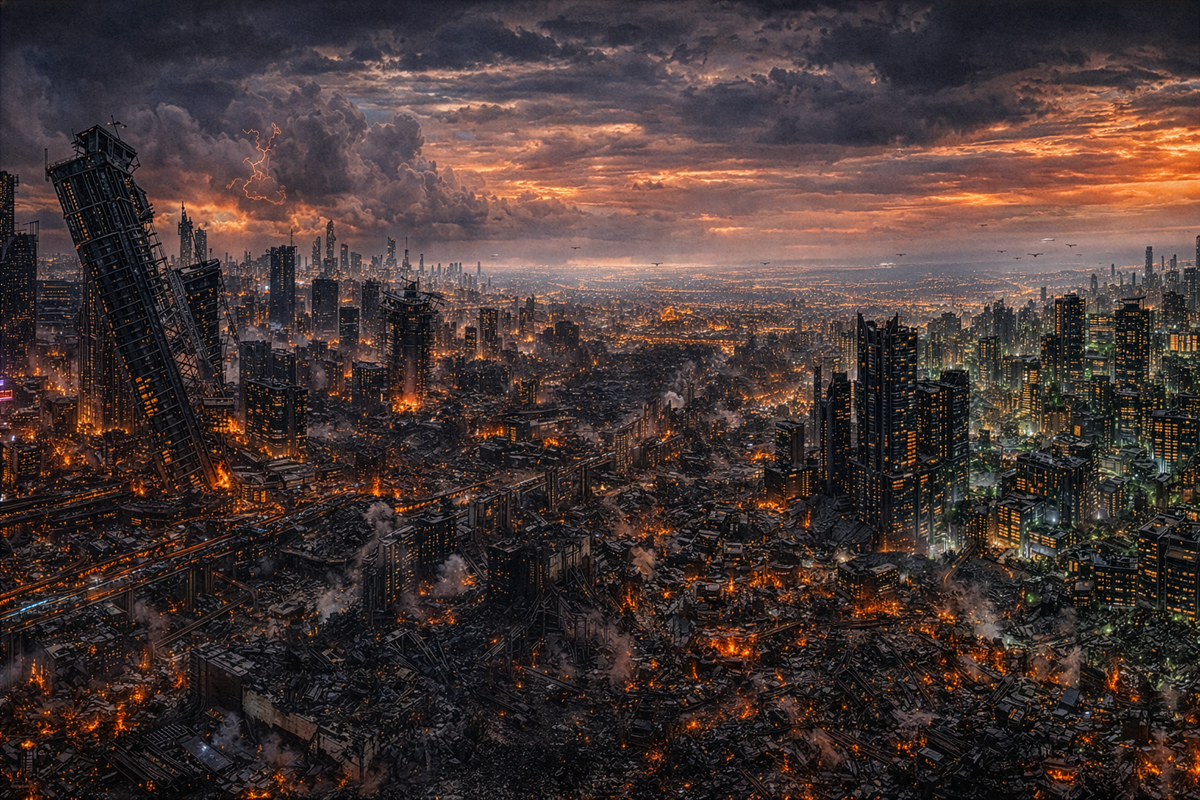
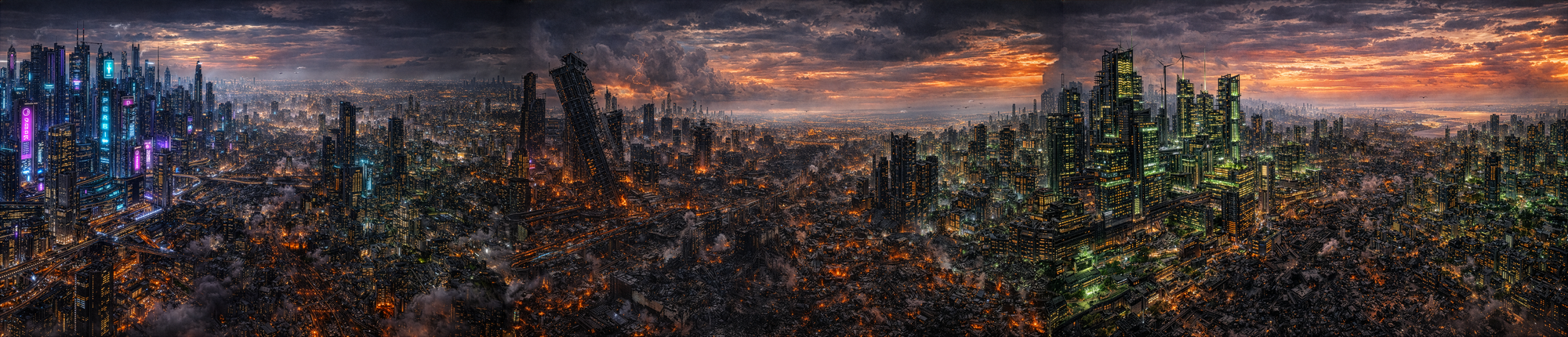
Detroit Megacity is a continental-scale cyberpunk metropolis stretching across the southern Great Lakes corridor in a continuous arc of vertical urbanization. With an estimated population of ~500 million, it is one of the largest urban concentrations on Earth. Rural Michigan has long since been absorbed into megastructure sprawl. True wilderness survives only in the far northern Upper Peninsula.
The city is vertical. One hundred–story buildings are ordinary. Roads are stacked in three layers. Monorails thread between arcologies. Freight arteries run through enclosed industrial corridors. Utilities are corporatized. Infrastructure is continuous and dense, not merely supporting the city, but defining it.
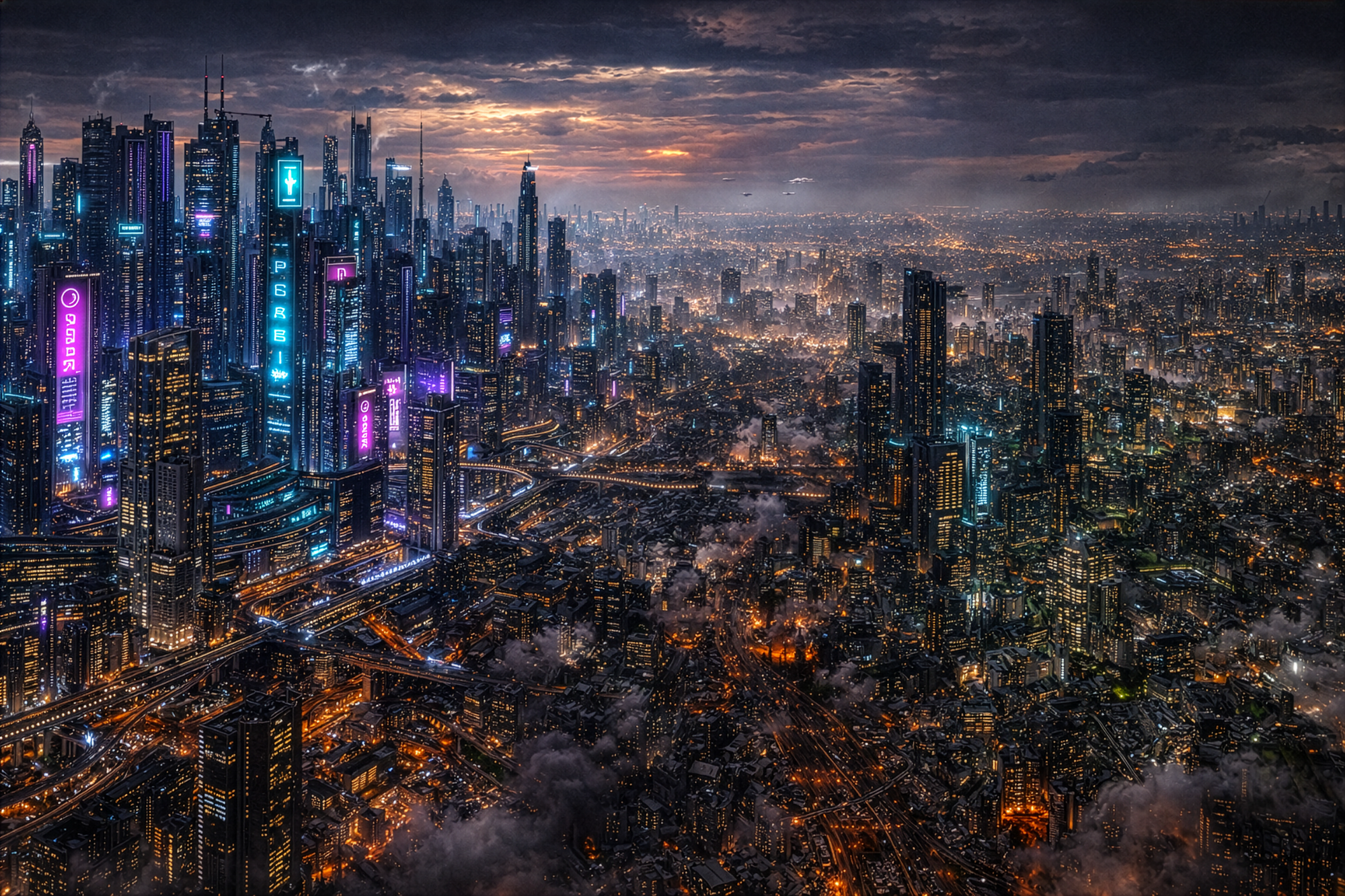
Detroit exists in prolonged civil conflict between the Corporate Consolidation and a decentralized Resistance coalition. Eight megacorporations govern the city after municipal insolvency transferred public authority into corporate administrative law. Energy, food, housing, transit, media, finance, defense, and biotechnology are controlled through vertically integrated corporate systems. Over half the population works directly for corporate subsidiaries.
Embedded within this infrastructure are the Automatons, advanced AI-driven robotic systems publicly framed as optimization tools. Privately, their autonomy is uncertain. Their strategic objective is rumored to be the transformation of Detroit into a Gigacity of one billion residents, a density threshold considered optimal for industrial and computational dominance. Whether corporations command the machines or exist symbiotically within an emerging algocracy remains unclear.
Detroit’s structure reflects its politics. The Top Layer houses executive arcologies, filtered air, skybridges, and private VTOL corridors. The Middle Layer sustains the corporate workforce, habitation towers, data centers, automated logistics hubs. The Ground Layer absorbs the marginalized living within salvage districts, improvised housing, and dense street economies.
Between corporate districts and Resistance territory lies No-Man’s Land: collapsed megastructures, abandoned transit arteries, active conflict zones.
The Resistance formed in 2039. It is not a singular force but a network of guilds, clans, technologists, fighters, and reconstruction planners. Its solarpunk-esque Free Eco-Cities attempt renewable sovereignty within the megastructure. The Warband fights open engagements. The Technologist Institute maintains communications and research. The Trade Unionists coordinate industry.
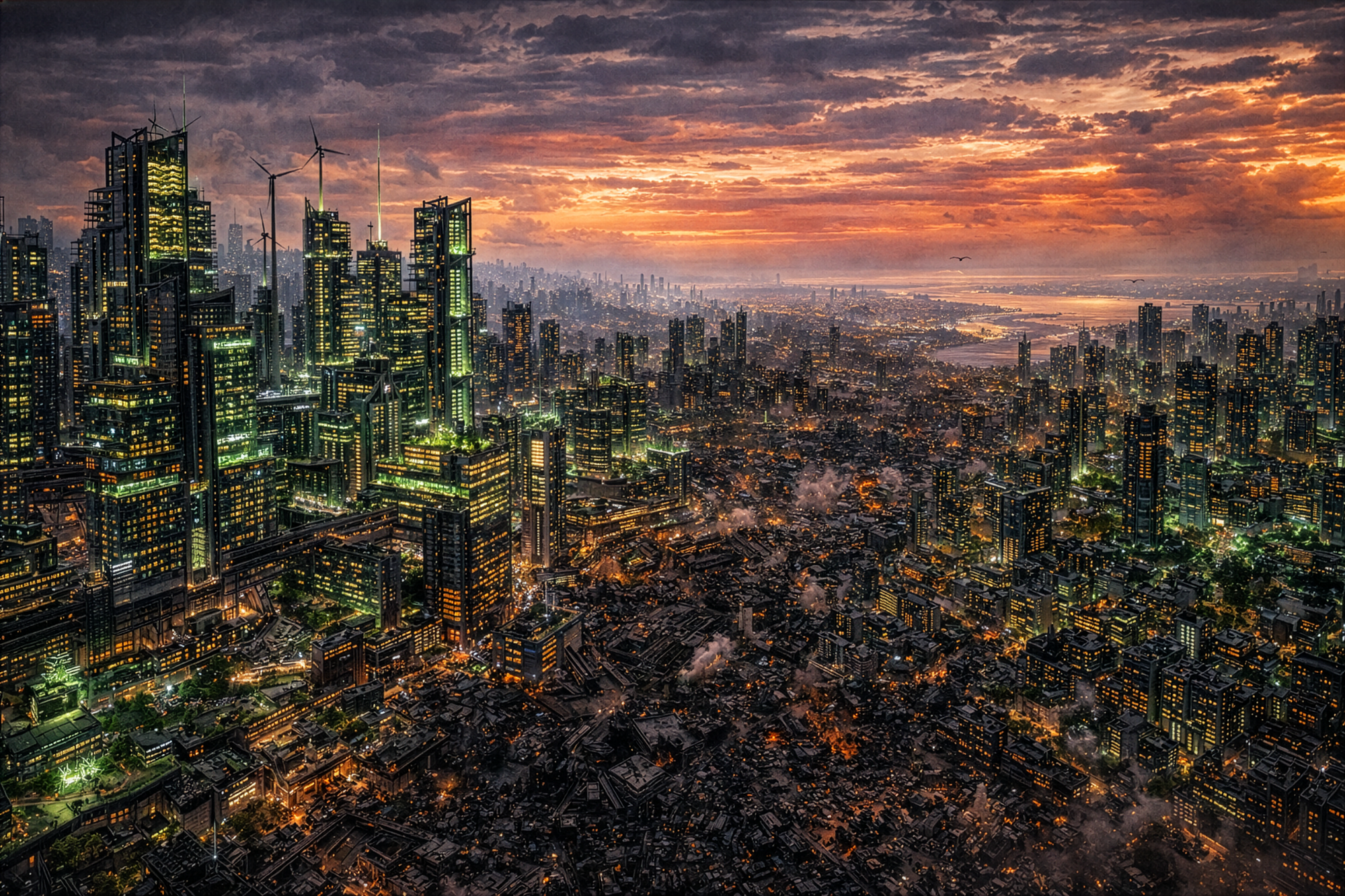
Independent scavenger factions inhabit scrap zones, recycling rare metals and obsolete technology. The Old Order Cultists reject AI entirely, infiltrating institutions while preaching spiritual resistance to machine dominance.
Why introduce this world on a tactical survival blog?
Because megacities concentrate power. They centralize energy grids, data networks, food systems, and financial architecture into dense, interdependent systems. In Detroit Megacity, infrastructure is governance. Whoever controls matter, energy, and information controls the population.
Survival in such an environment is not wilderness survival. It is systems survival.
It means understanding supply chains rather than tree lines. It means navigating urban districts rather than open terrain. It means redundancy in water, energy, and communication within vertical density. It means knowing how to move between strata without being seen. It means recognizing that in hyper-optimized cities, disruption spreads faster than wildfire.
The fiction that follows will dramatize these principles through character and conflict, factional warfare, contested transit corridors, decentralized energy experiments, and the tension between algorithmic efficiency and human autonomy.
Detroit Megacity is not merely a fictional setting. It is a thought experiment about scale, and about what happens when urbanization is taken to the limit, when infrastructure replaces governance, and when machine logic competes with human dignity.
The chapters ahead will explore that struggle.