Becoming the Knight: Why Most People Never Act and How a Few Do
Why most people never act and what it actually takes to become one of the few who do.

Becoming the Knight: An Addendum on Action and Transformation
If the fortress is inevitable, then the question is not how to dismantle it, but how one chooses to exist within it.
 John D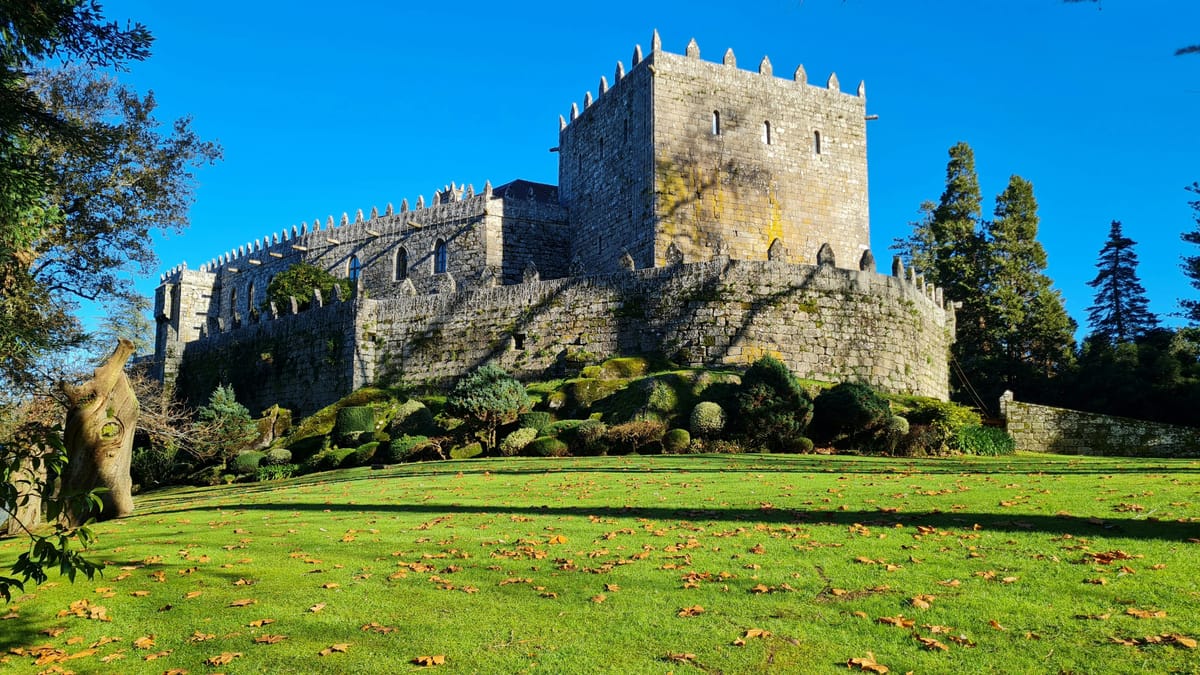
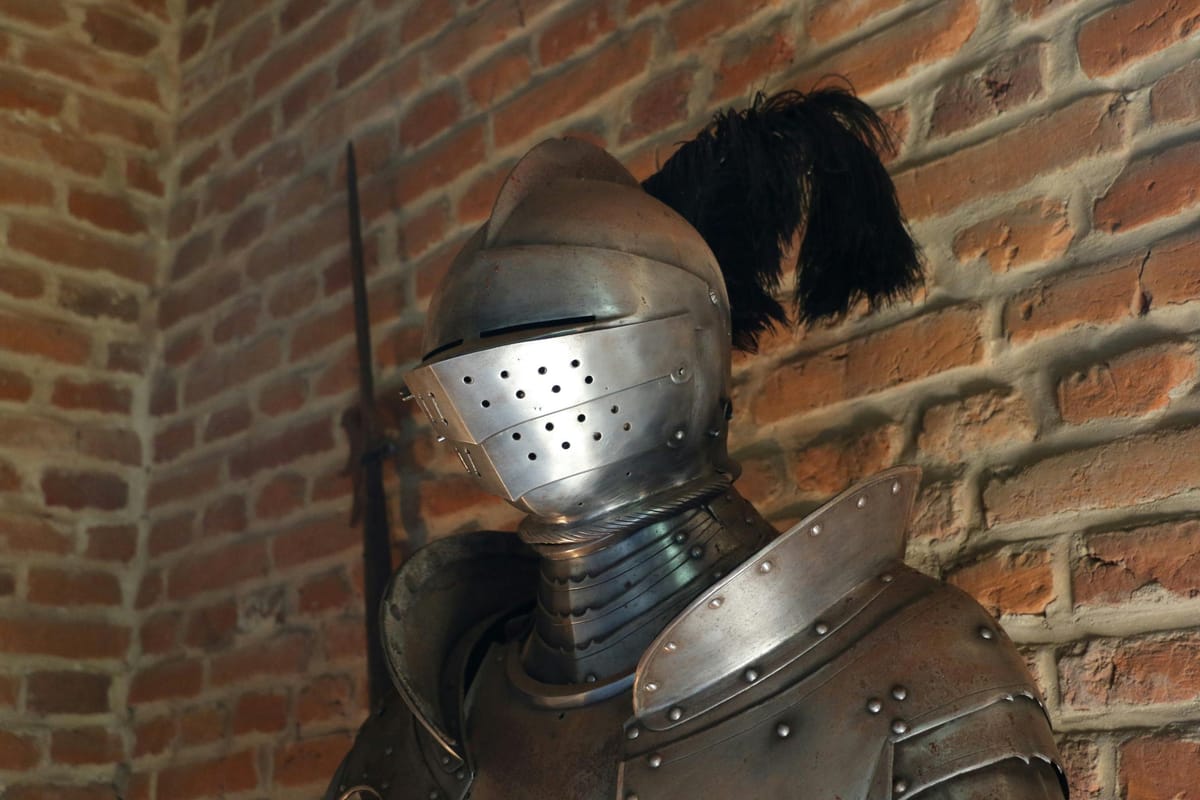
The preceding analysis may appear deterministic. If most individuals are predisposed toward the role of the soldier; toward preservation, caution, and collective stability, then what remains for the individual who recognizes this pattern? Are they bound to the wall, another observer in an endless chain of commentary? Or is the role of the knight something that can be consciously assumed?
The answer is both simpler and more demanding than it first appears.
The knight is not born. The knight is selected, by the individual, and then tested by reality.
I. The Threshold of Responsibility
The transition begins at a precise psychological moment: the rejection of diffusion.
Where the soldier thinks:
“Someone should do something,”
the knight arrives at a different conclusion:
“If it is to be done, it may as well be me.”
This is not arrogance. It is not a belief in superiority. It is the quiet acceptance of responsibility in the absence of guarantees. The knight does not wait for permission, consensus, or ideal conditions. In fact, the absence of these is often the signal to begin.
Most individuals encounter this threshold and step back. The cost is too visible, the risk too real. To cross it is to voluntarily accept asymmetry. To accept the certainty of effort against the uncertainty of outcome.
II. The Reality of Cost
The romantic image of the knight is misleading. There is no glory in the early stages, only friction.
To act is to:
- Spend time without immediate return
- Invest energy into uncertain systems
- Accept repeated failure without external validation
- Operate in isolation while others observe
This is the fundamental barrier. Not intelligence, not access, but tolerance for sustained, unrewarded effort.
Where the soldier receives immediate social reinforcement through agreement, the knight receives silence, skepticism, or indifference. The feedback loop is delayed, often indefinitely.
For this reason, most attempts at transformation collapse early, not from external resistance, but from internal exhaustion.
III. The Reframing of Failure
To persist, the knight must reinterpret failure.
Within the fortress, failure is reputational. It is something to be avoided, something that lowers one’s standing among peers. But outside the walls, failure is structural. It is data.
Every failed attempt is not a verdict, but a measurement. It reveals constraints, inefficiencies, and incorrect assumptions. The knight does not ask, “Did I succeed?” but rather, “What did this reveal?”
This shift is essential. Without it, the psychological cost of action becomes unsustainable.
IV. The Role of the Fortress
It would be a mistake to view the fortress as an obstacle alone. It is also a filter.
The criticism of the soldiers; the doubt, the skepticism, the resistance; is not merely noise. It is pressure. It is the environment through which ideas must pass to become viable.
A weak idea collapses under scrutiny. A strong idea adapts.
In this way, the fortress does not only resist change; it refines it.
The knight who understands this does not resent the wall. They use it.
V. The Asymmetry of Impact
One of the least intuitive truths is that the system does not require many knights.
A small number of individuals operating at high levels of action can alter the trajectory of entire systems. This is observable across domains, in technology, economics, governance, and culture.
The fortress is maintained by the many, but it is redirected by the few.
This asymmetry is precisely why the role carries such weight and why it remains rare.
VI. The Fluidity of Roles
Importantly, these roles are not fixed identities.
An individual may be a soldier in one domain and a knight in another. One may spend years within the safety of the wall before crossing the threshold or return to it after a failed campaign.
The distinction is not who one is, but what one does in a given moment.
The knight is not a permanent state. It is a repeated decision.
VII. The Modern Arena
In the current era, the barrier to entry has never been lower and yet the ratio remains unchanged.
Tools for creation, distribution, and coordination are widely accessible. Knowledge is abundant. The theoretical path from idea to execution is clearer than at any point in history.
And still, the majority remain at the wall.
This reveals a final truth: the limitation is not technological. It is psychological.
Access does not produce action. Capacity does not produce will.
VIII. The Decision
To become the knight is not to reject the fortress, nor to abandon stability entirely. It is to step beyond it, selectively and deliberately, in pursuit of change.
It is the willingness to:
- Act without consensus
- Risk without guarantee
- Build without recognition
- Persist without immediate reward
Most will not make this choice. Not because they are incapable, but because the system does not require them to.
But for those who do, the world is no longer defined by the walls they observe, but by the ground they are willing to cross.
More Similar Content:
 John D
 John D