The Manual That Kept Soldiers Alive - Australian Bushcraft by Richard Graves
A complete TLDR of the legendary primitive skills guide used to train WWII jungle rescue teams. Everything in one read.

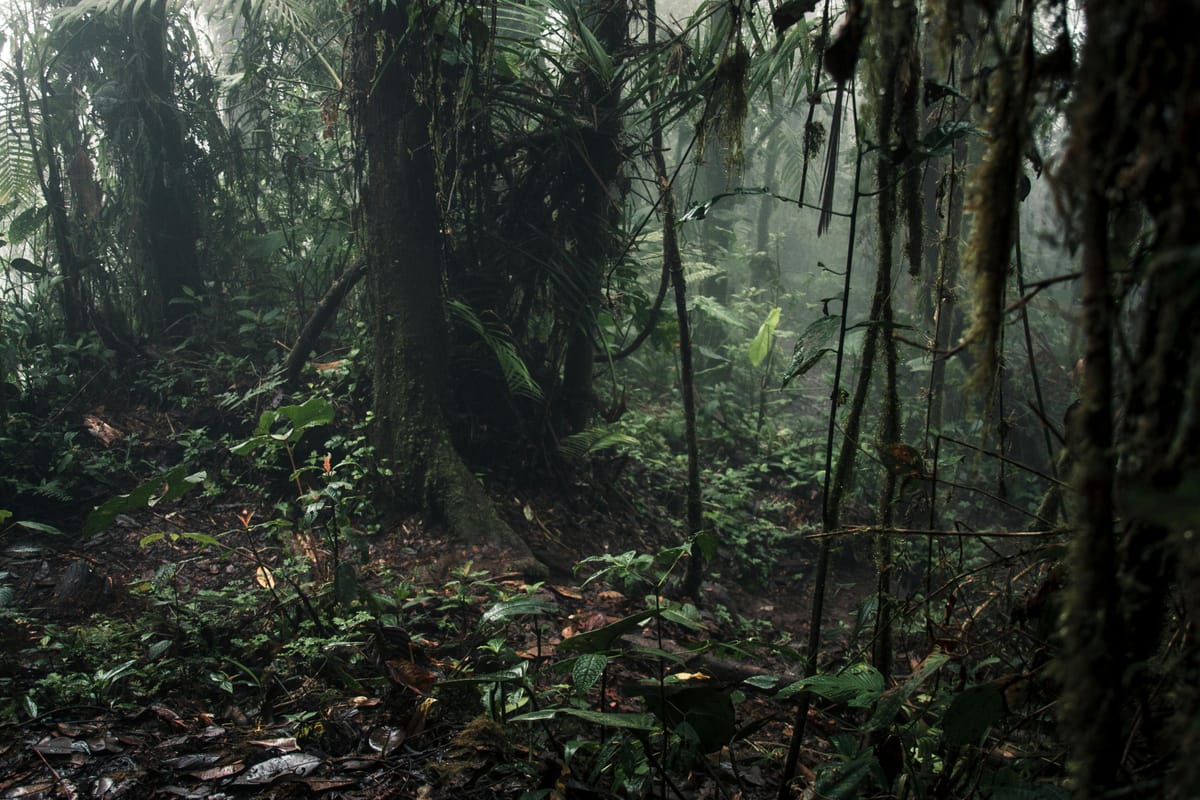
Before YouTube tutorials, before Dual Survival, before Bear Grylls made a career out of squeezing water from elephant dung, there was Richard Graves. A WWII veteran, white-water canoeing pioneer, and cousin of poet Robert Graves, Richard Graves spent the war running a 60-man jungle rescue unit in the Pacific theater. Over 300 missions. Zero lives lost. The method? Bushcraft so deeply ingrained it became instinct.
After the war, Graves distilled everything into what became The 10 Bushcraft Books, later compiled and updated as Australian Bushcraft: A Serious Guide to Survival and Camping. If you've stumbled here looking for a summary, you're in the right place. Below is the full chapter-by-chapter breakdown with the most critical skills covered in each section.
The Philosophy Behind It All
"The practice of bushcraft shows many unexpected results. The five senses are sharpened and consequently the joy of being alive is greater." — Richard Graves, Australian Bushcraft
Graves didn't write this as a collection of party tricks. The underlying argument is that bushcraft develops adaptability, the single most transferable survival trait a person can have. The ability to see a vine and think "rope." To see dry grass and think "tinder." To look at the sun and know what time it is. These aren't niche skills; they are the compressed operating system of human beings before modernity insulated us from consequence.
For the off-grid community, this book is essentially a foundational text. It predates permaculture design as a formal concept, but shares its core ethic: observe, harvest responsibly, waste nothing, leave the land able to regenerate.
Core Survival Skills (9-Part System)
01 — Ropes & Cords
How to spin, plait, and lay functional rope from grasses, bark, vines, and palm fiber; with tested breaking strains from 50 to 1,000 kg.
This chapter is far more detailed than most modern bushcraft content; Graves walks through the physics of fiber twist, breaking strain testing by material, the construction of a full ropewalk for spinning 25–100m lengths, and the difference between spinning and plaiting. Palm fiber and lawyer vine (Calamus) are called out as elite materials, with tested breaking strains that rival thin steel cable.
02 — Knots & Lashings
The foundational knots that replace nails in the bush; from end knots to joining knots, lashings, loops, and utility knots.
Green grass | 50-100 kg
Bark fibre | 200 - 700 kg
Palm fibre | 300 - 1000 kg
Sedges | 900 - 1000 kg
Lianas (monkey vines) | 250 - 300 kg
Lawyer vine (Calamus) | 500 kg
(10 mm diameter)
If material is hard or stiff, it can be passed over afire to make it more pliable.
03 — Huts & Thatching
Weatherproof shelter construction using poles and thatched grass, fern, or bark; built with zero manufactured materials.
04 — Campcraft
Camp layout, cooking without utensils, water clarification, camp furniture, and reading sign — including a DIY bush sun clock.
This is where daily survival infrastructure comes together. Graves covers camp siting, raised sleeping bunks to avoid ground moisture and insects, DIY furniture from lashed poles, boiling water in improvised containers, clarifying turbid water, and the camp sun clock — a shadow-based time-keeping device you can build in twenty minutes.
05 — Food & Water
Foraging from sea and land, preserving meat, emergency water sourcing, and solar still techniques.
06 — Fire Making
Fire by friction, fire without flame, firewood selection, and building fires for different conditions.
Friction fire is treated as a learnable mechanical process, not a mystical skill. The section on bushfire survival is sobering. Graves is blunt that fires can leap firebreaks over 200 meters wide, and running from a fire is almost always the wrong call unless you are absolutely certain of your escape route and destination.
Matches can be made waterproof by covering them with candlewax. They should be stored in a sealed container together with a striking sur- face wrapped in plastic.
07 — Animal Habits
Understanding wildlife behavior; what to avoid, what to use, and how campsite management reduces dangerous encounters.
08 — Travel & Weather
Cross-country travel pacing, cloud reading, and forecasting weather without instruments.
Overlanding is like bushwalking, but utilizing a vehicle instead.
Some of the essential equipment needed when taking a vehicle into the bush: spare hoses and fan belt, axe, torch, metal jerrican, jumper leads, mattock, steel tow rope, jack and fire extinguisher.
09 — Time & Direction
Celestial navigation, compass-free direction finding, and estimating time without electronics.
Covers celestial navigation in more depth than most modern guides, including calculating meridian transit, using compass bearings from the sun, and finding north without a compass using shadow-stick methods. This chapter alone is worth it for anyone spending serious time off-grid or in remote terrain.
Who Should Read This?
Honestly? Anyone serious about self-sufficiency. The book is written in plain, precise language; no survival machismo, no dramatic anecdotes, just documented technique from someone who repeatedly proved these methods worked in life-or-death conditions. If you're building toward off-grid living, overlanding, homesteading in remote areas, or just want to be genuinely competent in the woods rather than dependent on a gear list, this belongs in your library.
 John D
It is also worth noting that Graves consistently advocates for ecological restraint. Cut, don't pull; harvest broadly, don't strip a single stand; only fell what's already dead when possible. For 1950, this is quietly progressive land ethics baked directly into a technical manual.
Australian Bushcraft was originally published as The 10 Bushcraft Books (1950) and revised in 1984 by Dymocks Publishing. Richard Graves (1898–1971) founded the Australian Jungle Rescue Detachment during WWII. This summary is provided for educational and informational purposes.